Ecology and Evolution of Infectious Diseases – Serie
Visar alla böcker i serien Ecology and Evolution of Infectious Diseases. Handla med fri frakt och snabb leverans.
5 produkter
5 produkter
1 941 kr
Skickas
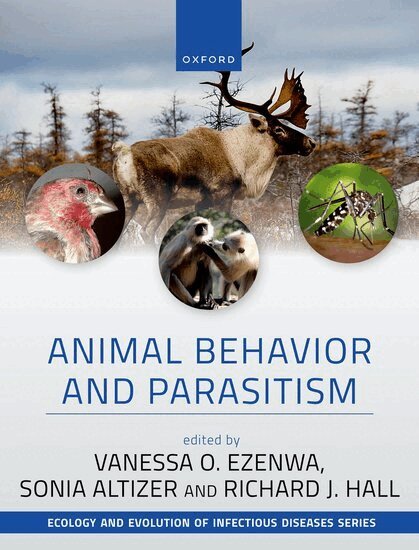
We live in a world teeming with parasites. Many animal behaviors, including social interactions, mating displays, and decisions about where to move, nest, and forage are shaped by interactions with parasites. The same is true for humans, where our attraction to mates, hygienic behaviors, food choices, and decisions about when and where to gather in groups often depend on current and perceived infection risk. In turn, behaviors like social distancing and self-medication can alter the trajectories of parasite transmission and evolution, as vividly illustrated by the ongoing COVID-19 pandemic. The myriad connections between animal behavior and parasitism have been the subject of growing research interest since the 1970s and 80s, when fundamental theories linking the two fields of study emerged. Since then, a combination of conceptual and technological advances, and increased integration of ideas across disciplines, have helped to uncover fascinating new connections between animal behavior and the ecology and evolution of infectious diseases. This accessible text surveys emerging research in this vibrant field. Chapters focus on fundamental topics at the interface of animal behavior and parasitism, and authors have been selected to provide a diverse and international perspective. Animal Behavior and Parasitism is an upper-level text suitable for senior undergraduate and graduate level students as well as professional researchers in animal behavior/behavioral ecology, disease ecology, parasitology, and evolutionary biology.
1 475 kr
Kommande
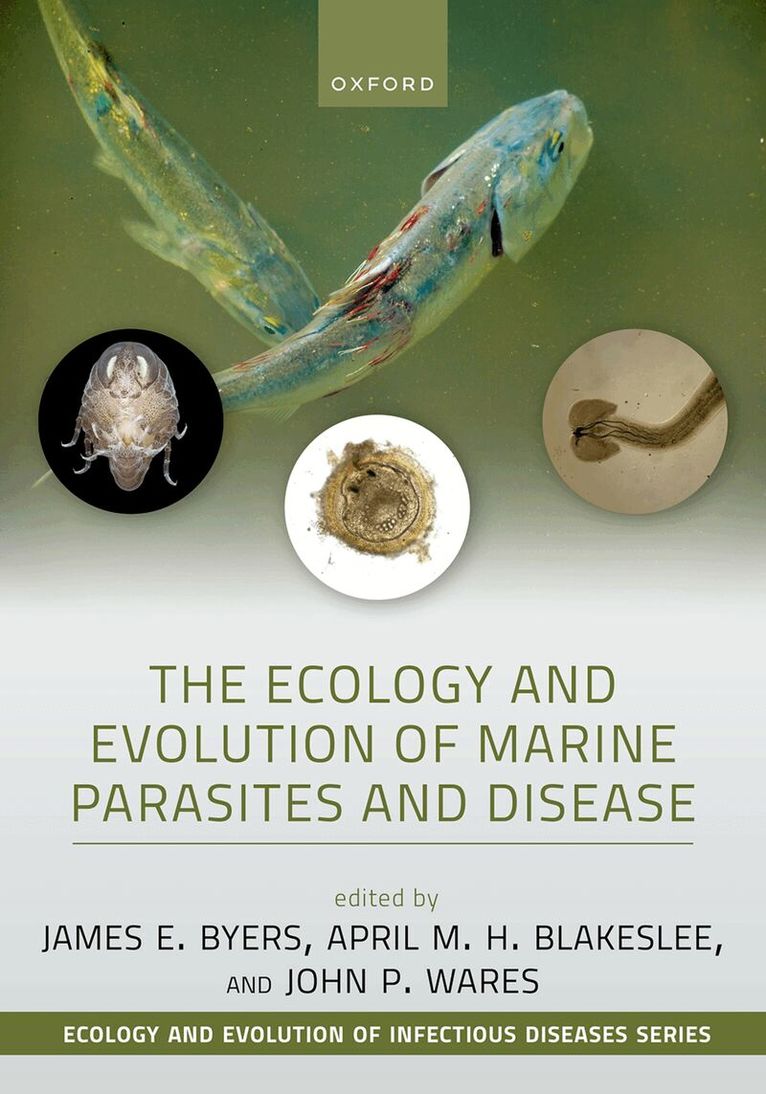
Reports of marine parasites and diseases are increasing worldwide; however, they are woefully understudied compared to their terrestrial counterparts. Part of the disparity stems from the logistical difficulties of working and sampling in the ocean, as well as the open nature of many marine populations, which decreases the visibility and tractability of marine parasites. As we work to build the knowledge base of marine parasites and diseases, we must recognize that such a process is more than just cataloguing species. Rather, we need appropriate frameworks for understanding which parasites and diseases are impactful, how they affect species other than their hosts, how they are exacerbated by environmental factors, and how they may adapt to conditions of global change. The Ecology and Evolution of Marine Parasites and Disease explores how parasites and diseases affect marine life, ecosystems, and global change. As reports of marine disease rise, this timely volume offers a rare and accessible look at how scientists detect, study, and understand these often-overlooked threats. Written by leading experts, the book brings together real-world case studies, large-scale research, and cutting-edge evolutionary insights. It provides readers with a vital framework for understanding how marine disease spreads, evolves, and impacts life beyond just the host. This is an essential resource for marine science, conservation, and environmental change.
691 kr
Kommande
Reports of marine parasites and diseases are increasing worldwide; however, they are woefully understudied compared to their terrestrial counterparts. Part of the disparity stems from the logistical difficulties of working and sampling in the ocean, as well as the open nature of many marine populations, which decreases the visibility and tractability of marine parasites. As we work to build the knowledge base of marine parasites and diseases, we must recognize that such a process is more than just cataloguing species. Rather, we need appropriate frameworks for understanding which parasites and diseases are impactful, how they affect species other than their hosts, how they are exacerbated by environmental factors, and how they may adapt to conditions of global change. The Ecology and Evolution of Marine Parasites and Disease explores how parasites and diseases affect marine life, ecosystems, and global change. As reports of marine disease rise, this timely volume offers a rare and accessible look at how scientists detect, study, and understand these often-overlooked threats. Written by leading experts, the book brings together real-world case studies, large-scale research, and cutting-edge evolutionary insights. It provides readers with a vital framework for understanding how marine disease spreads, evolves, and impacts life beyond just the host. This is an essential resource for marine science, conservation, and environmental change.
1 319 kr
Skickas inom 7-10 vardagar
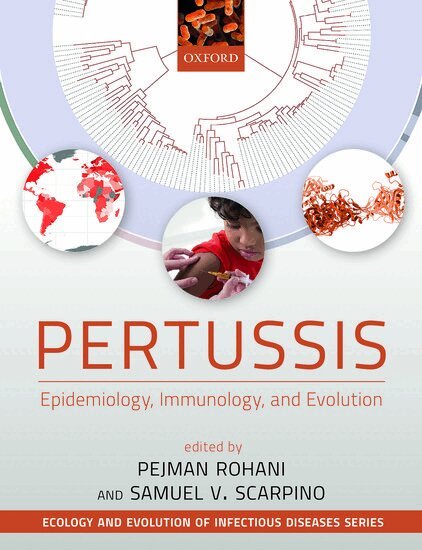
Pertussis, or whooping cough, is a respiratory disease caused primarily by infection with the bacterium Bordetella pertussis. It remains among the leading causes of death amongst vaccine-preventable diseases worldwide and recent years have seen its alarming re-emergence in many regions (including the U.S. and much of Europe), despite sustained high levels of vaccine coverage. The causes of the resurgence remain contentious, in part due to inherent complexities of the pathogen's biology, in part due to pronounced variation in the treatment and prevention strategies between different countries and regions, and in part due to long-standing disagreement amongst scientific researchers studying pertussis. This edited volume brings together expert knowledge from disparate fields with the overall aim of synthesizing the current understanding of this critically important, global pathogen.
1 682 kr
Skickas inom 7-10 vardagar
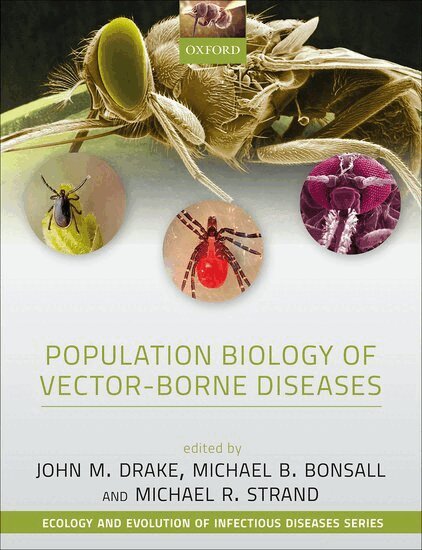
Population Biology of Vector-Borne Diseases is the first comprehensive survey of this rapidly developing field. The chapter topics provide an up-to-date presentation of classical concepts, reviews of emerging trends, synthesis of existing knowledge, and a prospective agenda for future research. The contributions offer authoritative and international perspectives from leading thinkers in the field. The dynamics of vector-borne diseases are far more intrinsically ecological compared with their directly transmitted equivalents. The environmental dependence of ectotherm vectors means that vector-borne pathogens are acutely sensitive to changing environmental conditions. Although perennially important vector-borne diseases such as malaria and dengue have deeply informed our understanding of vector-borne diseases, recent emerging viruses such as West Nile virus, Chikungunya virus, and Zika virus have generated new scientific questions and practical problems. The study of vector-borne disease has been a particularly rich source of ecological questions, while ecological theory has provided the conceptual tools for thinking about their evolution, transmission, and spatial extent. Population Biology of Vector-Borne Diseases is an advanced textbook suitable for graduate level students taking courses in vector biology, population ecology, evolutionary ecology, disease ecology, medical entomology, viral ecology/evolution, and parasitology, as well as providing a key reference for researchers across these fields.