Economics in the Real World – serie
Visar alla böcker i serien Economics in the Real World. Handla med fri frakt och snabb leverans.
18 produkter
18 produkter
Inbunden, Engelska, 2019
2 179 kr
Skickas inom 10-15 vardagar
This book presents a new narrative on the eurozone crisis. It argues that the common currency has the potential to kill the European Union, and the conventional wisdom that the eurozone can be fixed by a common budget and further political integration is incorrect.The authors address key questions such as why the European Union and the single market have been successful, why the common currency poses a threat to European integration, and whether it is possible to either fix the eurozone or dissolve it while keeping the EU and the single market. Contrary to the view that it would be best if the Southern European countries left the eurozone first, the book makes the case that the optimal solution would be to start the process with the most competitive countries exiting first. The authors argue that a return to national currencies would be beneficial not only to the crisis-ridden southern countries, but also to France and Germany, which were the main promoters of the single currency. An organised unwinding of the euro area would be beneficial both for the European economy and for Europe’s main trading partners.The authors contend that to defend the euro at all costs weakens the European economy and threatens the cohesion of the European Union. If pro-European and pro-market EU leaders do not dismantle the eurozone, it will most likely be done by their anti-European and anti-market successors. If that happens, the European Union and the common market will be destroyed.This book will be a useful and engaging contribution to the existing literature in the fields of macro, monetary and international finance and economics.
Häftad, Engelska, 2019
595 kr
Skickas inom 10-15 vardagar
This book presents a new narrative on the eurozone crisis. It argues that the common currency has the potential to kill the European Union, and the conventional wisdom that the eurozone can be fixed by a common budget and further political integration is incorrect.The authors address key questions such as why the European Union and the single market have been successful, why the common currency poses a threat to European integration, and whether it is possible to either fix the eurozone or dissolve it while keeping the EU and the single market. Contrary to the view that it would be best if the Southern European countries left the eurozone first, the book makes the case that the optimal solution would be to start the process with the most competitive countries exiting first. The authors argue that a return to national currencies would be beneficial not only to the crisis-ridden southern countries, but also to France and Germany, which were the main promoters of the single currency. An organised unwinding of the euro area would be beneficial both for the European economy and for Europe’s main trading partners.The authors contend that to defend the euro at all costs weakens the European economy and threatens the cohesion of the European Union. If pro-European and pro-market EU leaders do not dismantle the eurozone, it will most likely be done by their anti-European and anti-market successors. If that happens, the European Union and the common market will be destroyed.This book will be a useful and engaging contribution to the existing literature in the fields of macro, monetary and international finance and economics.
Häftad, Engelska, 2019
595 kr
Skickas inom 10-15 vardagar
This book gives a complex description and discussion of today’s populist attacks against the European Union (EU) following the financial crisis of 2008, which opened the floodgates of dissatisfaction, and the migration crisis which destabilized the traditional solidarity basis of the EU. The problem of Brexit is also explored.Each chapter presents one of the main elements of the crisis of the EU. These include West European populism, Central European right-wing populism in power, and the exploitation of the EU’s mistake during the migration crisis of the mid-2010s. These also include the discovery of Christian ideology against immigration and hidden anti-Semitic propaganda using a hysterical attack against the liberal billionaire philanthropist George Soros, and Brexit. There is a detailed discussion of the failures of the EU to pacify the neighbourhood in the South and North, especially in Ukraine, and the rising hostile outside enemies of the EU, including Russia and Turkey, bad relationships with Trump’s America, the uncertainty of NATO, and the emergence of a new rival, China, that enters into the Central European edge of the EU.The author explores strategies for coping with, and emerging from, this existential crisis and ends with the alternative plans and possibilities for the future of the eurozone. This will be an invaluable resource for understanding the crisis of the EU, one of the central questions of contemporary international politics for undergraduate and graduate students, and readers interested in the discussion surrounding an endangered European integration and difficult world politics.
Inbunden, Engelska, 2019
2 179 kr
Skickas inom 10-15 vardagar
This book gives a complex description and discussion of today’s populist attacks against the European Union (EU) following the financial crisis of 2008, which opened the floodgates of dissatisfaction, and the migration crisis which destabilized the traditional solidarity basis of the EU. The problem of Brexit is also explored.Each chapter presents one of the main elements of the crisis of the EU. These include West European populism, Central European right-wing populism in power, and the exploitation of the EU’s mistake during the migration crisis of the mid-2010s. These also include the discovery of Christian ideology against immigration and hidden anti-Semitic propaganda using a hysterical attack against the liberal billionaire philanthropist George Soros, and Brexit. There is a detailed discussion of the failures of the EU to pacify the neighbourhood in the South and North, especially in Ukraine, and the rising hostile outside enemies of the EU, including Russia and Turkey, bad relationships with Trump’s America, the uncertainty of NATO, and the emergence of a new rival, China, that enters into the Central European edge of the EU.The author explores strategies for coping with, and emerging from, this existential crisis and ends with the alternative plans and possibilities for the future of the eurozone. This will be an invaluable resource for understanding the crisis of the EU, one of the central questions of contemporary international politics for undergraduate and graduate students, and readers interested in the discussion surrounding an endangered European integration and difficult world politics.
Inbunden, Engelska, 2019
2 460 kr
Skickas inom 10-15 vardagar
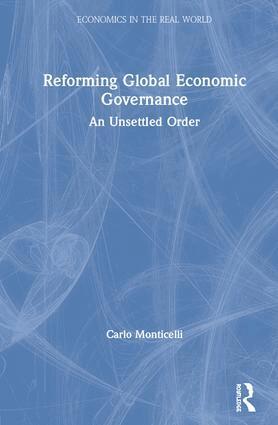
The architecture of global economic and financial governance has undergone a deep and pervasive reform in the last ten years, radically transforming international institutions and groups, such as the International Monetary Fund, the G7, and the G20. This book investigates the new, unsettled order which is now prevailing, driven by the change in the balance of power between advanced economies and key emerging market economies. Bringing together multiple strands of analysis, traditionally kept separate, Reforming Global Economic Governance: An Unsettled Order particularly explores the role of Europe within this changing world. The book documents and examines a broad range of events, building on methods from economics and other disciplines, as well as on the insights from the author’s personal involvement. This innovative approach allows the reader to ascertain the defining features of the reform: the increasing fragmentation of governance; the interconnectedness of its different elements; and the strong concern for inclusiveness. Furthermore, it presents analyses highlighting the controversial nature of the new order which underpins the current policy debate on international economic relations, including the resurgence of nationalism and trade conflicts. Through these explorations, this engaging book has direct relevance for the future prospects of international economic affairs.Offering a comprehensive view of these issues, this accessible text will appeal to scholars, insiders, and the general reader. Its detailed and thorough analyses will also be of great use to those studying economics, international political economy, and international relations.
Häftad, Engelska, 2019
700 kr
Skickas inom 10-15 vardagar
The architecture of global economic and financial governance has undergone a deep and pervasive reform in the last ten years, radically transforming international institutions and groups, such as the International Monetary Fund, the G7, and the G20. This book investigates the new, unsettled order which is now prevailing, driven by the change in the balance of power between advanced economies and key emerging market economies. Bringing together multiple strands of analysis, traditionally kept separate, Reforming Global Economic Governance: An Unsettled Order particularly explores the role of Europe within this changing world. The book documents and examines a broad range of events, building on methods from economics and other disciplines, as well as on the insights from the author’s personal involvement. This innovative approach allows the reader to ascertain the defining features of the reform: the increasing fragmentation of governance; the interconnectedness of its different elements; and the strong concern for inclusiveness. Furthermore, it presents analyses highlighting the controversial nature of the new order which underpins the current policy debate on international economic relations, including the resurgence of nationalism and trade conflicts. Through these explorations, this engaging book has direct relevance for the future prospects of international economic affairs.Offering a comprehensive view of these issues, this accessible text will appeal to scholars, insiders, and the general reader. Its detailed and thorough analyses will also be of great use to those studying economics, international political economy, and international relations.
Inbunden, Engelska, 2016
2 244 kr
Skickas inom 10-15 vardagar
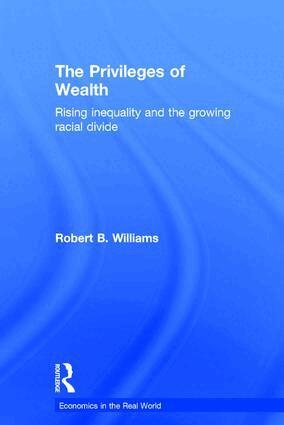
The American Dream is under assault. This threat results not from a lack of means, but from an unwillingness to share. Total household wealth increased by half in the past generation, but barely one fifth of American households captured this new wealth. For the rest, the dream of owning a home, gaining a secure retirement, and ensuring a college education for their kids is disappearing. Worse still, the widening wealth divide largely tracks our racial fault lines.The Privileges of Wealth investigates the impact of the rising concentration of wealth. It describes how households accumulate wealth along three pathways: household saving, appreciation of assets, and family gifts and inheritances. In addition, federal wealth policies, in the form of assorted tax deductions and credits, act as a fourth pathway that favors wealthy households. For those with means, each pathway operates as a virtuous cycle enabling families to build wealth with increasing ease. For those without, these same pathways are experienced as vicious cycles.The issue of wealth privilege is even more pronounced when examining the racial wealth gap. Typically, White households own ten times the wealth of Black or Latino families. This chasm results from the durability and transferability of wealth across generations and serves as a persistent legacy of our history of racial enslavement, expropriation, and exclusion. Current policies favoring the wealthy are simply cementing these wealth disparities.This book explains how these sources of wealth privilege are systemic features of our economy and the basis of rising disparities. The arguments and evidence presented here offer a compelling case for how our current policies are undermining the American Dream for most Americans while fortifying a White plutocracy, with dire consequences for us all.
Häftad, Engelska, 2016
729 kr
Skickas inom 10-15 vardagar
The American Dream is under assault. This threat results not from a lack of means, but from an unwillingness to share. Total household wealth increased by half in the past generation, but barely one fifth of American households captured this new wealth. For the rest, the dream of owning a home, gaining a secure retirement, and ensuring a college education for their kids is disappearing. Worse still, the widening wealth divide largely tracks our racial fault lines.The Privileges of Wealth investigates the impact of the rising concentration of wealth. It describes how households accumulate wealth along three pathways: household saving, appreciation of assets, and family gifts and inheritances. In addition, federal wealth policies, in the form of assorted tax deductions and credits, act as a fourth pathway that favors wealthy households. For those with means, each pathway operates as a virtuous cycle enabling families to build wealth with increasing ease. For those without, these same pathways are experienced as vicious cycles.The issue of wealth privilege is even more pronounced when examining the racial wealth gap. Typically, White households own ten times the wealth of Black or Latino families. This chasm results from the durability and transferability of wealth across generations and serves as a persistent legacy of our history of racial enslavement, expropriation, and exclusion. Current policies favoring the wealthy are simply cementing these wealth disparities.This book explains how these sources of wealth privilege are systemic features of our economy and the basis of rising disparities. The arguments and evidence presented here offer a compelling case for how our current policies are undermining the American Dream for most Americans while fortifying a White plutocracy, with dire consequences for us all.
Inbunden, Engelska, 2018
2 244 kr
Skickas inom 10-15 vardagar
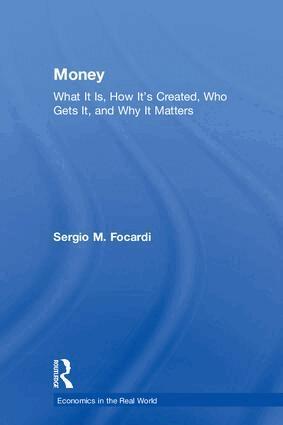
By enabling the storage and transfer of purchasing power, money facilitates economic transactions and coordinates economic activity. But what is money? How is it generated? Distributed? How does money acquire value and that value change? How does money impact the economy, society?This book explores money as a system of "tokens" that represent the purchasing power of individual agents. It looks at how money developed from debt/credit relationships, barter and coins into a system of gold-backed currencies and bank credit and on to the present system of fiat money, bank credit, near-money and, more recently, digital currencies. The author successively examines how the money circuit has changed over the last 50 years, a period of stagnant wages, increased household borrowing and growing economic complexity, and argues for a new theory of economies as complex systems, coordinated by a banking and financial system.Money: What It Is, How It’s Created, Who Gets It and Why It Matters will be of interest to students of economics and finance theory and anyone wanting a more complete understanding of monetary theory, economics, money and banking.
Häftad, Engelska, 2018
613 kr
Skickas inom 10-15 vardagar
By enabling the storage and transfer of purchasing power, money facilitates economic transactions and coordinates economic activity. But what is money? How is it generated? Distributed? How does money acquire value and that value change? How does money impact the economy, society?This book explores money as a system of "tokens" that represent the purchasing power of individual agents. It looks at how money developed from debt/credit relationships, barter and coins into a system of gold-backed currencies and bank credit and on to the present system of fiat money, bank credit, near-money and, more recently, digital currencies. The author successively examines how the money circuit has changed over the last 50 years, a period of stagnant wages, increased household borrowing and growing economic complexity, and argues for a new theory of economies as complex systems, coordinated by a banking and financial system.Money: What It Is, How It’s Created, Who Gets It and Why It Matters will be of interest to students of economics and finance theory and anyone wanting a more complete understanding of monetary theory, economics, money and banking.
Inbunden, Engelska, 2017
2 244 kr
Skickas inom 10-15 vardagar
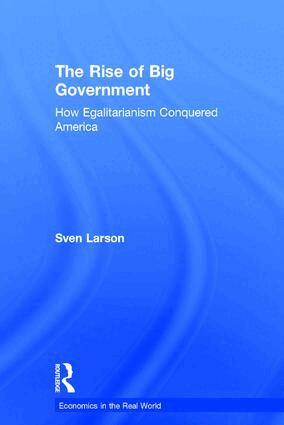
Americans tend to believe that their country is very different from Europe. Yet over the past half century they have imported and embraced the most transformative social idea of modern Scandinavia: egalitarianism. Today, the United States is more like Sweden than it is different, dedicated to economic redistribution and to vigorously defending its big government. What price, morally and economically, are today’s Americans willing to pay to preserve their egalitarian welfare state? Are they willing to turn life into a fiscal cost item? Will they sacrifice their children’s future prosperity to defend their entitlements?The Rise of Big Government: How Egalitarianism Conquered America pursues the answer to these questions by going back to the ideological origins of the modern, egalitarian welfare state. Specifically, the book asks why this unity has been able to set such deep roots in the United States, a country that is often perceived as fundamentally different when it comes to the role of government in the economy. It is shown that there are more similarities than differences between the welfare state in the United States and its Swedish "template."This book is essential reading for anyone interested in understanding how the egalitarian ideology conquered the United States, and who seeks to gain a deeper understanding of its strength, its resiliency, and the problems it faces in the future.
Häftad, Engelska, 2017
599 kr
Skickas inom 10-15 vardagar
Americans tend to believe that their country is very different from Europe. Yet over the past half century they have imported and embraced the most transformative social idea of modern Scandinavia: egalitarianism. Today, the United States is more like Sweden than it is different, dedicated to economic redistribution and to vigorously defending its big government. What price, morally and economically, are today’s Americans willing to pay to preserve their egalitarian welfare state? Are they willing to turn life into a fiscal cost item? Will they sacrifice their children’s future prosperity to defend their entitlements?The Rise of Big Government: How Egalitarianism Conquered America pursues the answer to these questions by going back to the ideological origins of the modern, egalitarian welfare state. Specifically, the book asks why this unity has been able to set such deep roots in the United States, a country that is often perceived as fundamentally different when it comes to the role of government in the economy. It is shown that there are more similarities than differences between the welfare state in the United States and its Swedish "template."This book is essential reading for anyone interested in understanding how the egalitarian ideology conquered the United States, and who seeks to gain a deeper understanding of its strength, its resiliency, and the problems it faces in the future.
Inbunden, Engelska, 2018
3 398 kr
Skickas inom 10-15 vardagar
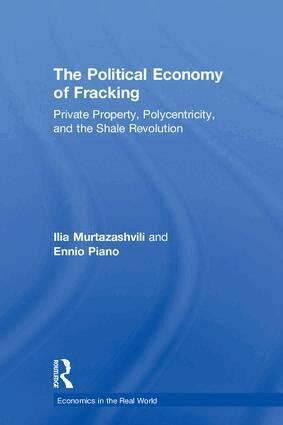
Over the past two decades, "fracking" has led to a revolution in shale gas production. For some, shale gas promised economic opportunities, cheaper energy bills, and an alternative to coal. For others, shale gas was fool’s gold. Critics contend that the shale boom has occurred in a regulatory Wild West, that the response has been fractured and ineffective, or that the harmful environmental and health consequences exceed the benefits from shale gas production. The Political Economy of Fracking argues that the criticism of the shale revolution has been misplaced. The authors use insights from a diversity of perspectives in political economy to understand why the shale boom occurred, who won in the race for shale, and who was left behind. The book explains how private property rights and entrepreneurs led to the shale boom. It contends that polycentric governance, which encourages a diversity of regulatory responses, is a virtue because it generates knowledge about the most appropriate ways to regulate shale development. Private property rights and political institutions that provide for local self-governance also helped to ensure that the benefits of shale gas production exceeded its costs. The authors make the case for fracking shale gas using evidence from shale-producing countries from around the world, comparing them to those that have fallen behind in the shale race. They show that private property rights and markets have been a source of innovation and dynamism and that a diversity of regulatory responses is appropriate to govern shale gas development. This book is insightful reading for academics and professionals interested in the shale boom, the fracking industry in general, and regulatory policy.
Häftad, Engelska, 2018
772 kr
Skickas inom 10-15 vardagar
Over the past two decades, "fracking" has led to a revolution in shale gas production. For some, shale gas promised economic opportunities, cheaper energy bills, and an alternative to coal. For others, shale gas was fool’s gold. Critics contend that the shale boom has occurred in a regulatory Wild West, that the response has been fractured and ineffective, or that the harmful environmental and health consequences exceed the benefits from shale gas production. The Political Economy of Fracking argues that the criticism of the shale revolution has been misplaced. The authors use insights from a diversity of perspectives in political economy to understand why the shale boom occurred, who won in the race for shale, and who was left behind. The book explains how private property rights and entrepreneurs led to the shale boom. It contends that polycentric governance, which encourages a diversity of regulatory responses, is a virtue because it generates knowledge about the most appropriate ways to regulate shale development. Private property rights and political institutions that provide for local self-governance also helped to ensure that the benefits of shale gas production exceeded its costs. The authors make the case for fracking shale gas using evidence from shale-producing countries from around the world, comparing them to those that have fallen behind in the shale race. They show that private property rights and markets have been a source of innovation and dynamism and that a diversity of regulatory responses is appropriate to govern shale gas development. This book is insightful reading for academics and professionals interested in the shale boom, the fracking industry in general, and regulatory policy.
Inbunden, Engelska, 2016
2 253 kr
Skickas inom 10-15 vardagar
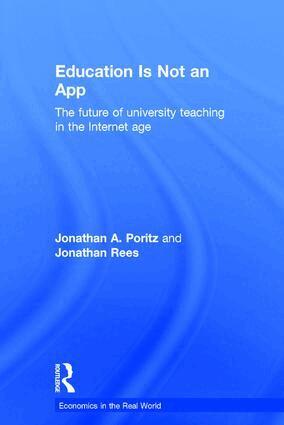
Whilst much has been written about the doors that technology can open for students, less has been said about its impact on teachers and professors. Although technology undoubtedly brings with it huge opportunities within higher education, there is also the fear that it will have a negative effect both on faculty and on teaching standards.Education Is Not an App offers a bold and provocative analysis of the economic context within which educational technology is being implemented, not least the financial problems currently facing higher education institutions around the world. The book emphasizes the issue of control as being a key factor in whether educational technology is used for good purposes or bad purposes, arguing that technology has great potential if placed in caring hands. Whilst it is a guide to the newest developments in education technology, it is also a book for those faculty, technology professionals, and higher education policy-makers who want to understand the economic and pedagogical impact of technology on professors and students. It advocates a path into the future based on faculty autonomy, shared governance, and concentration on the university’s traditional role of promoting the common good.Offering the first critical, in-depth assessment of the political economy of education technology, this book will serve as an invaluable guide to concerned faculty, as well as to anyone with an interest in the future of higher education.
Häftad, Engelska, 2016
565 kr
Skickas inom 10-15 vardagar
Whilst much has been written about the doors that technology can open for students, less has been said about its impact on teachers and professors. Although technology undoubtedly brings with it huge opportunities within higher education, there is also the fear that it will have a negative effect both on faculty and on teaching standards.Education Is Not an App offers a bold and provocative analysis of the economic context within which educational technology is being implemented, not least the financial problems currently facing higher education institutions around the world. The book emphasizes the issue of control as being a key factor in whether educational technology is used for good purposes or bad purposes, arguing that technology has great potential if placed in caring hands. Whilst it is a guide to the newest developments in education technology, it is also a book for those faculty, technology professionals, and higher education policy-makers who want to understand the economic and pedagogical impact of technology on professors and students. It advocates a path into the future based on faculty autonomy, shared governance, and concentration on the university’s traditional role of promoting the common good.Offering the first critical, in-depth assessment of the political economy of education technology, this book will serve as an invaluable guide to concerned faculty, as well as to anyone with an interest in the future of higher education.
Inbunden, Engelska, 2017
2 179 kr
Skickas inom 10-15 vardagar
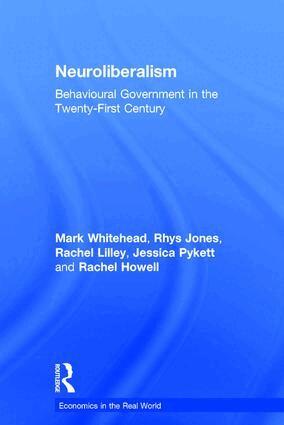
Many governments in the developed world can now best be described as ‘neuroliberal’: having a combination of neoliberal principles with policy initiatives derived from insights in the behavioural sciences. Neuroliberalism presents the results of the first critical global study of the impacts of the behavioural sciences on public policy and government actions, including behavioural economics, behavioural psychology and neuroeconomics. Drawing on interviews with leading behaviour change experts, organizations and policy-makers, and discussed in alignment with a series of international case studies, this volume provides a critical analysis of the ethical, economic, political and constitutional implications of behaviourally oriented government. It explores the impacts of the behavioural sciences on everyday life through a series of themes, including: understandings of the human subject; interpretations of freedom; the changing form and function of the state; the changing role of the corporation in society; and the design of everyday environments and technologies. The research presented in this volume reveals a diverse set of neuroliberal approaches to government that offer policy-makers and behaviour change professionals a real choice in relation to the systems of behavioural government they can implement. This book also argues that the behavioural sciences have the potential to support much more effective systems of government, but also generate new ethical concerns that policy-makers should be aware of.
Häftad, Engelska, 2017
567 kr
Skickas inom 10-15 vardagar
Many governments in the developed world can now best be described as ‘neuroliberal’: having a combination of neoliberal principles with policy initiatives derived from insights in the behavioural sciences. Neuroliberalism presents the results of the first critical global study of the impacts of the behavioural sciences on public policy and government actions, including behavioural economics, behavioural psychology and neuroeconomics. Drawing on interviews with leading behaviour change experts, organizations and policy-makers, and discussed in alignment with a series of international case studies, this volume provides a critical analysis of the ethical, economic, political and constitutional implications of behaviourally oriented government. It explores the impacts of the behavioural sciences on everyday life through a series of themes, including: understandings of the human subject; interpretations of freedom; the changing form and function of the state; the changing role of the corporation in society; and the design of everyday environments and technologies. The research presented in this volume reveals a diverse set of neuroliberal approaches to government that offer policy-makers and behaviour change professionals a real choice in relation to the systems of behavioural government they can implement. This book also argues that the behavioural sciences have the potential to support much more effective systems of government, but also generate new ethical concerns that policy-makers should be aware of.