Edinburgh Guides to Islamic Finance - Böcker
Visar alla böcker i serien Edinburgh Guides to Islamic Finance. Handla med fri frakt och snabb leverans.
14 produkter
14 produkter
1 433 kr
Skickas inom 7-10 vardagar
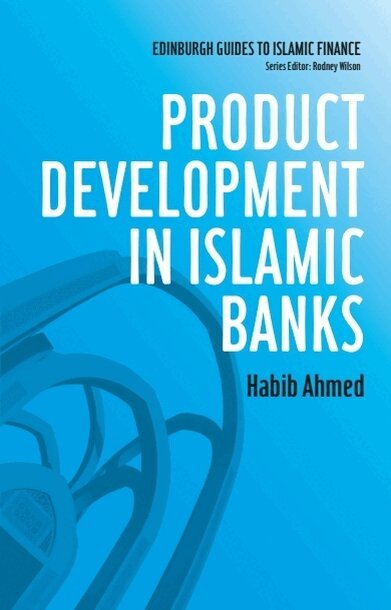
A systematic study of the process of developing Islamic financial products for banks.Islamic banking began in the 1970s with the aim of providing financial services compatible with Islamic law. Driven by market forces it has grown rapidly in Muslim countries and in international financial sectors. It is projected to grow at an annual rate of 15-20% and a key factor determining this future growth is the availability of new products that will satisfy the needs of various segments of society.While other texts discuss the basic principles and contracts used in Islamic banking and finance, few discuss how these can be used to develop financial products. This book fills that gap, starting with the basic principles that form the building blocks of contemporary Islamic financial products and then discussing the more intricate issues relating to product development processes.Key FeaturesDiscusses the different stages of the product development cycle in detailIncludes case studies showing the structures of various productsCritically evaluates the issues related to product development including the types of products used by Islamic banks and the approaches adopted in developing themThe author is well-positioned to write this text, having been an economist at the Islamic Development Bank Group in Saudi Arabia (1999-2007)
448 kr
Skickas inom 7-10 vardagar
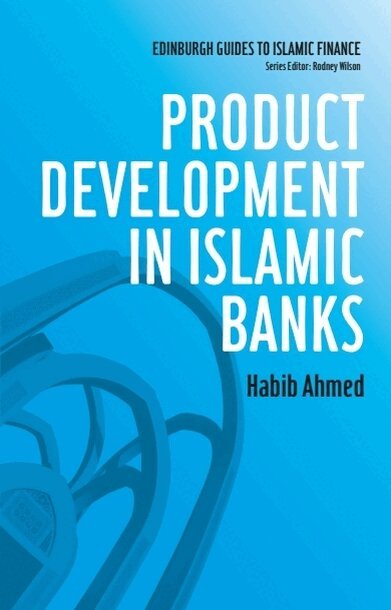
A systematic study of the process of developing Islamic financial products for banks.Islamic banking began in the 1970s with the aim of providing financial services compatible with Islamic law. Driven by market forces it has grown rapidly in Muslim countries and in international financial sectors. It is projected to grow at an annual rate of 15-20% and a key factor determining this future growth is the availability of new products that will satisfy the needs of various segments of society.While other texts discuss the basic principles and contracts used in Islamic banking and finance, few discuss how these can be used to develop financial products. This book fills that gap, starting with the basic principles that form the building blocks of contemporary Islamic financial products and then discussing the more intricate issues relating to product development processes.Key FeaturesDiscusses the different stages of the product development cycle in detailIncludes case studies showing the structures of various productsCritically evaluates the issues related to product development including the types of products used by Islamic banks and the approaches adopted in developing themThe author is well-positioned to write this text, having been an economist at the Islamic Development Bank Group in Saudi Arabia (1999-2007)
448 kr
Skickas inom 7-10 vardagar
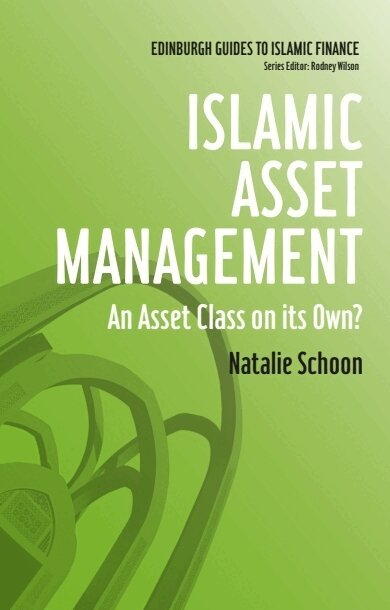
Islamic asset management has been growing at a similar rate as the Islamic financial industry as a whole and at the time of writing close to 700 funds are incorporated in the major databases with an estimated funds under management of around $70 billion. This book reviews the Islamic asset management industry in detail, including the types of funds offered and their operational procedures. It shows that although there are differences between conventional and Islamic asset management, these do not appear to have a significant impact on how the funds perform. Sharia'a compliant funds are therefore an attractive alternative for Muslim and non-Muslim investors alike. Key Features Contains valuable information on Shari'ah compliant fund structures and the type of instruments that can be invested in Considers practical implementation matters such as operational issues, available indices and the role of the Shari'ah Supervisory Board Includes case studies of the funds available to investors including the BLME $ Income Fund, SWIP Islamic Global Equity Fund, the Saudi Al Rajhi Fund Range and the Malaysian blue chip i-VCAP-MyETF-DJIM25 Features a glossary of abbreviations and key Arabic terms Relevant to investors and practitioners in the industry, and to non-Muslims interested in investing based on the same set of principles, norms and values
1 454 kr
Skickas inom 7-10 vardagar
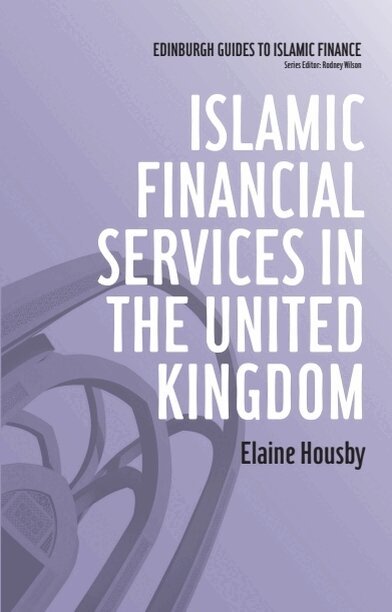
This is the first book-length study of Islamic financial services in the United Kingdom. It describes the ways in which British examples of Islamic financial provision illustrate both the main characteristics of Islamic financial teaching and some key issues in the situation of British Muslims. Coverage of the subject is comprehensive: there are chapters on the history of Islamic finance in the UK and on personal accounts, home purchase finance, the equivalents of personal loans and insurance, investment, commercial funding and the relatively new bond-like instruments of sukuk.The author's approach is broadly sympathetic to the general spirit and aims of the Islamic financial tradition but critical of some of its manifestations in practice.The book is especially topical at present, following the crisis in the UK banking industry and the unprecedented level of public debate about the appropriate aims and techniques of the financial markets. Some commentators have recently expressed disappointment that Islamic finance in the UK has failed to live up to the high expectations surrounding it. This book attempts to give a balanced account of the sector's strengths and weaknesses.
435 kr
Skickas inom 7-10 vardagar
This is the first book-length study of Islamic financial services in the United Kingdom. It describes the ways in which British examples of Islamic financial provision illustrate both the main characteristics of Islamic financial teaching and some key issues in the situation of British Muslims. Coverage of the subject is comprehensive: there are chapters on the history of Islamic finance in the UK and on personal accounts, home purchase finance, the equivalents of personal loans and insurance, investment, commercial funding and the relatively new bond-like instruments of sukuk.The author's approach is broadly sympathetic to the general spirit and aims of the Islamic financial tradition but critical of some of its manifestations in practice.The book is especially topical at present, following the crisis in the UK banking industry and the unprecedented level of public debate about the appropriate aims and techniques of the financial markets. Some commentators have recently expressed disappointment that Islamic finance in the UK has failed to live up to the high expectations surrounding it. This book attempts to give a balanced account of the sector's strengths and weaknesses.
1 266 kr
Skickas inom 7-10 vardagar
This is a theoretical and practical guide to understanding the application and operation of Shari'ah-based structures and Islamic venture capital in the private equity industry. These case studies and examples of business financial appraisals give an in-depth view of areas including: the Islamic banking industry; its use as a source of funding in the biotechnology industry, pharmaceuticals, ICT, agriculture and fisheries; and how it is used by investment companies as part of their asset management strategies.
367 kr
Skickas inom 11-20 vardagar
This is a theoretical and practical guide to understanding the application and operation of Shari'ah-based structures and Islamic venture capital in the private equity industry. These case studies and examples of business financial appraisals give an in-depth view of areas including: the Islamic banking industry; its use as a source of funding in the biotechnology industry, pharmaceuticals, ICT, agriculture and fisheries; and how it is used by investment companies as part of their asset management strategies.
402 kr
Skickas inom 11-20 vardagar
From Iran, where all banking is Shari'ah compliant, to Malaysia and the gulf, where Islamic financial institutions compete with conventional banks, Rodney Wilson examines how Islamic financial institutions are licensed and governed by common and civil law. Covering Islamic banks, takaful operators, fund management and Shari'ah compliant securities, it examines how their assets and liabilities differ from their conventional counterparts and what the implications are for risk management.
370 kr
Skickas inom 11-20 vardagar
An in-depth and insightful study of Shari'ah governance from a theoretical and practical perspective. Shari'ah governance has a profound influence on the day-to-day practice of Islamic Financial Institutions (IFIs) and each jurisdiction has adopted a different approach to developing a governance framework. Hasan Zulkifli reviews these pluralistic approaches and identifies best practice. With examples, case studies and practical discussions based on IFIs in Malaysia, the GCC countries of Bahrain, UAE, Qatar, Kuwait and Saudi Arabia and the UK.Topics covered includeThe theory behind corporate and Shari'ah governanceThe regulatory framework for Shari'ah governanceShari'ah governance approachesThe Shari'ah Board's role and how it retains its independence, transparency and competenceThe operational procedures of Shari'ah governanceThe effectiveness of the Shari'ah Board and how it could be improved
367 kr
Skickas inom 11-20 vardagar
This book examines a wide range of financial institutions in Britain which fall broadly within the ethical sector, considering the nature of their principles and practices, and how they relate to Islamic models and to Muslim communities. Islamic finance is routinely described as ethical: a beneficial association given that 'ethical' finance is one of the few financial sectors with a positive image and is a large and growing sector of the market. Yet the claim that ‘Islamic’ and ‘ethical’ are synonymous is only now being seriously examined, as is the claim that there exists a consistent and generally understood definition of ‘ethical’ practice. This guide includes case studies from retail banking, mutual associations such as building societies and credit unions, investment funds, high interest lenders and debt counselling, social enterprise, charities and the wider phenomenon of ethical consumerism.
397 kr
Skickas inom 7-10 vardagar
Drawing on received sources of 'maqasid' (Shari'ah's practical objectives), this book demonstrates how the principles of market economics affect how markets and financial instititions actually operate under Shari'ah law. It shows where Islamic economics converges with and differs from conventional economics through the banning of usury and other Shari'ah-prohibited trade practices. Students can check their progress with learning outcomes, chapter previews, chapter summaries and revision questions.
1 266 kr
Skickas inom 7-10 vardagar
This guide provides an integrated, structured process for managing risks in Islamic banks. It includes risk identification, measurement and mitigation, and compares risk management in conventional and Islamic banks. Using simulated Islamic bank financial statements, it demonstrates the integrated risk management process, and investigates how risk regulatory insights have implications for banking policy.
367 kr
Skickas inom 11-20 vardagar
This guide provides an integrated, structured process for managing risks in Islamic banks. It includes risk identification, measurement and mitigation, and compares risk management in conventional and Islamic banks. Using simulated Islamic bank financial statements, it demonstrates the integrated risk management process, and investigates how risk regulatory insights have implications for banking policy.
705 kr
Skickas inom 3-6 vardagar
The Islamic finance industry faces the challenging task of attempting to reconcile the risk management demands of business entities with the difficulties posed by the seemingly rigid stance taken by some Shari'ah scholars over hedging practices. Offering a fresh perspective, Sherif Ayoub confronts the challenge by reformulating how we might think about the theorisation of economic matters in the Islamic faith. Shedding light on the way the Islamic finance industry conceptualises the role of financial instruments in a market risk management framework that adheres to the objectives of Islamic jurisprudence, readers will come to understand the issues surrounding the avoidance of Riba (usury), Gharar (excessive uncertainty) and Maysir (gambling).