Elsevier Series in Advanced Ceramic Materials - Böcker
3 300 kr
Skickas inom 7-10 vardagar
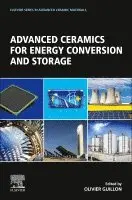
In order to enable an affordable, sustainable, fossil-free future energy supply, research activities on relevant materials and related technologies have been intensified in recent years, Advanced Ceramics for Energy Conversion and Storage describes the current state-of-the-art concerning materials, properties, processes, and specific applications. Academic and industrial researchers, materials scientists, and engineers will be able to get a broad overview of the use of ceramics in energy applications, while at the same time become acquainted with the most recent developments in the field.
With chapters written by recognized experts working in their respective fields the book is a valuable reference source covering the following application areas: ceramic materials and coatings for gas turbines; heat storage and exchange materials for solar thermal energy; ceramics for nuclear energy; ceramics for energy harvesting (thermoelectrics, piezoelectrics, and sunlight conversion); ceramic gas separation membranes; solid oxide fuel cells and electrolysers; and electrochemical storage in battery cells.
Advanced Ceramics for Energy Conversion and Storage offers a sound base for understanding the complex requirements related to the technological fields and the ceramic materials that make them possible. The book is also suitable for people with a solid base in materials science and engineering that want to specialize in ceramics.
Presents an extensive overview of ceramic materials involved in energy conversion and storage Updates on the tremendous progress that has been achieved in recent years Showcases authors at the forefront of their fields, including results from the huge amount of published data Provides a list of requirements for the materials used for each energy technology Includes an evaluation and comparison of materials available, including their structure, properties and performance2 264 kr
Skickas inom 7-10 vardagar
2 508 kr
Skickas inom 7-10 vardagar
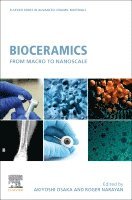
Biologically functional ceramic materials have been known about for several decades, like phosphate cements and gypsum, and they are within the zeroth generation. Modern and artificially synthesized bioceramics include amorphous materials in the Bioglass� family that were developed in the early 1970's and derivative glass ceramics such as Bioverit� and Cerabone A-W� that came in 1980's. They are from the 2nd generation of materials, and mostly applicable to bone replacement or bone defect fillers. Since the late 1990's, newer technologies have been introduced to the biologically functional material fields; they are the syntheses of organic-inorganic hybrids of micro- and macroscopic scales as well as nano-scales, organic fragment-covered ceramic particles of varied sizes, with light-controlling abilities to modify the frequency of light, in addition synthesis of high strength and high-tribological durability that had not been available before. With the advent of additive manufacturing technology employing lasers, electron beams, and printers, clinical materials of complicated porous structures are now easily prepared. These materials are of the 3rd generation.
This book will cover almost all kinds of such 3rd generation ceramic and ceramic-related biomaterials. This book conveys the current state-of-the-art on the science and technology of bioceramics, from nano-size dots or particles to macro-scale architectures, of a wide range of constitutions including quantum dots with peptide fragments, meso-scale therapeutic particles designed to involve drugs or genes, mesoporous organic-inorganic hybrids, nano-structured oxide layers on metals and alloys.
Comprehensively covers all aspects (research/experimental and commercial products) related to the latest progresses in bioceramic science, technology and applications, with emphasis on nanobioceramics Pulls together a broad range of materials, concepts, and technologies based on nanomaterials Features novel preparation procedures like additive manufacturing (3-D printing and related techniques) that have also been introduced and practiced for forming complicated architectures Features innovative 3rd generation ceramic and ceramic-related biomaterials1 776 kr
Kommande
2 264 kr
Skickas inom 7-10 vardagar
2 508 kr
Skickas inom 7-10 vardagar
Surface Modification and Functionalization of Ceramic Composites is intended for both experts and beginners, allowing them to have an extended overview of recent progress in the evolution of surface modification methods and functionalization for ceramic composites. The book provides a detailed summary of the various techniques that are currently available, along with an evaluation of the costs involved. Information on the relationship between surface properties and function is also discussed. There is also an additional section on commercial and industrial applications, including biomedical, sensing and energy.
The book will be a valuable reference resource for researchers and an instructive and stimulating text for postgraduate students who want to enhance their knowledge on novel materials and surface modification and functionalization of ceramic composites.
Extensively covers surface modification and functionalization of ceramic composites A detailed review of the various techniques currently available and an evaluation of costs Covers recent advances and a broad range of different industrial applications2 447 kr
Skickas inom 7-10 vardagar
It has been three decades since the last significant book was published on SiC ceramics (other than those books that specifically focus on SiC semiconductors). Thirty years has been a long time in the world of SiC ceramics. In the early 1990s, SiC was still a relatively obscure ceramic even within the materials community, prominent only as an industrial abrasive (carborundum), and a refractory (Chapter 7). This has all changed dramatically in the 21st century. For example,
As a semiconductor, SiC greatly surpasses silicon in performance, especially in high-power systems. Its market penetration since its launch in 2001 has been exponential. Single-crystal SiC semiconductors are covered in Chapter 3 Millions of military and paramilitary personnel have globally been protected with lightweight SiC body armour, since the late 1990s. Body armour is covered in Chapters 4 and 5 SiC-SiC is a composite material close to commercialization that makes possible high-temperature load-bearing applications hitherto only able to be hypothesized: from ultra-high-temperature jet turbine blades to advanced nuclear fuel encapsulation, the possibilities are very promising. Aerospace applications are covered in Chapter 9 Other key areas that are addressed are blast-resistant SiC vehicle/vessel armour in Chapter 8 and wear-resistant SiC ceramics in Chapter 6 Silicon Carbide Ceramics will be an essential reference resource for academic and industrial researchers and materials scientists and engineers working in ceramic materials for the semiconductor, defence, aerospace, wear resistance and refractory fields� Presents an extensive review of the history, production and properties of SiC ceramics, including their characterization and applications Discusses classical and state-of-the-art sintering technologies for SiC ceramics Focuses on the future of ceramic manufacturing and advanced ceramic additive technologies2 691 kr
Skickas inom 7-10 vardagar
Advanced Ceramics for Versatile Interdisciplinary Applications describes recent progress in ceramic synthesis and their applications in areas of catalysis, lithium-ion batteries, microbial fuel cells, and biomedical applications. Advancements in ceramic syntheses, such as laser additive manufacturing technologies are also discussed, as are developments in magnetic-based, doped and piezoelectric ceramics and their applications. Other sections cover mixed ionic-electronic conducting ceramic membranes for electrochemical applications, ceramic separators for microbial fuel cells, ceramic polymer composites for lithium-ion batteries, and hybrid ceramic nanocomposites for catalysis applications.
The use of metal and metal oxide nanostructures as antimicrobial agents offer a wide range of advantages, ranging from straightforward synthesis to less prone towards resistance development by microbes. Finally, the development of biocompatible ceramic materials, mechanical and chemical properties, and applications are discussed in detail. The book will be useful for new researchers, academics and postgraduate students all working in the area of ceramics and their potential applications.
Focuses on the optical and electrochemical properties of advanced ceramic materials and MXenes Covers synthesis, characterization techniques and a diverse range of applications, including energy and biomaterials Contains contributions from a diverse range of backgrounds across chemistry, physics, materials science, engineering, medical science, environmental and industrial technology, biotechnology and biomedical engineering2 691 kr
Skickas inom 7-10 vardagar
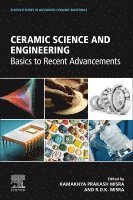
Ceramic Science and Engineering: Basics to Recent Advancements covers the fundamentals, classification and applications surrounding ceramic engineering. In addition, the book contains an extensive review of the current published literature on established ceramic materials. Other sections present an extensive review of up-to-date research on new innovative ceramic materials and reviews recently published articles, case studies and the latest research outputs. The book will be an essential reference resource for materials scientists, physicists, chemists and engineers, postgraduate students, early career researchers, and industrial researchers working in R&D in the development of ceramic materials.
Ceramic engineering deals with the science and technology of creating objects from inorganic and non-metallic materials. It combines the principles of chemistry, physics and engineering. Fiber-optic devices, microprocessors and solar panels are just a few examples of ceramic engineering being applied in everyday life. Advanced ceramics such as alumina, aluminum nitride, zirconia, ZnO, silicon carbide, silicon nitride and titania-based materials, each of which have their own specific characteristics and offer an economic and high-performance alternative to more conventional materials such as glass, metals and plastics are also discussed.
Covers environmental barrier ceramic coatings, advanced ceramic conductive fuel cells, processing and machining technology in ceramic and composite materials, photoluminescent ceramic materials, perovskite ceramics and bioinspired ceramic materials Reviews both conventional, established ceramics and new, innovative advanced ceramics Contains an extensive review of the current published literature on established ceramic materials2 386 kr
Skickas inom 7-10 vardagar
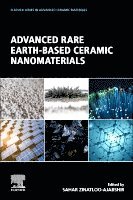
Advanced Rare Earth-Based Ceramic Nanomaterials focuses on recent advances related to preparation methods and applications of advanced rare earth-based ceramic nanomaterials. Different approaches for synthesizing rare earth-based ceramic nanomaterials are discussed, along with their advantages and disadvantages for applications in various fields. Sections cover rare earth-based ceramic nanomaterials like ceria and rare earth oxides (R2O3), rare earth vanadates, rare earth titanates, rare earth zirconates, rare earth stannates, rare earth-based tungstates, rare earth-based manganites, ferrites, cobaltites, nickelates, rare earth doped semiconductor nanomaterials, rare earth molybdates, rare earth-based nanocomposites, rare earth-based compounds for solar cells, and laser nanomaterials based on rare-earth compounds.
Reviews the chemistry and processing of rare earth doped ceramic nanomaterials and their characteristics and applications Covers a broad range of materials, including ceria and rare earth oxides (R2O3), vanadates, titanates, zirconates, stannates, tungstates, manganites, ferrites, cobaltites, nickelates, rare earth doped semiconductor nanomaterials, rare earth molybdates, rare earth-based nanocomposites, rare earth-based compounds for solar cells, and laser nanomaterials based on rare-earth compounds Includes different approaches to synthesizing each family of rare earth-based ceramic nanomaterials, along with their advantages and disadvantages Provides green chemistry-based methods for the preparation of advanced rare earth-based ceramic nanomaterials2 691 kr
Skickas inom 7-10 vardagar
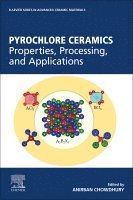
Present-day interest in pyrochlore materials is immense. Academic and industrial researchers working with pyrochlore materials need a fundamental understanding of what pyrochlores are and their potential applications. Pyrochlore Ceramics: Properties, Processing, and Applications provides key knowledge and information needed on pyrochlore materials. With an emphasis on recent research developments, the contents review a broad spectrum of pyrochlore systems, focusing on their structures, their successful synthesis, multifaceted properties, and applications. The book brings all aspects together and presents recent research findings on pyrochlore materials. It will be the definitive text for all researchers who aim to venture into the eclectic world of pyrochlores. In addition, the book will be of interest to researchers who are already working on pyrochlore materials, providing them with novel information on the uncommon virtues of pyrochlore systems.
All chapters presented in the book are at the cutting edge of research and have never been assembled in book form before. Any researcher working in related fields will gain not only a historical perspective but also a comprehensive overview of recent developments. The book will be a valuable reference resource for academic and industrial researchers working in ceramics and materials science, mechanical, electronics, and chemical engineering, as well as physical and chemical science.
Provides an extensive review of novel pyrochlore material systems Compares different types of pyrochlore materials, including their structure, properties, and performance Describes potential applications2 995 kr
Skickas inom 7-10 vardagar
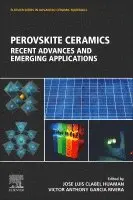
Perovskite-based ceramics are a significant class of innovative materials with fascinating physical properties, which are now receiving intensive research attention in condensed matter physics and in the area of practical device applications. Perovskite Ceramics provides a state-of-the-art review on the latest advances in perovskite-based ceramic materials, as well as the development of devices from these materials for different applications.
Perovskite Ceramics: Recent Advances and Emerging Applications is divided into two main parts. The first part focuses on the basics of perovskite-based ceramic materials and includes chapters on the fundamentals, synthesis and processing, characterization, and properties of these materials. Chapters are also included on bulk and thin materials, phase transitions, polaronic effects and the compensation and screening of ferroelectricity. This section will allow the reader to familiarize themselves with the standard traditional approach, but it will also introduce new concepts that are fast evolving in this field. The second part presents an extensive review of up-to-date research on new and innovative advances in perovskite-based ceramic materials. Chapters cover multiferroic applications, lead-free perovskites, energy storage applications, perovskite-based memories, light manipulation and spectral modifications, and solar cells and fuel cells. All these fields of research are rapidly evolving, so the book acts a platform to showcase latest results on optical strategies and materials for light manipulation, and spectral up- and down-conversion too (mainly rare earth doped oxides and complexes).
The book will be an essential reference resource for academic and industrial researchers working in materials research and development particularly in functional and oxide ceramics and perovskites.
A comprehensive and systematic review of advanced research in perovskite-based ceramics Covers both oxide and halide perovskites, their synthesis, processing, properties and applications Presents advanced methods of synthesis as well as latest applications Discusses all aspects from theory to production Covers the most important advances both in terms of new materials and application strategies2 508 kr
Skickas inom 7-10 vardagar
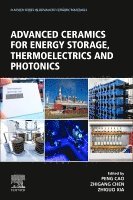
Advanced Ceramics for Energy Storage, Thermoelectrics and Photonics describes recent progress in ceramic synthesis and applications in the areas of rechargeable batteries, capacitors, fuel cells, ferroelectrics, thermoelectrics, and inorganic luminescence materials. Both fundamental scientific advancements and technological breakthroughs in terms of new ceramic chemistries, new synthesis methodologies, and new applications are discussed in detail. The latest developments in advanced electrodes, ionic conductors, catalysts, thermoelectric ceramics, and luminescent powders/ceramics and their applications are also covered. With its focus on energy-related applications, the book will be a valuable reference resource for new researchers, academics, and postgraduate students who are interested in delving deeper into energy-related materials research, in particular, the areas of electronic and optical ceramics and their potential applications.
Covers three key areas of ceramics science: electrochemical energy conversion, thermoelectrics, and photonics An entire section that explains the fundamental theory that lies behind new ceramic chemistries and synthesis methodologies Complex perspectives are explained, such as solid electrolytes and�the coupling between thermal and electric phenomena and optical properties as well as�electrodes, ionic conductors, catalysts, thermoelectric ceramics and their applications Discusses challenges that new ceramic technology is currently facing and the potential solutions for commercial success2 386 kr
Skickas inom 7-10 vardagar
2 264 kr
Skickas inom 7-10 vardagar
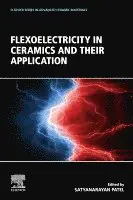
Flexoelectricity is the ability of materials to generate a voltage when they are bent or, conversely, to bend under voltage. Flexoelectricity can be present in all materials; however, the magnitude of the flexoelectric coefficients is so small that flexoelectricity is virtually imperceptible on the human scale. The book's objective is to look at the flexoelectric effect in ceramics for various applications point of view such as sensor, actuator and energy harvesting etc. It briefly discusses the flexoelectric effect theories and models with the latest development in this field. Several methods are discussed to increase the flexoelectric effect in ferroelectric and other ceramics. It focused on the latest development in various possible applications such as flexopyroelectric, flexocaloric and nano energy generators. Apart from these, it will also discuss the inverse flexoelectric effect, flexoelectric effect in 2D materials, ambiguities and controversies in this field. This book resolved many questions related to flexoelectricity and made significant discoveries with profound implications beyond flexoelectricity, in such diverse areas as caloric or MEMS devices, etc. It covers the most recent breakthroughs in nano-generator, composite-based ceramics to maximize energy harvesting and storage. Therefore, this book will be handy for a researcher working in this direction of ceramics and can be a reference book for allied specializations. It will open a new approach to using the flexoelectric effect in various ceramics and varieties of applications.
Provides an in-depth study of the flexoelectric effect of a broad range of ceramic materials It updates the state of art progress that has been done in the area of flexoelectric-based energy harvesting via nano-generator or nanocomposites of ceramics Provides most recent advancement in the area of lead-free, lead-based ceramics, 2D material, flexocaloric and flexopyroelectric applications The inverse flexoelectric effect is discussed in detail, which helps newcomers and expert researchers, scientists, and engineers working in this field Includes an evaluation of ambiguities and controversies about the flexoelectric effectAdvanced Ceramics for Photocatalytic Membranes
Synthesis Methods, Characterization and Performance Analysis, and Applications in Water and Wastewater Treatment
2 630 kr
Skickas inom 7-10 vardagar
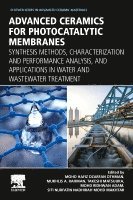
Advanced Ceramics for Photocatalytic Membranes: Synthesis Methods, Characterization and Performance Analysis, and Applications in Water and Wastewater Treatment reviews recent research on the application and use of advanced ceramic materials in photocatalytic membrane processes. Sections cover current developments in photocatalytic membrane processes, synthesis and fabrication techniques using either physical or chemical approaches, diverse characterization methods and performance evaluations, and various types of environmental applications. The book is not only limited to the conceptual theory, it also gives a detailed review of recent progress in materials science. Readers will find applications in different disciplines, i.e., chemistry, physics, and mechanics that are critically required in modern science and engineering. This across-the-board briefing on the field is suitable for use as a major reference, as well as a knowledge sharing tool.
Provides a comprehensive review of advanced ceramic materials used in photocatalytic membranesCovers synthesis of ceramic membranes via both physical and chemical approachesDiscusses materials characterization, properties, and performance analysisCovers modeling, simulation, and the theory of mass transfer mechanismsFeatures applications in water and wastewater treatmentDiscusses system scale up, economic viability, and cost analysisAdvanced Flexible Ceramics
Design, Properties, Manufacturing, and Emerging Applications
2 812 kr
Skickas inom 7-10 vardagar
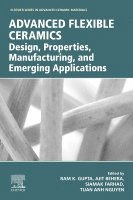
Advanced Flexible Ceramics: Design, Properties, Manufacturing, and Emerging Applications provides detailed information on the properties and applications of advanced flexible ceramics. Sections cover materials dependent flexible behavior, microstructure and phases, the operational life of ceramics, how flexible materials can influence smart behavior (shape memory and self-healing), and thermal, physical, mechanical, electrical and optical properties. Various processing routes such as powder metallurgy, both physical and chemical vapor deposition, sol-gel, 3D print, and roll-to-roll processing are also explained in detail. The later section of the book provides detailed coverage of emerging technological applications.
Additional chapters cover cost-effectiveness and the global market and recycling and future challenges and perspectives. This will be an essential reference resource for academic and industrial researchers working in the fields of refractory linings, high-temperature equipment, shielding, and MEMS/NEMS.
Covers a new class of flexible ceramic materials for advanced technological applications Discusses a broad range of topics, including characterization, synthesis, microstructure and properties Provides advanced technological aspects such as applications, manufacturing processes, industrial assessments and economics2 142 kr
Skickas inom 7-10 vardagar
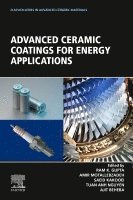
Advanced Ceramic Coatings for Energy Applications covers recent developments in conducting electrodes, photovoltaics, solar cells, battery applications, fuel cells, electrocatalysts, photocatalysts, and supercapacitors. The book is one of four volumes that together provide a comprehensive resource in the field of Advanced Ceramic Coatings, also including titles covering: fundamentals, manufacturing, and classification; biomedical applications; and emerging applications. These books will be extremely useful for academic and industrial researchers and practicing engineers who need to find reliable and up-to-date information about recent progresses and new developments in the field of advanced ceramic coatings.Smart ceramic coatings contain multifunctional components are now finding application in transportation and automotive industries, in electronics, and energy, sectors, in aerospace and defense, and in industrial goods and healthcare. Their wide application and stability in harsh environments are only possible due to the stability of the inorganic components that are used in ceramic coatings.
Includes comprehensive coverage of advanced ceramic coatings for energy applicationsFeatures the latest progress and recent technological developmentsIncludes comparisons to other coatings types (e.g., polymers, metals, and enamel) to demonstrate potential, limitations, and differencesContains extensive case studies and worked examples2 142 kr
Skickas inom 7-10 vardagar
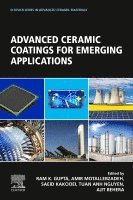
Advanced Ceramic Coatings for Emerging Applications covers new developments in automotive, construction, electronic, space and defense industries. The book is one of four volumes that together provide a comprehensive resource in the field of Advanced Ceramic Coatings, also including titles covering fundamentals, manufacturing and classification, energy and biomedical applications. These books will be extremely useful for academic and industrial researchers and practicing engineers who need to find reliable and up-to-date information about recent progresses and new developments in the field of advanced ceramic coatings. These books will also be of value to early career scientists providing background knowledge to the field.
Smart ceramic coatings containing multifunctional components are now finding application in transportation and automotive industries, in electronics, and energy, sectors, in aerospace and defense, and in industrial goods and healthcare. Their wide application and stability in harsh environments are only possible due to the stability of the inorganic components that are used in ceramic coatings.
Provides comprehensive coverage of emerging applications in advanced ceramic coatings Features the latest progress and recent technological developments Includes comparisons to other coatings types (e.g., polymers, metals and enamel) to demonstrate potential, limitations and differences Contains extensive case studies and worked examples1 954 kr
Skickas inom 7-10 vardagar
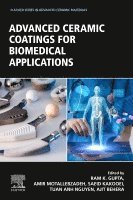
Advanced Ceramic Coatings for Biomedical Applications covers tissue engineering, scaffolds, implant and dental application, wound healing and adhesives. The book is one of four volumes that together provide a comprehensive resource in the field of Advanced Ceramic Coatings, also including titles covering: fundamentals, manufacturing, and classification; energy applications; and emerging applications. This books will be extremely useful for academic and industrial researchers and practicing engineers who need to find reliable and up-to-date information about recent progresses and new developments in the field of advanced ceramic coatings. It will also be of value to early career scientists providing background knowledge to the field.
Smart ceramic coatings containing multifunctional components are now finding application in transportation and automotive industries, in electronics, and energy sectors, in aerospace and defense, and in industrial goods and healthcare. Their wide application and stability in harsh environments are only possible due to the stability of the inorganic components used. Ceramic coatings are typically silicon nitride, chromia, hafnia, alumina, alumina-magnesia, silica, silicon carbide, titania, and zirconia-based compositions. The increased demand for these materials and their application in energy, transportation, and the automotive industry, are considered, to be the main drivers.
Provides comprehensive coverage of biomedical applications of advanced ceramic coatings Covers basic principles of surface chemistry and the fundamentals of ceramic materials and engineering Features the latest progress and recent technological developments Includes comparisons to other coating types (e.g., polymers, metals, and enamel) to demonstrate the potential, limitations, and differences Contains extensive case studies and worked examples2 995 kr
Skickas inom 7-10 vardagar
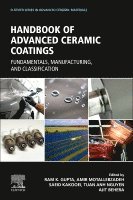
Handbook of Advanced Ceramic Coatings: Fundamentals, Manufacturing and Classification introduces ceramic coating materials, methods of fabrication, characterizations, the interaction between fillers, reinforcers, and environmental impact, and the functional classification of ceramic coatings. The book is one of four volumes that together provide a comprehensive resource in the field of Advanced Ceramic Coatings, also including titles covering energy, biomedical and emerging applications. These books will be extremely useful for academic and industrial researchers and practicing engineers who need to find reliable and up-to-date information about recent progresses and new developments in the field of advanced ceramic coatings.
Smart ceramic coatings containing multifunctional components are now finding application in transportation and automotive industries, in electronics, and energy sectors, in aerospace and defense, and in industrial goods and healthcare. Their wide application and stability in harsh environments are only possible due to the stability of the inorganic components used. Ceramic coatings are typically silicon nitride, chromia, hafnia, alumina, alumina-magnesia, silica, silicon carbide, titania, and zirconia-based compositions. The increased demand for these materials and their application in energy, transportation, and the automotive industry, are considered, to be the main drivers.
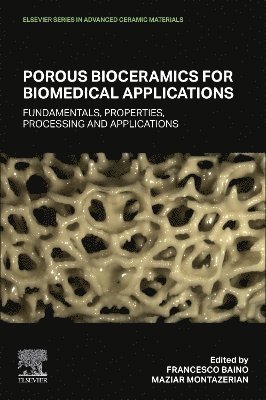
Comprehensively covers the production, characterization and properties of advanced ceramic coatings Features the latest manufacturing processes Covers basic principles of surface chemistry, along with the fundamentals of ceramic materials and engineering Features the latest progress and recent technological developments Discusses basic science relevant to both the materials and preparation methodsPorous Bioceramics for Biomedical Applications
Fundamentals, Properties, Processing and Applications
2 708 kr
Skickas inom 7-10 vardagar
2 645 kr
Kommande
3 300 kr
Skickas inom 7-10 vardagar
2 630 kr
Kommande
3 056 kr
Kommande
Ceramic Membranes for Liquid Separation Processes
From Research to Real-World Applications
2 386 kr
Kommande