Emerald Studies in Metal Music and Culture – serie
Visar alla böcker i serien Emerald Studies in Metal Music and Culture. Handla med fri frakt och snabb leverans.
6 produkter
6 produkter
998 kr
Skickas inom 7-10 vardagar
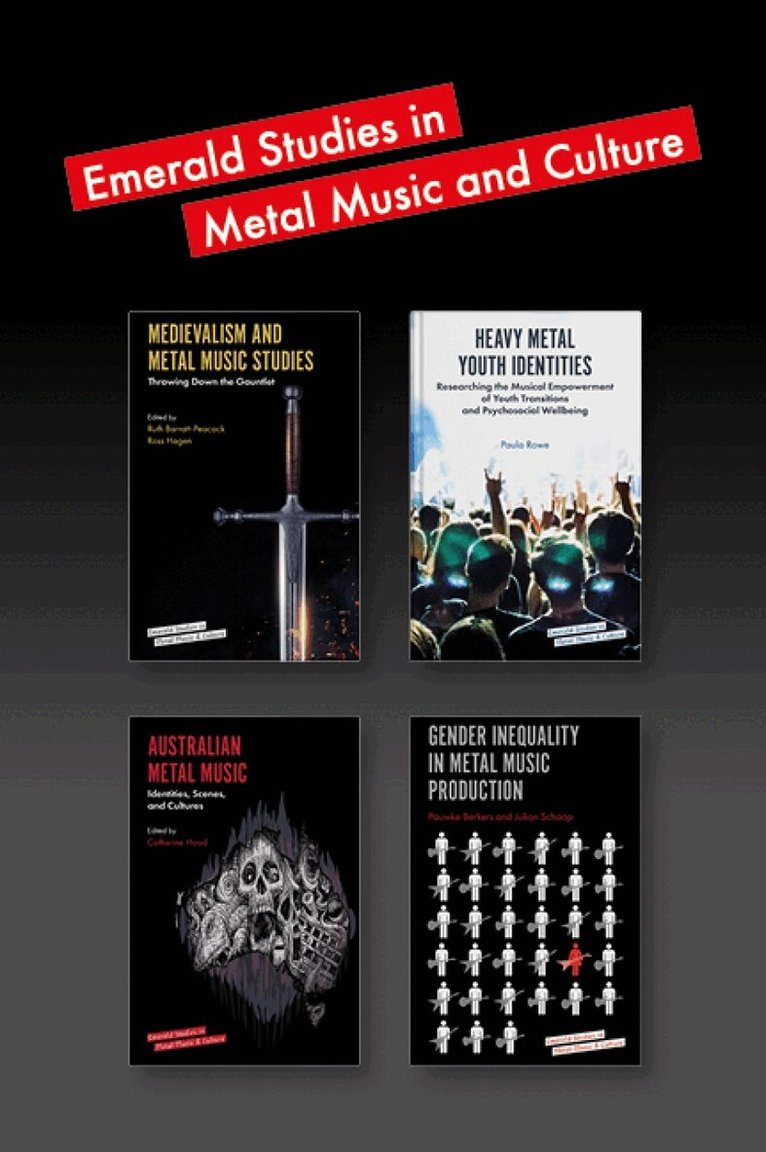
Metal music has long nurtured an obsession with visions of the Middle Ages, with countless album covers and lyric sheets populated by Vikings, knights, wizards, and castles. Medievalism and Metal Music Studies: Throwing down the Gauntlet addresses this fascination with all things medieval, exploring how metal musicians and fans find inspiration both in authentically medieval materials and neomedievalist depictions of the period in literature, cinema, and other media. Within metal music, the medieval takes on multiple, and even contradictory meanings, becoming at once a cipher of difference and grotesque alterity while simultaneously being imagined as a simpler, more authentic time, as opposed to the complexities and stresses of modernity. In this fashion, the medieval period becomes both a source for artistic creativity and a vector for countercultural social and political critique. The contributors in this book hail from a wide range of fields including medieval history, music performance, musicology, media studies, and literature, and computer linguistics, bringing a variety of critical perspectives to bear on the topic. Engaging in analyses of cover art, liner notes, lyrics, and musical style, the contributors investigate issues of research methodologies, crucial concerns over identity and nationalism, and the recontextualisation of historical materials, all aimed at critically examining how and why medievalism has permeated heavy metal music and culture. Hearken to our tales!
Heavy Metal Youth Identities
Researching the Musical Empowerment of Youth Transitions and Psychosocial Wellbeing
Inbunden, Engelska, 2018
984 kr
Skickas inom 7-10 vardagar
Heavy Metal Youth Identities critically examines the significance of heavy metal music and culture in the everyday lives of metal youth. Historically, young metal fans have been portrayed in popular and academic literature as delinquent, mentally unwell, demotivated, and destined for low-achieving futures and poor educational outcomes. So why would young people sign up for this? What’s the specific appeal of metal, and why start embodying a metal identity that others can see and know? And is metal really such a problem for youth development, as some have speculated?To explore these questions, this book draws on narrative research with metal youth that invited them to reflect, in their own words, on the role of metal in their everyday lives. They share their early memories of forming a metal identity during high school years and ways that metal helped them cope with things like bullying, bereavement and challenging family circumstances. They also give us rare insight into ways that metal influenced (and even assisted) their transitions through education and career paths post-school. This book highlights ways that youth workers, educators and parents can work positively to support young people forming subcultural identities and capitalise on their unique strengths and skill-sets. As the globalisation of youth cultures continues to expand against the backdrop of a changing workforce, it is crucial that we learn how to better facilitate the preferred pathways of young people with interests that might be considered 'against the grain' by normative standards. This book takes us a step forward in that direction.
1 066 kr
Skickas inom 7-10 vardagar
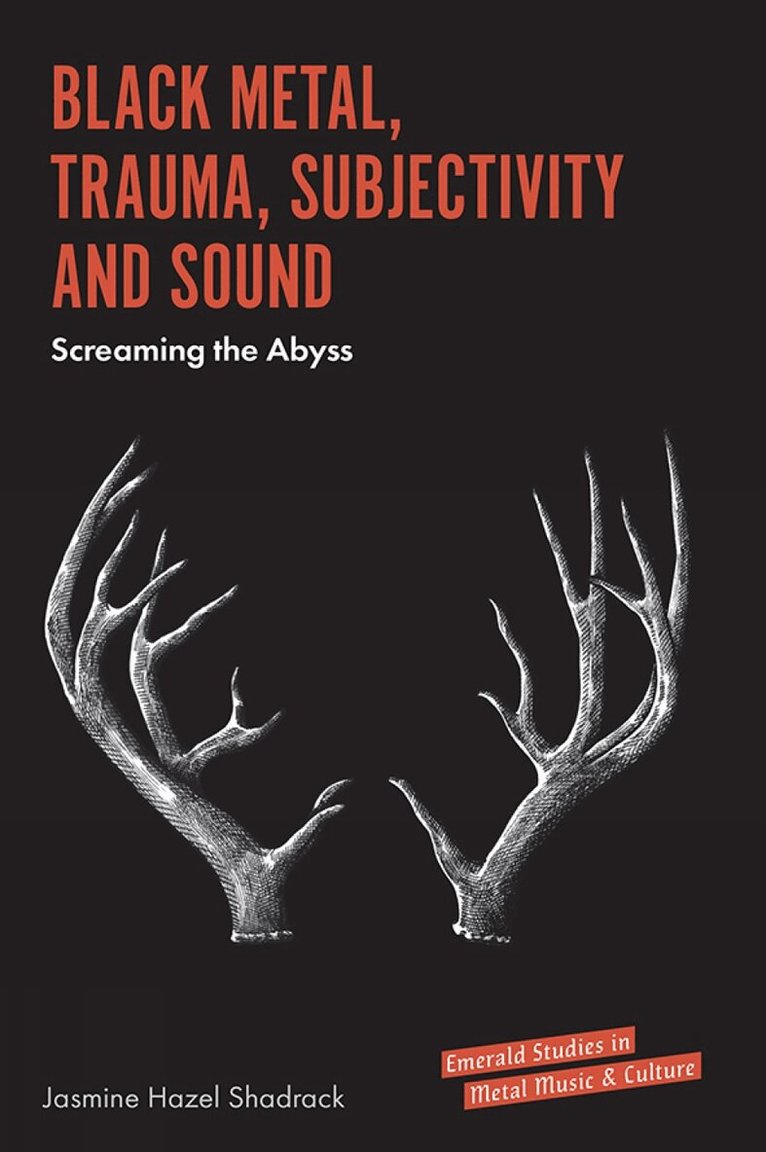
Black Metal, Trauma, Subjectivity and Sound: Screaming the Abyss weaves together trauma, black metal performance and disability into a story of both pain and freedom. Drawing on her years as a black metal guitarist, Jasmine Hazel Shadrack uses autoethnography to explore her own experiences of gender-based violence, misogyny, and the healing power of performance.This profoundly personal book offers a detailed explanation of autoethnography, followed by a careful exposition of the relationship between metal and gender, considering - among other things - how women are engaged with by metal music culture. After examining the various waves of black metal and how this has impacted black metal theory, the book moves on to consider female performers and performance as catharsis, including a discussion of the author's work as guitarist and vocalist with the black metal band Denigrata and her alter-ego, the 'antlered priestess' Denigrata Herself. The book concludes with some thoughts on acquired disability, freedom and peace.The book includes a foreword from eminent gender researcher Rosemary Lucy Hill, a guest section from metal scholar Amanda DiGioia, an epilogue from Rebecca Lamont-Jiggens (a legal pracademic specialising in disability), suggestions of sources of help for those in abusive relationships and further reading for those wishing to learn more about black metal theory.
930 kr
Skickas inom 7-10 vardagar
Defining 'Australian metal' is a challenge for scene members and researchers alike. Australian metal has long been situated in a complex relationship between local and global trends, where the geographic distance between Australia and metal music's seemingly traditional centres in the United States and United Kingdom have meant that metal in Australia has been isolated from international scenes. While numerous metal scenes exist throughout the country, 'Australian metal' itself, as a style, as a sound, and as a signifier, is a term which cannot be easily defined. This book considers the multiple ways in which 'Australianness' has been experienced, imagined, and contested throughout historical periods, within particular subgenres, and across localised metal scenes. In doing so, the collection not only explores what can be meant by Australian metal, but what can be meant by 'Australian' more generally. With chapters from researchers and practitioners across Australia, each chapter maps the distinct ways in which 'Australianness' has been grappled with in the identities, scenes, and cultures of heavy metal in the country. Authors address the question of whether there is anything particularly 'Australian' about Australian metal music, finding that often the 'Australianness' of Australian metal is articulated through wider, mythologised archetypes of national identity. However, this collection also reveals how Australianness can manifest in metal in ways that can challenge stereotypical imaginings of national identity, and assert new modes of being metal 'downungerground'.
1 066 kr
Skickas inom 7-10 vardagar
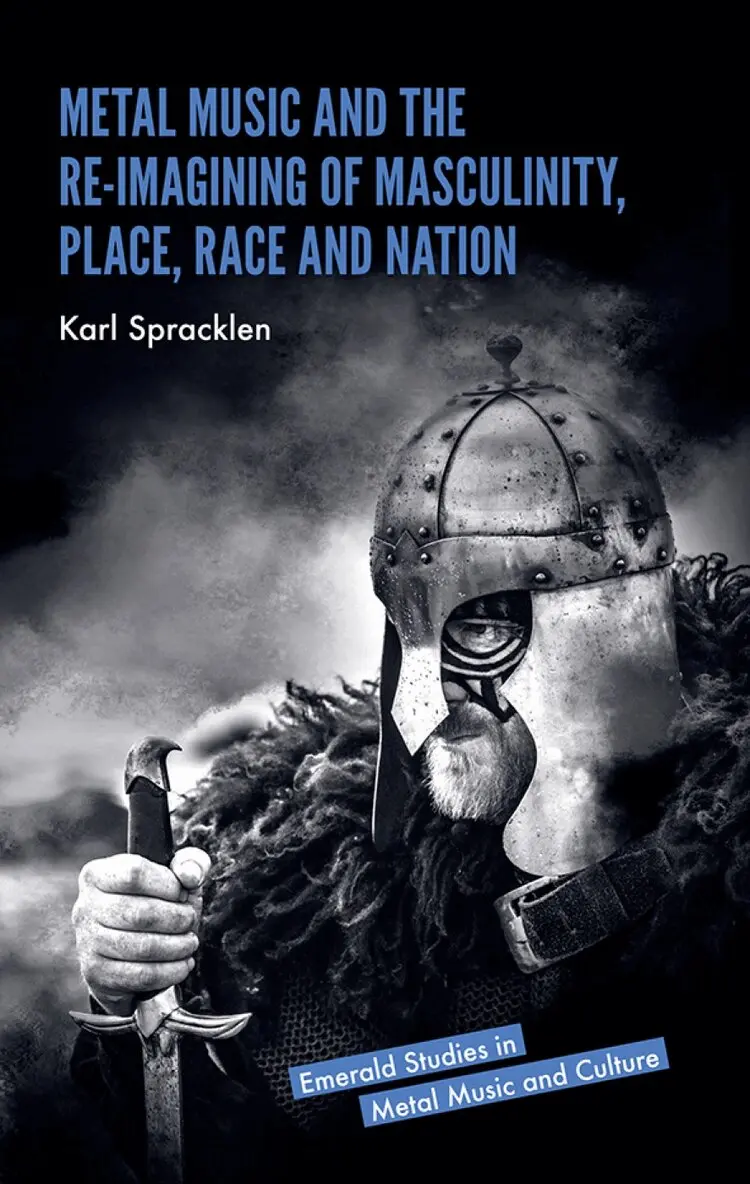
Metal is a form of popular music. Popular music is a form of leisure. In the modern age, popular music has become part of popular culture, a heavily contested collection of practices and industries that construct place, belonging and power. The arrival of Donald Trump in the White House has shown that angry white men still wield huge social and cultural power in this new century. The aim of this monograph is to explore metal music - might be seen as leisure spaces that resist the norms and values of the mainstream; but also how they might also serve to re-affirm and construct those norms and values. In particular, this book is interested in how forms of metal might work to re-imagine masculinity, race, nation and class in an intersectional way through the myth of warrior masculinity and blood and soil. This monograph explores the history of the myths, and the reaction by fans to the music. The focus is extended to bands that use the warrior-nation myth in places and countries beyond the global North, and in ways that challenge or subvert hegemony.
Multilingual Metal Music
Sociocultural, Linguistic and Literary Perspectives on Heavy Metal Lyrics
Inbunden, Engelska, 2020
1 134 kr
Skickas inom 7-10 vardagar
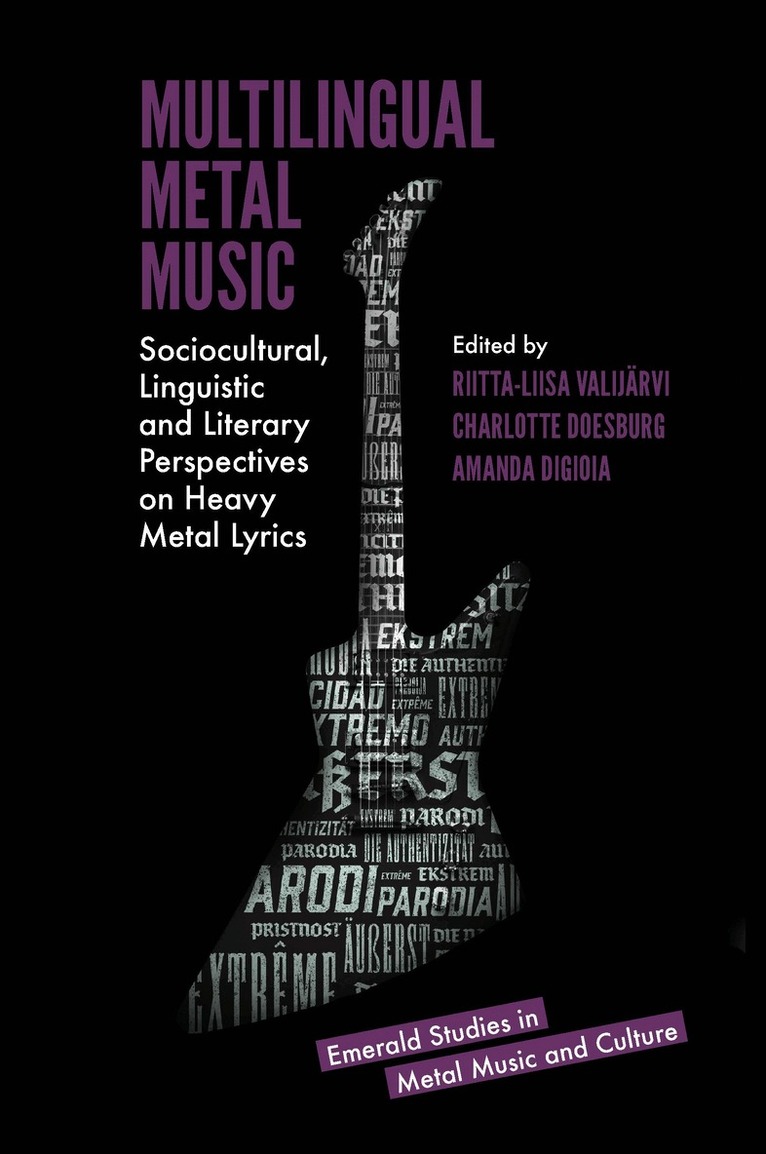
This multi-disciplinary edited collection explores the textual analysis of heavy metal lyrics written in languages other than English, including Yiddish, Latin, Russian, Austrian German, Spanish and Italian. The volume features fascinating chapters on the role of ancient language in heavy metal, the significance of metal in minority-language communities, Slovenian mythology in metal, heavy metal lyrics and politics in the Soviet Union and Taiwan, processing bereavement in Danish black metal, cultural identity in Norwegian-medium metal, and the Kawaii metal scene in Japan, amongst others.Applying a range of methodological approaches - from literary and content analysis to quantitative corpus methods and critical approaches - the book conceptualises various forms of identity via lyrical text and identifies a number of global themes in heavy metal lyrics, including authenticity, parody and the desire to sound extreme, that reoccur across different countries and languages.The book is essential reading for researchers and students of metal music and culture, as well as those with broader interests in cultural studies, musicology, literary studies and popular culture studies.