Emerging Issues in Analytical Chemistry - Böcker
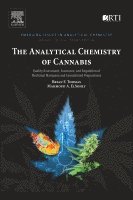
The Analytical Chemistry of Cannabis
Quality Assessment, Assurance, and Regulation of Medicinal Marijuana and Cannabinoid Preparations
510 kr
Skickas inom 7-10 vardagar
A volume in the Emerging Issues in Analytical Chemistry series, The Analytical Chemistry of Cannabis: Quality Assessment, Assurance, and Regulation of Medicinal Marijuana and Cannabinoid Preparations provides analytical chemistry methods that address the latest issues surrounding cannabis-based products. The plethora of marketed strains of cannabis and cannabinoid-containing products, combined with the lack of industry standards and labelling requirements, adds to the general perception of poor quality control and limited product oversight. The methods described in this leading-edge volume help to support the manufacturing, labelling, and distribution of safe and consistent products with known chemical content and demonstrated performance characteristics. It treats analytical chemistry within the context of the diverse issues surrounding medicinal and recreational cannabis in a manner designed to foster understanding and rational perspective in non-scientist stakeholders as well as scientists who are concerned with bringing a necessary degree of order to a field now characterized by confusion and contradiction.
Addresses current and emerging analytical chemistry methods - an approach that is unique among the literature on this topic Presents information from a broad perspective of the issues in a single compact volume Employs language comprehensible to non-technical stakeholders as well as to specialists in analytical chemistry495 kr
Skickas inom 7-10 vardagar
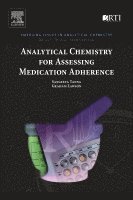
The lack of adherence to medication is a growing public health problem worldwide and is costing many patients their good health and healthcare systems billions of dollars. A new volume in the Emerging Issues in Analytical Chemistry series, Analytical Chemistry for Assessing Medication Adherence introduces the concept of medication adherence/compliance and reports international perspectives on medication adherence while highlighting its importance. It then describes the opportunities for analytical chemistry to assess medication adherence and thereby provide an evidence base for clinicians to improve patient health outcomes. The authors highlight the strengths and weaknesses of each of the analytical techniques cited in addition to categorizing the findings in terms of the biological samples used to assess adherence and identifying methods to extract biological samples prior to analysis. The final chapter provides the authors' perspective in this area, emphasising the importance of medication optimization for individual patients.
The Emerging Issues in Analytical Chemistry series is published in partnership with RTI International and edited by Brian F. Thomas. Please be sure to check out our other featured volumes:
Thomas, Brian F. and ElSohly, Mahmoud. The Analytical Chemistry of Cannabis: Quality Assessment, Assurance, and Regulation of Medicinal Marijuana and Cannabinoid Preparations, 9780128046463, December 2015. Hackney, Anthony C. Exercise, Sport, and Bioanalytical Chemistry: Principles and Practice, 9780128092064, March 2016. Rao, Vikram, Knight, Rob, and Stoner, Brian. Sustainable Shale Oil and Gas: Analytical Chemistry, Biochemistry, and Geochemistry Methods, 9780128103890, forthcoming September 2016. Farsalinos, Konstantinos, et al. Analytical Assessment of e-Cigarettes: From Contents to Chemical and Particle Exposure Profiles, 9780128112410, forthcoming November 2016. Surveys the strengths, weaknesses, and appropriateness of existing instruments and techniques and points the way toward a program of therapeutic optimization Brings together data scattered amongst professional journals and other sources in a single convenient volume Presents the problem of adherence and the authors' evaluation of possible solutions based on the analysis of patient bio-samples
510 kr
Skickas inom 7-10 vardagar
A new volume in the Emerging Issues in Analytical Chemistry series, Exercise, Sport, and Bioanalytical Chemistry: Principles and Practice focuses on the basic and applied aspects of energy metabolism in humans. Concise and scientific, yet intelligible to the nonscientist, the book consists of two parts. Part I, Introduction: Basics and Background, provides the biochemistry necessary to understand the rest of the book and describes analytical processes and results as an aid to grasping the science. Part II, Applications: Knowledge into Practice, explores measurement techniques for metabolism, energy expenditure of various activities, techniques that enhance expenditure, metabolic adaptation, foods and drugs that enhance expenditure, and the role of bioanalytical chemistry in future research in exercise and sport. Discussion of the benefits of exercise and practices for improving the capacity to perform exercise is illustrated by many useful and entertaining examples. This volume allows readers to come away with a grasp of the scientific concepts, how they are manifested in research techniques, and how the results of research can be applied in the real world of public health and personal development.
The Emerging Issues in Analytical Chemistry series is published in partnership with RTI International and edited by Brian F. Thomas. Please be sure to check out our other featured volumes:
Thomas, Brian F. and ElSohly, Mahmoud. The Analytical Chemistry of Cannabis: Quality Assessment, Assurance, and Regulation of Medicinal Marijuana and Cannabinoid Preparations, 9780128046463, December 2015. Tanna, Sangeeta and Lawson, Graham. Analytical Chemistry for Assessing Medication Adherence, 9780128054635, April 2016. Rao, Vikram, Knight, Rob, and Stoner, Brian. Sustainable Shale Oil and Gas: Analytical Chemistry, Biochemistry, and Geochemistry Methods, 9780128103890, forthcoming September 2016. Farsalinos, Konstantinos, et al. Analytical Assessment of e-Cigarettes: From Contents to Chemical and Particle Exposure Profiles, 9780128112410, forthcoming November 2016. Provides readers with the fundamental biochemistry and some elements of the physiology behind physical activity/exercise and describes the analytical techniques used to elucidate the science Written in clear, concise, compelling prose that is neither simplistic to scientists nor too sophisticated for a large, diverse global audience A one-page Close-Up in each chapter illustrates key topics to catch, engage, entertain, and create a novel synthesis of thoughtSustainable Shale Oil and Gas
Analytical Chemistry, Geochemistry, and Biochemistry Methods
513 kr
Skickas inom 7-10 vardagar
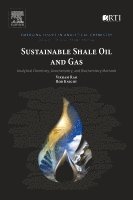
Shale oil and gas have altered the energy landscape, possibly permanently. They burst upon the fossil energy scene with a suddenness that initially defied prediction. Even the political balance of the world has changed. But, with the methods employed, the vast majority of the oil and gas remains in the ground. At the same time, serious environmental impact issues have been raised. A new volume in the Emerging Issues in Analytical Chemistry series, Sustainable Shale Oil and Gas: Analytical Chemistry, Geochemistry, and Biochemistry Methods was written on the premise that analytical methods to inform these areas were wanting. While not attempting to be comprehensive, it describes important analytical methods, some still in development. These methods are underpinned primarily by chemistry, but geochemistry and even biochemistry play significant roles. The book has a solutions flavor; problems are posed together with approaches to ameliorate them.
Provides a clear understanding of the potential environmental issues as well as a path to solutions Includes background information for understanding potential impacts of shale operations from both an environmental and public health perspective Authored by leaders from diverse disciplines with expertise in a variety of areas: groundwater quality, petroleum-related operations, microbial ecology, and electronic technologies Reviews new sensing and evaluation methods that could be key enablers to sustainable fracking: portable mass spectrometry, microbiome analysis, DNA as tracers, and a microparticulate matter detectorAnalytical Assessment of e-Cigarettes
From Contents to Chemical and Particle Exposure Profiles
560 kr
Skickas inom 7-10 vardagar
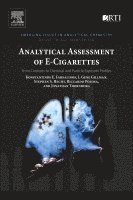
A volume in the Emerging Issues in Analytical Chemistry series, Analytical Assessment of E-Cigarettes: From Contents to Chemical and Particle Exposure Profiles addresses the many issues surrounding electronic cigarettes in an unprecedented level of scientific detail. The plethora of product devices, formulations, and flavors, combined with the lack of industry standards and labeling requirements, quality control, and limited product oversight, has given rise to public concern about initiation of use and potential for adverse exposure and negative long-term health outcomes. This volume discusses how analytical methods can address these issues and support the manufacturing, labeling, distribution, testing, regulation, and monitoring for consistency of products with known chemical content and demonstrated performance characteristics.
The book begins with the background on aerosol drug delivery services and e-cigarettes, constituents of nicotine-containing liquid dosing formulations, typical use scenarios and associated aerosol emissions, and chemical exposures and pharmacological and toxicological effect profiles, and then continues with descriptions of the analytical methods used to characterize the chemicals in formulations and emissions from e-cigarettes, including their stability, physical particle-size distribution and thermal degradation under commonly employed conditions of use.
Analytical methods enabling detection of biomarkers of exposure and harm in complex biological matrices are discussed, with an emphasis on constituents or emissions of current medicinal interest or with potential to produce harm. Opportunities and challenges for analytical chemistry in supporting the continued development and use of safe and consistent dosage formulations as alternatives to tobacco products are also explored, with a concluding section describing an analytical approach to a risk-benefit assessment of e-cigarette use on human health.
The Emerging Issues in Analytical Chemistry series is published in partnership with RTI International and edited by Brian F. Thomas. Please be sure to check out our other featured volumes: Thomas, Brian F. and ElSohly, Mahmoud. The Analytical Chemistry of Cannabis: Quality Assessment, Assurance, and Regulation of Medicinal Marijuana and Cannabinoid Preparations, 9780128046463, December 2015. Hackney, Anthony C. Exercise, Sport, and Bioanalytical Chemistry: Principles and Practice, 9780128092064, March 2016.Tanna, Sangeeta and Lawson, Graham. Analytical Chemistry for Assessing Medication Adherence, 9780128054635, April 2016.Rao, Vikram; Knight, Rob; and Stoner, Brian. Sustainable Shale Oil and Gas: Analytical Chemistry, Biochemistry, and Geochemistry Methods, 9780128103890, September 2016.
Discusses the chemistry and physics involved in aerosol production, inhalation, deposition, chemical exposure, and effect assessment Contains current information and state-of-the-science methods on e-cigarette emissions, exposures, and harm assessment Offers an authoritative, objective perspective from five of the most well-recognized scientists in their areas of expertise who have no personal stake in the e-cigarette industry or the opposition Includes a foreword written by Dr. Neal BenowitzInhaled Pharmaceutical Product Development Perspectives
Challenges and Opportunities
678 kr
Skickas inom 7-10 vardagar
Inhaled Pharmaceutical Product Development Perspectives: Challenges and Opportunities describes methods and procedures for consideration when developing inhaled pharmaceuticals, while commenting on product development strategies and their suitability to support regulatory submission. It bridges the gap between the aspirations of scientists invested in new technology development and the requirements that must be met for any new product.
The book brings together emerging analytical and inhalation technologies, providing perspectives that illuminate formulation and device design, development, regulatory compliance, and practice. Focusing on underlying scientific and technical principles known to be acceptable from the current regulatory perspective, this monograph will remain useful as a high-level guide to inhaled product development for the foreseeable future.
Discusses development strategies and best practices in the context of regulatory requirements Written by a broadly qualified expert drawing on the knowledge and critical opinions of key individuals in the field Includes a foreword by Charles G. ThielDoping, Performance-Enhancing Drugs, and Hormones in Sport
Mechanisms of Action and Methods of Detection
532 kr
Skickas inom 7-10 vardagar
Doping, Performance-Enhancing Drugs, and Hormones in Sport: Mechanisms of Action and Methods of Detection examines the biochemistry and bioanalytical aspects of performance-enhancing drugs (PEDs) and other questionable procedures used by athletes to enhance performance. The book informs the specialist of emerging knowledge and techniques and allows the non-specialist to grasp the underlying science and current practice of the discipline.
With clear and compelling language appropriate for a broad spectrum of readers, this book provides background on prevalence, types of agents, their actual or supposed benefits, and their negative effects on health. The technical aspects of detection are discussed, followed by a discussion of why detection is a problematic and still-evolving science. To facilitate comprehension, each chapter is organized in a uniform way with six sections: (1) standard medical uses, (2) why the drugs are used by athletes, (3) biological mechanism of action, (4) what research says about efficacy in improving performance, (5) major health side effects from use and abuse in sport, and 6) concluding key points.
Presents the scientific concepts of how performance enhancers work, how they are used, and how they are detected and masked from detection Features language that is neither simplistic to scientists nor too sophisticated for a large, diverse global audience Provides a short "close-up� in each chapter to illustrate key topics that engage, entertain, and create a novel synthesis of thought861 kr
Skickas inom 7-10 vardagar
Detection of Drugs and Their Metabolites in Oral Fluid presents the analytical chemistry methods used for the detection and quantification of drugs and their metabolites in human oral fluid. The authors summarize the state of the science, including its strengths, weaknesses, unmet methodological needs, and cutting-edge trends. This volume covers the salient aspects of oral fluid drug testing, including specimen collection and handling, initial testing, point of collection testing (POCT), specimen validity testing (SVT), and confirmatory and proficiency testing. Analytes discussed include amphetamines, cannabinoids, cocaine, opiates, phencyclidine, cannabimimetics, and miscellaneous drugs.
This practical guide helps users turn knowledge into practice, moving logically from an outline of the problem, to the evaluation of the appropriateness of oral fluid as a test medium, and finally to a consideration of detection methods and their validation and employment.
Compares different collection and testing systems to assist readers involved in clinical or forensic practice in selecting oral fluid as the matrix of choice Provides a sound basis for the detection of drugs and their metabolites in oral fluid and the interpretation of both positive and negative Places the need, or lack thereof, for specimen validity testing and confirmation testing in context with the purposes of oral fluid testing Describes drugs and drug classes that can be tested, along with useful information on a patient/donor's drug status1 202 kr
Skickas inom 7-10 vardagar
Analytical Methods for Biomass Characterization and Conversion is a thorough resource for researchers, students and professors who investigate the use of biomass for fuels, chemicals and products. Advanced analytical chemistry methods and techniques can now provide detailed compositional and chemical measurements of biomass, biomass conversion process streams, intermediates and products. This volume from the Emerging Issues in Analytical Chemistry series brings together the current knowledge on each of these methods, including spectroscopic methods (Fourier Transform Infrared Spectroscopy, Near-infrared Spectroscopy, Solid State Nuclear Magnetic Resonance), pyrolysis (Gas Chromatography/Mass Spectrometry), Liquid Chromatography/High Performance Liquid Chromatography, Liquid Chromatography/Mass Spectrometry, and so on.
Authors David C. Dayton and Thomas D. Foust show how these can be used for measuring biomass composition and for determining the composition of intermediates with regard to subsequent processing for biofuels, bio-chemicals and bio-based products.
Covers the broad range of techniques and applications that have been developed and perfected in the last decade Highlights specific analyses required for understanding biomass conversion to select intermediates Provides references to seminal books, review articles and technical articles that go into greater depth, serving as a basis for further studyParticulates Matter
Impact, Measurement, and Remediation of Airborne Pollutants
1 300 kr
Skickas inom 7-10 vardagar
A title in the Emerging Issues in Analytical Chemistry series, Particulates Matter: Impact, Measurement, and Remediation of Airborne Pollutants provides the latest technical findings in the study of particulate matter (PM). It links these findings to awareness-raising and actionable schemes for legislated remediation and engineered solutions. Written in an engaging and informative manner, the book begins with a multi-disciplinary overview of the major sources and unique classes of PM, detection techniques, and their impact, including molecular changes resulting in health effects. It then goes one step further by proposing and examining the means to curtail and contain PM generation and ameliorate their impacts.
Particulates Matter: Impact, Measurement, and Remediation of Airborne Pollutants offers a high-quality reference guide to PM that will greatly benefit technology leaders in environmental compliance groups, epidemiologists and other public health professionals focused on pollution and health, and researchers and scholars working in pollution, climate change, and urbanization. It may also be useful to advanced undergraduate and�early graduate students in environmental sciences.
Includes a summary of the current knowledge on nanoparticles as pollutants and their negative health effects Provides a framework for the evolution and maturation of air pollution characterization and mitigation Describes an integrated set of engineered solutions that account for the concatenated relationships between technology, policy, and society necessary for long-term successSmokeless Tobacco Products
Characteristics, Usage, Health Effects, and Regulatory Implications
1 339 kr
Skickas inom 7-10 vardagar
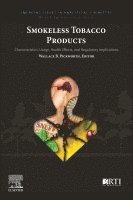
Smokeless Tobacco Products: Characteristics, Usage, Health Effects, and Regulatory Implications, a title in the Emerging Issues in Analytical Chemistry series, presents an overview of research on the second most dangerous tobacco product. This book presents findings on public health risks emanating from the complex interaction between smokeless tobacco products and their users. It covers the key components of assessment and provides insight into scientific and public health considerations. The book does not take a simplistic condemnatory position, but rather conceptualizes tobacco use in terms of graduated public health danger and harm reduction.
The book begins by introducing smokeless tobacco, its history of use, marketing, and implications for public health. It then continues with coverage of epidemiology, pathology and clinical implications, addiction, and treatment, and includes laboratory studies of human use. The following section explains the chemistry, biochemical mechanisms of carcinogenesis, and role of plant cultivation and manufacturing in toxicity. Finally, the book concludes by addressing regulatory considerations, the scientific basis of regulations, and the role of these products in harm reduction for smokers. This is the first resource of its kind to cover these topics together and in language appropriate to both specialists in the research community and informed persons responsible for legislative, funding, and public health matters in the community at large.
Brings attention to smokeless tobacco product use and its association with addiction and disease Considers smokeless tobacco use historically and currently, as well as its place in a future harm-reduction conceptualization of tobacco Written by a distinguished, internationally recognized group of tobacco researchers from academia, independent research organizations, and the federal government with expertise in the many and various disciplines covered1 300 kr
Skickas inom 7-10 vardagar
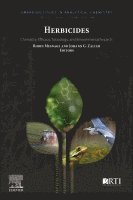
Herbicides: Chemistry, Efficacy, Toxicology, and Environmental Impacts addresses contemporary debates on herbicide toxicology. The reader is offered a comprehensive overview of this complex topic, presented by internationally recognized experts. Information presented will inform discussions on the use of herbicides in modern agricultural and other systems, and their potential non-target effects on human populations and various ecosystems. The book covers these matters in concise language appropriate to engage both specialists in the research community and informed persons responsible for legislative, funding, and public health matters in the community at large.
The use of herbicides is an essential pillar of modern agricultural production systems. Weeds, if uncontrolled, would reduce crop yield and result in massive economic damage. Recently, the heavy reliance on single herbicides has been linked to the development of weed resistance. To combat resistant weeds, farmers are advised to use a mix of several herbicides and to increase herbicide application rates. As a result, the toxicity of herbicides on human health and the environment has become a controversial topic.
Offers a comprehensive overview of herbicide science in modern agricultural systems Addresses the complex problems that can arise from herbicide use and misuse, including weed resistance, pollution, and human health issues Uses recent examples to demonstrate the topical nature of this issueRethinking Polyester Polyurethanes
Algae Based Renewable, Sustainable, Biodegradable and Recyclable Materials
1 009 kr
Skickas
The Analytical Chemistry of Cannabis
Chemistry, Pharmacology, Manufacturing, Use, and Control of Medicinal Cannabis and Cannabinoid Dosage Formulations
1 009 kr
Skickas inom 11-20 vardagar
The Analytical Chemistry of Cannabis: Chemistry, Pharmacology, Manufacturing, Use, and Control of Medicinal Cannabis and Cannabinoid Dosage Formulations: Second Edition presents advanced methods in analytical chemistry to address modern issues surrounding cannabis-based products. Since the first edition, the cannabis industry has rapidly expanded its array of recreational and medicinal products. This volume provides crucial methods to support the manufacturing, labeling, and distribution of safe, consistent products with known chemical content and performance. It offers updated information on the chemistry and pharmacology of cannabis and cannabinoids and aims to resolve industry challenges by fostering understanding among scientists, public health officials, and non-scientist stakeholders.The book is valuable for professionals in analytical chemistry, pharmacology, medicine, and law enforcement, as well as for advanced academic courses in related fields.
Addresses current and emerging analytical chemistry methods, a unique approach among the literature on this topicPresents information from a broad perspective on a range of issues in a single, concise volumeEmploys language comprehensible to non-technical stakeholders as well as to specialists in analytical chemistryIncludes core concepts in botany, analytical chemistry, and dosage formulation, as well as quality control and assurance