• Fri frakt över 249 kr
  • •
  • Snabba leveranser
  • •
  • Billiga böcker
Kundservice

Du är på sajten för privatpersoner.

Företag, bibliotek eller offentlig verksamhet?

Du handlar på classic.bokus.com, där alla dina funktioner finns intakta.
Till classic.bokus.com
Bokus logotyp. Gå till startsidan.
  • Erbjudanden
  • Nyheter
  • Student
  • Topplistor
  • Barn & ungdom
  • Bokus Play
  • E-böcker
  • Pocketböcker
  • Spel & pussel

10% rabatt på allt med kod: NYSTART10 →

Sidfot

Mina sidor

    Hjälp

    • Kundservice
    • Vanliga frågor och svar
    • Frakt och leverans
    • Retur vid ångerrätt
    • Reklamera vara
    • Betalning
    • Köpvillkor
    • Allmänna villkor
    • Information om webbplatsens tillgänglighet

    Om Bokus

    • Om oss
    • Pressrum
    • För studenter
    • För företag
    • För bibliotek och offentlig verksamhet
    • För leverantörer
    • Hållbarhet

    Populärt

    • Aktuella erbjudanden
    • Presentkort
    • Studentlitteratur
    • Nya böcker
    • Topplistor
    • Signerade böcker
    • Engelska böcker

    Inspiration

    • Boktips
    • BookTok
    • Populära bokserier
    • Barnbokskaraktärer
    • Populära författare
    Logotyp för Bokus
    Följ oss på Facebook (extern länk)Följ oss på Instagram (extern länk)Följ oss på YouTube (extern länk)Följ oss på TikTok (extern länk)
    bokus @ CookiesAnpassa cookiesIntegritetspolicyKöpvillkor
    Till Citymail hemsida (extern länk)Till Budbee hemsida (extern länk)Till Postnord hemsida (extern länk)Till Schenker hemsida (extern länk)Till Early Bird hemsida (extern länk)Till Walleys hemsida (extern länk)
    1. Naturvetenskap och teknik
    2. Geovetenskap
    3. Geovetenskap

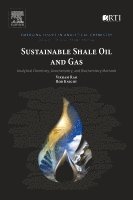
    Sustainable Shale Oil and Gas

    Analytical Chemistry, Geochemistry, and Biochemistry Methods

    AvVikram Rao,Rob Knight

    Häftad, Engelska, 2016

    Del i serien Emerging Issues in Analytical Chemistry

    524 kr

    Beställningsvara. Skickas inom 10-15 vardagar. Fri frakt över 249 kr.

    Beskrivning

    Shale oil and gas have altered the energy landscape, possibly permanently. They burst upon the fossil energy scene with a suddenness that initially defied prediction. Even the political balance of the world has changed. But, with the methods employed, the vast majority of the oil and gas remains in the ground. At the same time, serious environmental impact issues have been raised. A new volume in the Emerging Issues in Analytical Chemistry series, Sustainable Shale Oil and Gas: Analytical Chemistry, Geochemistry, and Biochemistry Methods was written on the premise that analytical methods to inform these areas were wanting. While not attempting to be comprehensive, it describes important analytical methods, some still in development. These methods are underpinned primarily by chemistry, but geochemistry and even biochemistry play significant roles. The book has a solutions flavor; problems are posed together with approaches to ameliorate them.


    • Provides a clear understanding of the potential environmental issues as well as a path to solutions
    • Includes background information for understanding potential impacts of shale operations from both an environmental and public health perspective
    • Authored by leaders from diverse disciplines with expertise in a variety of areas: groundwater quality, petroleum-related operations, microbial ecology, and electronic technologies
    • Reviews new sensing and evaluation methods that could be key enablers to sustainable fracking: portable mass spectrometry, microbiome analysis, DNA as tracers, and a microparticulate matter detector

    Produktinformation

    • Utgivningsdatum:2016-09-29
    • Mått:152 x 229 x 13 mm
    • Vikt:320 g
    • Format:Häftad
    • Språk:Engelska
    • Serie:Emerging Issues in Analytical Chemistry
    • Antal sidor:188
    • Förlag:Elsevier Science
    • ISBN:9780128103890

    Utforska kategorier

    • Geovetenskap inom Naturvetenskap och teknik
    • Energiteknik inom Naturvetenskap och teknik
    • Analytisk kemi inom Naturvetenskap och teknik

    Mer om författaren

    Vikram Rao is the executive director of the Research Triangle Energy Consortium, having assumed this position on September 1, 2008. He spent 9 years with Halliburton and another 25 with predecessor companies. Most recently, he served as senior vice president and chief technology officer responsible for Halliburton’s technology effort as well as intellectual asset management. He joined a predecessor company in 1974 as a senior research engineer. Dr. Rao currently advises the non-profit RTI International and the firms BioLargo Inc., Biota Technology Inc., Alchemy Sciences Inc., Fervo Energy Inc., Sage Geosystems Inc., Clyra Medical Technologies Inc., and Cybele Microbiome Inc. He is a past chairman of the North Carolina Mining and Energy Commission. He is the author of more than 30 publications and has been awarded 42 United States patents and foreign analogs. RTI Press released his book Shale Gas: The Promise and the Peril in July 2012 and a revised second edition in 2015. His book Sustainable Shale Oil and Gas in the Emerging Issues in Analytical Chemistry series, with Dr. Rob Knight, was released in 2016. Rao earned a doctorate and a master’s in engineering from Stanford University and holds a bachelor’s degree in engineering from the Indian Institute of Technology, Madras in Chennai, India. Rob Knight is a Professor in the Biological Sciences Graduate Program at the University of California San Diego. He received his Ph.D. from Princeton University. His research interests include the human microbiome, microbial community ecology, and multi-omics analyses. His current areas of focus are bioinformatics and glycobiology.

    Innehållsförteckning

    • 1. BackgroundPart I: Air Emissions2. Fugitive Methane and Emissions From Flaring3. Detection of Methane and Amelioration4. Particulate Matter and Volatile Organic ChemicalsPart II. The Potential for Contaminating Ground Water5. Methane in Groundwater6. Potential for Liquid Contamination of GroundwaterPart III: Improving Economics of Recovery7. Illuminating the Reservoir8. Improving Net Recovery of Fluids9. Subsurface DNA Sequencing: A New Tool for Reservoir CharacterizationPart IV: Informing Policy10. Enabling Regulations and Empowering the Public