Enhancing Reflective Teaching in Higher Education – serie
Visar alla böcker i serien Enhancing Reflective Teaching in Higher Education. Handla med fri frakt och snabb leverans.
8 produkter
8 produkter
Häftad, Engelska, 2026
370 kr
Skickas
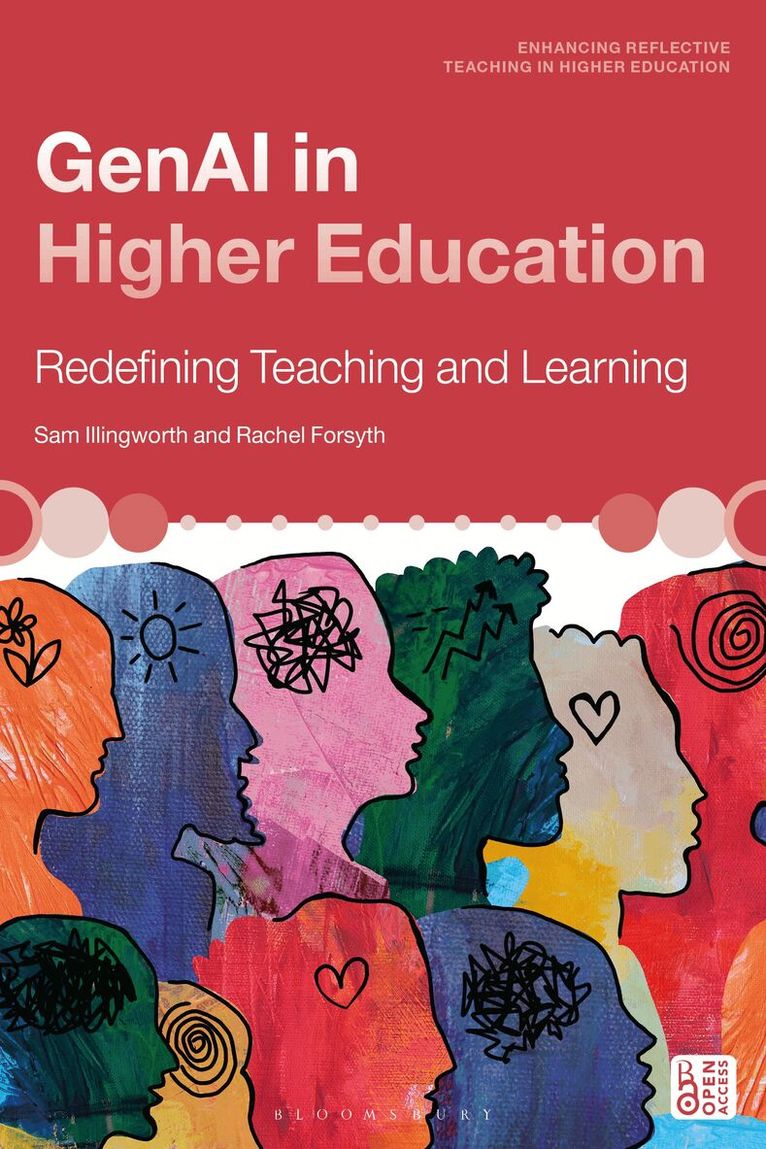
This open access book provides practical guidance for higher education professionals looking to use Generative Artificial Intelligence (GenAI) technologies. Blending theoretical grounding with real-world examples and case studies, it gives step-by-step guidance on how to evaluate, select, and implement GenAI technologies in teaching, learning, assessment, and student support. It covers topics including automating administrative processes, adapting learning resources, and critiquing outputs. Each chapter includes reflective exercises and further reading lists and shows how AI can enhance accessibility, efficiency, and creativity in higher education. Alongside this, the many challenges and ethical considerations of using AI are introduced, including issues around plagiarism, quality control, and the need to establish governance protocols.The ebook editions of this book are available open access under a CC BY-NC-ND 4.0 licence on bloomsburycollections.com. Open access was funded by Lund University.
Inbunden, Engelska, 2027
930 kr
Kommande
This volume distinguishes itself by taking a broad and philosophical perspective on teaching and the process of learning, rather than proposing yet another algorithmic approach to learning. It is intended for teaching faculty and academic support staff who want to deeply reflect on and continuously develop teaching designs that combine knowledge and action. Motivated by a concern for the societal issues and global challenges facing us, we recognize that the current generation of students will need to be agentic citizens able to act to become authentic change-makers. If students are to become critically reflective active citizens, equipped for life in its broadest sense, then teaching must engage them with disciplinary knowledge and link this to authentic practices to make learning meaningful.Meaningful learning is defined as linking knowledge-intensive processes of learning to the creation of value for others outside the university. This embodies students’ cognitive heads, conative hands, and affective hearts allowing them to become authentic change-makers. It makes the learning process holistic, embedded in the individual, and socially connected, without losing the connection to knowledge content. When a meaning-oriented format supports content and when content is enhanced through an outward-oriented format, students’ cognitive, affective, and conative domains are activated in a powerful interplay to trigger deep feelings of meaningfulness. A meaningful learning approach ensures that students become participative learners, able to reflect on their own values and combine disciplinary knowledge in collaboration with others to tackle some of today’s most pressing societal challenges.
Häftad, Engelska, 2027
318 kr
Kommande
This volume distinguishes itself by taking a broad and philosophical perspective on teaching and the process of learning, rather than proposing yet another algorithmic approach to learning. It is intended for teaching faculty and academic support staff who want to deeply reflect on and continuously develop teaching designs that combine knowledge and action. Motivated by a concern for the societal issues and global challenges facing us, we recognize that the current generation of students will need to be agentic citizens able to act to become authentic change-makers. If students are to become critically reflective active citizens, equipped for life in its broadest sense, then teaching must engage them with disciplinary knowledge and link this to authentic practices to make learning meaningful.Meaningful learning is defined as linking knowledge-intensive processes of learning to the creation of value for others outside the university. This embodies students’ cognitive heads, conative hands, and affective hearts allowing them to become authentic change-makers. It makes the learning process holistic, embedded in the individual, and socially connected, without losing the connection to knowledge content. When a meaning-oriented format supports content and when content is enhanced through an outward-oriented format, students’ cognitive, affective, and conative domains are activated in a powerful interplay to trigger deep feelings of meaningfulness. A meaningful learning approach ensures that students become participative learners, able to reflect on their own values and combine disciplinary knowledge in collaboration with others to tackle some of today’s most pressing societal challenges.
Inbunden, Engelska, 2026
1 314 kr
Kommande
Doctoral supervision is a fundamental component of academic life, contributing significantly to the advancement of research and education. However, it is also a highly complex and challenging process that requires a diverse set of skills and knowledge. In this book, a group of international experts will draw upon their extensive experience to share their insights into the best practices of doctoral supervision.The book provides readers with a comprehensive understanding of the key issues surrounding doctoral supervision. The main themes covered in the text are:– The unique character of the Doctorate as an aspect of Higher Education– The nature of supervision– Doctoral student identity– Equity, diversity, and inclusion– Assessment and feedback practices– Completion and final examinationReflective activities, case studies, and research briefings support readers to gain a deeper understanding of the complexities of doctoral supervision within any institutional or national context. The insights and experiences shared by international experts offer advice and strategies for effective supervision, from establishing positive relationships with students to providing constructive feedback and support to help with ongoing professional development of doctoral supervisors, enhance the quality of doctoral education and research, and ultimately contribute to the advancement of academia.
Häftad, Engelska, 2026
318 kr
Kommande
Doctoral supervision is a fundamental component of academic life, contributing significantly to the advancement of research and education. However, it is also a highly complex and challenging process that requires a diverse set of skills and knowledge. In this book, a group of international experts will draw upon their extensive experience to share their insights into the best practices of doctoral supervision.The book provides readers with a comprehensive understanding of the key issues surrounding doctoral supervision. The main themes covered in the text are:– The unique character of the Doctorate as an aspect of Higher Education– The nature of supervision– Doctoral student identity– Equity, diversity, and inclusion– Assessment and feedback practices– Completion and final examinationReflective activities, case studies, and research briefings support readers to gain a deeper understanding of the complexities of doctoral supervision within any institutional or national context. The insights and experiences shared by international experts offer advice and strategies for effective supervision, from establishing positive relationships with students to providing constructive feedback and support to help with ongoing professional development of doctoral supervisors, enhance the quality of doctoral education and research, and ultimately contribute to the advancement of academia.
Inbunden, Engelska, 2026
1 091 kr
Skickas inom 10-15 vardagar
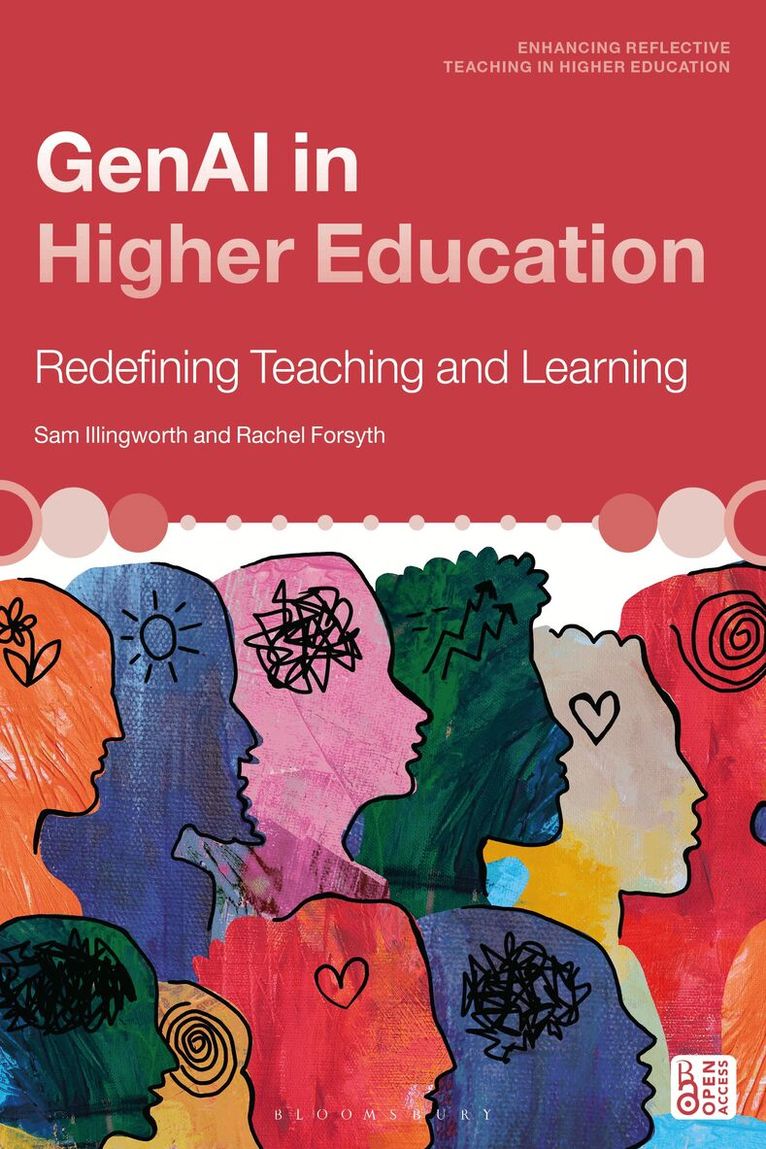
This open access book provides practical guidance for higher education professionals looking to use Generative Artificial Intelligence (GenAI) technologies. Blending theoretical grounding with real-world examples and case studies, it gives step-by-step guidance on how to evaluate, select, and implement GenAI technologies in teaching, learning, assessment, and student support. It covers topics including automating administrative processes, adapting learning resources, and critiquing outputs. Each chapter includes reflective exercises and further reading lists and shows how AI can enhance accessibility, efficiency, and creativity in higher education. Alongside this, the many challenges and ethical considerations of using AI are introduced, including issues around plagiarism, quality control, and the need to establish governance protocols.The ebook editions of this book are available open access under a CC BY-NC-ND 4.0 licence on bloomsburycollections.com. Open access was funded by Lund University.
Häftad, Engelska, 2027
387 kr
Kommande
Fully revised and updated, this 2nd edition introduces the key principles of team-based learning (TBL). Linking theory with practice and using case studies of TBL in use around the world, the book shows the effectiveness of putting individual students into small groups for promoting more active and more effective learning. As TBL has grown in popularity, the uses, applications and technologies around it have changed. The ten new chapters in the new book address these changes and cover: creating effective pre-work assignments; critical thinking and decision-making skills; peer evaluations; diverse team environments; choosing the right technology; using AI; TBL in elementary and secondary schools; TBL in governmental agencies, non-profit organizations and businesses; and using evidence. Co-authored by the founder of team-based learning, Larry K. Michaelson, the book is relevant to teaching faculty in higher education across all academic disciplines, particularly those taking institution-wide faculty development courses.
Inbunden, Engelska, 2027
1 160 kr
Kommande
Fully revised and updated, this 2nd edition introduces the key principles of team-based learning (TBL). Linking theory with practice and using case studies of TBL in use around the world, the book shows the effectiveness of putting individual students into small groups for promoting more active and more effective learning. As TBL has grown in popularity, the uses, applications and technologies around it have changed. The ten new chapters in the new book address these changes and cover: creating effective pre-work assignments; critical thinking and decision-making skills; peer evaluations; diverse team environments; choosing the right technology; using AI; TBL in elementary and secondary schools; TBL in governmental agencies, non-profit organizations and businesses; and using evidence. Co-authored by the founder of team-based learning, Larry K. Michaelson, the book is relevant to teaching faculty in higher education across all academic disciplines, particularly those taking institution-wide faculty development courses.