Sarah Robinson – författare
161 kr
Skickas inom 5-8 vardagar
860 kr
Läs direkt efter köp
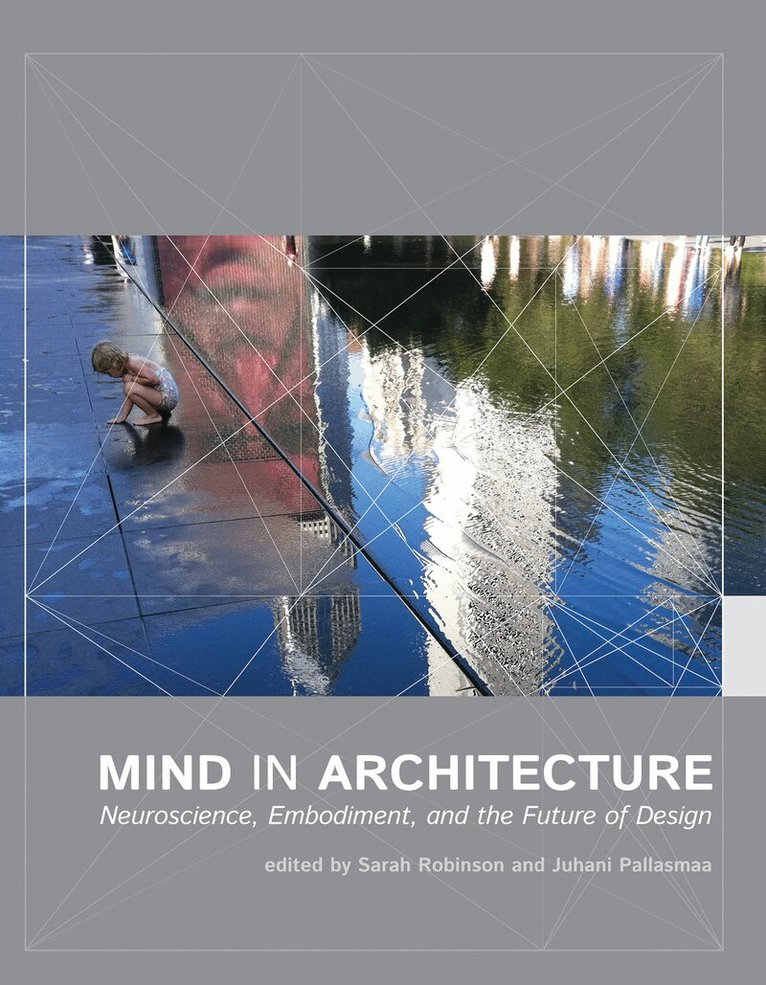
Leading neuroscientists and architects explore how the built environment affects our behavior, thoughts, emotions, and well-being.
Although we spend more than ninety percent of our lives inside buildings, we understand very little about how the built environment affects our behavior, thoughts, emotions, and well-being. We are biological beings whose senses and neural systems have developed over millions of years; it stands to reason that research in the life sciences, particularly neuroscience, can offer compelling insights into the ways our buildings shape our interactions with the world. This expanded understanding can help architects design buildings that support both mind and body. In Mind in Architecture, leading thinkers from architecture and other disciplines, including neuroscience, cognitive science, psychiatry, and philosophy, explore what architecture and neuroscience can learn from each other. They offer historical context, examine the implications for current architectural practice and education, and imagine a neuroscientifically informed architecture of the future.
Architecture is late in discovering the richness of neuroscientific research. As scientists were finding evidence for the bodily basis of mind and meaning, architecture was caught up in convoluted cerebral games that denied emotional and bodily reality altogether. This volume maps the extraordinary opportunity that engagement with cutting-edge neuroscience offers present-day architects.
ContributorsThomas D. Albright, Michael Arbib, John Paul Eberhard, Melissa Farling, Vittorio Gallese, Alessandro Gattara, Mark L. Johnson, Harry Francis Mallgrave, Iain McGilchrist, Juhani Pallasmaa, Alberto Pérez-Gómez, Sarah Robinson
1 025 kr
Skickas inom 5-8 vardagar
600 kr
Skickas inom 10-15 vardagar
2 495 kr
Skickas inom 10-15 vardagar
2 184 kr
Skickas inom 10-15 vardagar
559 kr
Skickas inom 10-15 vardagar
559 kr
Skickas inom 10-15 vardagar
559 kr
Skickas inom 10-15 vardagar
33 kr
Läs direkt efter köp
78 kr
Läs direkt efter köp
33 kr
Läs direkt efter köp
32 kr
Läs direkt efter köp
32 kr
Läs direkt efter köp
33 kr
Läs direkt efter köp
78 kr
Läs direkt efter köp
32 kr
Läs direkt efter köp
54 kr
Läs direkt efter köp
254 kr
Skickas inom 5-8 vardagar
22 kr
Läs direkt efter köp
675 kr
Läs direkt efter köp
Architecture is a Verb outlines an approach that shifts the fundamental premises of architectural design and practice in several important ways. First, it acknowledges the centrality of the human organism as an active participant interdependent in its environment. Second, it understands human action in terms of radical embodiment—grounding the range of human activities traditionally attributed to mind and cognition: imagining, thinking, remembering—in the body. Third, it asks what a building does—that is, extends the performative functional interpretation of design to interrogate how buildings move and in turn move us, how they shape thought and action. Finally, it is committed to articulating concrete situations by developing a taxonomy of human/building interactions.
Written in engaging prose for students of architecture, interiors and urban design, as well as practicing professionals, Sarah Robinson offers richly illustrated practical examples for a new generation of designers.
675 kr
Läs direkt efter köp
Architecture is a Verb outlines an approach that shifts the fundamental premises of architectural design and practice in several important ways. First, it acknowledges the centrality of the human organism as an active participant interdependent in its environment. Second, it understands human action in terms of radical embodiment—grounding the range of human activities traditionally attributed to mind and cognition: imagining, thinking, remembering—in the body. Third, it asks what a building does—that is, extends the performative functional interpretation of design to interrogate how buildings move and in turn move us, how they shape thought and action. Finally, it is committed to articulating concrete situations by developing a taxonomy of human/building interactions.
Written in engaging prose for students of architecture, interiors and urban design, as well as practicing professionals, Sarah Robinson offers richly illustrated practical examples for a new generation of designers.
757 kr
Läs direkt efter köp
There is increasing academic interest in how Pierre Bourdieu’s sociology can be applied to management and organization studies (MOS). In a context of increasing complexity faced by organizations and those who work in them due to globalization, neoliberalism, austerity, financial crisis, ecological issues, populism and developing technologies, there is untapped potential to use Bourdieu’s theoretical inventions to arrive at greater understandings of how change, transition and crisis shape work, organizational life as well as relations between different organizational and sectorial fields.
This book aims to take a specific focus on the relational nature of Bourdieu’s work and its relevance for contemporary organizations. It provides empirically-grounded examples that showcase the explanatory strength of Bourdieu´s intellectual concepts, such as field, habitus, capital, hexis, hysteresis, symbolic power, symbolic violence, doxa, illusio as applied to the current challenges within MOS. Such challenges include issues resulting from globalization, neoliberalism, financial crisis, ecological crisis, populism and developing technologies, to name but a few; and added to those, a global pandemic. The twelve chapters presented in this book study a great variety and range of organizational phenomena that are organized into three thematic sections: ‘Neoliberalism, fields and hysteresis’, ‘Global and national movements as sites for competition and symbolic domination’ and the ‘The emergence and transformation of professional fields’. The chapters show a concern with the challenges and opportunities such developments offer to MOS scholars and to managers and employees in public and private sector organizations.
It will be of interest to researchers, academics and students in the fields of organizational studies, critical management studies, human resource management and sociology.
757 kr
Läs direkt efter köp
There is increasing academic interest in how Pierre Bourdieu’s sociology can be applied to management and organization studies (MOS). In a context of increasing complexity faced by organizations and those who work in them due to globalization, neoliberalism, austerity, financial crisis, ecological issues, populism and developing technologies, there is untapped potential to use Bourdieu’s theoretical inventions to arrive at greater understandings of how change, transition and crisis shape work, organizational life as well as relations between different organizational and sectorial fields.
This book aims to take a specific focus on the relational nature of Bourdieu’s work and its relevance for contemporary organizations. It provides empirically-grounded examples that showcase the explanatory strength of Bourdieu´s intellectual concepts, such as field, habitus, capital, hexis, hysteresis, symbolic power, symbolic violence, doxa, illusio as applied to the current challenges within MOS. Such challenges include issues resulting from globalization, neoliberalism, financial crisis, ecological crisis, populism and developing technologies, to name but a few; and added to those, a global pandemic. The twelve chapters presented in this book study a great variety and range of organizational phenomena that are organized into three thematic sections: ‘Neoliberalism, fields and hysteresis’, ‘Global and national movements as sites for competition and symbolic domination’ and the ‘The emergence and transformation of professional fields’. The chapters show a concern with the challenges and opportunities such developments offer to MOS scholars and to managers and employees in public and private sector organizations.
It will be of interest to researchers, academics and students in the fields of organizational studies, critical management studies, human resource management and sociology.
686 kr
Läs direkt efter köp
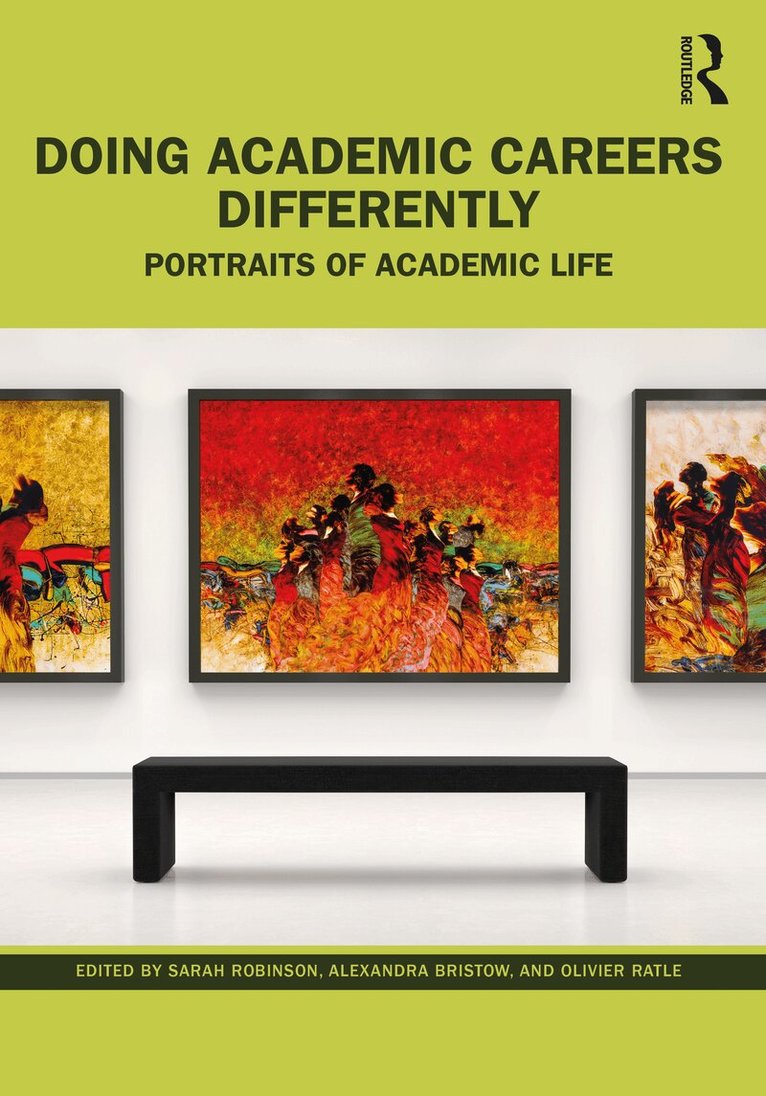
Should academic careers always unfold in exactly the same way? Is there one best way of being an academic? This book says no. Assumptions about who academics are and what they should do are becoming increasingly narrow and focused on achieving so-called ‘excellence’ in teaching and research above anything else. This book problematises this and explores the scope for doing academic careers differently.
Authors paint individual or group portraits of their academic careers, working with metaphors which challenge the dominant discourses of how academic careers should be led. From rejecting the pressure to focus on ‘one big thing’, to prioritising nurture and care, transcending disciplinary boundaries, reshaping own daily practice, connecting with communities, and being academics outside academia, the chapters in this book offer those considering, starting, or developing an academic career a treasure trove of many alternative possibilities.
Presented as a portrait gallery through which readers are encouraged to meander at will, this compilation of insights into alternative academic lives will help to inspire and encourage current academics to re-think and take ownership of their careers in their own terms, according to their own strengths, weaknesses, and circumstances.
686 kr
Läs direkt efter köp
Should academic careers always unfold in exactly the same way? Is there one best way of being an academic? This book says no. Assumptions about who academics are and what they should do are becoming increasingly narrow and focused on achieving so-called ‘excellence’ in teaching and research above anything else. This book problematises this and explores the scope for doing academic careers differently.
Authors paint individual or group portraits of their academic careers, working with metaphors which challenge the dominant discourses of how academic careers should be led. From rejecting the pressure to focus on ‘one big thing’, to prioritising nurture and care, transcending disciplinary boundaries, reshaping own daily practice, connecting with communities, and being academics outside academia, the chapters in this book offer those considering, starting, or developing an academic career a treasure trove of many alternative possibilities.
Presented as a portrait gallery through which readers are encouraged to meander at will, this compilation of insights into alternative academic lives will help to inspire and encourage current academics to re-think and take ownership of their careers in their own terms, according to their own strengths, weaknesses, and circumstances.
357 kr
Skickas inom 5-8 vardagar
200 kr
Skickas inom 5-8 vardagar
658 kr
Skickas inom 10-15 vardagar
2 355 kr
Skickas inom 10-15 vardagar