Tourism, Environment and Development Series - Böcker
Visar alla böcker i serien Tourism, Environment and Development Series. Handla med fri frakt och snabb leverans.
14 produkter
14 produkter
2 159 kr
Skickas inom 10-15 vardagar
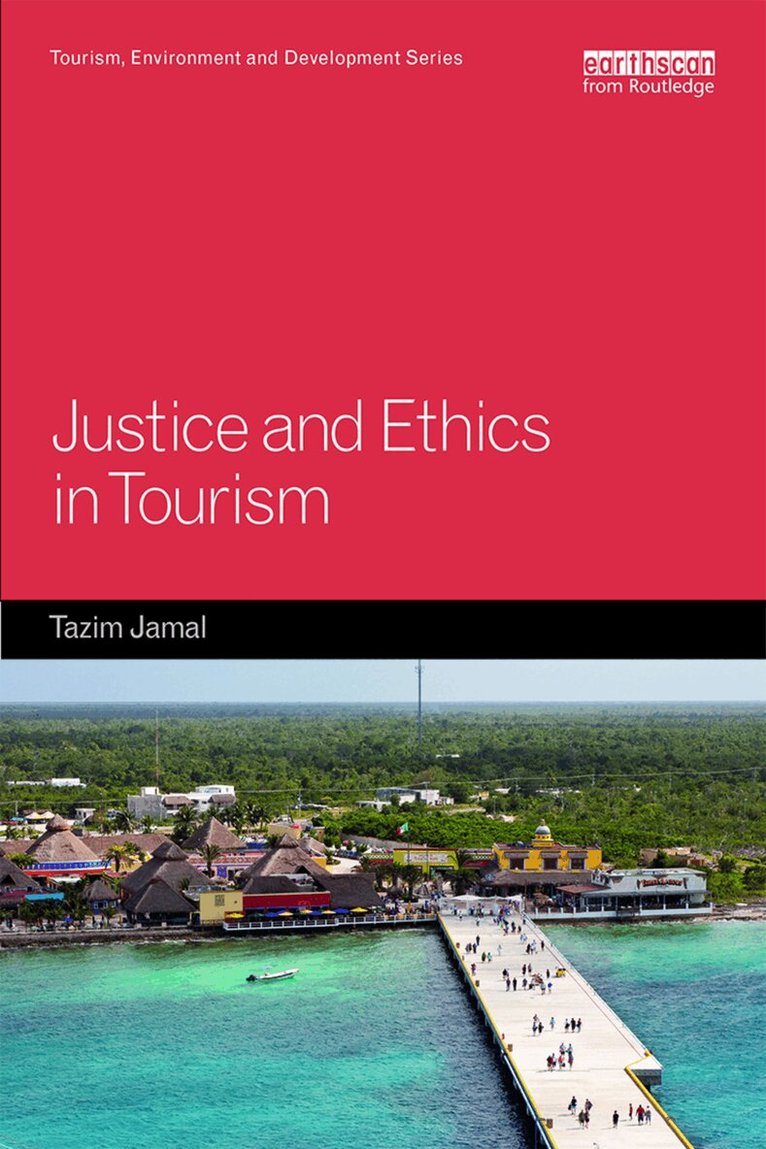
This is the first book to look at justice and ethics in tourism in one volume, bringing theoretical perspectives into conversation with tourism, development and the environment.The book explores some key ethical perspectives and approaches to justice, including building capabilities, distributive justice, recognition, representation, and democracy. Human rights, integral in the context of tourism, are discussed throughout. Space is also given to structurally embedded injustices (including those related to historical racism and colonialism), responsibility toward justice, justice within and beyond borders, and justice in the context of sustainability, governance, policy, and planning.A variety of international case studies contributed by researchers and experts from around the globe illustrate these concepts and facilitate understanding and practical application. Comprehensive and accessible, this is essential reading for students and researchers in tourism studies and will be of interest to students of geography, development studies, business and hospitality management, cultural studies, anthropology, sociology, urban planning, heritage conservation, international relations and environmental studies. The range of insights offered make this valuable reading for planners, policymakers, business managers and civil society organizations as well.
576 kr
Skickas inom 10-15 vardagar
This is the first book to look at justice and ethics in tourism in one volume, bringing theoretical perspectives into conversation with tourism, development and the environment.The book explores some key ethical perspectives and approaches to justice, including building capabilities, distributive justice, recognition, representation, and democracy. Human rights, integral in the context of tourism, are discussed throughout. Space is also given to structurally embedded injustices (including those related to historical racism and colonialism), responsibility toward justice, justice within and beyond borders, and justice in the context of sustainability, governance, policy, and planning.A variety of international case studies contributed by researchers and experts from around the globe illustrate these concepts and facilitate understanding and practical application. Comprehensive and accessible, this is essential reading for students and researchers in tourism studies and will be of interest to students of geography, development studies, business and hospitality management, cultural studies, anthropology, sociology, urban planning, heritage conservation, international relations and environmental studies. The range of insights offered make this valuable reading for planners, policymakers, business managers and civil society organizations as well.
2 159 kr
Skickas inom 10-15 vardagar
This book uniquely focuses on human rights issues associated with tourism development and tourism businesses. Tourism is a manifestation of globalization and it intersects with human rights on so many levels. These implications are increasingly relevant in light of the COVID-19 pandemic and subsequent global economic hardship.Split into two main sections, the first establishes a background to human rights issues with reference to tourism, and the second provides a multi-disciplinary analysis of a range of selected human rights issues in tourism; these include displacement, security, privacy, discrimination, freedom of movement, the rights of Indigenous people, sex tourism and labour conditions. All chapters include case studies to showcase specific issues such as legal rulings or tourism policies/regulations. This book is written by a highly regarded team of authors specializing in tourism studies and human rights law.This significant volume on the interaction between tourism development and the safeguarding of human rights will be of interest to a variety of disciplines, in the fields of tourism, political science and tourism/human rights.
590 kr
Skickas inom 10-15 vardagar
This book uniquely focuses on human rights issues associated with tourism development and tourism businesses. Tourism is a manifestation of globalization and it intersects with human rights on so many levels. These implications are increasingly relevant in light of the COVID-19 pandemic and subsequent global economic hardship.Split into two main sections, the first establishes a background to human rights issues with reference to tourism, and the second provides a multi-disciplinary analysis of a range of selected human rights issues in tourism; these include displacement, security, privacy, discrimination, freedom of movement, the rights of Indigenous people, sex tourism and labour conditions. All chapters include case studies to showcase specific issues such as legal rulings or tourism policies/regulations. This book is written by a highly regarded team of authors specializing in tourism studies and human rights law.This significant volume on the interaction between tourism development and the safeguarding of human rights will be of interest to a variety of disciplines, in the fields of tourism, political science and tourism/human rights.
2 096 kr
Skickas inom 10-15 vardagar
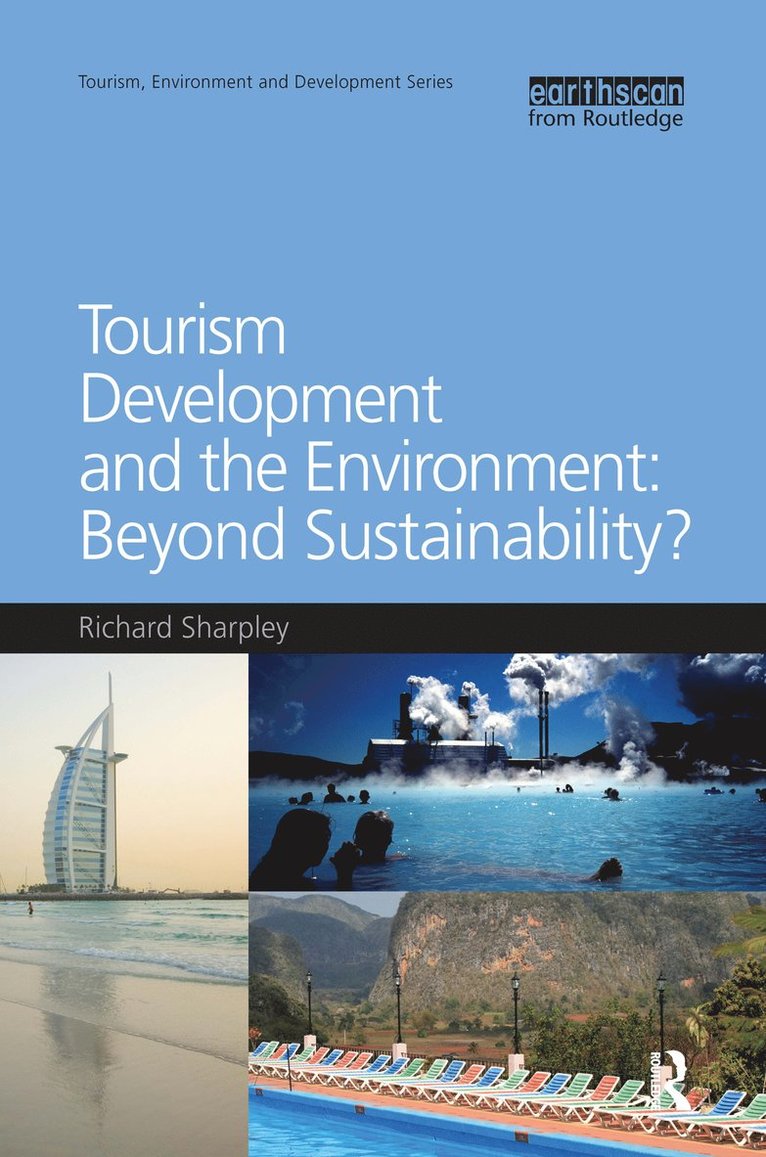
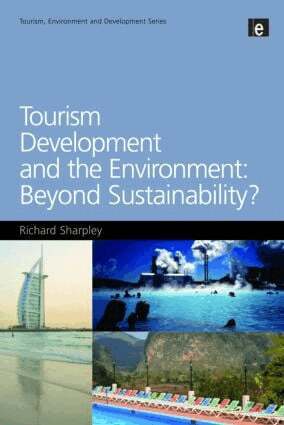
Tourism Development and the Environment: Beyond Sustainability? challenges the sustainable tourism development paradigm that has come to dominate both theoretical and practical approaches to tourism development over the last two decades. It extends the sustainable tourism debate beyond the arguably managerialist 'blueprint' and destination-focused approach that continues to characterise even the most recent 'sustainability' agenda within tourism development. Reviewing the evolution of the sustainable tourism development concept, its contemporary manifestations in academic literature and policy developments and processes, the author compares its limitations to prevailing political-economic, socio-cultural and environmental contexts. He then proposes alternative approaches to tourism development which, nevertheless, retain environmental sustainability as a prerequisite of tourism development. This book also acts as an introduction to the Earthscan series Tourism, Environment and Development.About the series: 'Tourism, Environment and Development' aims to explore, within a variety of contexts, the developmental role of tourism as it relates explicitly to its environmental consequences. Each book will review critically and challenge 'traditional' perspectives on (sustainable) tourism development, exploring new approaches that reflect contemporary economic, socio-cultural and political contexts.
640 kr
Skickas inom 10-15 vardagar
Tourism Development and the Environment: Beyond Sustainability? challenges the sustainable tourism development paradigm that has come to dominate both theoretical and practical approaches to tourism development over the last two decades. It extends the sustainable tourism debate beyond the arguably managerialist 'blueprint' and destination-focused approach that continues to characterise even the most recent 'sustainability' agenda within tourism development. Reviewing the evolution of the sustainable tourism development concept, its contemporary manifestations in academic literature and policy developments and processes, the author compares its limitations to prevailing political-economic, socio-cultural and environmental contexts. He then proposes alternative approaches to tourism development which, nevertheless, retain environmental sustainability as a prerequisite of tourism development. This book also acts as an introduction to the Earthscan series Tourism, Environment and Development.About the series: 'Tourism, Environment and Development' aims to explore, within a variety of contexts, the developmental role of tourism as it relates explicitly to its environmental consequences. Each book will review critically and challenge 'traditional' perspectives on (sustainable) tourism development, exploring new approaches that reflect contemporary economic, socio-cultural and political contexts.
2 096 kr
Skickas inom 10-15 vardagar
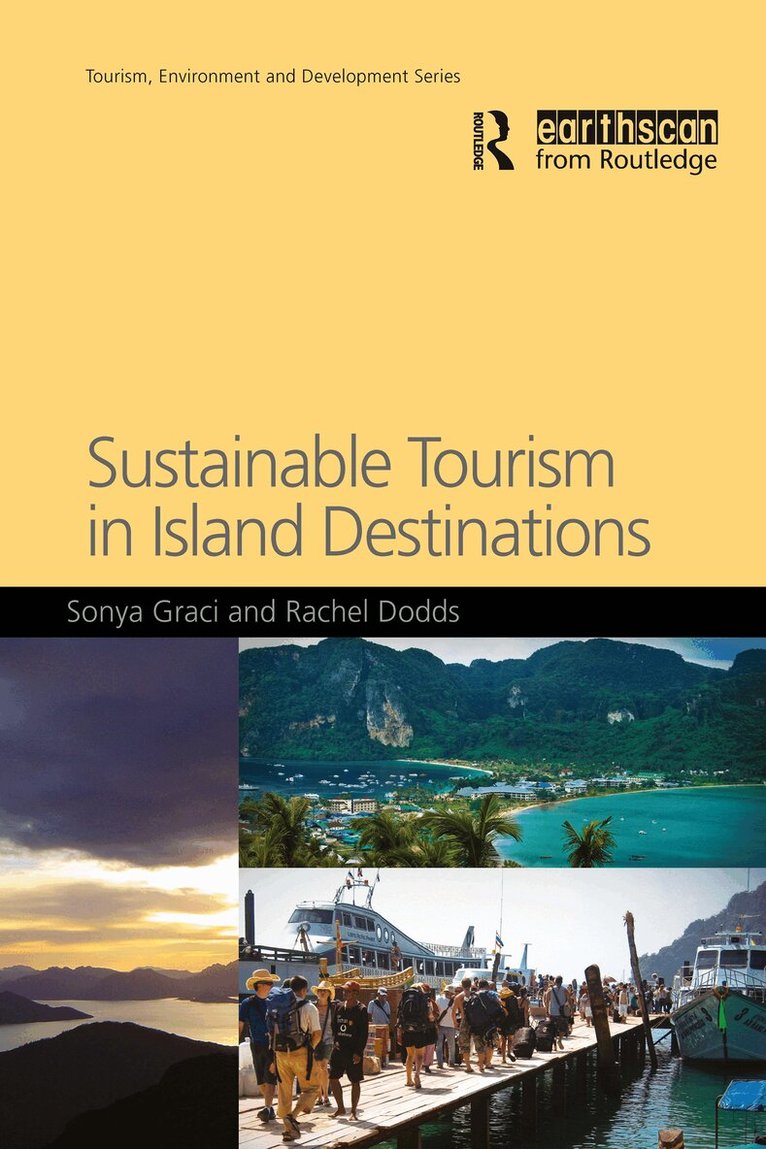
Many of the world's islands are dependent on tourism as their main source of income. It is therefore imperative that these destinations are managed for long-term viability. The natural appeal of a destination is typically one of its main tourism related assets, yet the natural environment is also the feature most directly threatened by potential overexploitation. Sustainable Tourism in Island Destinations builds on existing literature in the subject by providing innovative discussions and practical management structures through the use of the authors' various island project work. An original feature is the focus on islands which are part of larger nations, rather than just on island sovereign states. Through an illustrated case study approach, the book focuses on the successes and challenges islands face in achieving sustainable tourism. The authors put forward innovative mechanisms such as multi-stakeholder partnerships and incentive-driven non-regulatory approaches as ways that the sustainability agenda can move forward in destinations that face specific challenges due to their geography and historic development. The case studies - from Canada, St Kitts, Honduras, China, Indonesia, Spain, Tanzania and Thailand - provide the foundation which suggests that alternative approaches to tourism development are possible if they retain sustainability as a priority.
694 kr
Skickas inom 10-15 vardagar
Many of the world's islands are dependent on tourism as their main source of income. It is therefore imperative that these destinations are managed for long-term viability. The natural appeal of a destination is typically one of its main tourism related assets, yet the natural environment is also the feature most directly threatened by potential overexploitation. Sustainable Tourism in Island Destinations builds on existing literature in the subject by providing innovative discussions and practical management structures through the use of the authors' various island project work. An original feature is the focus on islands which are part of larger nations, rather than just on island sovereign states. Through an illustrated case study approach, the book focuses on the successes and challenges islands face in achieving sustainable tourism. The authors put forward innovative mechanisms such as multi-stakeholder partnerships and incentive-driven non-regulatory approaches as ways that the sustainability agenda can move forward in destinations that face specific challenges due to their geography and historic development. The case studies - from Canada, St Kitts, Honduras, China, Indonesia, Spain, Tanzania and Thailand - provide the foundation which suggests that alternative approaches to tourism development are possible if they retain sustainability as a priority.
2 159 kr
Skickas inom 10-15 vardagar
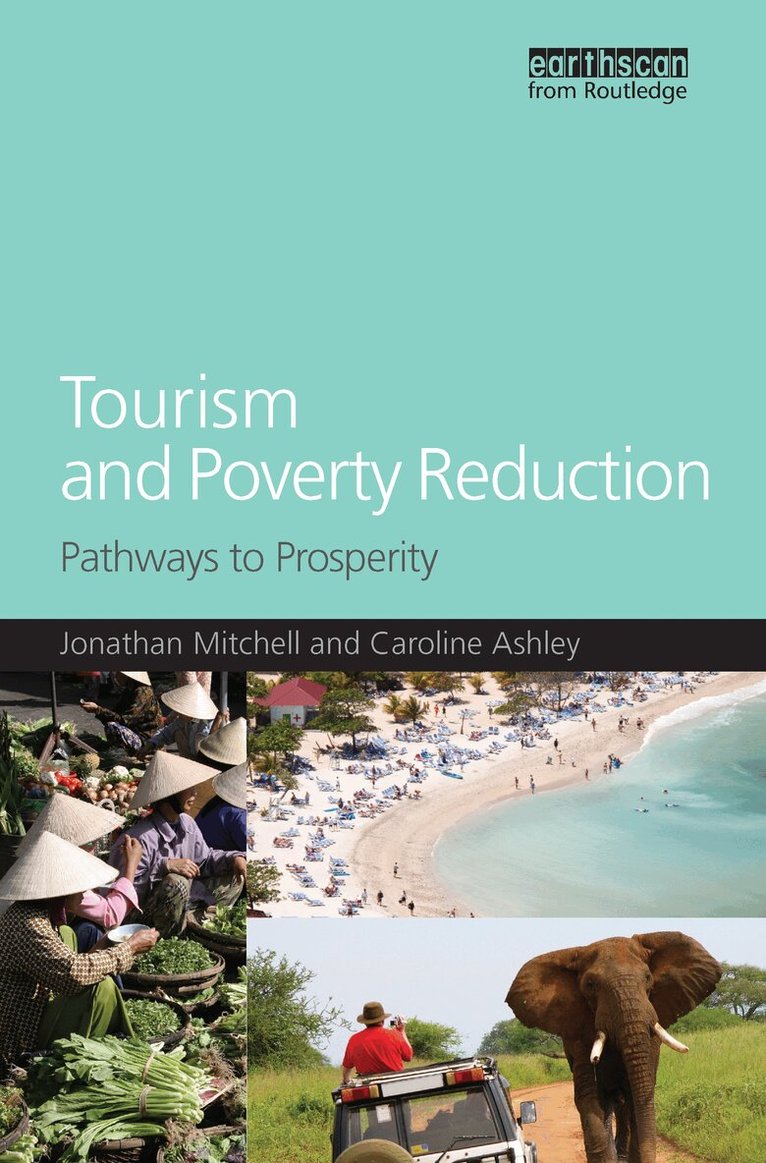
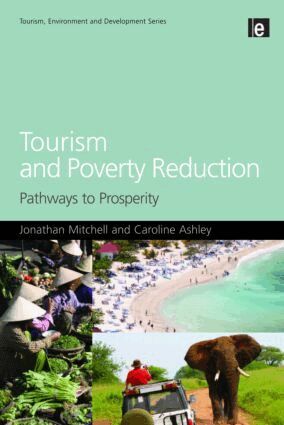
Tourism can reduce poverty in developing countries. But tourism growth is not universally inclusive of the poor. Moreover our understanding of how tourism affects the poor is largely based on partial and superficial analysis. Researchers from different disciplines and practitioners with different objectives generally work in splendid isolation from each other and from the mainstream of development economics. Detailed economic analysis remains buried and is rarely challenged for policy implications, let alone poverty implications.This book provides an overview of a broad array of analyses of how tourism affects poor people. First, it pulls these together to identify three main pathways by which impacts on poverty can be delivered. Second, it reviews the empirical evidence on the scale and significance of impacts within each pathway, exploring where comparisons can be made and where they cannot. Finally, it considers the different methods used to gather and collect data, and implications for how we should work in the future.Tourism and Poverty Reduction draws on international evidence throughout, but provides particular insights into Africa and other less developed countries. It makes a major contribution to a more coherent, cross-disciplinary and sensitive approach to the tourism-poverty debate.
590 kr
Skickas inom 10-15 vardagar
Tourism can reduce poverty in developing countries. But tourism growth is not universally inclusive of the poor. Moreover our understanding of how tourism affects the poor is largely based on partial and superficial analysis. Researchers from different disciplines and practitioners with different objectives generally work in splendid isolation from each other and from the mainstream of development economics. Detailed economic analysis remains buried and is rarely challenged for policy implications, let alone poverty implications.This book provides an overview of a broad array of analyses of how tourism affects poor people. First, it pulls these together to identify three main pathways by which impacts on poverty can be delivered. Second, it reviews the empirical evidence on the scale and significance of impacts within each pathway, exploring where comparisons can be made and where they cannot. Finally, it considers the different methods used to gather and collect data, and implications for how we should work in the future.Tourism and Poverty Reduction draws on international evidence throughout, but provides particular insights into Africa and other less developed countries. It makes a major contribution to a more coherent, cross-disciplinary and sensitive approach to the tourism-poverty debate.
2 159 kr
Skickas inom 10-15 vardagar
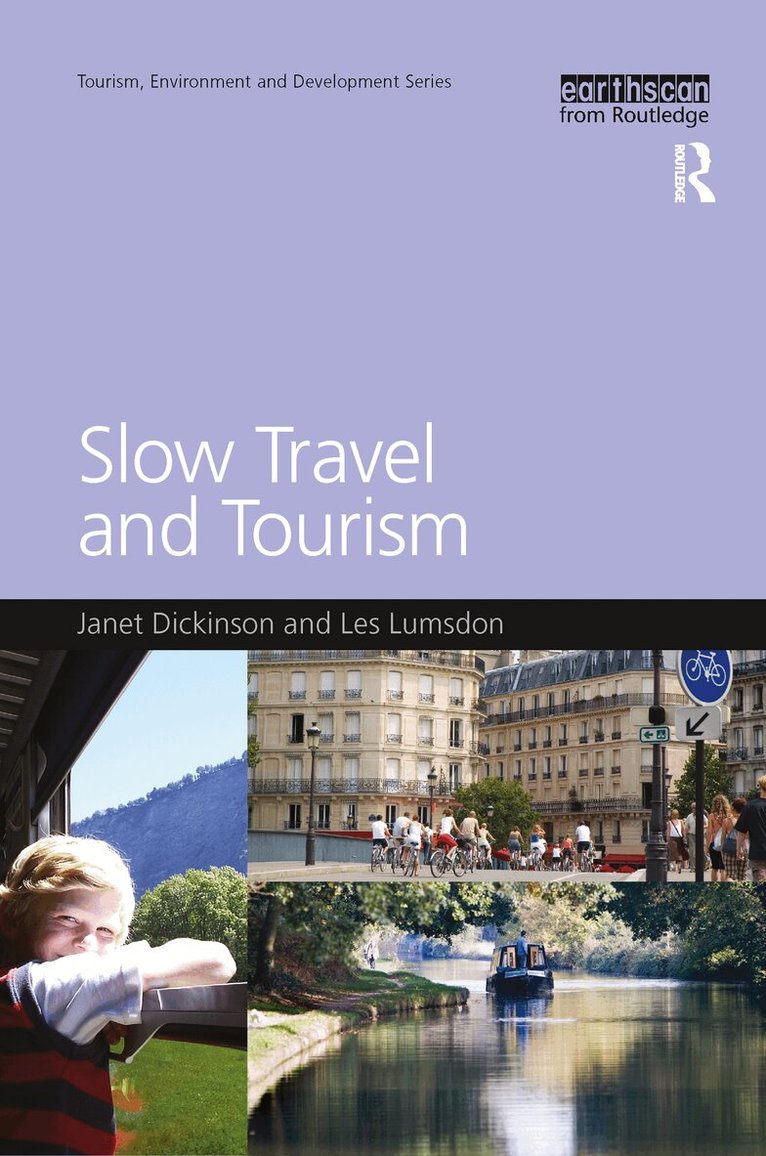
It is widely recognized that travel and tourism can have a high environmental impact and make a major contribution to climate change. It is therefore vital that ways to reduce these impacts are developed and implemented. 'Slow travel' provides such a concept, drawing on ideas from the 'slow food' movement with a concern for locality, ecology and quality of life.The aim of this book is to define slow travel and to discuss how some underlining values are likely to pervade new forms of sustainable development. It also aims to provide insights into the travel experience; these are explored in several chapters which bring new knowledge about sustainable transport tourism from across the world. In order to do this the book explores the concept of slow travel and sets out its core ingredients, comparing it with related frameworks such as low-carbon tourism and sustainable tourism development. The authors explain slow travel as holiday travel where air and car transport is rejected in favour of more environmentally benign forms of overland transport, which generally take much longer and become incorporated as part of the holiday experience. The book critically examines the key trends in tourism transport and recent climate change debates, setting out the main issues facing tourism planners. It reviews the potential for new consumption patterns, as well as current business models that facilitate hyper-mobility. This provides a cutting edge critique of the 'upstream' drivers to unsustainable tourism. Finally, the authors illustrate their approach through a series of case studies from around the world, featuring travel by train, bus, cycling and walking. Examples are drawn from Europe, Asia, Australia and the Americas. Cases include the Eurostar train (as an alternative to air travel), walking in the Appalachian Trail (US), the Euro-Velo network of long-distance cycling routes, canoe tours on the Gudena River in Denmark, sea kayaking in British Columbia (Canada) and the Oz Bus Europe to Australia.
590 kr
Skickas inom 10-15 vardagar
It is widely recognized that travel and tourism can have a high environmental impact and make a major contribution to climate change. It is therefore vital that ways to reduce these impacts are developed and implemented. 'Slow travel' provides such a concept, drawing on ideas from the 'slow food' movement with a concern for locality, ecology and quality of life.The aim of this book is to define slow travel and to discuss how some underlining values are likely to pervade new forms of sustainable development. It also aims to provide insights into the travel experience; these are explored in several chapters which bring new knowledge about sustainable transport tourism from across the world. In order to do this the book explores the concept of slow travel and sets out its core ingredients, comparing it with related frameworks such as low-carbon tourism and sustainable tourism development. The authors explain slow travel as holiday travel where air and car transport is rejected in favour of more environmentally benign forms of overland transport, which generally take much longer and become incorporated as part of the holiday experience. The book critically examines the key trends in tourism transport and recent climate change debates, setting out the main issues facing tourism planners. It reviews the potential for new consumption patterns, as well as current business models that facilitate hyper-mobility. This provides a cutting edge critique of the 'upstream' drivers to unsustainable tourism. Finally, the authors illustrate their approach through a series of case studies from around the world, featuring travel by train, bus, cycling and walking. Examples are drawn from Europe, Asia, Australia and the Americas. Cases include the Eurostar train (as an alternative to air travel), walking in the Appalachian Trail (US), the Euro-Velo network of long-distance cycling routes, canoe tours on the Gudena River in Denmark, sea kayaking in British Columbia (Canada) and the Oz Bus Europe to Australia.
2 159 kr
Skickas inom 10-15 vardagar
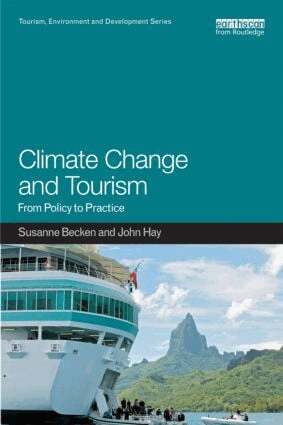
The contribution of tourism to climate change, and the likely consequences of climate change for key tourist destinations, has been well reported and discussed. Yet, there is a lack of evidence-based systematic practical advice as to how the tourism industry should respond to the challenge of climate change. Building on a sound conceptual understanding of the links between climate change and tourism, this book shows how the tourism sector might best respond. It not only focuses on the roles of supportive policies and institutions in ensuring a strong "enabling environment" for practical responses, but also on the practical responses themselves.This practical approach is presented through a large number of case studies and examples which illustrate how policy and industry initiatives have been implemented in tourism, and if or why they were successful. The majority of examples come from places such as the Caribbean, Spain, the Maldives, Nepal, and the UK, as well as Australia, New Zealand and other parts of the Pacific. The examples are presented within an overall framework that facilitates the translation of adaptation and mitigation policies into practice.This book offers the tourism industry, students and academics the opportunity to advance from the earlier, more conceptual texts on tourism and climate change by taking a much more practical approach. Its global coverage, through the use of international case studies, fosters a cross-fertilisation of ideas and initiatives. This text provides a detailed analysis of best practices in the face of climate change, across countries and geographically diverse tourist destinations and operations.
826 kr
Skickas inom 10-15 vardagar
The contribution of tourism to climate change, and the likely consequences of climate change for key tourist destinations, has been well reported and discussed. Yet, there is a lack of evidence-based systematic practical advice as to how the tourism industry should respond to the challenge of climate change. Building on a sound conceptual understanding of the links between climate change and tourism, this book shows how the tourism sector might best respond. It not only focuses on the roles of supportive policies and institutions in ensuring a strong "enabling environment" for practical responses, but also on the practical responses themselves.This practical approach is presented through a large number of case studies and examples which illustrate how policy and industry initiatives have been implemented in tourism, and if or why they were successful. The majority of examples come from places such as the Caribbean, Spain, the Maldives, Nepal, and the UK, as well as Australia, New Zealand and other parts of the Pacific. The examples are presented within an overall framework that facilitates the translation of adaptation and mitigation policies into practice.This book offers the tourism industry, students and academics the opportunity to advance from the earlier, more conceptual texts on tourism and climate change by taking a much more practical approach. Its global coverage, through the use of international case studies, fosters a cross-fertilisation of ideas and initiatives. This text provides a detailed analysis of best practices in the face of climate change, across countries and geographically diverse tourist destinations and operations.