Society, Environment and Statistics – serie
Visar alla böcker i serien Society, Environment and Statistics. Handla med fri frakt och snabb leverans.
8 produkter
8 produkter
Inbunden, Engelska, 2023
1 404 kr
Skickas inom 10-15 vardagar
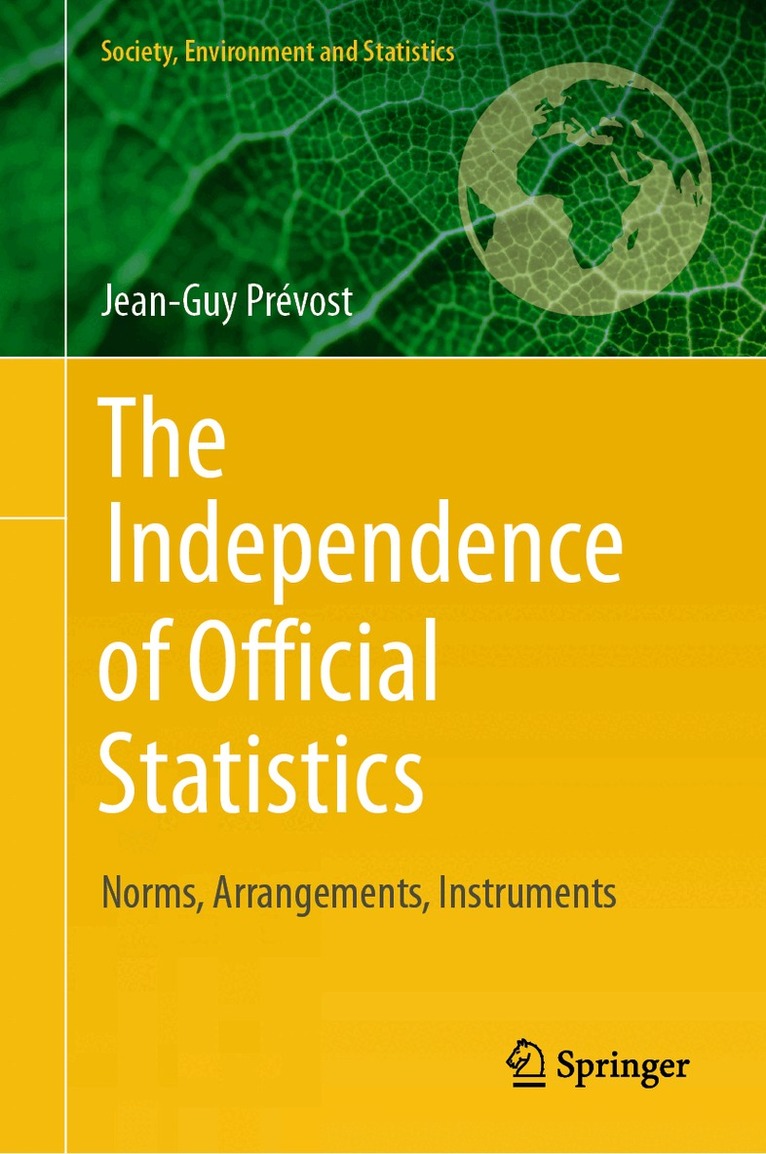
This book explores the independence of official statistics and describes the various legal and professional norms, institutional arrangements, instruments and practices that statisticians have developed over recent decades to protect their work from political interference. It argues that this ‘drive for independence’, which saw the replication of these norms, arrangements, and instruments across countries, was largely led by the international epistemic community of statisticians, and it identifies some of the paths and processes that enabled this drive.The study conducts an overall, multi-dimensional, and detailed comparative examination of the thirty-eight OECD countries’ norms, arrangements, and practices regarding the institutional and professional independence of official statistics. For that purpose, several dimensions have been surveyed and an index has been built that allows patterns and clusters to be uncovered among the OECD countries, shedding light on the variationsthat can be observed from one subgroup of countries to another.The issue of the independence of official statistics has been at the heart of several recent statistical controversies, including that of Greece’s debt, censuses in Canada and the United States, the Argentinian cost of living index, and some recent cases of resignation or dismissal of senior statisticians in various countries. Such independence has been a major topic of discussion in the epistemic community since the turn of the century, and concerns have also been addressed more widely, in the media. The subject of the book is particularly relevant as official statistics also play a significant role in monitoring the progress of the United Nations’ Sustainable Development Goals. This book will appeal to anyone interested in the topic of official statistics and to students of government in general.
Häftad, Engelska, 2024
1 082 kr
Skickas inom 10-15 vardagar
This book explores the independence of official statistics and describes the various legal and professional norms, institutional arrangements, instruments and practices that statisticians have developed over recent decades to protect their work from political interference. It argues that this ‘drive for independence’, which saw the replication of these norms, arrangements, and instruments across countries, was largely led by the international epistemic community of statisticians, and it identifies some of the paths and processes that enabled this drive.The study conducts an overall, multi-dimensional, and detailed comparative examination of the thirty-eight OECD countries’ norms, arrangements, and practices regarding the institutional and professional independence of official statistics. For that purpose, several dimensions have been surveyed and an index has been built that allows patterns and clusters to be uncovered among the OECD countries, shedding light on the variationsthat can be observed from one subgroup of countries to another.The issue of the independence of official statistics has been at the heart of several recent statistical controversies, including that of Greece’s debt, censuses in Canada and the United States, the Argentinian cost of living index, and some recent cases of resignation or dismissal of senior statisticians in various countries. Such independence has been a major topic of discussion in the epistemic community since the turn of the century, and concerns have also been addressed more widely, in the media. The subject of the book is particularly relevant as official statistics also play a significant role in monitoring the progress of the United Nations’ Sustainable Development Goals. This book will appeal to anyone interested in the topic of official statistics and to students of government in general.
Inbunden, Engelska, 2025
1 942 kr
Skickas inom 5-8 vardagar
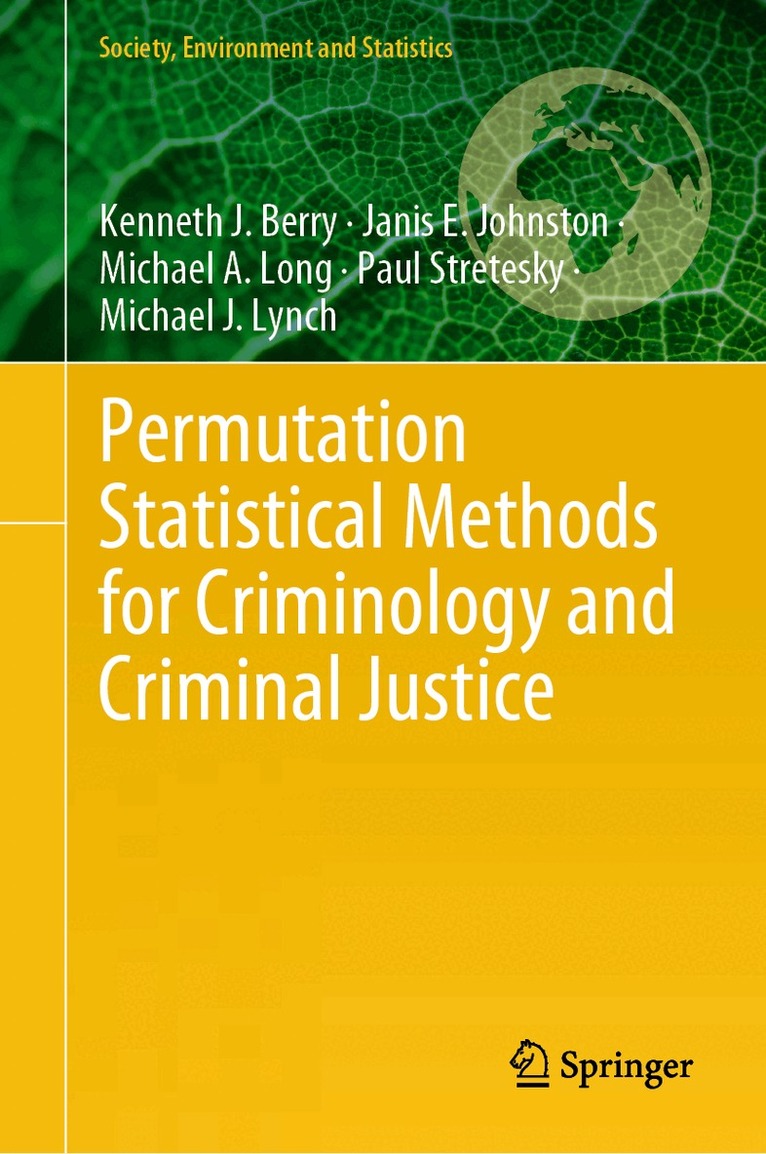
This book takes a unique approach to explaining permutation statistical methods for advanced undergraduate students, graduate students, faculty, researchers, and other professionals interested in the areas of criminology or criminal justice. The book integrates permutation statistical methods with a wide range of classical statistical methods. It opens with a comparison of two models of statistical inference: the classical population model espoused by J. Neyman and E. Pearson and the permutation model first introduced by R.A. Fisher and E.J.G. Pitman. Numerous comparisons of permutation and classical statistical methods are illustrated with examples from criminology and criminal justice and supplemented with a variety of R scripts for ease of computation. The text follows the general outline of an introductory textbook in statistics with chapters on central tendency, variability, one-sample tests, two-sample tests, matched-pairs tests, completely-randomized analysis of variance, randomized-blocks analysis of variance, simple linear regression and correlation, and the analysis of goodness of fit and contingency.Unlike classical statistical methods, permutation statistical methods do not rely on theoretical distributions, avoid the usual assumptions of normality and homogeneity, depend solely on the observed data, and do not require random sampling, making permutation statistical methods ideal for analyzing criminology and criminal justice databases. Permutation methods are relatively new in that it took modern computing power to make them available to those working in criminology and criminal justice research.The book contains detailed examples of permutation analyses. Each analysis is paired with a conventional analysis; for example, a permutation test of the difference between experimental and control groups is contrasted with Student's two-sample $t$ test. An added feature is the inclusion of multiple historical notes on the origin and development of both parametric and conventional tests and measures. Designed for an audience with a basic statistical background and a strong interest in parametric and non-parametric statistics, the book can easily serve as a textbook for undergraduate and graduate students in criminology, criminal justice, or sociology, as well as serving as a research source for faculty, researchers, and other professionals in the area of criminology. No statistical training beyond a first course in statistics is required, but some knowledge of, or interest in, criminology or criminal justice is assumed.
Inbunden, Engelska, 2025
1 225 kr
Skickas inom 10-15 vardagar
This book provides a comprehensive introduction to statistical approaches for the assessment of complex environmental exposures, such as pollutants and chemical mixtures, within the exposome framework. Environmental mixtures are defined as groups of 3 or more chemical/pollutants, simultaneously present in nature, consumer products, or in the human body. Assessing the health effects of environmental mixtures poses several methodological challenges due to the high levels of correlation that are often present between environmental chemicals, and by the need of incorporating flexible non-additive and non-linear effects that can capture and describe the complex mechanisms by which environmental exposure contribute to diseases. Several statistical approaches are proposed and discussed, including the application of regression-based approaches (e.g. penalized regression such as LASSO and elastic net, or Bayesian variable selection) for environmental exposures, and novel methods (e.g. weighted quantile sum regression, or Bayesian Kernel Machine Regression) that account for specific complexities of environmental exposures. More recent efforts included are the application of machine learning approaches (e.g. gradient boosting) for environmental data. Statistical Methods for Environmental Mixtures describes the statistical challenges that commonly arise when dealing with environmental exposures and provides an introduction to different statistical approaches for such data. Over the last decade, substantial efforts have been made to transition the statistical framework for environmental exposures in epidemiologic studies from a single-chemical/pollutant to a multi-chemicals/pollutants approach. This book provides a comprehensive introduction to this modern multi-chemicals/pollutants framework. Emphasis is given to interpretability, discussing issues with causal interpretation and translation of scientific finding when applying the discussed statistical approaches for complex environmental exposures.The target audience includes researchers in environmental epidemiology and applied statisticians working in the field. As such, while rigorously presenting the statistical methodologies, the book keeps an applied focus, discussing those settings where each method is appropriate for use and for which question it can be applied, providing examples of accurate presentation and interpretation from the literature, including a basic introduction to R packages and tutorials, as well as discussing assumptions and practical challenges when applying these techniques on real data.
Häftad, Engelska, 2026
906 kr
Skickas inom 10-15 vardagar
This book provides a comprehensive introduction to statistical approaches for the assessment of complex environmental exposures, such as pollutants and chemical mixtures, within the exposome framework. Environmental mixtures are defined as groups of 3 or more chemical/pollutants, simultaneously present in nature, consumer products, or in the human body. Assessing the health effects of environmental mixtures poses several methodological challenges due to the high levels of correlation that are often present between environmental chemicals, and by the need of incorporating flexible non-additive and non-linear effects that can capture and describe the complex mechanisms by which environmental exposure contribute to diseases. Several statistical approaches are proposed and discussed, including the application of regression-based approaches (e.g. penalized regression such as LASSO and elastic net, or Bayesian variable selection) for environmental exposures, and novel methods (e.g. weighted quantile sum regression, or Bayesian Kernel Machine Regression) that account for specific complexities of environmental exposures. More recent efforts included are the application of machine learning approaches (e.g. gradient boosting) for environmental data. Statistical Methods for Environmental Mixtures describes the statistical challenges that commonly arise when dealing with environmental exposures and provides an introduction to different statistical approaches for such data. Over the last decade, substantial efforts have been made to transition the statistical framework for environmental exposures in epidemiologic studies from a single-chemical/pollutant to a multi-chemicals/pollutants approach. This book provides a comprehensive introduction to this modern multi-chemicals/pollutants framework. Emphasis is given to interpretability, discussing issues with causal interpretation and translation of scientific finding when applying the discussed statistical approaches for complex environmental exposures.The target audience includes researchers in environmental epidemiology and applied statisticians working in the field. As such, while rigorously presenting the statistical methodologies, the book keeps an applied focus, discussing those settings where each method is appropriate for use and for which question it can be applied, providing examples of accurate presentation and interpretation from the literature, including a basic introduction to R packages and tutorials, as well as discussing assumptions and practical challenges when applying these techniques on real data.
Inbunden, Engelska, 2025
544 kr
Skickas inom 10-15 vardagar
This Open access book gives an overview of current research and developments on the incorporation of machine learning in official statistics. It covers methodological questions, practical aspects and cross-cutting issues.Machine learning has become an integral part of official statistics over the last decade. This is evident in its many applications in numerous countries and organisations. At the same time, the integration of machine learning into statistical production raises questions about the right mathematical and statistical methodology, the consideration of quality standards and the appropriate IT support. In its four sections, "Methodological aspects", "Legal, ethical, and quality aspects", "Technological aspects" and "Use cases and insights", the book highlights current developments, provides inspiration, outlines challenges and offers possible solutions. It is aimed at methodologists in statistical offices and comparable institutions as well as scientists who are concerned with the further development and responsible use of machine learning
Inbunden, Engelska, 2024
437 kr
Skickas inom 10-15 vardagar
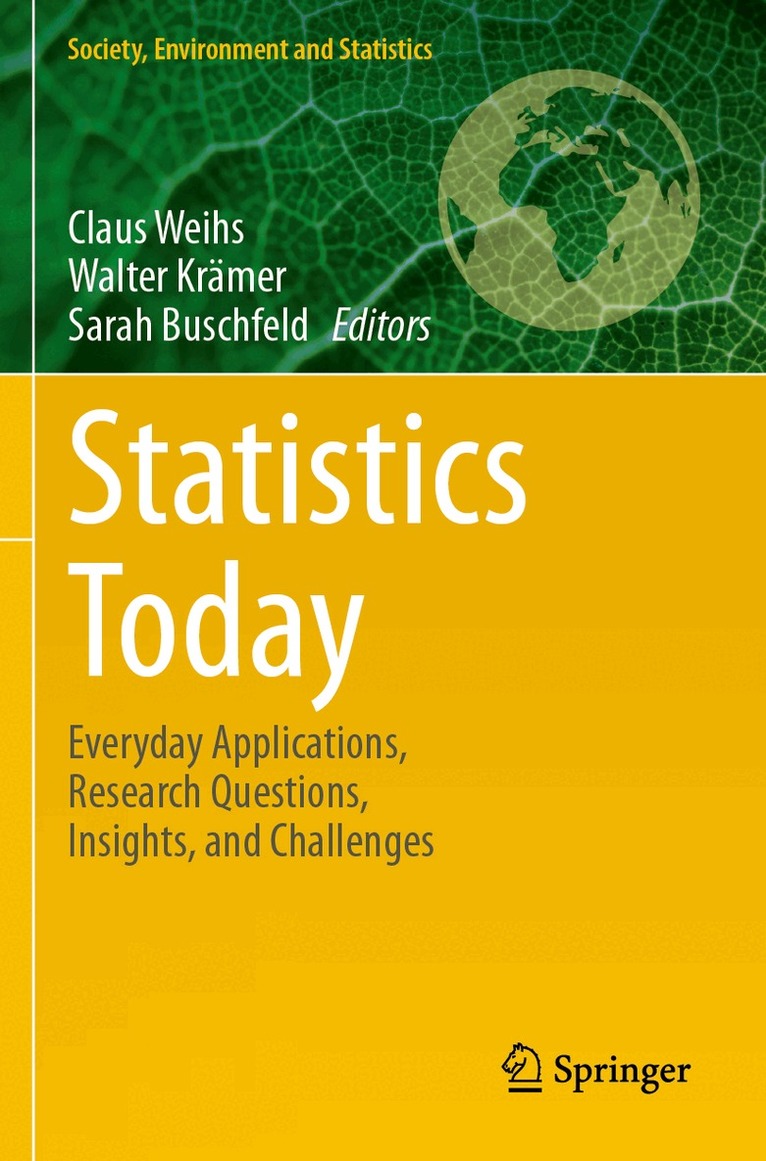
This book offers a broad selection of statistical applications to everyday situations, illustrating how exciting and diverse statistical analysis can be. It covers a wide variety of topics, including offering hearing-impaired people the option to enjoy music, extracting meaningful quantitative data from texts, and modeling flood disasters to help get a better grip on them. Most of the examples are not typically found in textbooks but directly relate to real-life problems encountered by the “average person”, including topics relevant for sustainable development.Technical jargon and formalism have been avoided as much as possible, and a detailed statistical background is not assumed of the reader, making the book accessible to anyone interested in current research in statistical applications. Providing an unobscured look at a thoroughly fascinating science, it will help students to develop enthusiasm for statistical issues and methods, and may even inspire ideas for their own projects.
Häftad, Engelska, 2025
437 kr
Skickas inom 10-15 vardagar
This book offers a broad selection of statistical applications to everyday situations, illustrating how exciting and diverse statistical analysis can be. It covers a wide variety of topics, including offering hearing-impaired people the option to enjoy music, extracting meaningful quantitative data from texts, and modeling flood disasters to help get a better grip on them. Most of the examples are not typically found in textbooks but directly relate to real-life problems encountered by the “average person”, including topics relevant for sustainable development.Technical jargon and formalism have been avoided as much as possible, and a detailed statistical background is not assumed of the reader, making the book accessible to anyone interested in current research in statistical applications. Providing an unobscured look at a thoroughly fascinating science, it will help students to develop enthusiasm for statistical issues and methods, and may even inspire ideas for their own projects.