Europe and the World - Böcker
Visar alla böcker i serien Europe and the World. Handla med fri frakt och snabb leverans.
5 produkter
5 produkter
541 kr
Skickas inom 10-15 vardagar
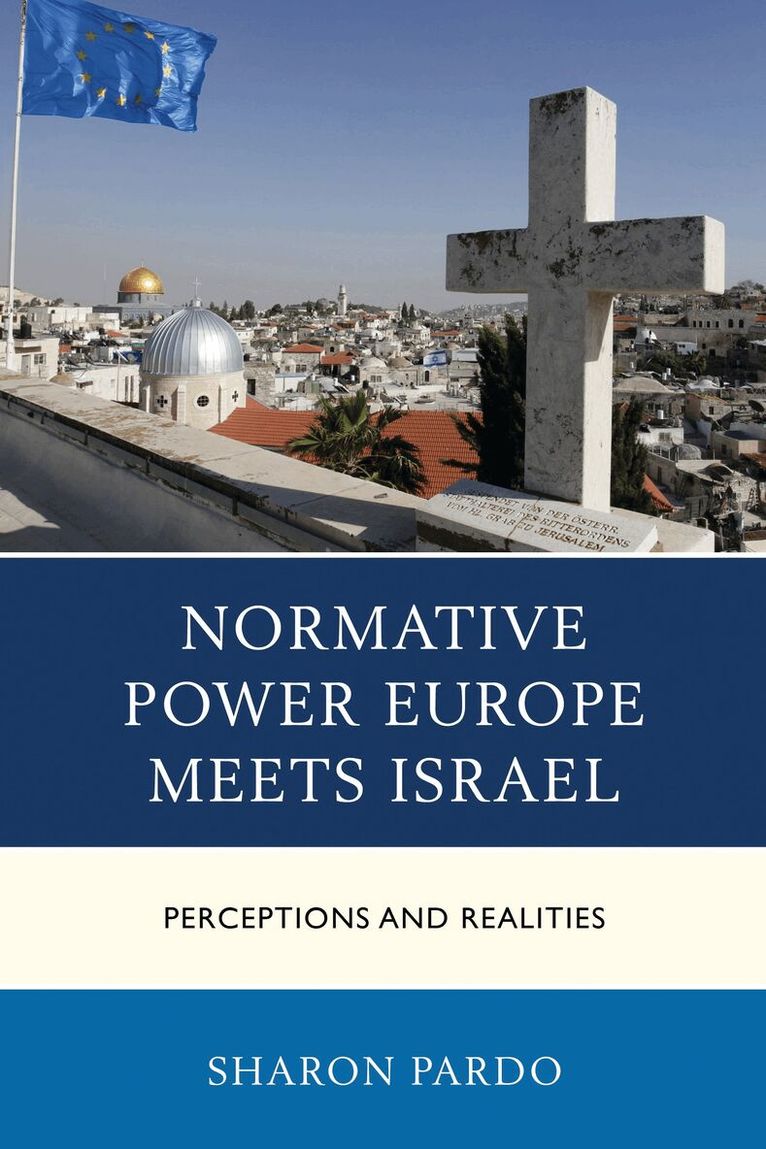
The book draws on some of the scholarship in perception studies and “Normative Power Europe” theory. The study of perceptions, although dating back to the mid-1970s, is gaining renewed currency in recent years both in international relations, in general, and in European Union studies, in particular. And yet, despite the significance of external perceptions of the European Union, there is still a lack of theoretical forays into this area as well as an absence of empirical investigations of actual external role conceptions. These lacunae in scholarly work are significant, since how the European Union is perceived outside its borders, and what factors shape these perceptions, are crucial for deepening the theory of “Normative Power Europe.” The book analyzes Israeli perceptions towards “Normative Power Europe,” the European Union, and NATO through five themes that, the book argues, underscore different dimensions of key Israeli conceptions of “Normative Power Europe” and NATO. The book seeks to contribute to the existing research on the European Union’s role as a “normative power,” the Union’s external representations, and on Israeli-European Union relations more broadly.
1 142 kr
Skickas inom 10-15 vardagar
Commencing in 2001, the Europa Lecture has become a high-profile fixture on the EU-New Zealand calendar. As witnessed by the fifteen lectures reproduced in this new volume, the speakers were selected for both their high-level profile as well as their importance to this bilateral dialogue. This volume includes speeches from three Prime Ministers, a President, four European Commissioners as well as four Foreign Ministers both European and New Zealanders. Each lecture, naturally, reflects the important issues of their day and cumulatively they produced a unique record of how EU-New Zealand relations have evolved, matured and continued to converge since the start of the new millennium. The earlier lectures reflect a general optimism in the European integration project, perhaps best highlighted by the historic enlargement of 1st May 2004. However, with the onset of the global financial crisis and then subsequent Eurozone debt crisis, the anticipated trajectory towards a supranational “ever closer union” was interrupted and the EU found itself confronting a period of both internal and external criticism and anxiety. It was in these less than auspicious times that significant effort towards enhancing New Zealand’s bilateral relations with the EU gained momentum. These initiatives are expected to bear fruit in 2016 with the signing of a Partnership Agreement on Relations and Cooperation and – BREXIT not withstanding – a fully-fledged EU-NZ Free Trade Agreement before 2020. This collection of lectures ends just as the rise in Euroscepticism became evident and the first serious murmurings of BREXIT could be detected within British politics. The impact the UK’s decision will have on EU-New Zealand relations remains uncertain although, as the introductory chapter to this volume suggests, since 2015 New Zealand’s media have seemingly begun to conflate coverage of the EU as being tantamount to BREXIT. If this trend does come to dominate the New Zealand media landscape then Kiwi perceptions towards Europe run a risk of becoming unbalanced and a “Back to the Future” perspective reflecting the difficulties of the 1970s may again come shape perceptions.
1 142 kr
Skickas inom 10-15 vardagar
Deconstructing “Ideal Power Europe”: The EU and Arab Change criticizes the dominant discourse on European foreign policy, which represents the EU as a force for good in world politics. Using a poststructuralist approach, it deconstructs the EU’s representation as “an ideal power” through an analysis of European foreign policy on the Southern Mediterranean before and after the Arab uprisings. In this endeavor, it displaces three major discourses which construct the EU as “ideal”: the “postmodern and post-sovereign EU”, “the EU as a model/a virtuous example”, and, “the EU as a normative power” discourses. The major argument of the book is that the “ideal power Europe” meta-narrative is especially produced and reproduced in the EU’s approach towards the Southern Mediterranean, and, it manifests itself through the rhetoric of “responsibility” and “universality” in the aftermath of the Arab uprisings. The book also provides an analysis of how the “ideal power Europe” meta-narrative feeds into and legitimizes European governmentality in the world, in general, and, in the case of the Southern Mediterranean after the Arab uprisings, in particular. Arguing that the depiction of the EU as postmodern/post-sovereign, as a model/an exemplar, and as a normative power pertains to the representation of a “regulatory ideal”, it elucidates how the EU pursues hegemonic practices in the Southern Mediterranean. It further manifests how the EU’s governmentality is marked by a securitized, depoliticizing, and technocratic approach which feeds into and gets legitimized by the dominant discourse on European foreign policy; reproducing the EU’s “ideal” identity vis-à-vis its “imperfect” Arab other.
1 142 kr
Skickas inom 10-15 vardagar
Differentiation and Politicization: The Case of EU Migration Policy examines the implementation of differentiated integration in EU migration and asylum policy. The research seeks to expand and deepen on the conceptual and factual interaction among core state powers, politicization, the rise of Euroscepticism, the public constraining dissent and the application of different forms of polarity within EU legal framework. Eleftheria Markozani argues that growing Euroscepticism may not only generate the application of opt-outs of particular member states, as previous research has also shown. Instead, she supports that the coincidental increase of politicization of a policy field and Euroscepticism in many member states can provoke the introduction of other forms of polarity, such as flexibility, in EU legal rules. The study begins with the cases of UK and Denmark, outlining the way that the mobilization of exclusive national identities raises the demand for differentiation. However, it , continues with the introduction of flexibility in the Commission’s proposals on the 2020 New Pact on Migration, through the lens of the aggregated level of politicization and the rise of right-wing Eurosceptic parties in many states of EU. While the treaty opt-outs have been related with Euroscepticism since the Maastricht Treaty through the polarization provoked by referendums and elections, the 2015 refugee crisis resulted in the EU institutions’ endorsement of flexibility within the Dublin system, a secondary legal rule.
1 209 kr
Skickas inom 10-15 vardagar
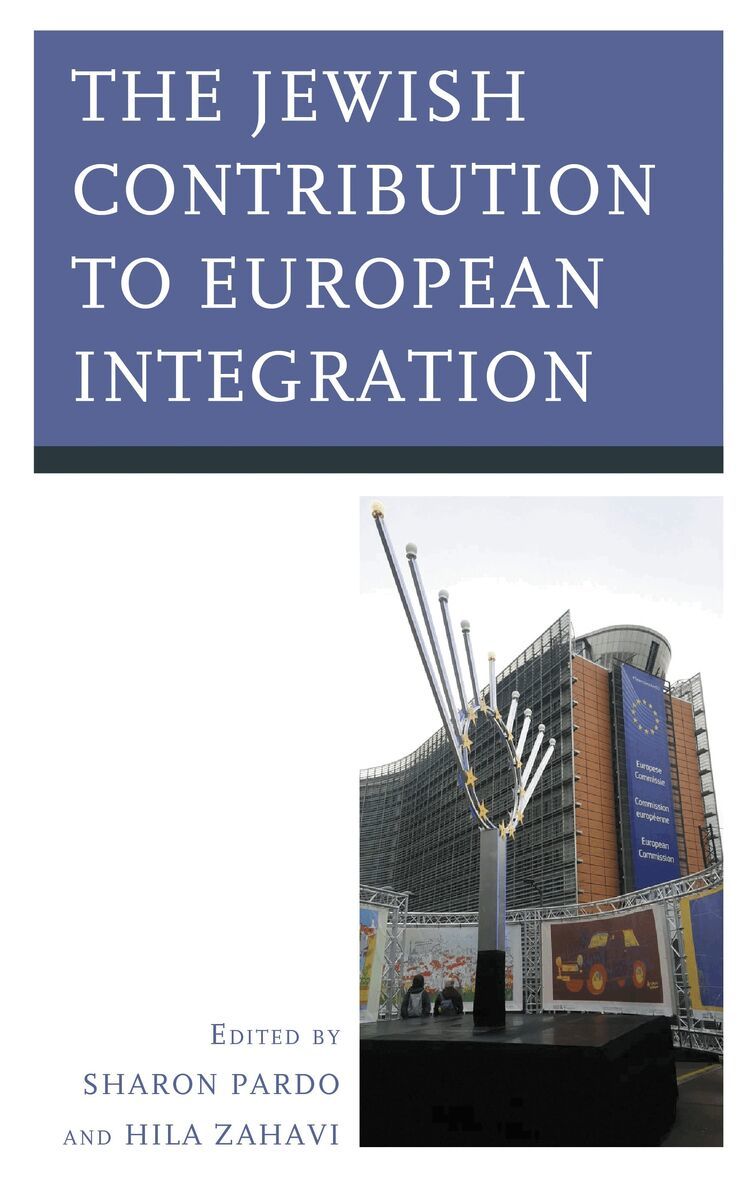
This edited collection seeks to present a valuable guide to the Jewish contribution to the European integration process, and to enable readers to obtain a better understanding of the unknown Jewish involvement in the European integration project. Adopting both a national and a pan-European approaches, this volume brings together the work of leading international researchers and senior practitioners to cover a wide range of topics with an interdisciplinary approach under three different parts: present challenges, Jews and pan-European identity, and unsung heroes.