Exeter Concepts in Media Thinking - Böcker
Visar alla böcker i serien Exeter Concepts in Media Thinking. Handla med fri frakt och snabb leverans.
3 produkter
3 produkter
692 kr
Skickas inom 5-8 vardagar
With the pervasive digitalization of communication and information devices in society, and with the increasing supremacy of software that dissimulates its physical medium, actual technologies are increasingly disappearing behind their user-oriented surfaces and manifest content. The more human users are superficially in touch with such devices, the more their technical essence recedes into an almost non-intelligible sphere, culminating in the hidden layers of neuronal nets in Artificial Intelligence.Transitive Media [Philosophy] argues for a media engagement that instead stays close to the mechanism and becomes conscious of its knowledge value in real time. Rejecting symbolic abstraction, the book argues for a ‘transitive’ engagement, in the grammatical sense of an immediate relation between verbal expression and its objects where the actor remains entangled in the action. Concrete technical scenarios explore how knowledge arises from real-time interaction with machines, whether through reactivating obsolete devices in Berlin’s Media Archaeological Fundus, analysing glitches as epistemic revelations, or reframing writing itself as a technical act. A hands-on, entangled philosophy emerges through—not just about—technology.Addressing a broad readership in media culture and philosophy, this volume offers a new kind of doing-media theory, urging readers to trade passive observation for embodied, operational insight to achieve a more conscious dialogue with their smartphones, tablets and other such items. Emerging from the author’s long academic training in media theories and from practical media-archaeological experience with generations of technical devices, this provocative book compels a rethink of how thought and technology co-constitute one another.
1 358 kr
Kommande
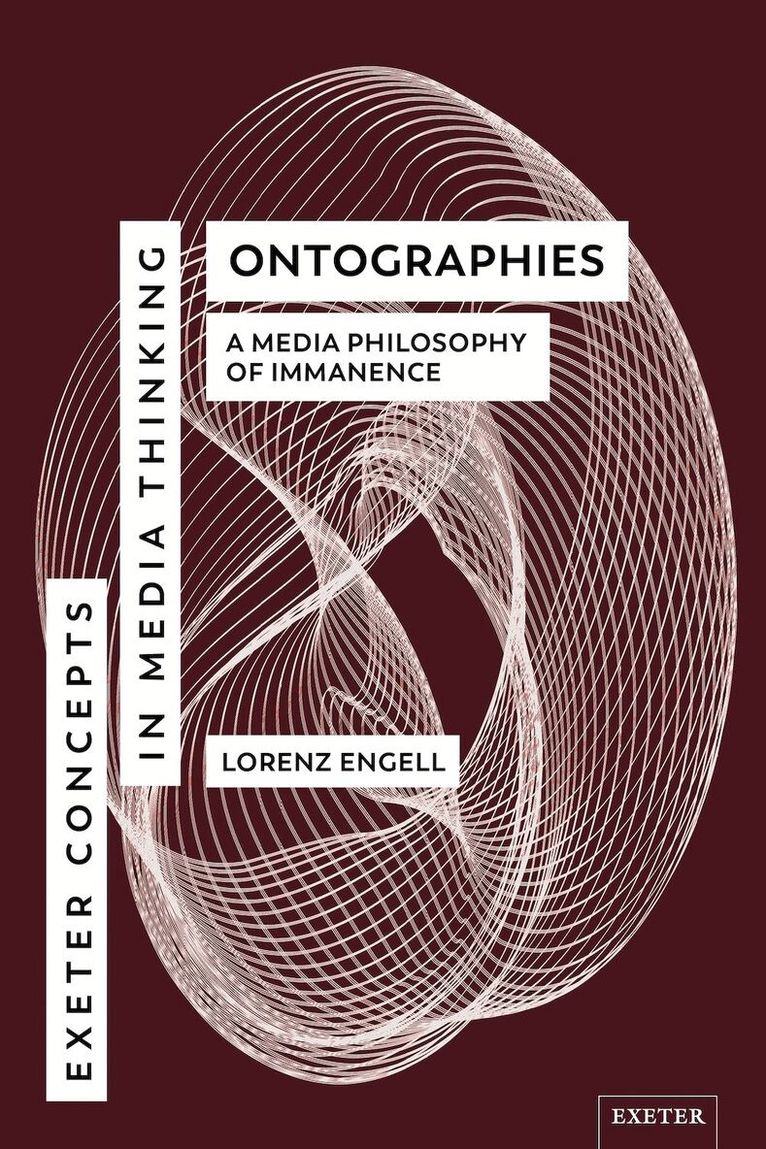
Ontographies proposes a radical shift, moving beyond the crisis of representation by embracing a philosophy of immanence, and offering a vital new perspective for understanding our media-saturated world.In light of recent media developments in algorithmic, digital and picture-based mediaspheres, we must accept that received models of representation (in politics, in the realm of signs, in philosophies of consciousness) have long since collapsed. Nothing stands for anything any longer; the world has a massive media ontological problem. This book provides readers with a way to, if not cope with this problem, then at least map it and thereby to think beyond it. The volume sets out the concept of ontographies as a completely different form of access to the world, one that can overtake (and ultimately replace) the media ontological challenge of our time.Through a rich tapestry of examples—from Wes Anderson’s The Darjeeling Limited and Oscar Cavandoli’s La Linea to analogue photography and algorithmic computation—Ontographies argues that the world does not operate via hierarchical structures of signification (signifier/signified, beings/Being, subject/object) but by way of immanent, operative processes of inscription that blur the boundaries between recording and reality.Whatever exists comes into being through graphic operations: ontography. Indeed, the world exists solely insofar as it operatively records and describes or is being recorded and described. This compelling, refreshing book presents a bold and provocative intervention in media philosophy, challenging the dominant frameworks of representation, ontology and mediation.
1 104 kr
Kommande
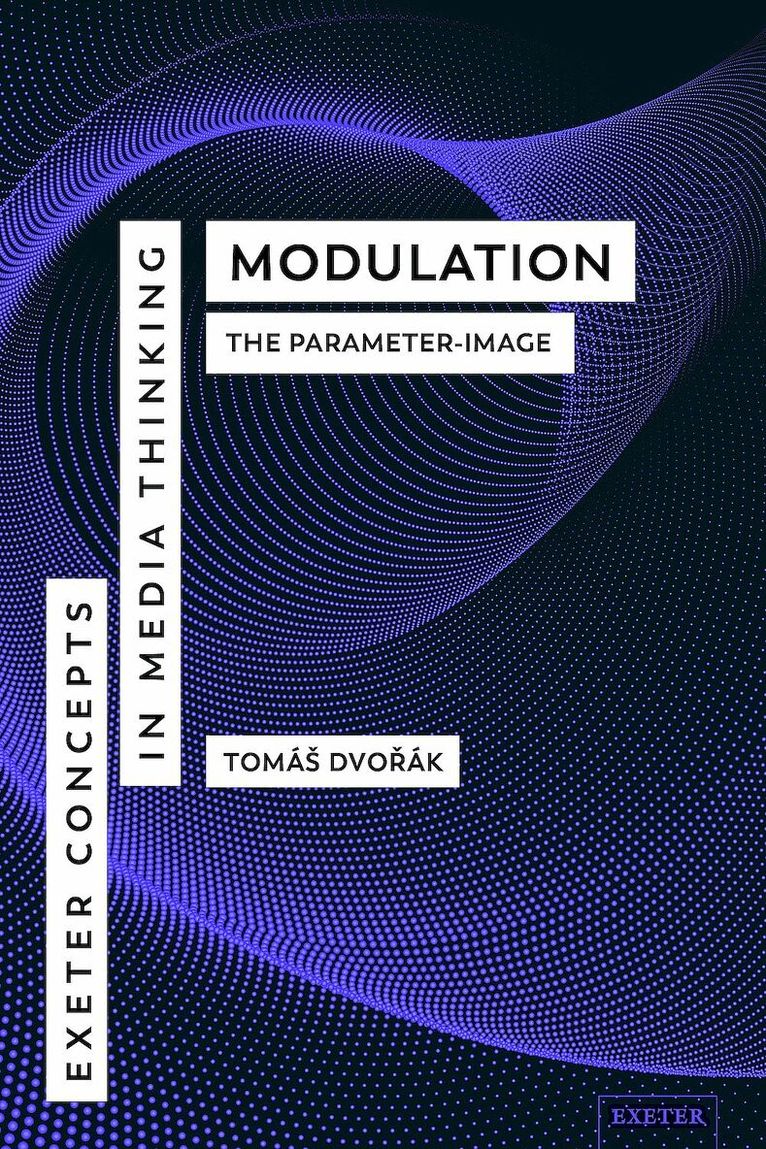
Modulation: The Parameter-Image offers a new way to understand what images are and how they work. Instead of treating pictures as fixed representations of the world, this book argues that every image is a field of variation—something continuously adjusted, tuned and transformed. From the mechanical instruments of the Renaissance to today’s generative AI, images have always been shaped by certain parameters: brightness and contrast, scale and resolution, signal and noise. Modulation, the art of varying within limits, is the deep logic behind all imaging.Tracing this idea across mechanical, optical, electrical, electronic and algorithmic media, the book shows how images emerge not as single artefacts but as dynamic processes. It links the sliders of photo-editing software to the vanishing points of perspective drawing, the tuning of radio signals and the latent spaces of machine learning. Each chapter demonstrates how cultures of modulation have organised the visible—technically, aesthetically and politically.Drawing on philosophy, media archaeology and art history, this volume reinterprets thinkers such as Gilbert Simondon to propose a theory of the ‘parameter-image’: an image defined by its range of possible variations rather than its fixed form. Written by a scholar whose background bridges philosophy, media theory and visual culture, it offers both conceptual clarity and historical depth. It will appeal to readers in media and cultural studies, art and design, philosophy and aesthetics and anyone interested in how images—past and present—are made to move, vary and think.