Exploring Urban Change in South Asia – serie
Visar alla böcker i serien Exploring Urban Change in South Asia. Handla med fri frakt och snabb leverans.
19 produkter
19 produkter
Inbunden, Engelska, 2016
1 307 kr
Skickas inom 10-15 vardagar
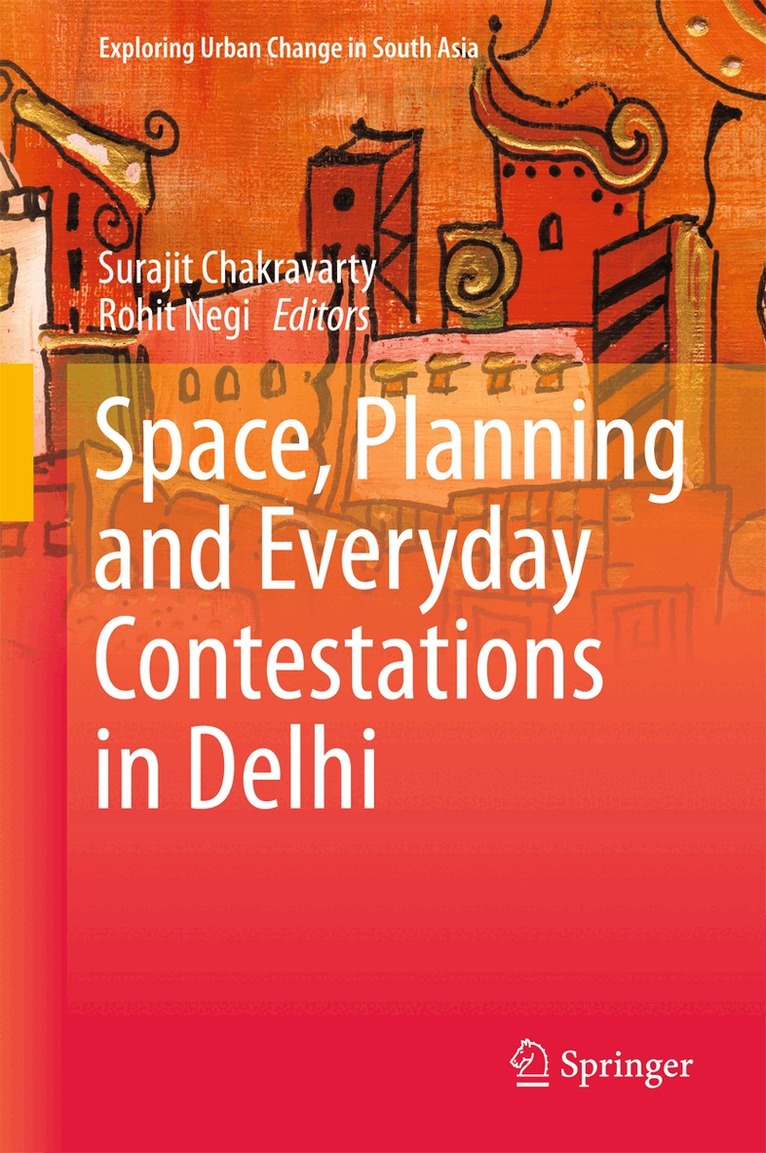
This insightful volume examines the politics and contestations around urban space in India’s national capital, Delhi. Moving beyond spectacular megaprojects and sites of consumption, this book engages with ordinary space and everyday life. Sites and communities analysed in this volume reveal the processes, relations, and logics through which the city’s grand plans are executed. The contributors argue that urbanization is negotiated and muddled, particularly in the spaces occupied by informal labour, resettled communities, and small-scale investors. The critical analyses in this volume shed light on the disjunctures between planning and ideology, narratives of growth and realities of immobility, and facades of modernity and the spaces and practices produced in its pursuit. The book is organized in four parts – (I) Dis/locating Bodies, (II) Claims at the Urban Frontier, (III) Informalization and Investment, and (IV) Gendered Mobility. The studies report current empirical work from a variety of sites, investigating the dynamics of capital investment, state planning and citizen response in these spaces. These studies, set in ordinary spaces in Delhi, reveal a subliminal disarray of thought and action, stemming from the impetus to make the city attractive to capital, while having to manage marginality and reorganize welfare functions. The volume provides fresh insights into the nature of urban planning and governance in an Indian megacity two decades after the neoliberal shift.
Inbunden, Engelska, 2015
1 091 kr
Skickas inom 10-15 vardagar
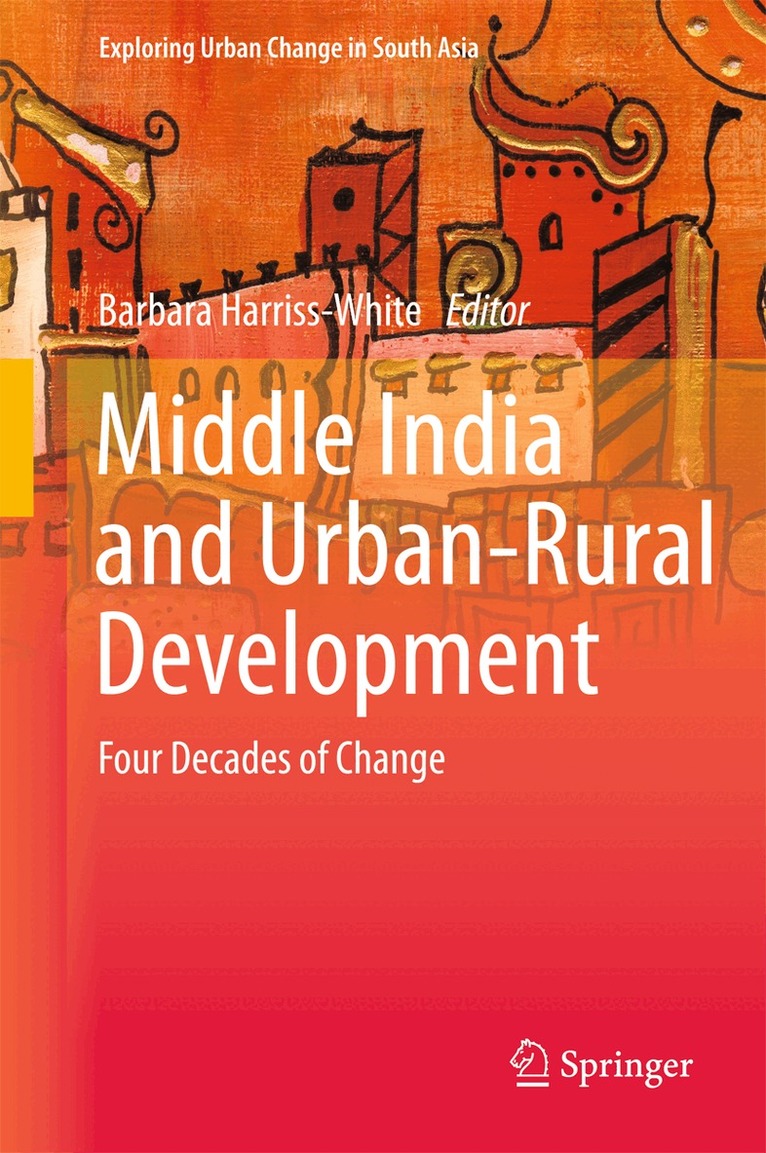
Middle India and Rural-Urban Development explores the socio-economic conditions of an ‘India’ that falls between the cracks of macro-economic analysis, sectoral research and micro-level ethnography. Its focus, the ‘middle India’ of small towns, is relatively unknown in scholarly terms for good reason: it requires sustained and difficult field research. But it is where most Indians either live or constantly visit in order to buy and sell, arrange marriages and plot politics. Anyone who wants to understand India therefore needs to understand non-metropolitan, provincial, small-town India and its economic life. This book meets this need. From 1973 to the present, Barbara Harriss-White has watched India’s development through the lens of an ordinary town in northern Tamil Nadu, Arni. This book provides a pluralist, multi-disciplinary and inter-disciplinary perspective on Arni and its rural hinterland. It grounds general economic processes in the social specificities of a given place and region. In the process, continuity is juxtaposed with abrupt change. A strong feature of the book is its analysis of how government policies that fail to take into account the realities of small town life in India have unintended and often perverse consequences. In this unique book, Harriss-White brings together ten essays written by herself and her research team on Arni and its surrounding rural areas. They track the changing nature of local business and the workforce; their urban-rural relations, their regulation through civil society organizations and social practices, their relations to the state and to India’s accelerating and dynamic growth. That most people live outside the metropolises holds for many other developing countries and makes this book, and the ideas and methods that frame it, highly relevant to a global development audience.
Inbunden, Engelska, 2016
549 kr
Skickas inom 10-15 vardagar
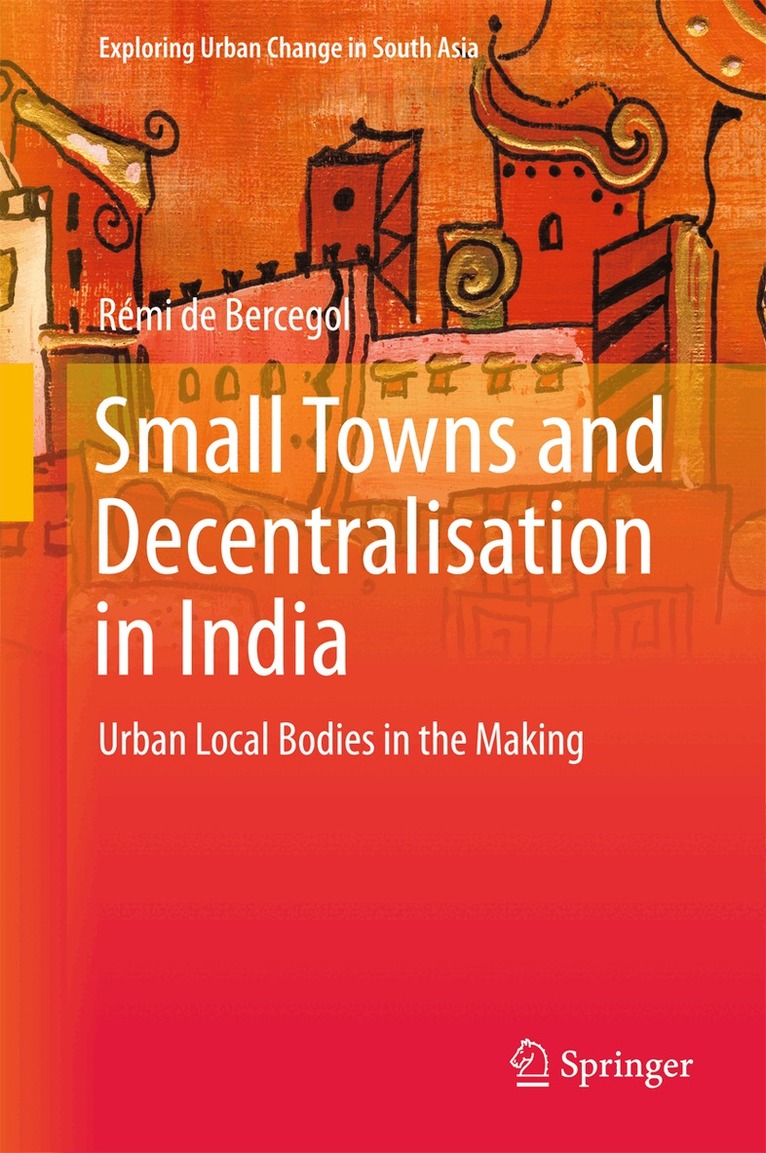
This book examines the impact that decentralisation reforms, initiated in the early 1990s, have had on small towns in India. It specifically focuses on small towns in Uttar Pradesh, one of the most densely populated and poorest states in India. Although considered home to one of the oldest urban civilisations, India remains one of the least urbanised regions in the world. At the same time, the country has many million-strong metropolises that are among the world’s largest megacities, as well as a multitude of small and medium-sized towns and cities. This paradoxical urbanisation, against a backdrop of reforms, has interested the scientific community to gain a more nuanced understanding of the changes and challenges involved. This book analyses an urban environment often overlooked by researchers and public authorities, namely, that of small towns. These towns are of vital importance as this is where the bulk of future urban development will take place. However, decades after implementation of the reforms, the majority of reviews and assessments have focused on large cities and so the impacts of the reform on small towns are still poorly understood. This book includes extensive primary data about political, technical and financial municipal issues in small towns of northern India and, is therefore, of interest to students, researchers and planners working on urban and regional studies in the global South.
Häftad, Engelska, 2016
1 091 kr
Skickas inom 10-15 vardagar
Middle India and Rural-Urban Development explores the socio-economic conditions of an ‘India’ that falls between the cracks of macro-economic analysis, sectoral research and micro-level ethnography. Its focus, the ‘middle India’ of small towns, is relatively unknown in scholarly terms for good reason: it requires sustained and difficult field research. But it is where most Indians either live or constantly visit in order to buy and sell, arrange marriages and plot politics. Anyone who wants to understand India therefore needs to understand non-metropolitan, provincial, small-town India and its economic life. This book meets this need. From 1973 to the present, Barbara Harriss-White has watched India’s development through the lens of an ordinary town in northern Tamil Nadu, Arni. This book provides a pluralist, multi-disciplinary and inter-disciplinary perspective on Arni and its rural hinterland. It grounds general economic processes in the social specificities of a given place and region. In the process, continuity is juxtaposed with abrupt change. A strong feature of the book is its analysis of how government policies that fail to take into account the realities of small town life in India have unintended and often perverse consequences. In this unique book, Harriss-White brings together ten essays written by herself and her research team on Arni and its surrounding rural areas. They track the changing nature of local business and the workforce; their urban-rural relations, their regulation through civil society organizations and social practices, their relations to the state and to India’s accelerating and dynamic growth. That most people live outside the metropolises holds for many other developing countries and makes this book, and the ideas and methods that frame it, highly relevant to a global development audience.
Inbunden, Engelska, 2017
1 741 kr
Skickas inom 10-15 vardagar
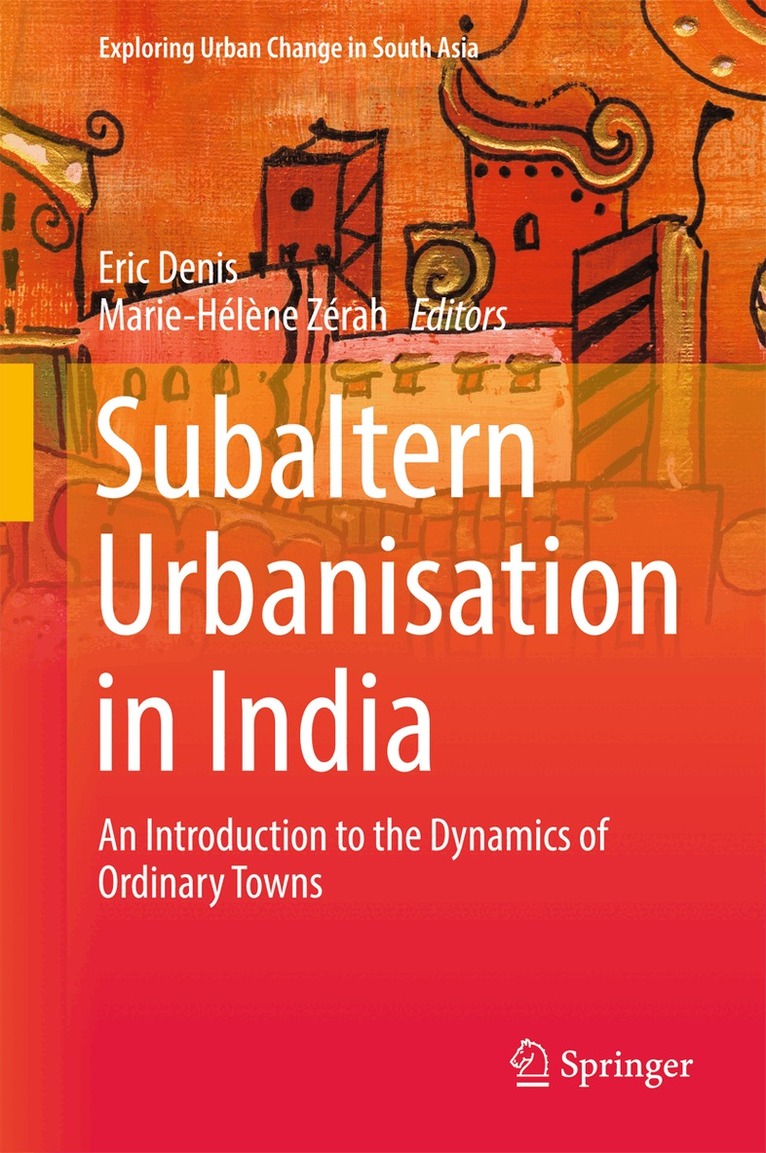
This volume decentres the view of urbanisation in India from large agglomerations towards smaller urban settlements. It presents the outcomes of original research conducted over three years on subaltern processes of urbanization. The volume is organised in four sections. A first one deals with urbanisation dynamics and systems of cities with chapters on the new census towns, demographic and economic trajectories of cities and employment transformation. The interrelations of land transformation, social and cultural changes form the topic of the “land, society, belonging” section based on ethnographic work in various parts of India (Karnataka, Himachal Pradesh, Arunachal Pradesh and Tamil Nadu). A third section focuses on public policies, governance and urban services with a set of macro-analysis based papers and specific case studies. Understanding the nature of production and innovation in non-metropolitan contexts closes this volume. Finally, though focused on India, this researchraises larger questions with regard to the study of urbanisation and development worldwide.
Inbunden, Engelska, 2017
1 416 kr
Skickas inom 10-15 vardagar
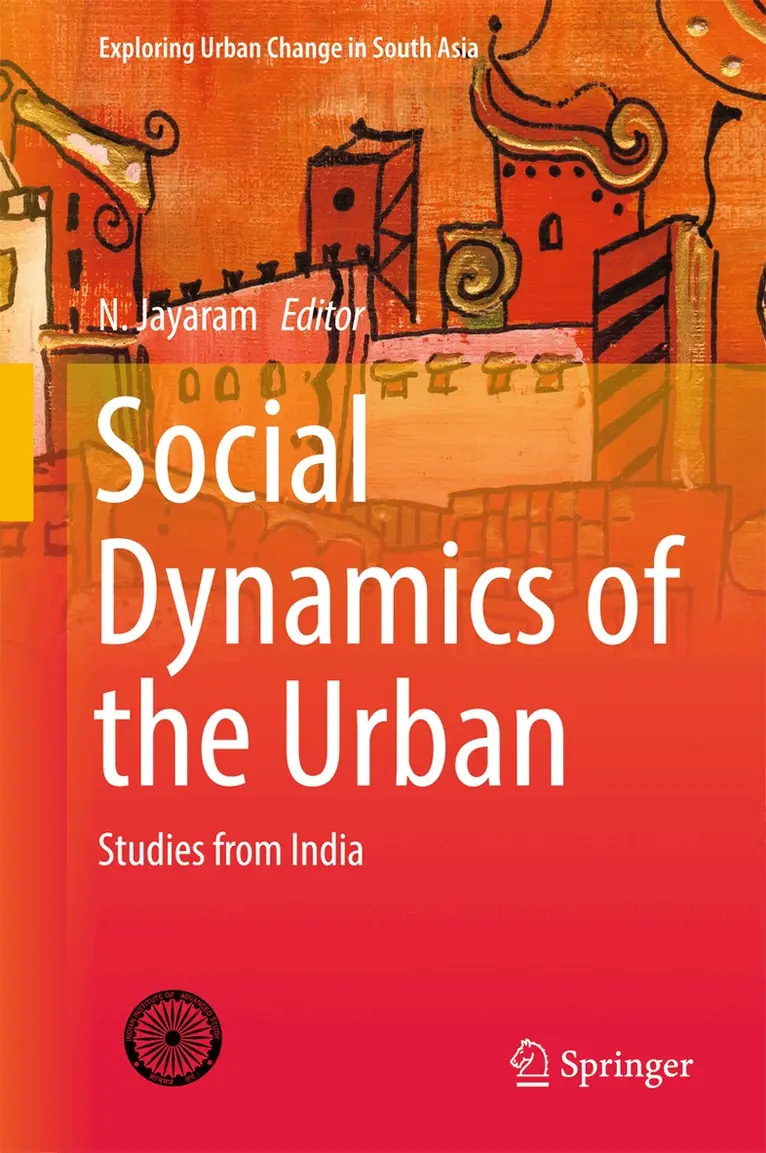
This volume emphasises the sociological view that cities are primarily about people, not places or buildings, and explores the social dynamics of urban space in globalising India. Distinguishing between ‘locale’ and ‘milieu’ and the community–cosmopolitanism dialectic in urban areas, it elucidates the thematic for urban sociology today. The chapters explore the various perspectives and processes in understanding the urban predicament in India today. The contributors specifically ask: What are the characteristics of the fastest growing cities in India? What are the forces shaping their forms and processes? Who benefits from what type of livelihood options cities offer? How have city administrations been dealing with mounting demands for housing, energy, and water resources, and problems of mass transportation? What implications do these have for the ecology of the city and the surrounding areas? Given the heterogeneity of urban populations, what social processes are at work and how they affect cit[y]zenship and identity? What aspirations and tensions are expressed among different groups, and what implications do these have for inter-group relations? What challenges do inter-group relations pose for urban planning and administration? The contributors include renowned scholars as also young researchers. They go beyond their disciplinary moorings of economics, history, political science, social work, and sociology, and their trans-disciplinary dialogues carry inputs from policy makers, administrators, and grassroots activists working in urban areas.
Häftad, Engelska, 2018
1 741 kr
Skickas inom 10-15 vardagar
This volume decentres the view of urbanisation in India from large agglomerations towards smaller urban settlements. It presents the outcomes of original research conducted over three years on subaltern processes of urbanization. The volume is organised in four sections. A first one deals with urbanisation dynamics and systems of cities with chapters on the new census towns, demographic and economic trajectories of cities and employment transformation. The interrelations of land transformation, social and cultural changes form the topic of the “land, society, belonging” section based on ethnographic work in various parts of India (Karnataka, Himachal Pradesh, Arunachal Pradesh and Tamil Nadu). A third section focuses on public policies, governance and urban services with a set of macro-analysis based papers and specific case studies. Understanding the nature of production and innovation in non-metropolitan contexts closes this volume. Finally, though focused on India, this researchraises larger questions with regard to the study of urbanisation and development worldwide.
Häftad, Engelska, 2018
982 kr
Skickas inom 10-15 vardagar
This volume emphasises the sociological view that cities are primarily about people, not places or buildings, and explores the social dynamics of urban space in globalising India. Distinguishing between ‘locale’ and ‘milieu’ and the community–cosmopolitanism dialectic in urban areas, it elucidates the thematic for urban sociology today. The chapters explore the various perspectives and processes in understanding the urban predicament in India today. The contributors specifically ask: What are the characteristics of the fastest growing cities in India? What are the forces shaping their forms and processes? Who benefits from what type of livelihood options cities offer? How have city administrations been dealing with mounting demands for housing, energy, and water resources, and problems of mass transportation? What implications do these have for the ecology of the city and the surrounding areas? Given the heterogeneity of urban populations, what social processes are at work and how they affect cit[y]zenship and identity? What aspirations and tensions are expressed among different groups, and what implications do these have for inter-group relations? What challenges do inter-group relations pose for urban planning and administration? The contributors include renowned scholars as also young researchers. They go beyond their disciplinary moorings of economics, history, political science, social work, and sociology, and their trans-disciplinary dialogues carry inputs from policy makers, administrators, and grassroots activists working in urban areas.
Inbunden, Engelska, 2017
1 416 kr
Skickas inom 10-15 vardagar
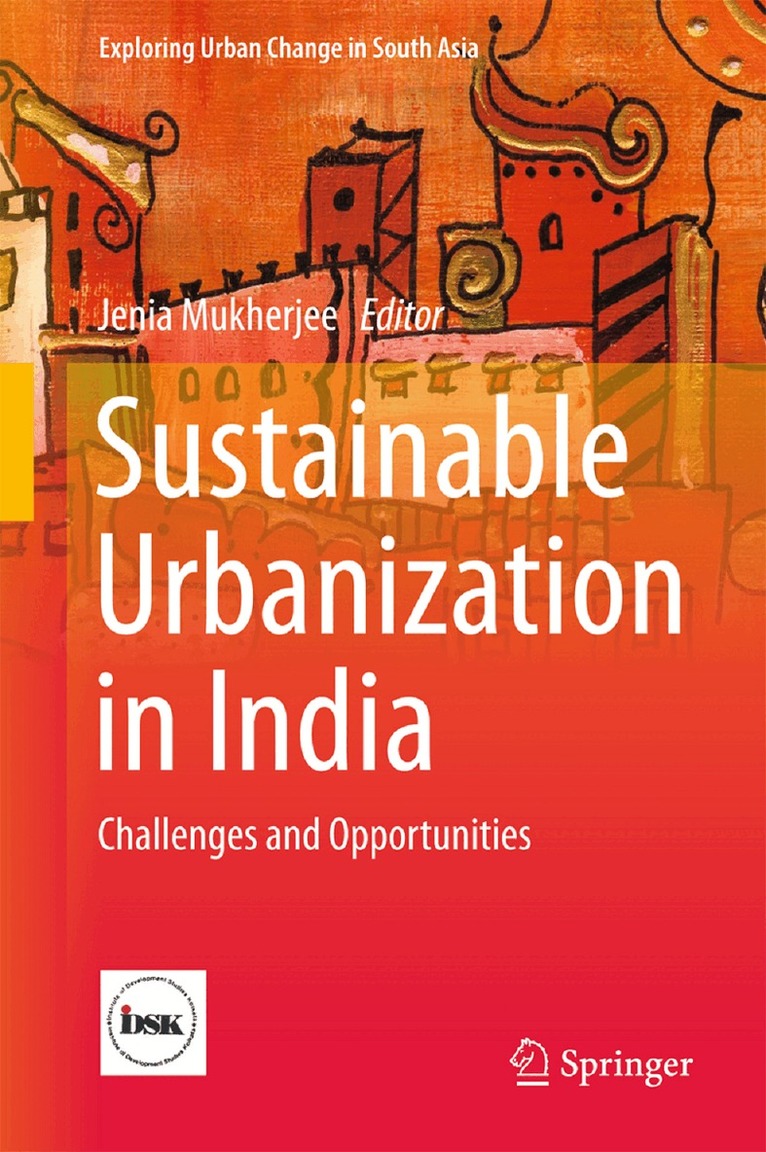
This comprehensive volume contributes to the existing and emerging body of literature on contemporary urbanization and the interactions between cities and the environment. The volume is contextualized against latest theories, debates and discussions on 'sustainable urbanization', the post‐2015 development agenda of the United Nations and India's official launching of the 'smart city' agenda. Reflecting on three major components of urban sustainability: investments and infrastructures, waste management, and urban ecologies and environmentalisms, it moves beyond the bi‐centric approach of only looking into the differences between the ‘developed’ and the ‘developing’ world and reflects on cities across India using polycentric methods and approaches. The Indian urban scenario is extremely complex and diverse, and solutions laid out in official and non‐official documents tend to miss these complexities. This volume includes innovative research acrossdifferent parts of India, identifying city‐specific sources of unsustainability and challenges along with strategies and potentials that would make the process of urban transition both sustainable and equitable. Complex explorations of non‐linear, bottom‐up, multisectoral process‐based local urban contexts across north, south, east and west Indian cities in this volume critique a general acceptance of the universalized concept of ‘sustainable urbanization’ and suggest ways that might be important for transcending inclusive theories to form practical policy-based recommendations and actions.
Inbunden, Engelska, 2018
1 253 kr
Skickas inom 10-15 vardagar
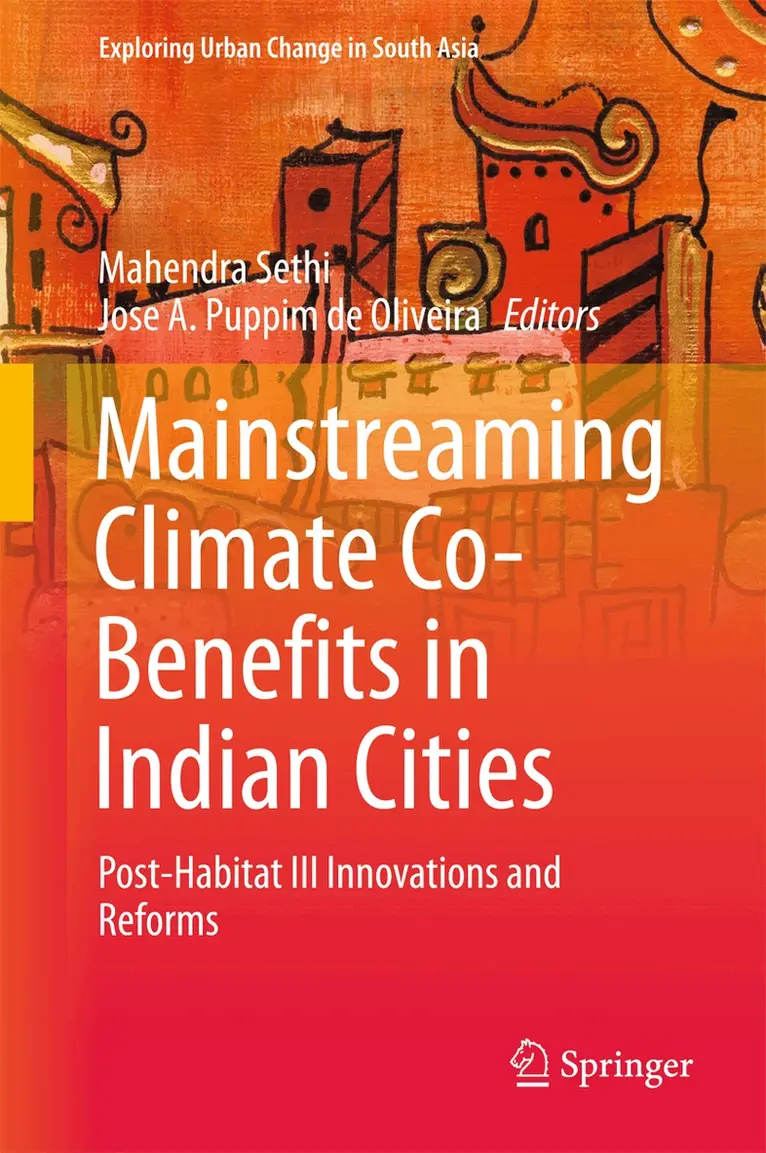
This volume presents a novel framework to understand urban climate co-benefits in India, that is, tackling climate change and achieving sustainable development goals in cities. It utilizes methods and tools from several assessment frameworks to scientifically evaluate sector co-benefits for informed decision making. The co-benefits approach can lead to significant improvements in the way societies use environmental resources and distribute their outputs. The volume discusses four main themes: (1) Concepts and theories on cities and climate co-benefits; (2) Contextualizing co-benefit issues across spatial scales and sectors; (3) Sectoral analyses of co-benefits in energy, transport, buildings, waste, and biodiversity, and (4) Innovations and reforms needed to promote co-benefits in cities. The discussions are based on empirical research conducted in Indian cities and aligned with the international discourse on the 2030 UN Development Agenda and New Urban Agenda created at the UN-Habitat III in 2016. The analyses and recommendations in this volume are of considerable interest to policy experts, scholars and researchers of urban and regional studies, geography, public policy, international development/law, economics, development planning, environmental planning, climate change, energy studies, and so on.
Häftad, Engelska, 2019
982 kr
Skickas inom 10-15 vardagar
This comprehensive volume contributes to the existing and emerging body of literature on contemporary urbanization and the interactions between cities and the environment. The volume is contextualized against latest theories, debates and discussions on 'sustainable urbanization', the post‐2015 development agenda of the United Nations and India's official launching of the 'smart city' agenda. Reflecting on three major components of urban sustainability: investments and infrastructures, waste management, and urban ecologies and environmentalisms, it moves beyond the bi‐centric approach of only looking into the differences between the ‘developed’ and the ‘developing’ world and reflects on cities across India using polycentric methods and approaches. The Indian urban scenario is extremely complex and diverse, and solutions laid out in official and non‐official documents tend to miss these complexities. This volume includes innovative research acrossdifferent parts of India, identifying city‐specific sources of unsustainability and challenges along with strategies and potentials that would make the process of urban transition both sustainable and equitable. Complex explorations of non‐linear, bottom‐up, multisectoral process‐based local urban contexts across north, south, east and west Indian cities in this volume critique a general acceptance of the universalized concept of ‘sustainable urbanization’ and suggest ways that might be important for transcending inclusive theories to form practical policy-based recommendations and actions.
Häftad, Engelska, 2018
1 253 kr
Skickas inom 10-15 vardagar
This volume presents a novel framework to understand urban climate co-benefits in India, that is, tackling climate change and achieving sustainable development goals in cities. It utilizes methods and tools from several assessment frameworks to scientifically evaluate sector co-benefits for informed decision making. The co-benefits approach can lead to significant improvements in the way societies use environmental resources and distribute their outputs. The volume discusses four main themes: (1) Concepts and theories on cities and climate co-benefits; (2) Contextualizing co-benefit issues across spatial scales and sectors; (3) Sectoral analyses of co-benefits in energy, transport, buildings, waste, and biodiversity, and (4) Innovations and reforms needed to promote co-benefits in cities. The discussions are based on empirical research conducted in Indian cities and aligned with the international discourse on the 2030 UN Development Agenda and New Urban Agenda created at the UN-Habitat III in 2016. The analyses and recommendations in this volume are of considerable interest to policy experts, scholars and researchers of urban and regional studies, geography, public policy, international development/law, economics, development planning, environmental planning, climate change, energy studies, and so on.
Inbunden, Engelska, 2020
549 kr
Skickas inom 10-15 vardagar
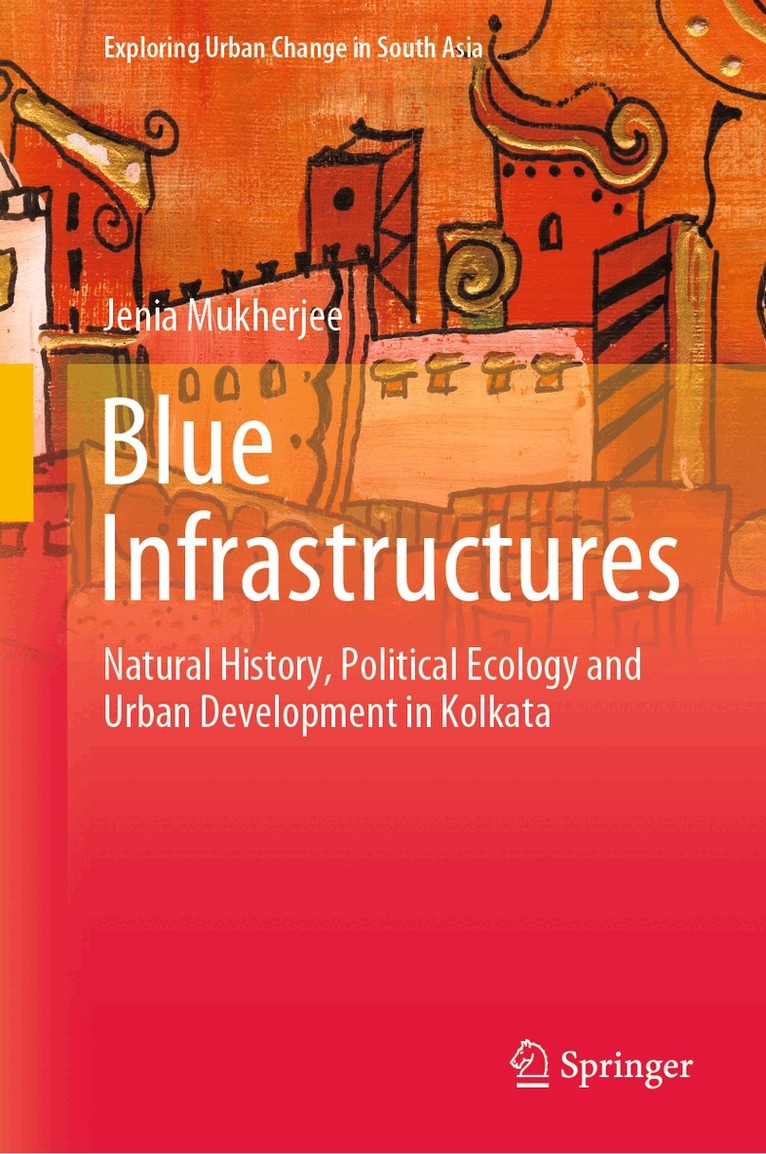
This book focuses on Kolkata, formerly the colonial capital of and currently a major megacity in India, in terms of its extensive blue infrastructures, i.e., its rivers, canals and wetlands as an integrated composite whole. It unfolds ways in which this reclaimed urban space could determine, and in turn, could get determined by political fate, economic calculations and social livelihoods across changing political-economic imperatives and with large-scale implications on urban sustainability. Employing historical urban political ecology (HUPE) as the methodological framework by combining urban environmental history and urban political ecology, the book studies the changing urban environmental equations through several centuries, and its impact on the city and its people. Weaving the past, present and posterity of deltaic Kolkata, the book demonstrates that it is in these ‘blue infrastructures’ that the anecdote of origin, the account of functioning and the apprehension of survival of the city is rooted. By emphasizing the ecology ‘of’ cities instead of ecology ‘in’ cities approach, the book exposes the limitations of contemporary ecological restructuring efforts regarding Indian cities. Further, it offers a blueprint for future innovative and empirical research focusing on other major cities. Accordingly, this topical and original book will be of interest to students and researchers of environmental humanities, political ecology and urban studies.
Häftad, Engelska, 2021
565 kr
Skickas inom 10-15 vardagar
This book focuses on Kolkata, formerly the colonial capital of and currently a major megacity in India, in terms of its extensive blue infrastructures, i.e., its rivers, canals and wetlands as an integrated composite whole. It unfolds ways in which this reclaimed urban space could determine, and in turn, could get determined by political fate, economic calculations and social livelihoods across changing political-economic imperatives and with large-scale implications on urban sustainability. Employing historical urban political ecology (HUPE) as the methodological framework by combining urban environmental history and urban political ecology, the book studies the changing urban environmental equations through several centuries, and its impact on the city and its people. Weaving the past, present and posterity of deltaic Kolkata, the book demonstrates that it is in these ‘blue infrastructures’ that the anecdote of origin, the account of functioning and the apprehension of survival of the city is rooted. By emphasizing the ecology ‘of’ cities instead of ecology ‘in’ cities approach, the book exposes the limitations of contemporary ecological restructuring efforts regarding Indian cities. Further, it offers a blueprint for future innovative and empirical research focusing on other major cities. Accordingly, this topical and original book will be of interest to students and researchers of environmental humanities, political ecology and urban studies.
Inbunden, Engelska, 2022
1 524 kr
Skickas inom 10-15 vardagar
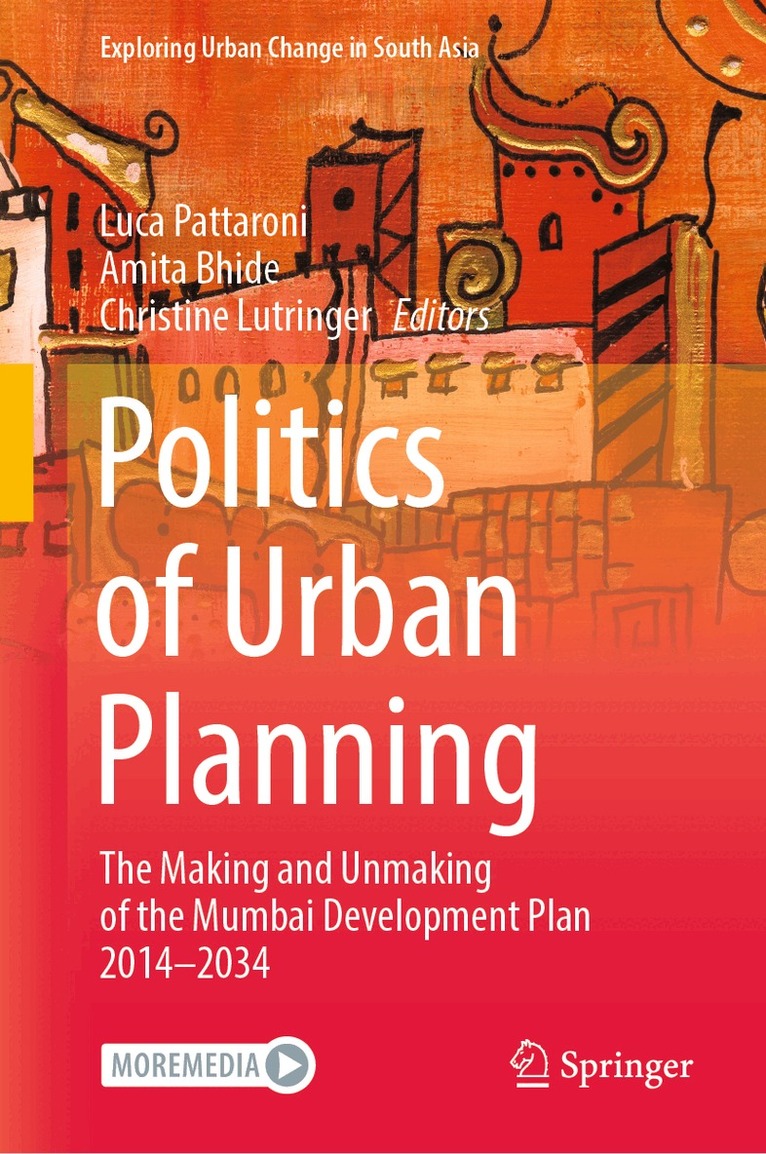
This book offers an interdisciplinary and dynamic account of the politicization of urban planning in Mumbai, India. It presents a unique perspective on the tensions and conflicts pervading the development and regulation of contemporary cities in the wider context of global urbanization, and broadens readers’ understanding of urban planning, chiefly focusing on the interplay between grassroots movements, experts’ involvement, and sociotechnical questions. As the respective chapters of the book show, the various controversies surrounding the Mumbai Development Plan (MDP) have called into question the social and political effects of reshaping the city, the exclusion, and inequalities it has produced, but also the role it confers on the state and the market, and its impacts on the environment. After carefully describing these controversies, the book tackles the fundamental democratic question of who gets to define the future of a city. Given its scope, the book is of interest to researchers, students, and teachers of city planning, urban development, and urban studies, as well as policymakers.
Häftad, Engelska, 2023
1 524 kr
Skickas inom 10-15 vardagar
This book offers an interdisciplinary and dynamic account of the politicization of urban planning in Mumbai, India. It presents a unique perspective on the tensions and conflicts pervading the development and regulation of contemporary cities in the wider context of global urbanization, and broadens readers’ understanding of urban planning, chiefly focusing on the interplay between grassroots movements, experts’ involvement, and sociotechnical questions. As the respective chapters of the book show, the various controversies surrounding the Mumbai Development Plan (MDP) have called into question the social and political effects of reshaping the city, the exclusion, and inequalities it has produced, but also the role it confers on the state and the market, and its impacts on the environment. After carefully describing these controversies, the book tackles the fundamental democratic question of who gets to define the future of a city. Given its scope, the book is of interest to researchers, students, and teachers of city planning, urban development, and urban studies, as well as policymakers.
Inbunden, Engelska, 2025
1 165 kr
Skickas inom 10-15 vardagar
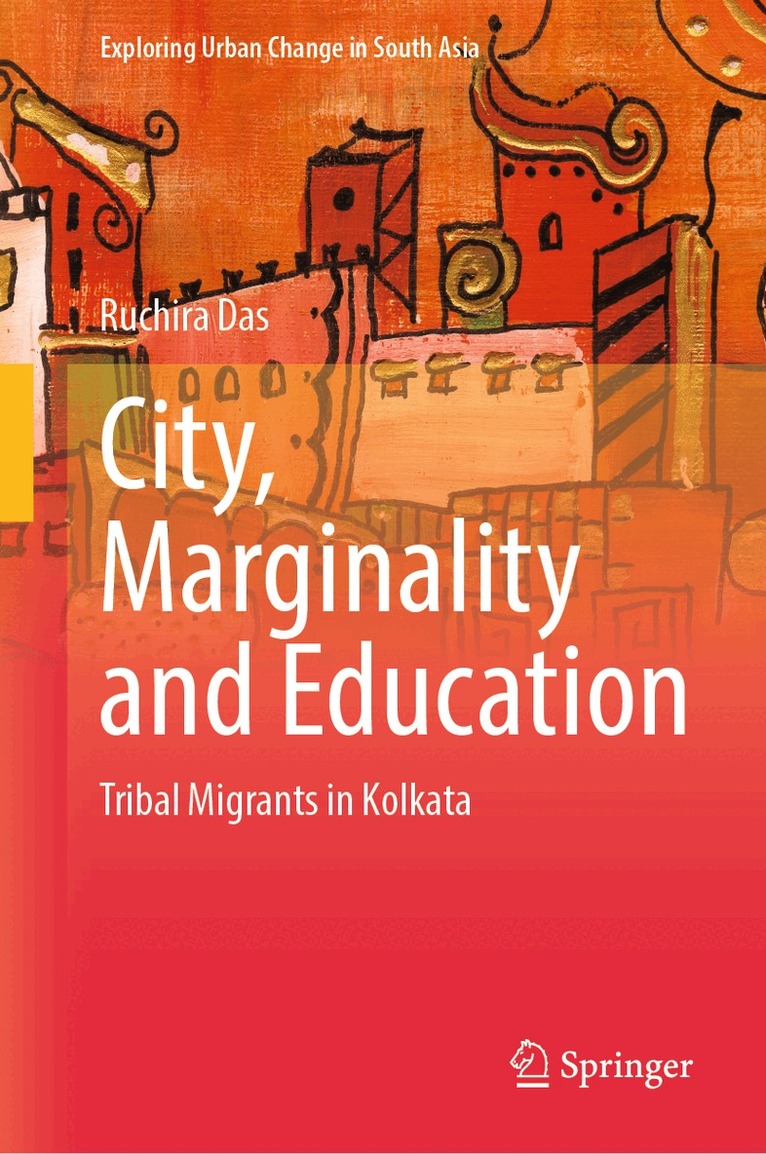
This book examines the socially segregated Santals, a tribal community that migrated from various parts of Bengal and its neighbouring states of Bihar, Orissa, and Jharkhand to Kolkata, a city currently driven by capitalist-consumerist forces that pose a challenge in terms of the community’s inclusion and accommodation. As residents of Kolkata for more than four decades, the Santal migrants have experienced multiple unique challenges in adapting to modern, urban life.The book maps the political economy of social change around the globe and in India to understand how such marginalised tribes have coped with attempts to assimilate. By pursuing an ethnographic account and exploring the lived realities of the Santals as they negotiate the socio-cultural world of the city, the book attempts to deconstruct notions of ‘pristine’ tribal cultures and the need to ‘mainstream’ tribes, thus conveying a sense of the multiple discourses on the tribal question emerging from within the tribal community. In turn, it critically addresses the tension concerning the theory-practice divide in researching marginality. Combining theoretical insights with empirical discussions and thematic analyses of the qualitative data, the book offers researchers, scholars, students, and policymakers an interesting read on marginality in the context of globalizing urban spaces.
Inbunden, Engelska, 2025
1 849 kr
Skickas inom 10-15 vardagar
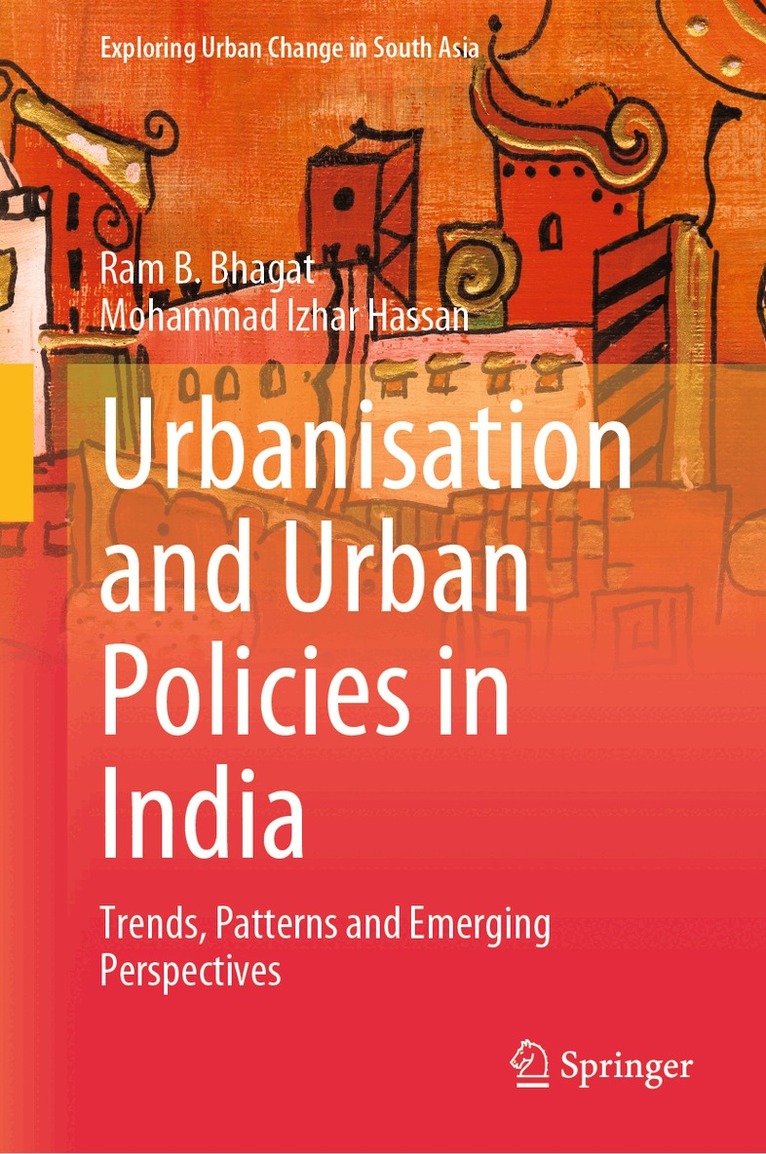
The volume examines urbanization and migration trends and their patterns in the light of India's emerging urban policy, planning and governance perspectives. It sheds light on the differences in urbanization between developed and less developed parts of the world, with a particular focus on India. It studies migration in general and rural to urban migration particular which plays a significant role in economic and urban transition. The chapters highlight important methodological issues in determining the nature of ‘urban’ and the magnitude of internal migration. Furthermore, the book presents the contributions of different factors to urban population growth, including natural increase, net rural-to-urban migration, and net rural-to-urban classification, to reflect the relationship between economic development and urbanization. It also elaborates on the regional economic disparities in India and its association with urbanization. The book elucidates the opportunities and challenges of urbanisation, presents explanations and perspectives from various theoretical and epistemological standpoints emphasising the role of a people centric inclusive urbanisation in sustainable development and human wellbeing. The book is aligned with SDG Goal 11, which emphasizes the need to make cities and human settlements inclusive, safe, resilient, and sustainable. It distinguishes between urban development policies focused solely on cities and their issues and urbanisation policies. Overall, this book is a valuable resource for researchers, students, and teachers of city planning, urban development, and urban studies, as well as policymakers.
Häftad, Engelska, 2026
1 849 kr
Skickas inom 10-15 vardagar
The volume examines urbanization and migration trends and their patterns in the light of India's emerging urban policy, planning and governance perspectives. It sheds light on the differences in urbanization between developed and less developed parts of the world, with a particular focus on India. It studies migration in general and rural to urban migration particular which plays a significant role in economic and urban transition. The chapters highlight important methodological issues in determining the nature of ‘urban’ and the magnitude of internal migration. Furthermore, the book presents the contributions of different factors to urban population growth, including natural increase, net rural-to-urban migration, and net rural-to-urban classification, to reflect the relationship between economic development and urbanization. It also elaborates on the regional economic disparities in India and its association with urbanization. The book elucidates the opportunities and challenges of urbanisation, presents explanations and perspectives from various theoretical and epistemological standpoints emphasising the role of a people centric inclusive urbanisation in sustainable development and human wellbeing. The book is aligned with SDG Goal 11, which emphasizes the need to make cities and human settlements inclusive, safe, resilient, and sustainable. It distinguishes between urban development policies focused solely on cities and their issues and urbanisation policies. Overall, this book is a valuable resource for researchers, students, and teachers of city planning, urban development, and urban studies, as well as policymakers.