Folklore Studies in a Multicultural World Series – serie
Visar alla böcker i serien Folklore Studies in a Multicultural World Series. Handla med fri frakt och snabb leverans.
14 produkter
14 produkter
Häftad, Engelska, 2015
438 kr
Skickas inom 10-15 vardagar
During the masquerades common during carnival time, jumbies (ghosts or ancestral spirits) are set free to roam the streets of Caribbean nations, turning the world topsy-turvy. Modern carnivals, which evolved from earlier ritual celebrations featuring disguised performers, are important cultural andeconomic events throughout the Caribbean, a direct link to a multilayered history.This work explores the evolutionary connections in function, garb, and behavior between Afro-Creole masquerades and precursors from West Africa, the British Isles, and Western Europe. Robert Wyndham Nicholls utilizes a concept of play derived from Africa to describe a range of lighthearted and ritualistic activities. Along with Old World seeds, he studies the evolution of Afro- Creole prototypes that emerged in the Eastern Caribbean--bush masquerades, stilt dancers, animal disguises, she-males, female masquerades, and carnival clowns.Masquerades enact social, political, and spiritual roles within recurring festivals, initiations, wakes, skimmingtons, and weddings. The author explores performance in terms of abstraction in costume-disguise and the aesthetics of music, songs, drum rhythms, dance, and licentiousness. He reveals masquerades as transformative agent, ancestral endorser, behavior manager, informal educator, and luck conferrer.
Inbunden, Engelska, 2015
326 kr
Skickas inom 5-8 vardagar
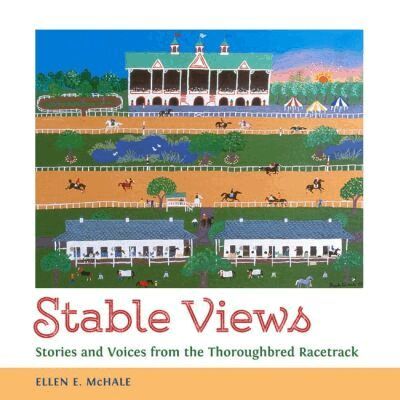
Stable Views offers an inside look at the thoroughbred racing industry through the words and perspectives of those who labor within its stables. In more than fourteen years of field research, Ellen E. McHale has traveled throughout the Eastern Seaboard, Kentucky, and Louisiana to gather oral narratives from those most intimately involved with racing: the stable workers, exercise riders, and horse trainers who form the backbone of the industry. She interviewed workers at Saratoga, Belmont, Tampa Bay Downs, Keeneland, the Evangeline Training Center in Louisiana, and the Palm Meadows Training Center in Florida.Workers within all sectors of the thoroughbred world have long histories of involvement in the racing industry, with many individuals shifting occupational roles throughout their lifetimes. The thoroughbred racetrack operates as a multicultural workplace that relies upon apprenticeship and mentoring. Many workers speak to the history, the joys, the hardships, and the miracles of horse racing along with the changes that they have experienced through their long careers. Included in the book are discussions about luck, the occupational language of the racetrack, race and gender, and recent changes in the industry, all in the words and voices of the stable workers.
Inbunden, Engelska, 2016
336 kr
Skickas inom 5-8 vardagar
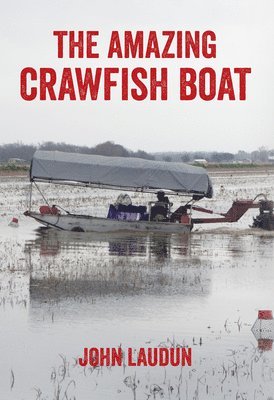
The remarkable story of the Cajuns and Germans of Louisiana who conquered the rice fields and spawned an aquaculture bonanza.In any given year, the Louisiana crawfish harvest tops 50,000 tons. The Amazing Crawfish Boat chronicles the development of an amphibious boat that transformed the Louisiana prairies into a powerhouse of aquaculture alongside agriculture. In seeking to understand how such an amazing machine came into being, John Laudun describes the ideas and traditions that have long been a part of the landscape and how they converged at a particular moment in time to create a new economic opportunity for both the rice farmers who used them and the fabricators who made them.Louisiana residents of the prairies and marshes understand the landscape on which they live and have, over the years, produced an astonishing set of artifacts that demonstrate not only their ability to adapt, but their ability to innovate. The crawfish boat is a great example of such creativity produced by individuals deeply embedded in their culture and place. To ascertain their inventiveness, Laudun examines the larger historical and cultural trends that led to this creation. He draws from archives, oral histories, and ethnographic accounts. In order to understand the nature of their craft and their imaginations, Laudun then turns to a closer examination of the shops and sheds where these boatwrights labor. While the lives of artists and scientists have been examined for what they tell us about innovation, in The Amazing Crawfish Boat the author seeks to address creativity as part of a larger cultural complex of ideas and behaviors.The Louisiana prairies are populated not just by Cajuns but also by Germans. As these groups settled they developed the complex mix of folk cultures that underlies a variety of traditions that are now seen as native to the area. Only through the diversity of the community and environment can the reader understand the importance of creativity in a setting where innovations might not be expected to flourish.
Häftad, Engelska, 2016
377 kr
Skickas inom 5-8 vardagar
In A Vulgar Art Ian Brodie uses a folkloristic approach to stand-up comedy, engaging the discipline's central method of studying interpersonal, artistic communication and performance. Because stand-up comedy is a rather broad category, people who study it often begin by relating it to something they recognize--""literature"" or ""theatre""; ""editorial"" or ""morality""--and analyze it accordingly. A Vulgar Art begins with a more fundamental observation: someone is standing in front of a group of people, talking to them directly, and trying to make them laugh. So this book takes the moment of performance as its focus, that stand-up comedy is a collaborative act between the comedian and the audience.Although the form of talk on the stage resembles talk among friends and intimates in social settings, stand-up comedy remains a profession. As such, it requires performance outside of the comedian's own community to gain larger and larger audiences. How do comedians recreate that atmosphere of intimacy in a roomful of strangers? This book regards everything from microphones to clothing and LPs to Twitter as strategies for bridging the spatial, temporal, and socio-cultural distances between the performer and the audience.
Inbunden, Engelska, 2016
709 kr
Skickas inom 10-15 vardagar
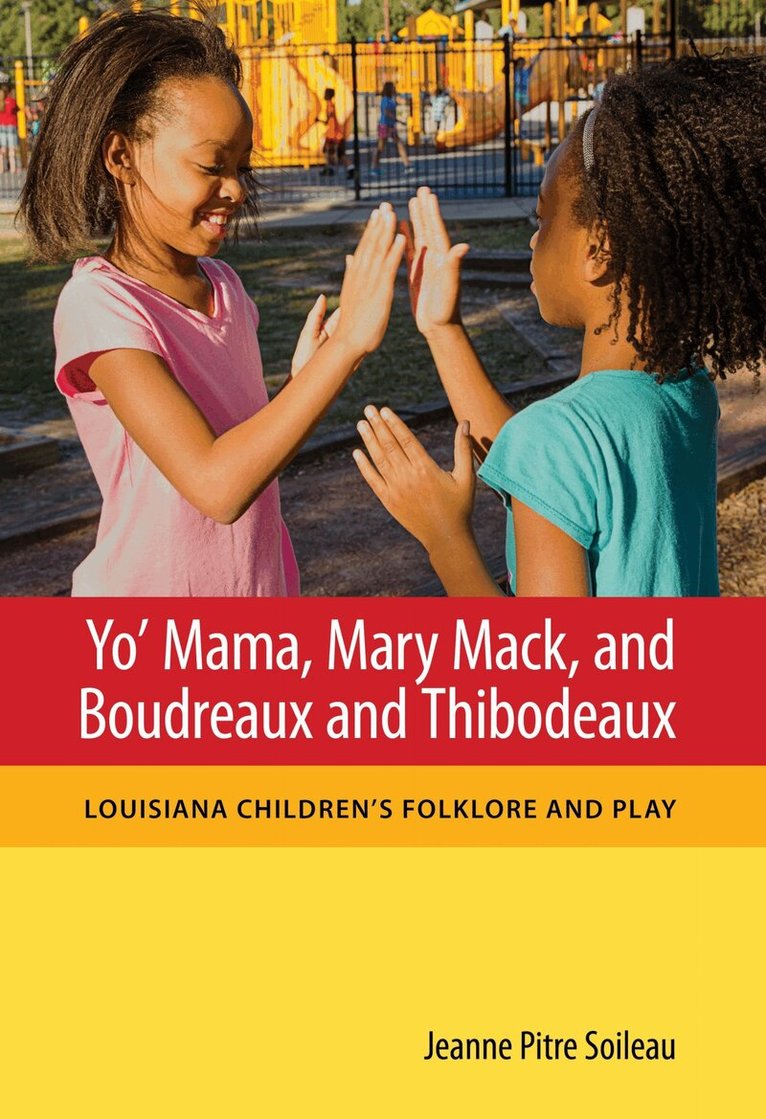
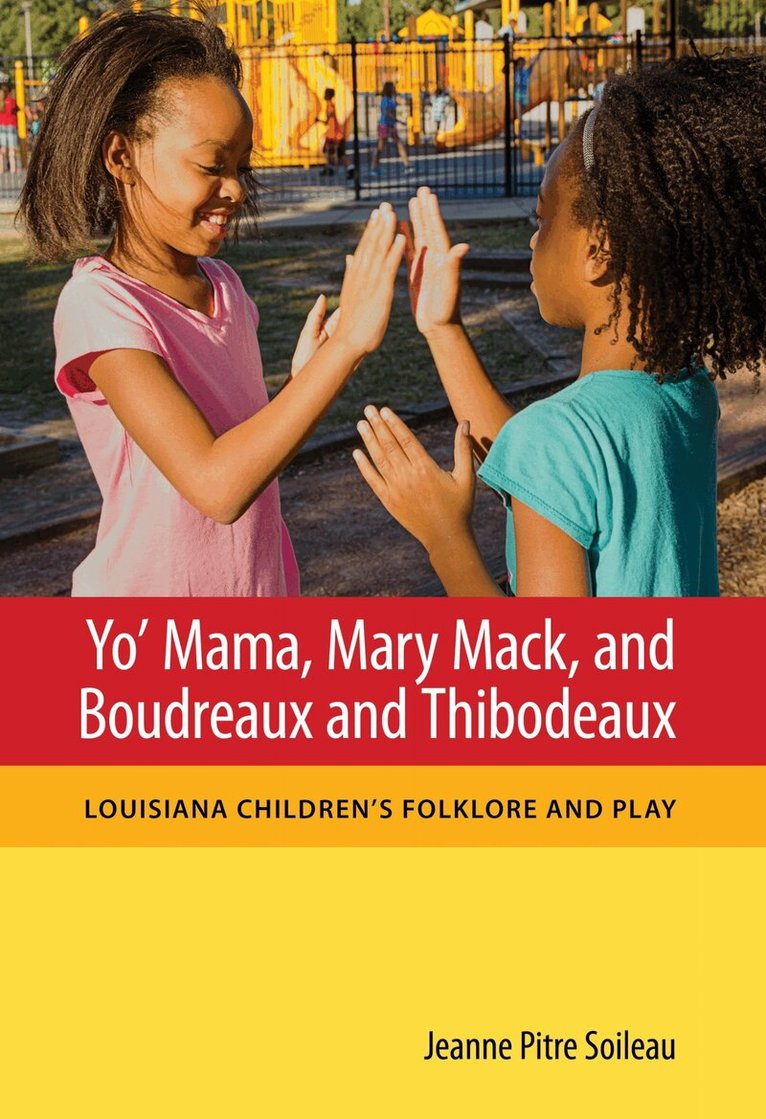
Jeanne Soileau, a teacher in New Orleans and south Louisiana for more than forty years, examines how children's folklore, especially among African Americans, has changed. From the tumult of integration to the present, her experience afforded unique opportunities to observe children as they played. With integration in New Orleans during the 1960s, Soileau notes how children began to play with one another almost immediately. Children taught each other play routines, chants, jokes, jump-rope rhymes, cheers, taunts, and teases - all the folk games that happen in normal play on the street and playground. When adults - the judges and attorneys, the parents, and the politicians - haggled and shouted, children began to hold hands in a circle, fall down together to ""Ring around the Rosie,"" and tease each other in new and creative ways. Children's ability to adapt can be seen not only in their response to social change, but in how they adopt and utilize pop culture and technology. Vast technological changes in the last third of the twentieth century influenced the way children sang, danced, played, and interacted. Soileau catalogs these changes and studies how games evolve and transform as much as they are preserved. She includes several topics of study: oral narratives and songs, jokes and tales, and teasing formulae gleaned from mostly African American sources. Because much of the field work took place on public school playgrounds, this body of oral narratives remains of particular interest to teachers, folklorists, linguists, and those who study play.In the end, Soileau shows that despite the restrictions of air-conditioning, shorter recess periods, ever-increasing hours of television watching, the growing popularity of video games, and carefully scripted after-school activities, many children in south Louisiana sustain traditional games. At the same time, they invent varied and clever new ones. As Soileau observes, children strive through their folk play to learn how to fit into a rapidly changing society.
Inbunden, Engelska, 2018
1 231 kr
Skickas inom 10-15 vardagar
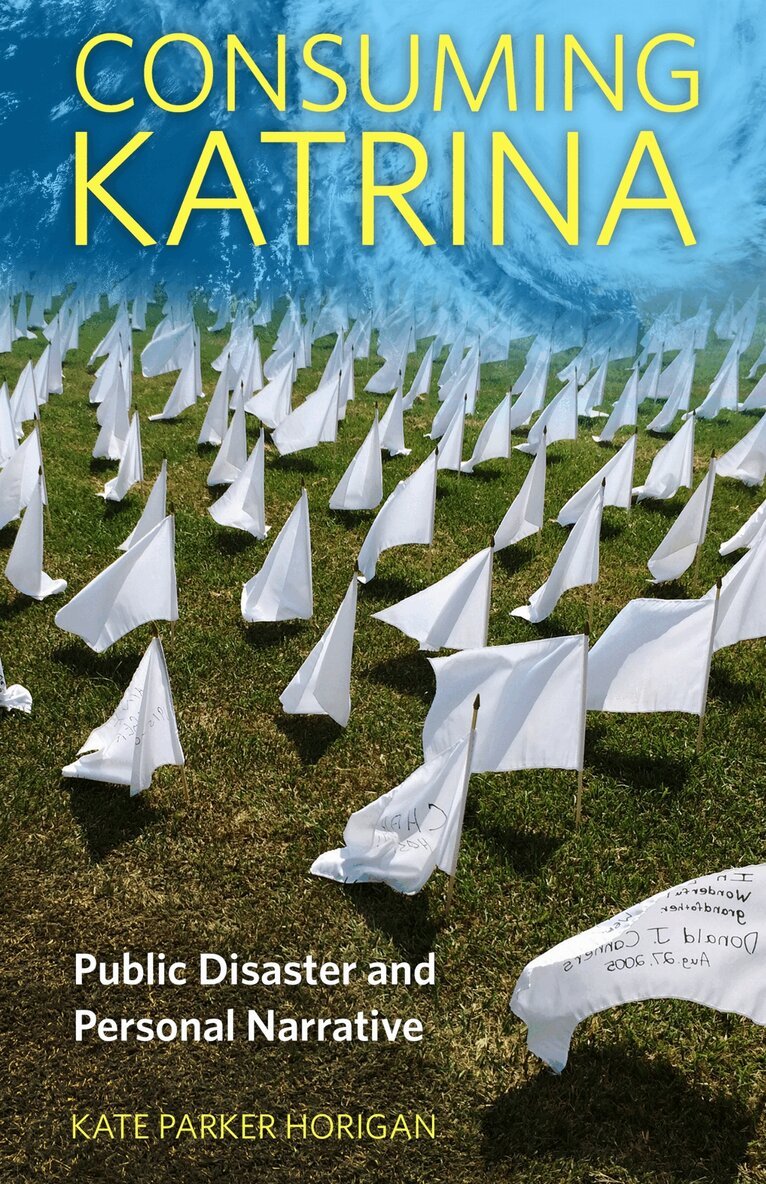
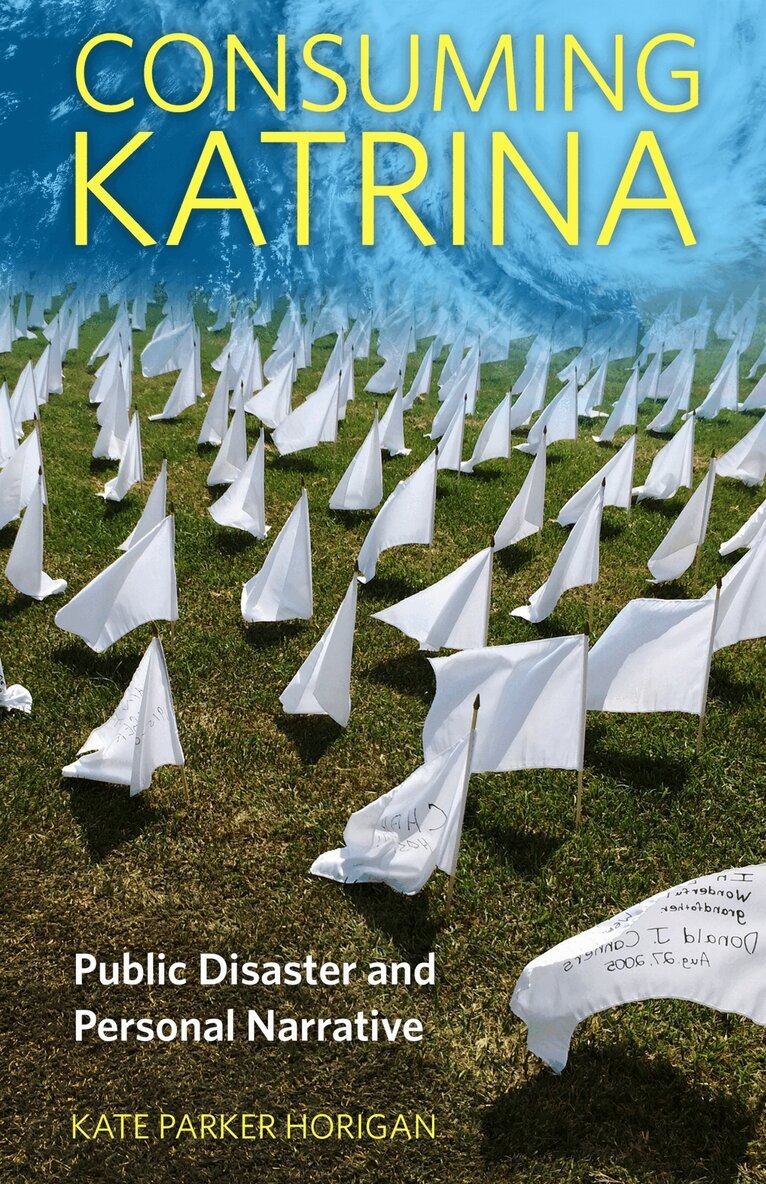
When and under what circumstances are disaster survivors able to speak for themselves in the public arena? In Consuming Katrina: Public Disaster and Personal Narrative, author Kate Parker Horigan shows how the public understands and remembers large-scale disasters like Hurricane Katrina, outlining which stories are remembered and why, as well as the impact on public memory and the survivors themselves.Horigan discusses unique contexts in which personal narratives about the storm are shared, including interviews with survivors, Dave Eggers's Zeitoun, Josh Neufeld's A.D.: New Orleans After the Deluge, Tia Lessin and Carl Deal's Trouble the Water, and public commemoration during Hurricane Katrina's tenth anniversary in New Orleans. In each case, survivors initially present themselves in specific ways, counteracting negative stereotypes that characterize their communities. However, when adapted for public presentation, their stories get reduced back to those stereotypes. As a result, people affected by Katrina continue to be seen in limited terms, as either undeserving or incapable of managing recovery.This project is rooted in Horigan's experiences living in New Orleans before and after Katrina, but it is also a case study illustrating an ongoing problem and an innovative solution: survivors' stories should be shared in a way that includes their own engagement with the processes of narrative production, circulation, and reception. When survivors are seen as agents in their own stories, they will be seen as agents in their own recovery. Having a better grasp on the processes of narration and memory is critical for improved disaster response because the stories that are most widely shared about disaster determine how communities recover.
Inbunden, Engelska, 2018
1 195 kr
Skickas inom 10-15 vardagar
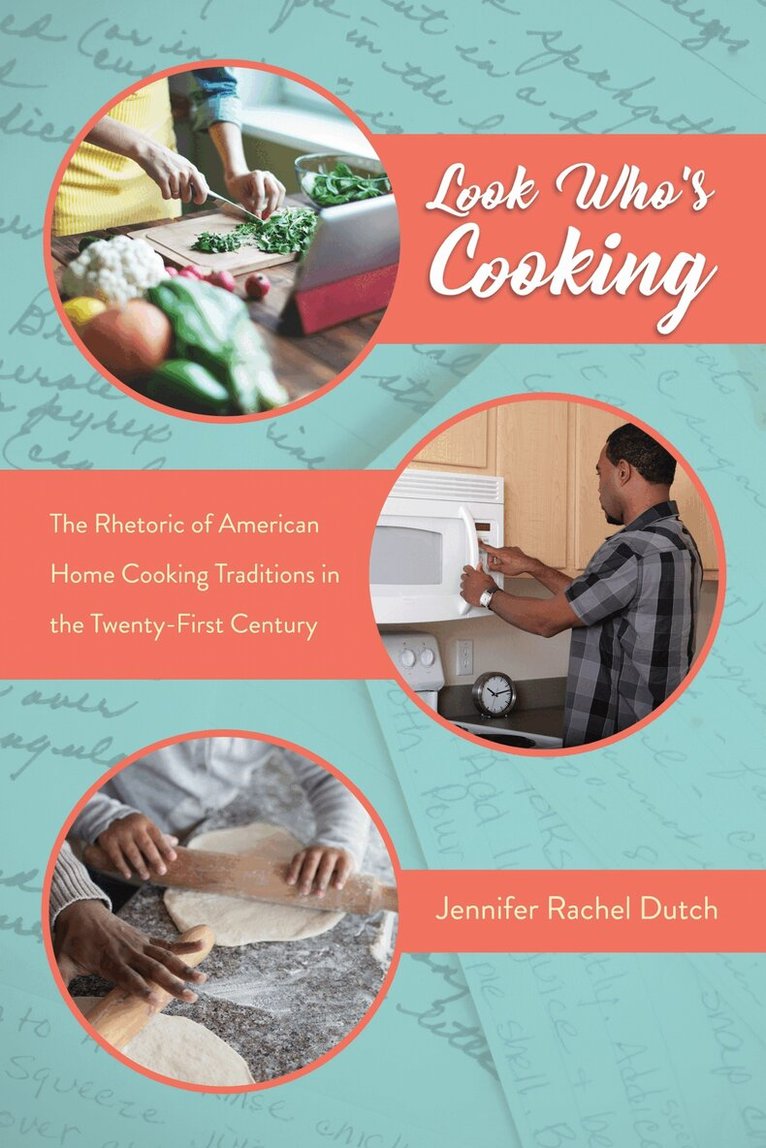
Home cooking is a multibillion-dollar industry that includes cookbooks, kitchen gadgets, high-end appliances, specialty ingredients, and more. Cooking-themed programming flourishes on television, inspiring a wide array of celebrity chef-branded goods even as self-described ""foodies"" seek authenticity by pickling, preserving, and canning foods in their own home kitchens. Despite this, claims that ""no one has time to cook anymore"" are common, lamenting the slow extinction of traditional American home cooking in the twenty-first century. In Look Who's Cooking: The Rhetoric of American Home Cooking Traditions in the Twenty-First Century, author Jennifer Rachel Dutch explores the death of home cooking, revealing how modern changes transformed cooking at home from an odious chore into a concept imbued with deep meanings associated with home, family, and community. Drawing on a wide array of texts-cookbooks, advertising, YouTube videos, and more-Dutch analyzes the many manifestations of traditional cooking in America today. She argues that what is missing from the discourse around home cooking is an understanding of skills and recipes as a form of folklore. Dutch's research reveals that home cooking is a powerful vessel that Americans fill with meaning because it represents both the continuity of the past and adaptability to the present. Home cooking is about much more than what is for dinner; it's about forging a connection to the past, displaying the self in the present, and leaving a lasting legacy for the future.
Inbunden, Engelska, 2019
1 195 kr
Skickas inom 10-15 vardagar
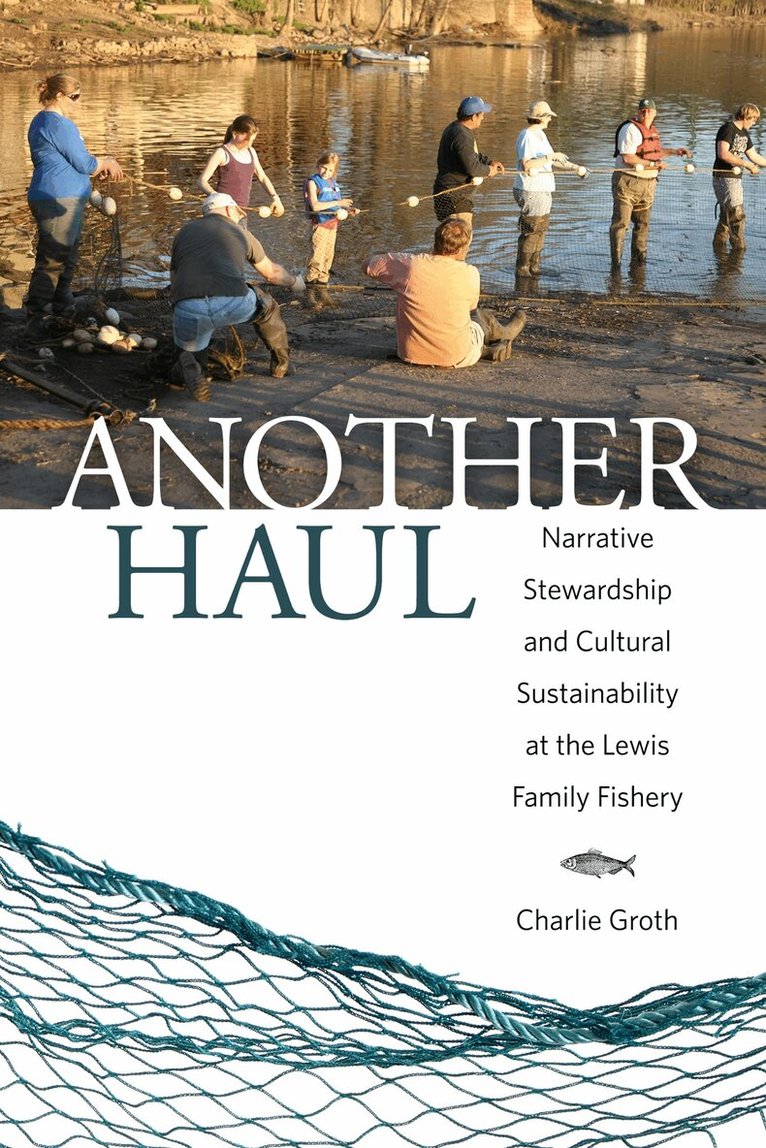
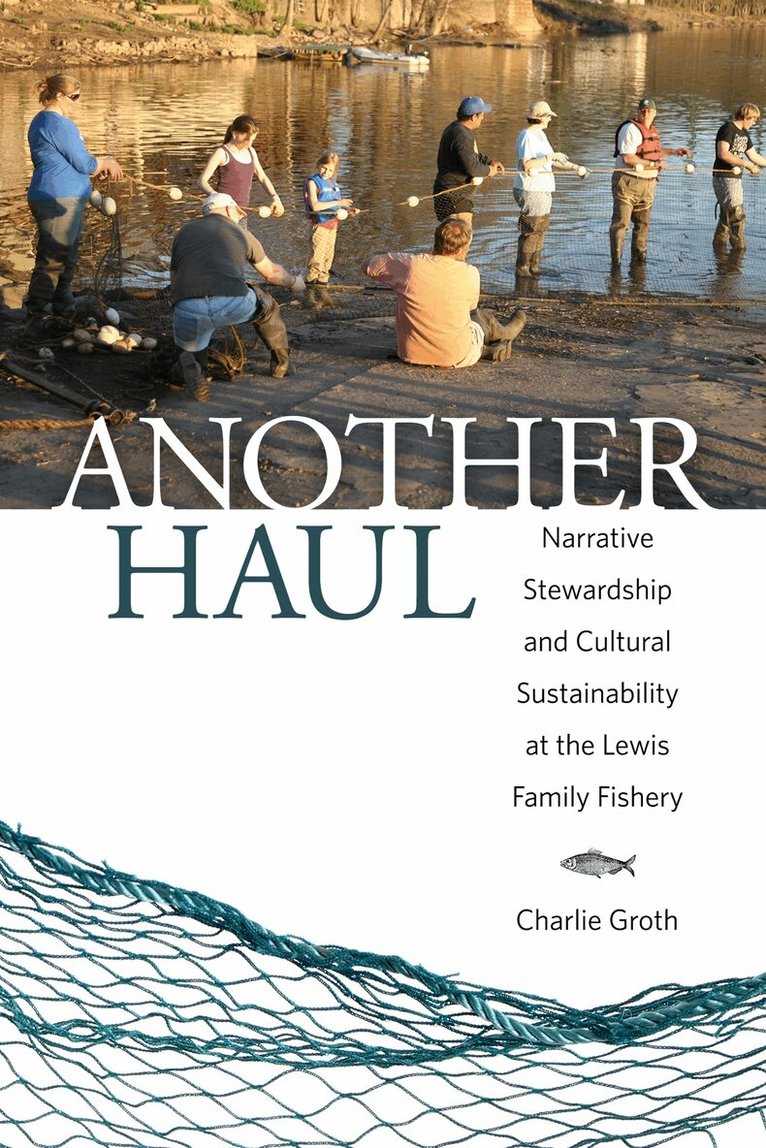
Lewis Island in Lambertville, New Jersey, is the site of the Lewis Fishery, the last haul seine American shad fishery on the nontidal Delaware River. The Lewis family has fished in the same spot since 1888 and operated the fishery through five generations. The extended Lewis family, its fishery's crew, and the Lambertville community connect with people throughout the region, including environmentalists concerned about the river. It was a Lewis who raised the alarm and helped resurrect a polluted river and its biosphere. While this once exclusively masculine activity is central to the tiny island, today men, women, and children fish, living out a sense of place, belonging, and sustainability. In Another Haul: Narrative Stewardship and Cultural Sustainability at the Lewis Family Fishery, author Charlie Groth highlights the traditional, vernacular, and everyday cultural expressions of the family and crew to understand how community, culture, and the environment intersect. Groth argues there is a system of narrative here that combines verbal activities and everyday activities. On the basis of over two decades of participation and observation, interviews, surveys, and a wide variety of published sources, Groth identifies a phenomenon she calls ""narrative stewardship."" This narrative system, emphasizing place, community, and commitment, in turn, encourages environmental and cultural stewardship, tradition, and community. Intricate and embedded, the system appears invisible, but careful study unpacks and untangles how people, often unconsciously, foster sustainability. Though an ethnography of an occupation, the volume encourages readers to consider what arises as special about all cultures and what needs to be seen and preserved.
Häftad, Engelska, 2018
371 kr
Skickas inom 10-15 vardagar
Lewis Island in Lambertville, New Jersey, is the site of the Lewis Fishery, the last haul seine American shad fishery on the nontidal Delaware River. The Lewis family has fished in the same spot since 1888 and operated the fishery through five generations. The extended Lewis family, its fishery's crew, and the Lambertville community connect with people throughout the region, including environmentalists concerned about the river. It was a Lewis who raised the alarm and helped resurrect a polluted river and its biosphere. While this once exclusively masculine activity is central to the tiny island, today men, women, and children fish, living out a sense of place, belonging, and sustainability. In Another Haul: Narrative Stewardship and Cultural Sustainability at the Lewis Family Fishery, author Charlie Groth highlights the traditional, vernacular, and everyday cultural expressions of the family and crew to understand how community, culture, and the environment intersect. Groth argues there is a system of narrative here that combines verbal activities and everyday activities. On the basis of over two decades of participation and observation, interviews, surveys, and a wide variety of published sources, Groth identifies a phenomenon she calls ""narrative stewardship."" This narrative system, emphasizing place, community, and commitment, in turn, encourages environmental and cultural stewardship, tradition, and community. Intricate and embedded, the system appears invisible, but careful study unpacks and untangles how people, often unconsciously, foster sustainability. Though an ethnography of an occupation, the volume encourages readers to consider what arises as special about all cultures and what needs to be seen and preserved.
Häftad, Engelska, 2018
371 kr
Skickas inom 10-15 vardagar
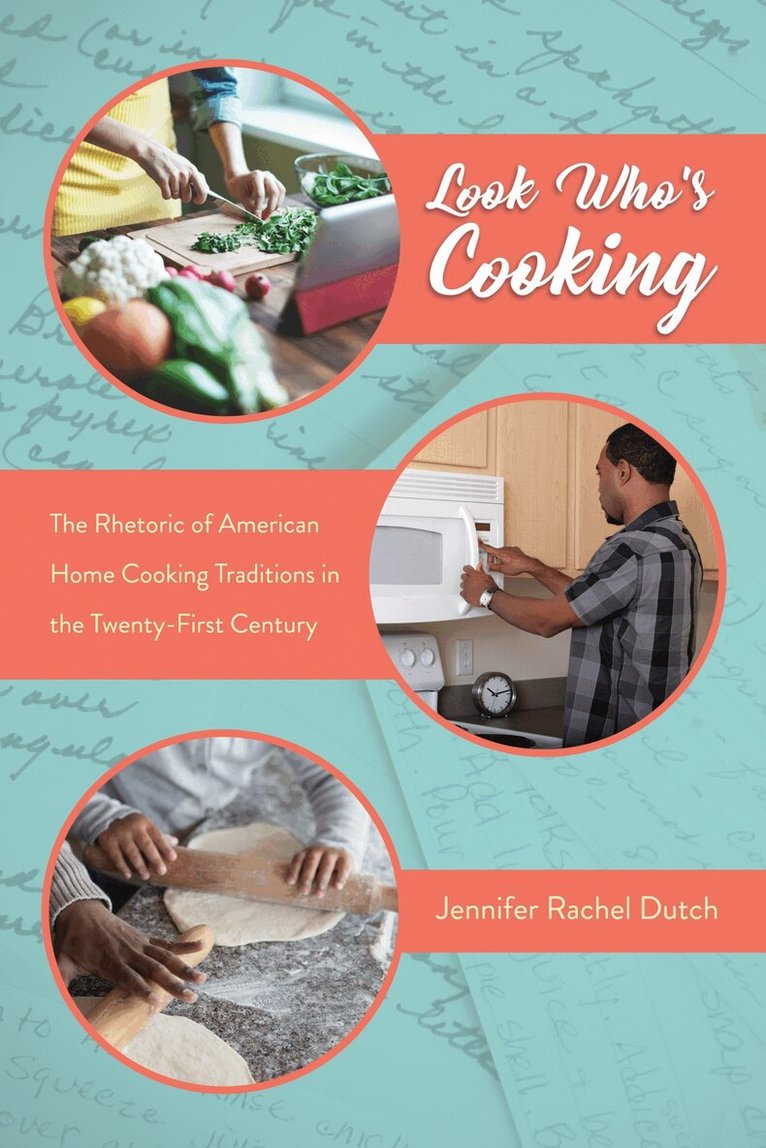
Home cooking is a multibillion-dollar industry that includes cookbooks, kitchen gadgets, high-end appliances, specialty ingredients, and more. Cooking-themed programming flourishes on television, inspiring a wide array of celebrity chef-branded goods even as self-described ""foodies"" seek authenticity by pickling, preserving, and canning foods in their own home kitchens. Despite this, claims that ""no one has time to cook anymore"" are common, lamenting the slow extinction of traditional American home cooking in the twenty-first century. In Look Who's Cooking: The Rhetoric of American Home Cooking Traditions in the Twenty-First Century, author Jennifer Rachel Dutch explores the death of home cooking, revealing how modern changes transformed cooking at home from an odious chore into a concept imbued with deep meanings associated with home, family, and community. Drawing on a wide array of texts-cookbooks, advertising, YouTube videos, and more-Dutch analyzes the many manifestations of traditional cooking in America today. She argues that what is missing from the discourse around home cooking is an understanding of skills and recipes as a form of folklore. Dutch's research reveals that home cooking is a powerful vessel that Americans fill with meaning because it represents both the continuity of the past and adaptability to the present. Home cooking is about much more than what is for dinner; it's about forging a connection to the past, displaying the self in the present, and leaving a lasting legacy for the future.
Häftad, Engelska, 2019
371 kr
Skickas inom 10-15 vardagar
Winner of the 2018 Chicago Folklore Prize and Winner of the 2018 Opie Prize.Jeanne Soileau, a teacher in New Orleans and south Louisiana for more than forty years, examines how children’s folklore, especially among African Americans, has changed. From the tumult of integration to the present, her experience afforded unique opportunities to observe children as they played. With integration in New Orleans during the 1960s, Soileau notes how children began to play with one another almost immediately. Children taught each other play routines, chants, jokes, jump-rope rhymes, cheers, taunts, and teases—all the folk games that happen in normal play on the street and playground. When adults—the judges and attorneys, the parents, and the politicians—haggled and shouted, children began to hold hands in a circle, fall down together to "Ring around the Rosie," and tease each other in new and creative ways. Children’s ability to adapt can be seen not only in their response to social change, but in how they adopt and utilize pop culture and technology. Vast technological changes in the last third of the twentieth century influenced the way children sang, danced, played, and interacted. Soileau catalogs these changes and studies how games evolve and transform as much as they are preserved. She includes several topics of study: oral narratives and songs, jokes and tales, and teasing formulae gleaned from mostly African American sources. Because much of the field work took place on public school playgrounds, this body of oral narratives remains of particular interest to teachers, folklorists, linguists, and those who study play.In the end, Soileau shows that despite the restrictions of air-conditioning, shorter recess periods, ever-increasing hours of television watching, the growing popularity of video games, and carefully scripted after-school activities, many children in south Louisiana sustain traditional games. At the same time, they invent varied and clever new ones. As Soileau observes, children strive through their folk play to learn how to fit into a rapidly changing society.
Häftad, Engelska, 2020
382 kr
Skickas inom 10-15 vardagar
When and under what circumstances are disaster survivors able to speak for themselves in the public arena? In Consuming Katrina: Public Disaster and Personal Narrative, author Kate Parker Horigan shows how the public understands and remembers large-scale disasters like Hurricane Katrina, outlining which stories are remembered and why, as well as the impact on public memory and the survivors themselves.Horigan discusses unique contexts in which personal narratives about the storm are shared, including interviews with survivors, Dave Eggers's Zeitoun, Josh Neufeld's A.D.: New Orleans After the Deluge, Tia Lessin and Carl Deal's Trouble the Water, and public commemoration during Hurricane Katrina's tenth anniversary in New Orleans. In each case, survivors initially present themselves in specific ways, counteracting negative stereotypes that characterize their communities. However, when adapted for public presentation, their stories get reduced back to those stereotypes. As a result, people affected by Katrina continue to be seen in limited terms, as either undeserving or incapable of managing recovery.This project is rooted in Horigan's experiences living in New Orleans before and after Katrina, but it is also a case study illustrating an ongoing problem and an innovative solution: survivors' stories should be shared in a way that includes their own engagement with the processes of narrative production, circulation, and reception. When survivors are seen as agents in their own stories, they will be seen as agents in their own recovery. Having a better grasp on the processes of narration and memory is critical for improved disaster response because the stories that are most widely shared about disaster determine how communities recover.
Inbunden, Engelska, 2013
381 kr
Skickas inom 3-6 vardagar
Painted screens have long been synonymous in the popular imagination with the Baltimore row house. Picturesque, practical, and quirky, window and door screens adorned with scenic views simultaneously offer privacy and ventilation in crowded neighborhoods. As an urban folk art, painted screens flourished in Baltimore, though they did not originate there--precursors date to early eighteenth-century London. They were a fixture on fine homes and businesses in Europe and America throughout the Victorian era. But as the handmade screen yielded to industrial production, the whimsical artifact of the elite classes was suddenly transformed into an item for mass consumption. Historic examples are now a rarity, but in Baltimore the folk art is still very much alive.The Painted Screens of Baltimore takes a first look at this beloved icon of one major American city through the words and images of dozens of self-taught artists who trace their creations to the capable and unlikely brush of one Bohemian immigrant, William Oktavec. In 1913, this corner grocer began a family dynasty inspired generations of artists who continue his craft to this day. The book examines the roots of painted wire cloth, the ethnic communities where painted screens have been at home for a century, and the future of this art form.
Inbunden, Engelska, 2014
1 213 kr
Skickas inom 5-8 vardagar
In A Vulgar Art Ian Brodie uses a folkloristic approach to stand-up comedy, engaging the discipline's central method of studying interpersonal, artistic communication and performance. Because stand-up comedy is a rather broad category, people who study it often begin by relating it to something they recognize--""literature"" or ""theatre""; ""editorial"" or ""morality""--and analyze it accordingly. A Vulgar Art begins with a more fundamental observation: someone is standing in front of a group of people, talking to them directly, and trying to make them laugh. So this book takes the moment of performance as its focus, that stand-up comedy is a collaborative act between the comedian and the audience.Although the form of talk on the stage resembles talk among friends and intimates in social settings, stand-up comedy remains a profession. As such, it requires performance outside of the comedian's own community to gain larger and larger audiences. How do comedians recreate that atmosphere of intimacy in a roomful of strangers? This book regards everything from microphones to clothing and LPs to Twitter as strategies for bridging the spatial, temporal, and socio-cultural distances between the performer and the audience.