Foundations of Database Design - Böcker
Visar alla böcker i serien Foundations of Database Design. Handla med fri frakt och snabb leverans.
3 produkter
3 produkter
1 325 kr
Tillfälligt slut
The evolution of Oracle has led to a revolution in design practices. For Oracle 10g, database physical structures have become more complex than ever before and database designers face multiple ways to implement their logical models. IS students studying database design and administration need to be able to implement management systems in a way that enables fast performance while preserving logical data structures.Physical Database Design Using Oracle correlates logical data models with the physical implementation structures that Oracle provides. It allows students to learn how to take logical data models and convert them into a series of data structures that permit fast and easy logical access to data. Oracle 10g offers object-oriented data structures, pure relational data structures, and specialized data structures such as index-organized tables. Given so many choices, future DBAs and Oracle designers must understand the approprate use of each physical technology and how it maps to their data models.This textbook is targeted at undergraduate and graduate IS students working to become the Oracle professionals of the near future. It is expected that they already have exposure to basic Oracle database administration. The expert guidance provided by this textbook offers the insight needed to choose appropriate physical models for mission-critical applications.
1 667 kr
Skickas inom 10-15 vardagar
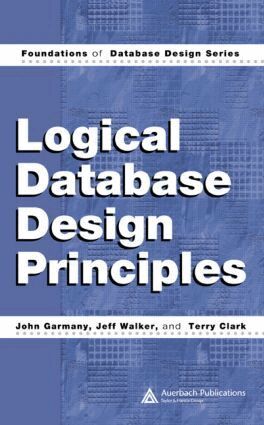
Until now, almost all books on logical database design focused exclusively on relational design. However, modern database management systems have added powerful features that have driven a movement away from truly normalized database design. Logical Database Design Principles reflects these recent changes. The book begins by covering traditional logical design principles, followed by an analysis of the normalizing and modeling of data. It then examines designing for specific purposes, such as object-oriented databases, online transaction processing (OLTP), and data warehouses. As the text progresses, it moves from the purely logical into some physical design, as determined by how the features of modern databases are implemented.Because this is a logical-design book, the authors attempt to make the examples database-neutral. Because various vendors implement features in different ways, this volume sometimes offers examples from a specific database management system. When necessary, it highlights a specific application, clearly demonstrating the concept being discussed.
1 943 kr
Skickas inom 10-15 vardagar
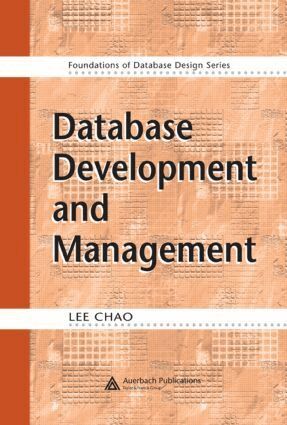
Today's database professionals must understand how to apply database systems to business processes and how to develop database systems for both business intelligence and Web-based applications.Database Development and Management explains all aspects of database design, access, implementation, application development, and management, as well as data analysis for business intelligence. This self-contained text gives students hands-on projects required for professionally developing and managing databases. It provides detailed instruction via an easy-to-follow, step-by-step case-based approach.Following an introduction to database components, the book uses case studies to illustrate the modeling process, covers table structures and normalization, and analyzes the transformation of a data model to a relational database. It explains the use of SQL in managing database objects and in querying databases, then discusses Transact-SQL and the views, indexes, and cursors that bridge databases and their applications.The book examines three major data-accessing techniques, and then shows how to develop sophisticated applications based upon the material included in previous chapters. It explores the use of databases in network environments, and details the multiple tasks handled by database administrators (DBAs).The text also discusses the OnLine Analytical Processing (OLAP) system, data warehousing, and other analysis tools that support business intelligence and decision making. It concludes with a review of data mining.