Frontiers of Developmental Science - Böcker
Visar alla böcker i serien Frontiers of Developmental Science. Handla med fri frakt och snabb leverans.

10 produkter
10 produkter
2 298 kr
Skickas inom 10-15 vardagar
The field of educational neuroscience uses new insights about the neural mechanisms of learning to improve educational practices and outcomes. The first volume to bring together the latest knowledge on the development of educational neuroscience from a life-span perspective, this important text offers state of the art, authoritative research findings in educational neuroscience before providing evidence-based recommendations for classroom practice.Thomas, Mareschal, Dumontheil, and the team of expert international contributors assembled in this volume thoroughly explore four main themes throughout the book. The first theme is individual differences, or what makes children perform better or worse in the classroom. The second theme is the nature of individual differences at different stages in development, from early years into adulthood. The third theme addresses cognitive enhancement, summarizing research that has investigated activities that might give general benefits to cognition. And the fourth theme considers the translation of research findings into classroom practices, discussing broader ethical issues raised by educational neuroscience, and what teachers need to know about neuroscience to enhance their day-to-day practice. Specific topics explored include neuropsychological perspectives on socioeconomic disparities in educational achievement, reading difficulties, phonological skills, executive function, and emotional development. Educational Neuroscience is essential reading for researchers and graduate students of educational psychology, developmental science, developmental psychology, and cognitive psychology, especially those specializing in emotion regulation.
1 072 kr
Skickas inom 10-15 vardagar
The field of educational neuroscience uses new insights about the neural mechanisms of learning to improve educational practices and outcomes. The first volume to bring together the latest knowledge on the development of educational neuroscience from a life-span perspective, this important text offers state of the art, authoritative research findings in educational neuroscience before providing evidence-based recommendations for classroom practice.Thomas, Mareschal, Dumontheil, and the team of expert international contributors assembled in this volume thoroughly explore four main themes throughout the book. The first theme is individual differences, or what makes children perform better or worse in the classroom. The second theme is the nature of individual differences at different stages in development, from early years into adulthood. The third theme addresses cognitive enhancement, summarizing research that has investigated activities that might give general benefits to cognition. And the fourth theme considers the translation of research findings into classroom practices, discussing broader ethical issues raised by educational neuroscience, and what teachers need to know about neuroscience to enhance their day-to-day practice. Specific topics explored include neuropsychological perspectives on socioeconomic disparities in educational achievement, reading difficulties, phonological skills, executive function, and emotional development. Educational Neuroscience is essential reading for researchers and graduate students of educational psychology, developmental science, developmental psychology, and cognitive psychology, especially those specializing in emotion regulation.
2 096 kr
Skickas inom 10-15 vardagar
Executive Function: Development Across the Life Span presents perspectives from leading researchers and theorists on the development of executive function from infancy to late adulthood and the factors that shape its growth and decline. Executive function is the set of higher-order cognitive processes involved in regulating attention, thoughts, and actions. Relative to other cognitive domains, its development is slow and decline begins early in late adulthood. As such, it is particularly sensitive to variations in environments and experiences, and there is growing evidence that it is susceptible to intervention – important because of its link to a wide range of important life outcomes.The volume is made up of four sections. It begins with an overview of executive function’s typical development across the lifespan, providing a foundation for the remainder of the volume. The second section presents insights into mechanisms of executive function, as provided by a variety of methodological approaches. The third and fourth sections review the current research evidence on specific factors that shape executive function’s development, focusing on normative (e.g., bilingualism, physical activity, cognitive training) and clinically relevant (e.g., substance use, neurodegenerative disease) developmental pathways.
816 kr
Skickas inom 10-15 vardagar
Executive Function: Development Across the Life Span presents perspectives from leading researchers and theorists on the development of executive function from infancy to late adulthood and the factors that shape its growth and decline. Executive function is the set of higher-order cognitive processes involved in regulating attention, thoughts, and actions. Relative to other cognitive domains, its development is slow and decline begins early in late adulthood. As such, it is particularly sensitive to variations in environments and experiences, and there is growing evidence that it is susceptible to intervention – important because of its link to a wide range of important life outcomes.The volume is made up of four sections. It begins with an overview of executive function’s typical development across the lifespan, providing a foundation for the remainder of the volume. The second section presents insights into mechanisms of executive function, as provided by a variety of methodological approaches. The third and fourth sections review the current research evidence on specific factors that shape executive function’s development, focusing on normative (e.g., bilingualism, physical activity, cognitive training) and clinically relevant (e.g., substance use, neurodegenerative disease) developmental pathways.
2 037 kr
Skickas inom 10-15 vardagar
One of the most important advances in the study of emotion regulation is understanding it as a dynamic process that develops across the life span. Emotion Regulation focuses on current conceptual and methodological issues in terms of change over various time scales: developmental change across years, as well as changes from day to day, from situation to situation, and from moment to moment. Written by top experts in the field, the volume is organized around three age periods of the life span: infancy and childhood, adolescence, and adulthood. By taking the matter of time seriously, these chapters represent promising and necessary approaches to broadening our knowledge of emotion regulation as a dynamic process that changes with age. The volume provides guidance for future research that will enable researchers to leave behind facile and static conceptualizations of emotion regulation in favor of richer and more explanatory frameworks.
793 kr
Skickas inom 10-15 vardagar
One of the most important advances in the study of emotion regulation is understanding it as a dynamic process that develops across the life span. Emotion Regulation focuses on current conceptual and methodological issues in terms of change over various time scales: developmental change across years, as well as changes from day to day, from situation to situation, and from moment to moment. Written by top experts in the field, the volume is organized around three age periods of the life span: infancy and childhood, adolescence, and adulthood. By taking the matter of time seriously, these chapters represent promising and necessary approaches to broadening our knowledge of emotion regulation as a dynamic process that changes with age. The volume provides guidance for future research that will enable researchers to leave behind facile and static conceptualizations of emotion regulation in favor of richer and more explanatory frameworks.
2 037 kr
Skickas inom 10-15 vardagar
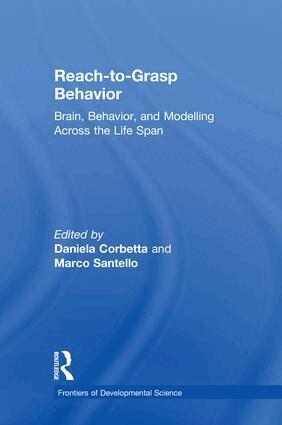
Reaching for objects in our surroundings is an everyday activity that most humans perform seamlessly a hundred times a day. It is nonetheless a complex behavior that requires the perception of objects’ features, action selection, movement planning, multi-joint coordination, force regulation, and the integration of all of these properties during the actions themselves to meet the successful demands of extremely varied task goals. Even though reach-to-grasp behavior has been studied for decades, it has, in recent years, become a particularly growing area of multidisciplinary research because of its crucial role in activities of daily living and broad range of applications to other fields, including physical rehabilitation, prosthetics, and robotics. This volume brings together novel and exciting research that sheds light into the complex sensory-motor processes involved in the selection and production of reach-to-grasp behaviors. It also offers a unique life-span and multidisciplinary perspective on the development and multiple processes involved in the formation of reach-to-grasp. It covers recent and exciting discoveries from the fields of developmental psychology and learning sciences, neurophysiology and brain sciences, movement sciences, and the dynamic field of developmental robotics, which has become a very active applied field relying on biologically inspired models. This volume is a rich and valuable resource for students and professionals in all of these research fields, as well as cognitive sciences, rehabilitation, and other applied sciences.
740 kr
Skickas inom 10-15 vardagar
Reaching for objects in our surroundings is an everyday activity that most humans perform seamlessly a hundred times a day. It is nonetheless a complex behavior that requires the perception of objects’ features, action selection, movement planning, multi-joint coordination, force regulation, and the integration of all of these properties during the actions themselves to meet the successful demands of extremely varied task goals. Even though reach-to-grasp behavior has been studied for decades, it has, in recent years, become a particularly growing area of multidisciplinary research because of its crucial role in activities of daily living and broad range of applications to other fields, including physical rehabilitation, prosthetics, and robotics. This volume brings together novel and exciting research that sheds light into the complex sensory-motor processes involved in the selection and production of reach-to-grasp behaviors. It also offers a unique life-span and multidisciplinary perspective on the development and multiple processes involved in the formation of reach-to-grasp. It covers recent and exciting discoveries from the fields of developmental psychology and learning sciences, neurophysiology and brain sciences, movement sciences, and the dynamic field of developmental robotics, which has become a very active applied field relying on biologically inspired models. This volume is a rich and valuable resource for students and professionals in all of these research fields, as well as cognitive sciences, rehabilitation, and other applied sciences.
2 168 kr
Skickas inom 10-15 vardagar
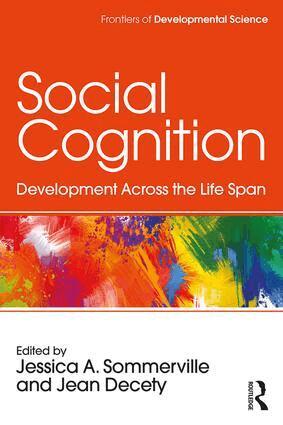
Social Cognition brings together diverse and timely writings that highlight cutting-edge research and theories on the development of social cognition and social behavior across species and the life span. The volume is organized according to two central themes that address issues of continuity and change both at the phylogenetic and the ontogenetic level. First, it addresses to what extent social cognitive abilities and behaviors are shared across species, versus abilities and capacities that are uniquely human. Second, it covers to what extent social cognitive abilities and behaviors are continuous across periods of development within and across the life span, versus their change with age. This volume offers a fresh perspective on social cognition and behavior, and shows the value of bringing together different disciplines to illuminate our understanding of the origins, mechanisms, functions, and development of the many capacities that have evolved to facilitate and regulate a wide variety of behaviors fine-tuned to group living.
793 kr
Skickas inom 10-15 vardagar
Social Cognition brings together diverse and timely writings that highlight cutting-edge research and theories on the development of social cognition and social behavior across species and the life span. The volume is organized according to two central themes that address issues of continuity and change both at the phylogenetic and the ontogenetic level. First, it addresses to what extent social cognitive abilities and behaviors are shared across species, versus abilities and capacities that are uniquely human. Second, it covers to what extent social cognitive abilities and behaviors are continuous across periods of development within and across the life span, versus their change with age. This volume offers a fresh perspective on social cognition and behavior, and shows the value of bringing together different disciplines to illuminate our understanding of the origins, mechanisms, functions, and development of the many capacities that have evolved to facilitate and regulate a wide variety of behaviors fine-tuned to group living.