Frontiers of Nanoscience - Böcker
1 410 kr
Skickas inom 7-10 vardagar
1 654 kr
Skickas inom 7-10 vardagar
Work with individual atoms and molecules aims to demonstrate that miniaturized electronic, optical, magnetic, and mechanical devices can operate ultimately even at the level of a single atom or molecule. As such, atomic and molecular manipulation has played an emblematic role in the development of the field of nanoscience. New methods based on the use of the scanning tunnelling microscope (STM) have been developed to characterize and manipulate all the degrees of freedom of individual atoms and molecules with an unprecedented precision. In the meantime, new concepts have emerged to design molecules and substrates having specific optical, mechanical and electronic functions, thus opening the way to the fabrication of real nano-machines. Manipulation of individual atoms and molecules has also opened up completely new areas of research and knowledge, raising fundamental questions of "Optics at the atomic scale", "Mechanics at the atomic scale", Electronics at the atomic scale", "Quantum physics at the atomic scale", and "Chemistry at the atomic scale". This book aims to illustrate the main aspects of this ongoing scientific adventure and to anticipate the major challenges for the future in "Atomic and molecular manipulation" from fundamental knowledge to the fabrication of atomic-scale devices.
Provides a broad overview of the field to aid those new and entering into this research area Presents a review of the historical development and evolution of the field Offers a clear personalized view of current scanning probe microscopy research from world expertsNanomagnetism: Fundamentals and Applications
1 654 kr
Skickas inom 7-10 vardagar
1 471 kr
Skickas inom 7-10 vardagar
Nanomaterials in the Environment covers all aspects of manufactured nanomaterials and their impact and behavior in the environment. Starting with a general overview of the field, emphasizing key points and background, the book then covers crucial specific areas, including nanomaterial transformations in the environment due to dissolution, aggregation, and other processes, and the modeling of environmental exposure and fate. A chapter on formation of the "eco-corona� investigates the state of the art with specific reference to the protein corona literature in human health. Finally, there are chapters on mechanisms of biouptake and toxicity.
The fast-moving nature of the field and the quality of the submissions make this book essential reading for all those working in this area. It is suitable for researchers from Masters-level upwards, and for regulators and industry. The book can also be used as a high-level teaching aid.
Edited and written by leaders in this area Environmental behavior and effects are discussed in depth Useful for specialists and generalists at all levels of experienceCharacterization of Nanomaterials in Complex Environmental and Biological Media
1 654 kr
Skickas inom 7-10 vardagar
Characterization of Nanomaterials in Complex Environmental and Biological Media covers the novel properties of nanomaterials and their applications to consumer products and industrial processes.
The book fills the growing gap in this challenging area, bringing together disparate strands in chemistry, physics, biology, and other relevant disciplines. It provides an overview on nanotechnology, nanomaterials, nano(eco)toxicology, and nanomaterial characterization, focusing on the characterization of a range of nanomaterial physicochemical properties of relevance to environmental and toxicological studies and their available analytical techniques.
Readers will find a multidisciplinary approach that provides highly skilled scientists, engineers, and technicians with the tools they need to understand and interpret complicated sets of data obtained through sophisticated analytical techniques.
Addresses the requirements, challenges, and solutions for nanomaterial characterization in environmentally complex media Focuses on technique limitations, appropriate data collection, data interpretation, and analysis Aids in understanding and comparing nanomaterial characterization data reported in the literature using different analytical tools Includes case studies of characterization relevant complex media to enhance understandingProtected Metal Clusters: From Fundamentals to Applications
1 654 kr
Skickas inom 7-10 vardagar
Protected Metal Clusters: From Fundamentals to Applications surveys the fundamental concepts and potential applications of atomically precise metal clusters protected by organic ligands.
As this class of materials is now emerging as a result of breakthroughs in synthesis and characterization that have taken place over the last few years, the book provides the first reference with a focus on these exciting novel nanomaterials, explaining their formation, and how, and why, they play an important role in the future of molecular electronics, catalysis, sensing, biological imaging, and medical diagnosis and therapy.
Surveys the fundamental concepts and potential applications of atomically precise metal clusters protected by organic ligands. Provides well-organized, tutorial style chapters that are ideal for teaching and self-study In-depth descriptions by top scientists in the field Presents the state-of-the art of protected metal clusters and their future prospects1 654 kr
Skickas inom 7-10 vardagar
Structure and Properties of Nanoalloys is devoted to the topic of alloy nanoparticles, the bi-or multicomponent metallic nanoparticles that are often called nanoalloys. The interest in nanoalloys stems from the wide spectrum of their possible applications in the fields of catalysis, magnetism, and optics.
Nanoalloys are also interesting from a basic science point-of-view due to the complexity of their structures and properties. Nanoalloys are presently a very lively research area, with impressive developments in the last ten years. This book meets the need to systematize the wealth of experimental and computational results generated over the last decade.
Provides a well-organized, coherent overall structure, with a tutorial style format ideal for teaching and self-study In-depth and fluent descriptions by a single leading academic Presents a wealth of experimental and computational results generated over the last decadeMaterials and Processes for Next Generation Lithography
1 654 kr
Skickas inom 7-10 vardagar
As the requirements of the semiconductor industry have become more demanding in terms of resolution and speed it has been necessary to push photoresist materials far beyond the capabilities previously envisioned. Currently there is significant worldwide research effort in to so called Next Generation Lithography techniques such as EUV lithography and multibeam electron beam lithography.
These developments in both the industrial and the academic lithography arenas have led to the proliferation of numerous novel approaches to resist chemistry and ingenious extensions of traditional photopolymers. Currently most texts in this area focus on either lithography with perhaps one or two chapters on resists, or on traditional resist materials with relatively little consideration of new approaches.
This book therefore aims to bring together the worlds foremost resist development scientists from the various community to produce in one place a definitive description of the many approaches to lithography fabrication.
Assembles up-to-date information from the world's premier resist chemists and technique development lithographers on the properties and capabilities of the wide range of resist materials currently under investigation Includes information on processing and metrology techniques Brings together multiple approaches to litho pattern recording from academia and industry in one place1 837 kr
Skickas inom 7-10 vardagar
Computational Modelling of Nanoparticles highlights recent advances in the power and versatility of computational modelling, experimental techniques, and how new progress has opened the door to a more detailed and comprehensive understanding of the world of nanomaterials. Nanoparticles, having dimensions of 100 nanometers or less, are increasingly being used in applications in medicine, materials and manufacturing, and energy. Spanning the smallest sub-nanometer nanoclusters to nanocrystals with diameters of 10s of nanometers, this book provides a state-of-the-art overview on how computational modelling can provide, often otherwise unobtainable, insights into nanoparticulate structure and properties.
This comprehensive, single resource is ideal for researchers who want to start/improve their nanoparticle modelling efforts, learn what can be (and what cannot) achieved with computational modelling, and understand more clearly the value and details of computational modelling efforts in their area of research.
Explores how computational modelling can be successfully applied at the nanoscale level Includes techniques for the computation modelling of different types of nanoclusters, including nanoalloy clusters, fullerines and Ligated and/or solvated nanoclusters Offers complete coverage of the use of computational modelling at the nanoscale, from characterization and processing, to applicationsSelf-Assembly of Nano- and Micro-structured Materials Using Colloidal Engineering
1 837 kr
Skickas inom 7-10 vardagar
Self-assembly of Nano- and Micro-structured Materials Using Colloidal Engineering, Volume 12, covers the recent breakthroughs in the design and manufacture of functional colloids at the micro- and nanoscale level. In addition, it provides analyses on how these functionalities can be exploited to develop self-assembly pathways towards nano- and micro-structured materials. As we seek increasingly complex functions for colloidal superstructures, in silico design will play a critical role in guiding experimental fabrication by reducing the element of trial-and-error that would otherwise be involved.
In addition to novel experimental approaches, recent developments in computational modelling are also presented, along with an overview of the arsenal of designing tools that are available to the modern materials scientist.
Focuses on promoting feedback between experiment, theory and computation in this cross-disciplinary research area Shows how colloid science plays a crucial role in the bottom-up fabrication of nanostructured materials Presents recent developments in computational modellingCluster Beam Deposition of Functional Nanomaterials and Devices
2 081 kr
Skickas inom 7-10 vardagar
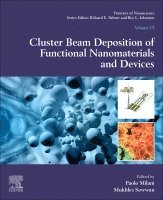
Cluster Beam Deposition of Functional Nanomaterials and Devices, Volume 15, provides up-to-date information on the CBD of novel nanomaterials and devices. The book offers an overview of gas phase synthesis in a range of nanoparticles, along with discussions on the development of several devices and applications. Applications include, but are not limited to catalysis, smart nanocomposites, nanoprobes, electronic devices, gas sensors and biosensors. This is an important reference source for materials scientists and engineers who want to learn more about this sustainable, innovative manufacturing technology.
Explores the use of CBD for the fabrication of functionalized nanomaterials and devices Shows how CBD is used for both sensing and biomedical applications Discusses how this emerging technology is being commercialized for use on a large-scaleNanostructured Thin Films
Fundamentals and Applications
1 898 kr
Skickas inom 7-10 vardagar
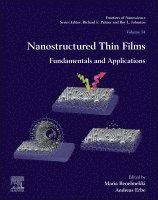
Nanostructured Thin Films: Fundamentals and Applications presents an overview of the synthesis and characterization of thin films and their nanocomposites. Both vapor phase and liquid phase approaches are discussed, along with the methods that are sufficiently attractive for large-scale production. Examples of applications in clean energy, sensors, biomedicine, anticorrosion and surface modification are also included. As the applications of thin films in nanomedicine, cell phones, solar cell-powered devices, and in the protection of structural materials continues to grow, this book presents an important research reference for anyone seeking an informed overview on their structure and applications.
Shows how thin films are being used to create more efficient devices in the fields of medicine and energy harvesting Discusses how to alter the design of nanostructured thin films by vapor phase and liquid phase methods Explores how modifying the structure of thin films for specific applications enhances their performanceColloids for Nanobiotechnology
Synthesis, Characterization and Potential Applications
2 081 kr
Skickas inom 7-10 vardagar
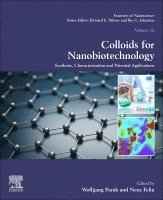
Colloids for Nanobiotechnology: Synthesis, Characterization and Potential Applications, Volume 17, offers a range of perspectives on emerging nano-inspired colloidal applications. With an emphasis on biomedical and environmental opportunities and challenges, the book outlines how nanotechnology is being used to increase the uses and impact of colloid science. Nanotechnology offers new horizons for colloidal research and synthesis routes that allow for the production of highly reproducible and defined materials. This book presents new characterization methods and a fundamental understanding of basic physicochemical, physical and chemical properties.
Explores the use of nanotechnology in enhancing colloidal characterization techniques Explains how colloids are being used in a range of nanomedical applications Demonstrates how nanotechnology is being used to create more efficient colloidal synthesis techniquesNanobiotechnology
Inorganic Nanoparticles vs Organic Nanoparticles
1 483 kr
Skickas inom 7-10 vardagar
2 081 kr
Skickas inom 7-10 vardagar
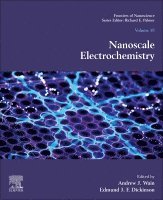
Nanoscale Electrochemistry focuses on challenges and advances in electrochemical nanoscience at solid-liquid interfaces, highlighting the most prominent developments of the last decade. Nanotechnology has had a tremendous effect on the multidisciplinary field of electrochemistry, yielding new fundamental insights that have broadened our understanding of interfacial processes and stimulating new and diverse applications.
The book begins with a tutorial chapter to introduce the principles of nanoscale electrochemical systems and emphasize their unique behavior compared with their macro/microscopic counterparts. Building on this, the following three chapters present analytical applications, such as sensing and electrochemical imaging, that are familiar to the traditional electrochemist but whose extension to the nanoscale is nontrivial and reveals new chemical information. The subsequent three chapters present exciting new electrochemical methodologies that are specific to the nanoscale,
including "single entity"-based methods and surface-enhanced electrochemical spectroscopy. These techniques, now sufficiently mature for exposition, have paved the way for major developments in our understanding of solid-liquid interfaces and continue to push electrochemical analysis toward atomic-length scales. The final three chapters address the rich overlap between electrochemistry and nanomaterials science, highlighting notable applications in energy conversion and storage.
This is an important reference for both academic and industrial researchers who are seeking to learn more about how nanoscale electrochemistry has developed in recent years.
Outlines the major applications of nanoscale electrochemistry in energy storage, spectroscopy and biology Summarizes the major principles of nanoscale electrochemical systems, exploring how they differ from similar system types Discusses the major challenges of electrochemical analysis at the nanoscaleNanomaterials for Electrochemical Energy Storage
Challenges and Opportunities
2 081 kr
Skickas inom 7-10 vardagar
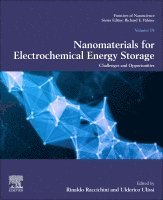
Nanomaterials for Electrochemical Energy Storage: Challenges and Opportunities, Volume Nineteen provides an objective, realistic overview on the use of nanomaterials for various rechargeable electrochemical energy storage systems. It delivers a clear message on opportunities and critical aspects for the application of nanomaterials in currently available commercial devices (i.e., lithium-ion, supercapacitors, lithium-ion capacitors) and in the most promising battery technologies (e.g., lithium-sulphur, sodium-ion, metal-air, multivalent-ion batteries, dual-ion). In addition, it covers the use of nanomaterials on two of the most promising research pathways, specifically solid electrolytes and nanostructured alkali metal interfaces. Finally, the book outlines future use scenarios in developed and industrial applications.
Nanomaterials have been considered as the "holy grail� of electrochemical energy storage during recent decades. Compounds and composites made of nanomaterials have opened unexpected research avenues, allowing entirely new classes of materials to be explored.
Covers the major nanomaterials classes used for electrochemical energy storage devices Assesses the major challenges of using nanomaterials for energy storage Shows how the use of nanomaterials can lead to lower cost and more efficient energy storage products and devices1 837 kr
Skickas inom 7-10 vardagar
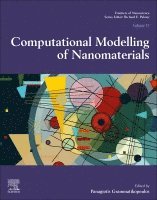
Due to their small size and their dependence on very fast phenomena, nanomaterials are ideal systems for computational modelling. This book provides an overview of various nanosystems classified by their dimensions: 0D (nanoparticles, QDs, etc.), 1D (nanowires, nanotubes), 2D (thin films, graphene, etc.), 3D (nanostructured bulk materials, devices). Fractal dimensions, such as nanoparticle agglomerates, percolating films and combinations of materials of different dimensionalities are also covered (e.g. epitaxial decoration of nanowires by nanoparticles, i.e. 0D+1D nanomaterials). For each class, the focus will be on growth, structure, and physical/chemical properties.
The book presents a broad range of techniques, including density functional theory, molecular dynamics, non-equilibrium molecular dynamics, finite element modelling (FEM), numerical modelling and meso-scale modelling. The focus is on each method's relevance and suitability for the study of materials and phenomena in the nanoscale.
This book is an important resource for understanding the mechanisms behind basic properties of nanomaterials, and the major techniques for computational modelling of nanomaterials.
Explores the major modelling techniques used for different classes of nanomaterial Assesses the best modelling technique to use for each different type of nanomaterials Discusses the challenges of using certain modelling techniques with specific nanomaterialsSemiconductor Nanodevices
Physics, Technology and Applications
2 081 kr
Skickas inom 7-10 vardagar
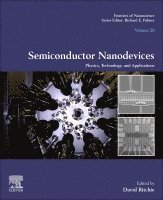
Semiconductor Nanodevices: Physics, Technology and Applications explores recent advances in the field. The behaviour of these devices is controlled by regions of nanoscale dimensions which typically determine the local density of electronic states and lead to the observation of a range of quantum effects with significant potential for exploitation.
The book opens with an introduction describing the development of this research field over the past few decades which contrasts quantum-controlled devices to conventional nanoscale electronic devices where an emphasis has often been placed on minimising quantum effects.
This introduction is followed by seven chapters describing electrical nanodevices and five chapters describing opto-electronic nanodevices; individual chapters review important recent advances.
These chapters include specific fabrication details for the structures and devices described as well as a discussion of the physics made accessible. It is an important reference source for physicists, materials scientists and engineers who want to learn more about how semiconductor-based nanodevices are being developed for both science and potential industrial applications.
The section on electrical devices includes chapters describing the study of electron correlation effects using transport in quantum point contacts and tunnelling between one-dimensional wires; the high-frequency pumping of single electrons; thermal effects in quantum dots; the use of silicon quantum dot devices for qubits and quantum computing; transport in topological insulator nanoribbons and a comprehensive discussion of noise in electrical nanodevices.
The optical device section describes the use of self-assembled III-V semiconductor nanostructures embedded in devices for a range of applications, including quantum dots for single and entangled photon sources, quantum dots and nanowires in lasers and quantum dots in solar cells.
Explores the major industrial applications of semiconductor nanodevices Explains fabrication techniques for the production of semiconductor nanodevices Assesses the challenges for the mass production of semiconductor nanodevices1 788 kr
Skickas inom 7-10 vardagar
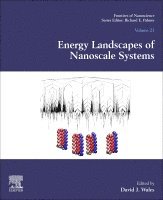
Energy Landscapes of Nanoscale Systems provides a snapshot of the state-of-the-art in energy landscapes theory and applications. The book's chapters reflect diversity and knowledge transfer that is a key strength of the energy landscape approach. To reflect the breadth of this field, contributions include applications for clusters, biomolecules, crystal structure prediction and glassy materials. Chapters highlighting new methodologies, especially enhanced sampling techniques are included. In particular, the development and application of global optimization for structure prediction, methods for treating broken ergodicity on multifunnel landscapes, and treatment of rare event dynamics that reflect the state-of-the-art are featured.
This book is an important reference source for materials scientists and energy engineers who want to understand more about how nanotechnology applies to the energy landscape approach. This volume is dedicated to Prof. Roy L. Johnston, who was formerly Co-Editor of the Frontiers of Nanoscience series, and who passed away in 2019.
Outlines applications and advances in theory and simulation of energy systems at the nanoscale Explores how the energy landscapes approach is being applied to nanoscale materials Assesses major challenges in applying nanomaterials for energy applications on an industrial scale