Future of the Religious Past - Böcker
Visar alla böcker i serien Future of the Religious Past. Handla med fri frakt och snabb leverans.
8 produkter
8 produkter
1 308 kr
Skickas inom 11-20 vardagar
What do we talk about when we talk about "religion"? Is it an array of empirical facts about historical human civilizations? Or is religion what is in essence unpredictable—perhaps the very emergence of the new? In what ways are the legacies of religion—its powers, words, things, and gestures—reconfiguring themselves as the elementary forms of life in the twenty-first century?Given the Latin roots of the word religion and its historical Christian uses, what sense, if any, does it make to talk about "religion" in other traditions? Where might we look for common elements that would enable us to do so? Has religion as an overarching concept lost all its currency, or does it ineluctably return—sometimes in unexpected ways—the moment we attempt to do without it?This book explores the difficulties and double binds that arise when we ask "What is religion?" Offering a marvelously rich and diverse array of perspectives, it begins the task of rethinking "religion" and "religious studies" in a contemporary world. Opening essays on the question "What is religion?" are followed by clusters exploring the relationships among religion, theology, and philosophy and the links between religion, politics, and law. Pedagogy is the focus of the following section. Religion is then examined in particular contexts, from classical times to the present Pentacostal revival, leading into an especially rich set of essays on religion, materiality, and mediatization. The final section grapples with the ever-changing forms that "religion" is taking, such as spirituality movements and responses to the ecological crisis.Featuring the work of leading scholars from a wide array of disciplines, traditions, and cultures, Religion: Beyond a Concept will help set the agenda for religious studies for years to come. It is the first of five volumes in a collection entitled The Future of the Religious Past, the fruit of a major international research initiative funded by the Netherlands Organization for Scientific Research.
1 062 kr
Skickas inom 7-10 vardagar
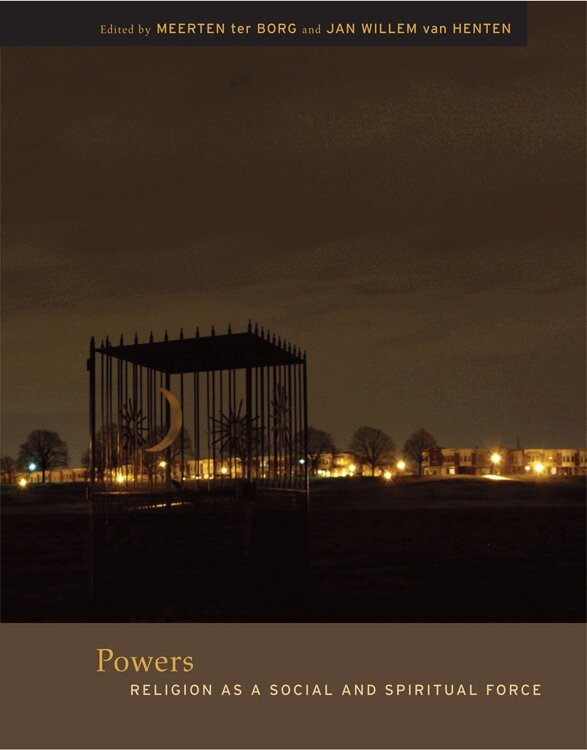
This book, the first themed volume in the series The Future of the Religious Past, elaborates the manifold and fascinating interconnections between power and religion. It carries forward the work of the series in bringing together scholars from many disciplines and countries to research forms of religion in a way unfettered by the idea that religion is solely or even primarily a matter of belief in specific tenets or intellectual systems—it is also a matter of multiple particulars in individual and social life, such as powers, things, gestures, and words.Dealing with the nexus of religion and power, the present volume radically undermines the idea that the political relevance of religion is a thing of the past. Its essays treat power as a central aspect of religion on many levels, from that of macro-politics through the links between religion and nationhood to the level of personal empowerment or its obverse, disempowerment.Power and religion are both omnipresent in human action and interaction. There is no human act that does not include some kind of faith in a positive outcome and no deed in which power does not play some role. People obviously can attempt to use religion as an instrument to enhance their power or improve their status, whether personally or at the level of the nationstate. Yet religion is in principle ambiguous in relation to power: It can disempower as well as empower, and it can even function as a critique of existing power relations. Moreover,there is the consolatory function of religion, offering ways of compensation, of healing, and of enduring feelings of powerlessness.Like the first volume in the series, Religion: Beyond a Concept, the essays in this volume strike a balance between broad analyses of the nature of religion and power in their modes of emergence today and specific case studies from anthropology, sociology, and the arts. It is noteworthy for the breadth of the material it treats and its reach outside the Christian West, while not taking anything in that Western tradition for granted, given the astonishing changes of supposedly familiar religious phenomena we are viewing in the contemporary world.
416 kr
Skickas inom 7-10 vardagar
This book, the first themed volume in the series The Future of the Religious Past, elaborates the manifold and fascinating interconnections between power and religion. It carries forward the work of the series in bringing together scholars from many disciplines and countries to research forms of religion in a way unfettered by the idea that religion is solely or even primarily a matter of belief in specific tenets or intellectual systems—it is also a matter of multiple particulars in individual and social life, such as powers, things, gestures, and words.Dealing with the nexus of religion and power, the present volume radically undermines the idea that the political relevance of religion is a thing of the past. Its essays treat power as a central aspect of religion on many levels, from that of macro-politics through the links between religion and nationhood to the level of personal empowerment or its obverse, disempowerment.Power and religion are both omnipresent in human action and interaction. There is no human act that does not include some kind of faith in a positive outcome and no deed in which power does not play some role. People obviously can attempt to use religion as an instrument to enhance their power or improve their status, whether personally or at the level of the nationstate. Yet religion is in principle ambiguous in relation to power: It can disempower as well as empower, and it can even function as a critique of existing power relations. Moreover,there is the consolatory function of religion, offering ways of compensation, of healing, and of enduring feelings of powerlessness.Like the first volume in the series, Religion: Beyond a Concept, the essays in this volume strike a balance between broad analyses of the nature of religion and power in their modes of emergence today and specific case studies from anthropology, sociology, and the arts. It is noteworthy for the breadth of the material it treats and its reach outside the Christian West, while not taking anything in that Western tradition for granted, given the astonishing changes of supposedly familiar religious phenomena we are viewing in the contemporary world.
455 kr
Skickas inom 7-10 vardagar
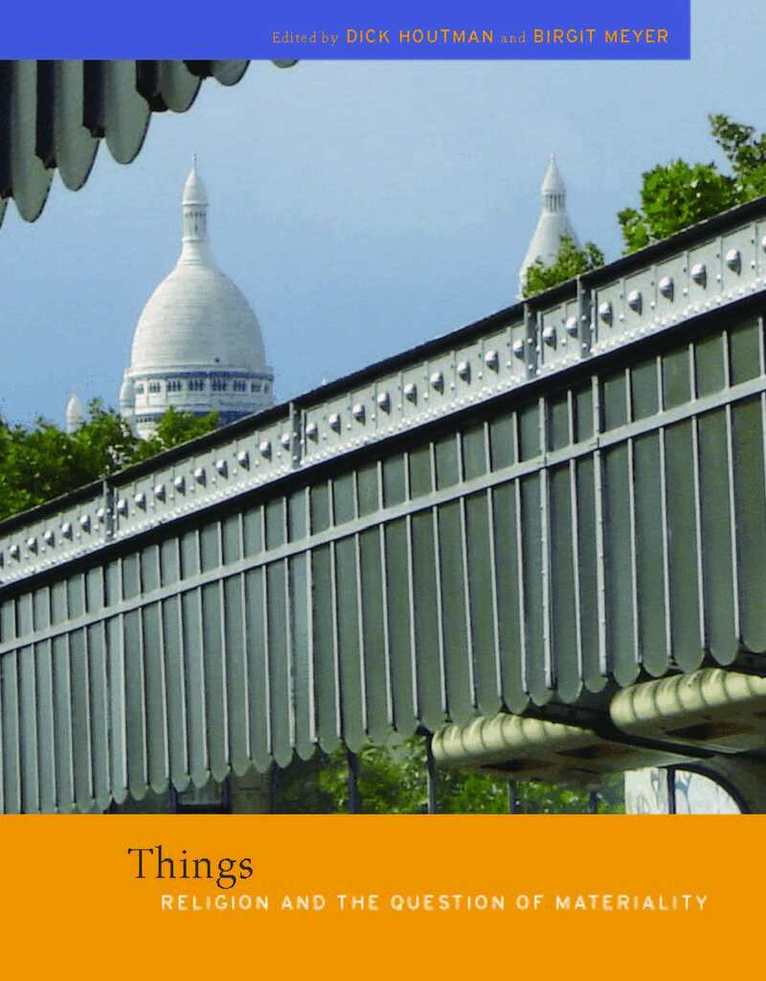
This volume addresses the relation between religion and things. That relation has long been conceived in antagonistic terms, privileging spirit above matter, belief above ritual and objects, meaning above form, and "inward" contemplation above "outward" action. After all, wasn't the opposition between spirituality and materiality the defining characteristic of religion, understood as geared to a transcendental beyond that was immaterial by definition? Grounded in the rise of religion as a modern category, with Protestantism as its main exponent, this conceptualization devalues religious things as lacking serious empirical, let alone theoretical, interest. The resurgence of public religion in our time has exposed the limitations of this attitude.Taking materiality seriously, this volume uses as a starting point the insight that religion necessarily requires some kind of incarnation, through which the beyond to which it refers becomes accessible. Conjoining rather than separating spirit and matter, incarnation (whether understood as "the word becoming flesh" or in a broader sense) places at center stage the question of how the realm of the transcendental, spiritual, or invisible is rendered tangible in the world.How do things matter in religious discourse and practice? How are we to account for the value or devaluation, the appraisal or contestation, of things within particular religious perspectives? How are we to rematerialize our scholarly approaches to religion? These are the key questions addressed by this multidisciplinary volume.Focusing on different kinds of things that matter for religion, including sacred artifacts, images, bodily fluids, sites, and electronic media, it offers a wide-ranging set of multidisciplinary studies that combine detailed analysis and critical reflection.
1 009 kr
Skickas inom 7-10 vardagar
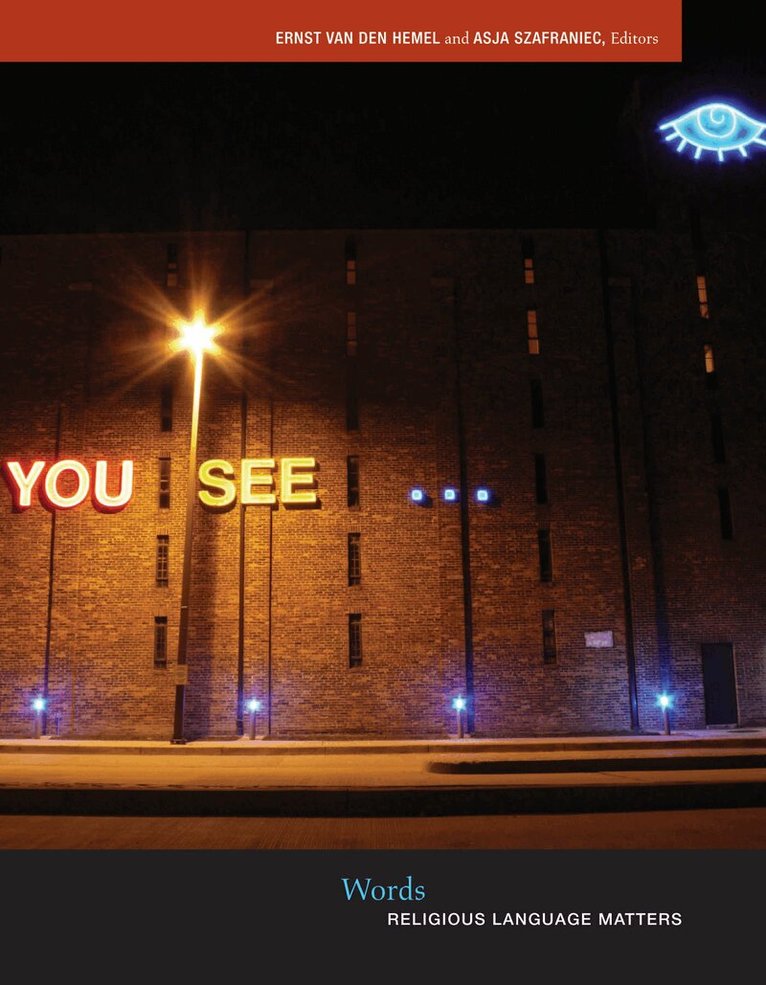
It is said that words are like people: One can encounter them daily yet never come to know their true selves. This volume examines what words are—how they exist—in religious phenomena. Going beyond the common idea that language merely describes states of mind, beliefs, and intentions, the book looks at words in their performative and material specificity.The contributions in the volume develop the insight that our implicit assumptions about what language does guide the way we understand and experience religious phenomena. They also explore the possibility that insights about the particular status of religious utterances may in turn influence the way we think about words in our language.
372 kr
Skickas inom 11-20 vardagar
It is said that words are like people: One can encounter them daily yet never come to know their true selves. This volume examines what words are—how they exist—in religious phenomena. Going beyond the common idea that language merely describes states of mind, beliefs, and intentions, the book looks at words in their performative and material specificity.The contributions in the volume develop the insight that our implicit assumptions about what language does guide the way we understand and experience religious phenomena. They also explore the possibility that insights about the particular status of religious utterances may in turn influence the way we think about words in our language.
1 504 kr
Skickas inom 10-15 vardagar
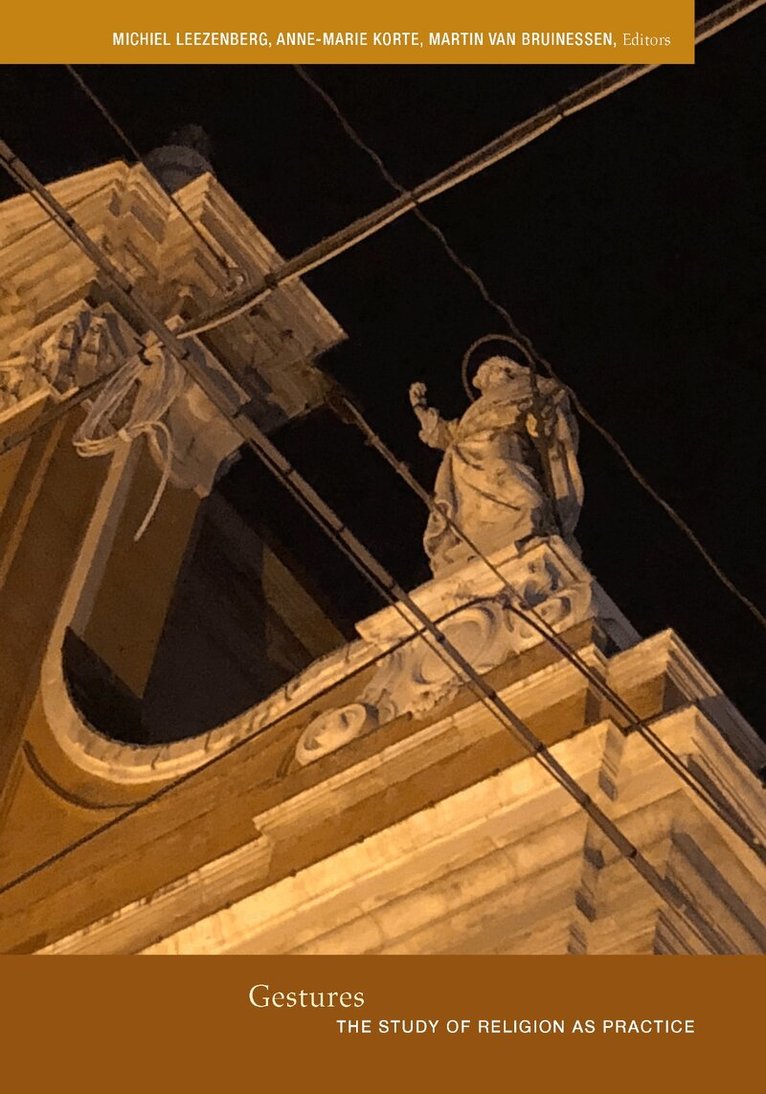
This concluding volume of the Future of the Religious Past series approaches contemporary religion through the lens of practice: the rituals, performances, devotions, and everyday acts through which humans do religion. In spite of predictions about the inevitability of secularism, religion in the twenty-first century remains stubbornly resilient, and Gestures: The Study of Religion as Practice offers a new vantage point from which to see the religious as a category shaped and reshaped by modernity and to encounter religion not as something bounded by doctrines and sacred texts but as lived experience.Twenty-four globally based scholars look to practice to examine such diverse phenomena as human rights, memory, martyrdom, dress and fashion, colonial legacies, blasphemy, mass political action, and the future of secularism.
416 kr
Skickas inom 7-10 vardagar
This concluding volume of the Future of the Religious Past series approaches contemporary religion through the lens of practice: the rituals, performances, devotions, and everyday acts through which humans do religion. In spite of predictions about the inevitability of secularism, religion in the twenty-first century remains stubbornly resilient, and Gestures: The Study of Religion as Practice offers a new vantage point from which to see the religious as a category shaped and reshaped by modernity and to encounter religion not as something bounded by doctrines and sacred texts but as lived experience.Twenty-four globally based scholars look to practice to examine such diverse phenomena as human rights, memory, martyrdom, dress and fashion, colonial legacies, blasphemy, mass political action, and the future of secularism.