Global Challenges in Political Economy – Serie
Visar alla böcker i serien Global Challenges in Political Economy. Handla med fri frakt och snabb leverans.
9 produkter
9 produkter
Political Economy of Extractivism
Global Perspectives on the Seduction of Rent
Inbunden, Engelska, 2023
2 176 kr
Skickas inom 10-15 vardagar
For many countries, primarily in the Global South, extractivism – the exploiting and exporting of natural resources – is big business. For those exporting countries, natural resource rents create hope and promise for development which can be a seductive force. This book explores the depth of extractivism in economies around the world. The contributions to this book investigate the connection between the political economy of extractivism and its impact on the sociopolitical fabric of natural resource exporting societies in Asia, Africa, Latin America, and Eastern Europe.The book engages with a comparative perspective on the persistence of extractivism in these four different world regions. The book focuses on the formative power of rents and argues that rents are seductive. The individual contributions flesh out this seductive force of rents on different political scales and how this seduction affects a variety of actors. The book investigates how these actors react to the prevalence of rent, how they align or break with specific political and economic strategies, and how myths of resource-driven development play out on the ground. The book, therefore, underlines that rent theory bridges current debates in different area communities and offers fresh insights into extractivist societies’ social, economic, and political dynamics. This book will be of significant interest to readers in political economy, political science, development studies, and area studies.
578 kr
Skickas inom 10-15 vardagar
For many countries, primarily in the Global South, extractivism – the exploiting and exporting of natural resources – is big business. For those exporting countries, natural resource rents create hope and promise for development which can be a seductive force. This book explores the depth of extractivism in economies around the world. The contributions to this book investigate the connection between the political economy of extractivism and its impact on the sociopolitical fabric of natural resource exporting societies in Asia, Africa, Latin America, and Eastern Europe.The book engages with a comparative perspective on the persistence of extractivism in these four different world regions. The book focuses on the formative power of rents and argues that rents are seductive. The individual contributions flesh out this seductive force of rents on different political scales and how this seduction affects a variety of actors. The book investigates how these actors react to the prevalence of rent, how they align or break with specific political and economic strategies, and how myths of resource-driven development play out on the ground. The book, therefore, underlines that rent theory bridges current debates in different area communities and offers fresh insights into extractivist societies’ social, economic, and political dynamics. This book will be of significant interest to readers in political economy, political science, development studies, and area studies.
Taxation and Inequality in Latin America
New Perspectives on Political Economy and Tax Regimes
Inbunden, Engelska, 2023
2 113 kr
Skickas inom 10-15 vardagar
Taxation and Inequality in Latin America takes a heterodox political economy approach, focusing on Latin America, where current problems of taxation have existed for a century and great wealth contrasts with abject poverty. The book analyzes the relation of natural resource wealth, allocational politics and the limited role of taxation for redistribution, and progressive resource mobilization. By drawing on the political economy of tax regimes, the book considers the specific conditions of taxation in Latin America, which apply to a large part of the Global South and more than 100 countries specializing in the extraction and export of raw materials. This book will cover: taxation and the dominance of raw material export sectors; taxation and allocational politics; new perspectives on political economy and tax regimes.Scholars and advanced students of political economy, political science, development studies, and fiscal sociology will find several key issues in tax research from a novel angle. The book provides an analytical orientation that relates central questions of taxation to patterns of regional political economy, thereby opening up the debate with tax scholars from other world regions of the Global South.
Taxation and Inequality in Latin America
New Perspectives on Political Economy and Tax Regimes
Häftad, Engelska, 2024
578 kr
Skickas inom 10-15 vardagar
Taxation and Inequality in Latin America takes a heterodox political economy approach, focusing on Latin America, where current problems of taxation have existed for a century and great wealth contrasts with abject poverty. The book analyzes the relation of natural resource wealth, allocational politics and the limited role of taxation for redistribution, and progressive resource mobilization. By drawing on the political economy of tax regimes, the book considers the specific conditions of taxation in Latin America, which apply to a large part of the Global South and more than 100 countries specializing in the extraction and export of raw materials. This book will cover: taxation and the dominance of raw material export sectors; taxation and allocational politics; new perspectives on political economy and tax regimes.Scholars and advanced students of political economy, political science, development studies, and fiscal sociology will find several key issues in tax research from a novel angle. The book provides an analytical orientation that relates central questions of taxation to patterns of regional political economy, thereby opening up the debate with tax scholars from other world regions of the Global South.
2 113 kr
Skickas inom 3-6 vardagar
Recent work on rent and rentierism has offered a distinctive and fresh approach to understanding and explaining contemporary capitalism. Drawing on political economy, economics, geography and sociology, this research has brought together distinct theoretical traditions in original and fertile ways to reshape the study of issues related to class, political-economic change and environmental challenges.This book critically engages with these theoretical resources to analyse and evaluate economies in the Global North and South. It offers historical, theoretical and empirical accounts of rentierism, making important cross-disciplinary and global connections. Its four parts address global rentier capitalism under the headings of historical lessons, theoretical developments and empirical studies of rentierism in the Global North and South. It will be the first book of its kind to offer a global account of rentier capitalism.It will be of immense interest to readers in economics, political economy, sociology, geography and development studies.
2 036 kr
Skickas inom 10-15 vardagar
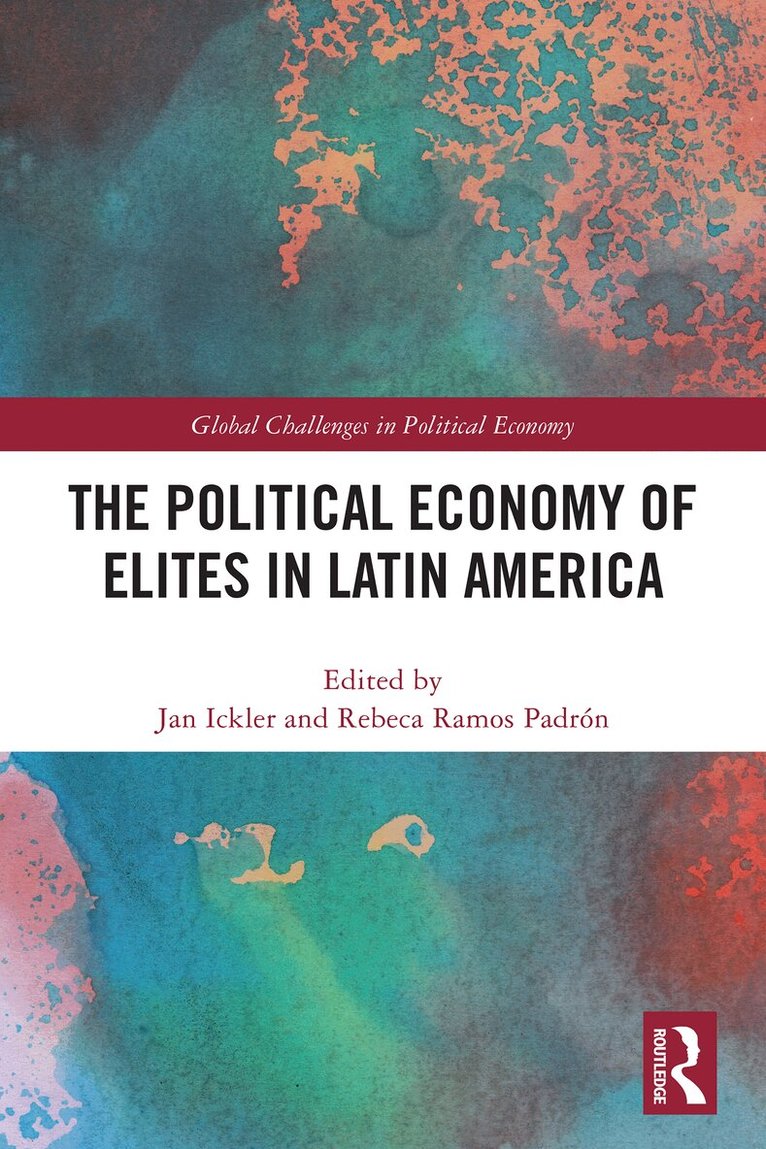
Recent years have seen renewed interest in elites around the world, and their interconnection with power, privilege, social stratification, and social change. The contributors to this edited volume explore the many facets of the role of elites in the political economy of Latin America: their position within society, their impact upon the economy, and their influence within governing institutions.The book demonstrates that in Latin America, as in many other parts of the world, structural change and movements toward more just, inclusive, and sustainable societies seem impossible without the involvement of elites at some level. This raises important questions: Under what conditions do elites push for reform? How do elites react to societal and economic challenges and changes? To what extent can popular classes successfully pressure elites? Bringing together a selection of case studies covering different Latin American countries, the book focuses on three key themes to address these questions: first, it explores how elites react to economic and societal challenges with some chapters looking at moments of change, as well as measures taken by individual elites to alter the status quo. Second, it seeks to understand the interrelation between external and domestic factors that engender elite action including global markets, geopolitics, state institutions, social forces, and the internal structure of elite groups. Third, it reflects upon methodological questions of studying elites in Latin America, laying bare the potential pitfalls and offering possible routes to further inquiry.This book will be vital reading for researchers in political economy, development economics, economic sociology, and Latin American studies more broadly.
768 kr
Skickas inom 10-15 vardagar
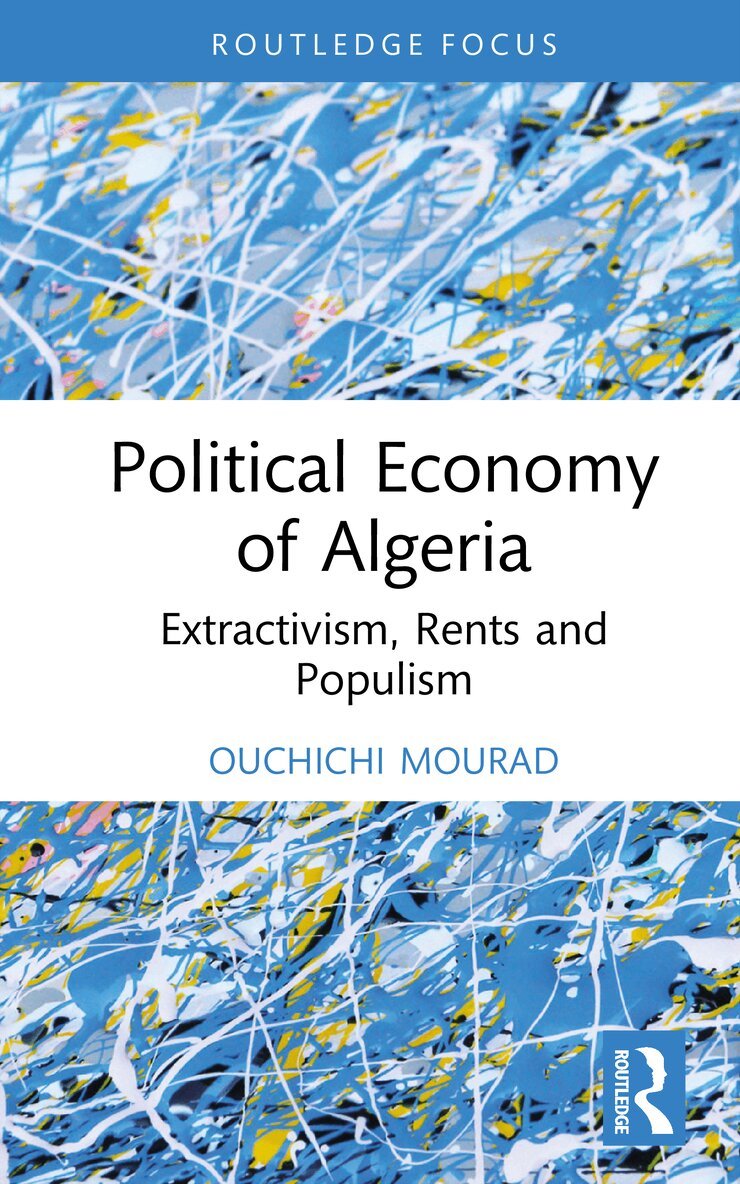
Algeria, the largest country in North Africa, is geopolitically significant due to its strategic location and natural resources. Despite its potential, the country remains entrenched in a rent-based economy, heavily dependent on hydrocarbon exports, a situation that has persisted since its independence in 1962.This book provides a comprehensive analysis of Algeria's complex politico-economic system, focusing on its rentier and extractivist nature. The study examines the historical evolution of Algeria’s economy, beginning with the ambitious yet ultimately unsuccessful industrialisation efforts of the 1960s and 1970s. This failure led to the country's specialization in the extraction and export of hydrocarbons. Subsequent reforms aimed at transitioning to a market economy have failed to break the country’s dependency on oil revenues, instead deepening its rentier and extractivist characteristics. The book critically explores the limitations of applying conventional economic and political science frameworks to analyse the Algerian economy. It argues that these disciplines, developed within the context of Western capitalism, are insufficient to fully capture the unique dynamics of an economy like Algeria’s, where the market plays a marginal role, and state-controlled rents dominate wealth distribution. To address these challenges, the book adopts the concept of extractivism, originally developed in Latin American contexts, to better understand the interplay between political struggles, social movements, and economic practices in Algeria. It posits that Algeria is both a rentier and an extractivist state, with these two aspects reinforcing each other and hindering the development of a productive economy.The book will be of interest to readers of political economy, Middle East and North African studies and international politics.
Political Economy of the Energy Transition in Latin America
Between Extractivism and Sustainable Development
Inbunden, Engelska, 2026
2 113 kr
Skickas inom 10-15 vardagar
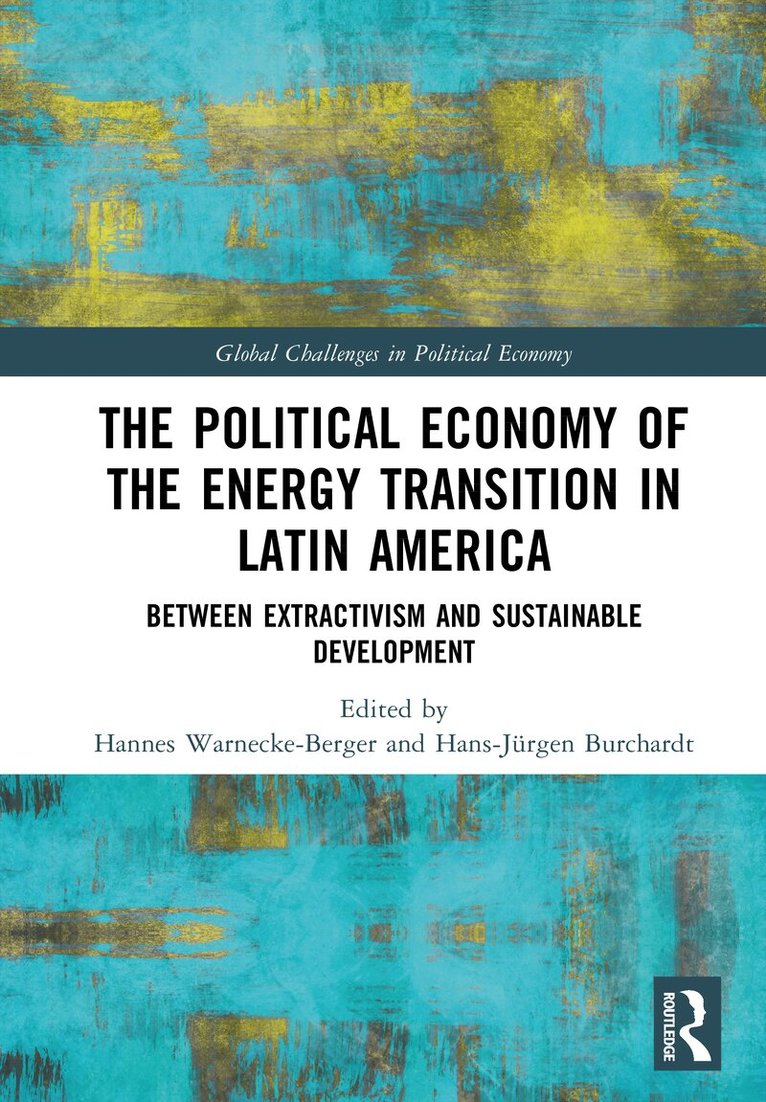
The persistence of extractivism in Latin America is a central issue in contemporary debates on global sustainability and the curse of the energy transition. This book explores these pressing concerns by analyzing the tensions between the energy transition, extractivism, and green development in Latin America. While important parts of the world economy are beginning to decarbonize and industrialized nations promote sustainability initiatives, resource extraction continues to play a fundamental role in the political, economic, and social landscapes of the Global South. The international expert contributors to this volume examine whether the emerging sustainability paradigm based on energy transition represents an alternative or merely a reconfiguration of historical extractivist structures. The first few chapters of the book critically examine the unsustainability of extractivism and therefore the historical and contemporary challenges of resource dependency. It presents case studies of countries such as Bolivia, Venezuela, and Argentina, illustrating how extractivist states have struggled with governance dilemmas, environmental degradation, and socio-political resistance. The following chapters focus on the challenges for the green economy, investigating the intersection between sustainability and structural economic constraints, addressing the risks of green extractivism, and exploring whether Latin America can escape the cycle of resource dependency. Through an interdisciplinary approach that integrates political economy, sociology, environmental science, and development studies, this book provides a nuanced understanding of Latin America’s resource dilemmas in the context of global energy transitions.
2 325 kr
Kommande
Centered on Algeria, Morocco, and Tunisia, this book interrogates the complex entanglements between extractivism, state power, class formation, and geopolitical reorientation in North Africa. While the global energy transition promises economic diversification and sustainable development, the international contributors to this volume show how “green extractivism” often reproduces older structures of dependency and inequality, and therefore authoritarianism consolidates.Rather than fostering transformation, rent economies adapt, stabilize, and reconfigure themselves through new sources of rent and new modes of social control. The book makes three core contributions. First, it offers a historically grounded and theoretically informed understanding of rent economies in the Maghreb, tracing how colonial legacies of resource extraction evolved into postcolonial patterns of rentier governance. Second, it introduces a class-analytical perspective to debates on extractivism, arguing that rent not only finances authoritarian regimes, but also shapes dynamic social coalitions, “state classes,” and cycles of contention and co-optation. Third, the book develops a comparative approach to the political economy of green transformation, focusing on the interplay between domestic rent regimes and external pressures from global markets, international donors, and climate politics. By anchoring each case study in concrete struggles, everyday experiences, and contested claims to resources, the book reveals how global transformations are mediated, resisted, and reappropriated from below.The book will be vital reading for those interested in political economy, development studies, and Middle East and North Africa (MENA) studies. It will particularly appeal to scholars working on extractivism, rentier states, authoritarianism, postcolonial development, and the political sociology of class and class struggle.