Global Economic Institutions - Böcker
Visar alla böcker i serien Global Economic Institutions. Handla med fri frakt och snabb leverans.
10 produkter
10 produkter
Del 2 - Global Economic Institutions
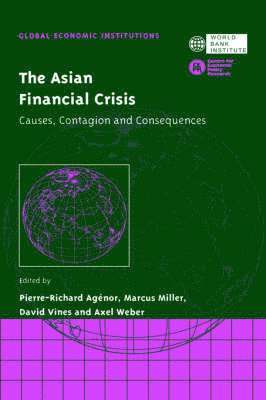
The Asian Financial Crisis
Causes, Contagion and Consequences
Häftad, Engelska, 2006
523 kr
Skickas inom 7-10 vardagar
Presents the first theoretical analysis of the Asian financial crisis and draws out the general lessons of an event whose potential long term effects have been likened to those of the Crash of 1929. Part I presents a factual and analytic overview of what happened: the role of 'vulnerability'; the interconnection between currency crises and financial crises; and why crisis turned into collapse. Part II considers more detailed issues, including how the inflation of non-traded goods prices created vulnerability, welfare-reducing capital inflow owing to under-regulated financial markets, and the onset of speculative attacks. Part III assesses all aspects of contagion, in particular the role of geographic proximity. The final section addresses policy issues. Joseph Stiglitz argues that there is much that can be done to reduce the frequency of crises and to mitigate the severity of crises when they happen. The book finishes with a round-table discussion of policy issues.
523 kr
Skickas inom 7-10 vardagar
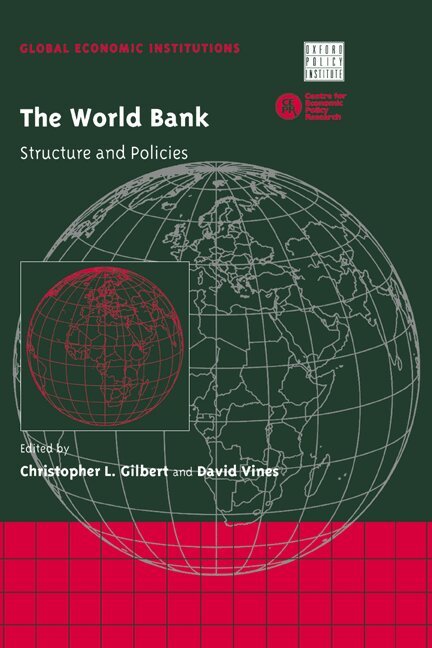
The World Bank is dedicated to the promotion of sustainable economic development and to poverty reduction throughout the developing world. It faces new challenges as capital shortages are replaced by large but volatile capital flows. The contributors to this volume argue that the Bank's greatest asset is its accumulated knowledge and experience of the development process, and propose that it organise itself around the concept of a 'Knowledge Bank'. They propose a shift in priority, away from lending with conditionality imposed on borrowing governments, towards assistance to governments in devising good development strategies. Part I examines the existing structure of the Bank and considers the World Bank as an institution. In Part II the effectiveness of World Bank assistance is evaluated. This book provides essential reading for politicians, civil servants, workers in the non-official sector, and academics and students involved or interested in the development process.
Del 4 - Global Economic Institutions
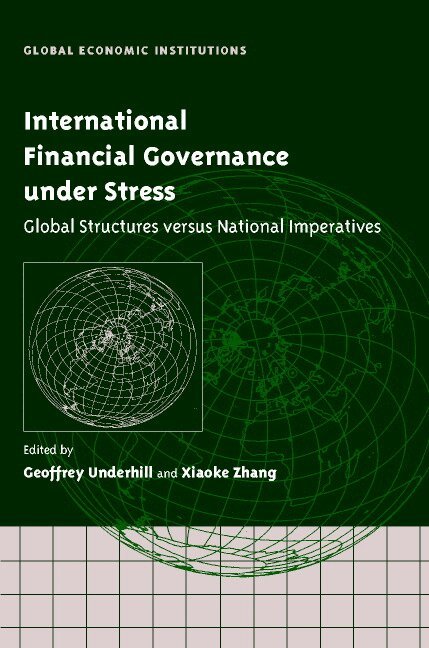
International Financial Governance under Stress
Global Structures versus National Imperatives
Häftad, Engelska, 2007
523 kr
Skickas inom 7-10 vardagar
Persistent episodes of global financial crises have placed the existing system of international monetary and financial governance under stress. The resulting economic turmoil provides a focal point for rethinking the norms and institutions of global financial architecture and the policy options of public and private authorities at national, regional and transnational levels. This volume moves beyond analysis of the causes and consequences of recent financial crises and concentrates on issues of policy. Written by distinguished scholars, it focuses on the tension between global market structures and national policy imperatives. Accessible to both specialists and general readers, the analysis is coherent across a broad range of theoretical and empirical cases. Offering a series of reasoned policy responses to financial integration and crises, the volume grapples directly with the institutional and often-neglected normative dimensions of international financial architecture. The volume thus constitutes required reading for scholars and policy-makers.
Del 5 - Global Economic Institutions
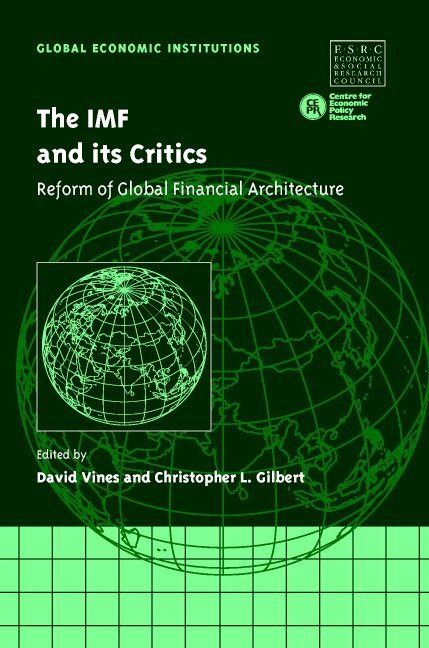
The IMF and its Critics
Reform of Global Financial Architecture
Häftad, Engelska, 2009
699 kr
Skickas inom 7-10 vardagar
The IMF is the first economic institution in line to protect countries from the effects of financial crises and to insulate the world economy from possible systemic risk. However, many argue that the IMF is insufficiently equipped to do this job, while others argue almost the opposite: the IMF's well-intentioned actions induce other countries to take risks which increase their exposure from both universities and the multilateral agencies, combines rigourous economic analysis with insider perspectives on key policy debates. It analyses the Asian and Argentine financial crises of the late 1990s, issues of policy ownership, the more general quest for financial stability and governance of the IMF. It is an essential reference for anyone interested in the role of international financial institutions in our globalised economy.
Del 1 - Global Economic Institutions
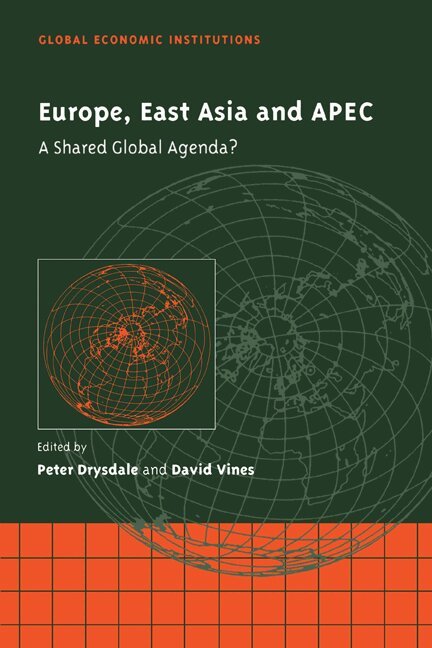
Europe, East Asia and APEC
A Shared Global Agenda?
Häftad, Engelska, 2011
428 kr
Skickas inom 7-10 vardagar
This book was the first in a major series examining Global Economic Institutions and contrasts regional economic integration in the Asia Pacific Region and in Europe. In the Asia Pacific Region at the time of publication, regionalism was developing by means of 'open regionalism', constructed through the APEC (Asia Pacific Economic Cooperation Process). This was different from the regionalism which had developed in Europe, through the construction of a single European Market and Monetary Union within the European Union. In the light of this contrast, a number of important contemporary policy questions are considered by an international team of contributors. How should Europe and other parts of the world respond to the development of open regionalism in the Asia Pacific Region? Can these regions develop a shared global agenda directed toward sustaining genuinely multilateral solutions to international trade policy problems?
Del 1 - Global Economic Institutions
Europe, East Asia and APEC
A Shared Global Agenda?
Inbunden, Engelska, 1998
1 417 kr
Skickas inom 7-10 vardagar
This book was the first in a major series examining Global Economic Institutions and contrasts regional economic integration in the Asia Pacific Region and in Europe. In the Asia Pacific Region at the time of publication, regionalism was developing by means of 'open regionalism', constructed through the APEC (Asia Pacific Economic Cooperation Process). This was different from the regionalism which had developed in Europe, through the construction of a single European Market and Monetary Union within the European Union. In the light of this contrast, a number of important contemporary policy questions are considered by an international team of contributors. How should Europe and other parts of the world respond to the development of open regionalism in the Asia Pacific Region? Can these regions develop a shared global agenda directed toward sustaining genuinely multilateral solutions to international trade policy problems?
Del 2 - Global Economic Institutions
The Asian Financial Crisis
Causes, Contagion and Consequences
Inbunden, Engelska, 1999
1 783 kr
Skickas inom 7-10 vardagar
Presents the first theoretical analysis of the Asian financial crisis and draws out the general lessons of an event whose potential long term effects have been likened to those of the Crash of 1929. Part I presents a factual and analytic overview of what happened: the role of 'vulnerability'; the interconnection between currency crises and financial crises; and why crisis turned into collapse. Part II considers more detailed issues, including how the inflation of non-traded goods prices created vulnerability, welfare-reducing capital inflow owing to under-regulated financial markets, and the onset of speculative attacks. Part III assesses all aspects of contagion, in particular the role of geographic proximity. The final section addresses policy issues. Joseph Stiglitz argues that there is much that can be done to reduce the frequency of crises and to mitigate the severity of crises when they happen. The book finishes with a round-table discussion of policy issues.
2 028 kr
Skickas inom 7-10 vardagar
The World Bank is dedicated to the promotion of sustainable economic development and to poverty reduction throughout the developing world. It faces new challenges as capital shortages are replaced by large but volatile capital flows. The contributors to this volume argue that the Bank's greatest asset is its accumulated knowledge and experience of the development process, and propose that it organise itself around the concept of a 'Knowledge Bank'. They propose a shift in priority, away from lending with conditionality imposed on borrowing governments, towards assistance to governments in devising good development strategies. Part I examines the existing structure of the Bank and considers the World Bank as an institution. In Part II the effectiveness of World Bank assistance is evaluated. This book provides essential reading for politicians, civil servants, workers in the non-official sector, and academics and students involved or interested in the development process.
Del 4 - Global Economic Institutions
International Financial Governance under Stress
Global Structures versus National Imperatives
Inbunden, Engelska, 2003
1 499 kr
Skickas inom 7-10 vardagar
Persistent episodes of global financial crises have placed the existing system of international monetary and financial governance under stress. The resulting economic turmoil provides a focal point for rethinking the norms and institutions of global financial architecture and the policy options of public and private authorities at national, regional and transnational levels. This volume moves beyond analysis of the causes and consequences of recent financial crises and concentrates on issues of policy. Written by distinguished scholars, it focuses on the tension between global market structures and national policy imperatives. Accessible to both specialists and general readers, the analysis is coherent across a broad range of theoretical and empirical cases. Offering a series of reasoned policy responses to financial integration and crises, the volume grapples directly with the institutional and often-neglected normative dimensions of international financial architecture. The volume thus constitutes required reading for scholars and policy-makers.
Del 5 - Global Economic Institutions
The IMF and its Critics
Reform of Global Financial Architecture
Inbunden, Engelska, 2004
1 228 kr
Skickas inom 7-10 vardagar
The IMF is the first economic institution in line to protect countries from the effects of financial crises and to insulate the world economy from possible systemic risk. However, many argue that the IMF is insufficiently equipped to do this job, while others argue almost the opposite: the IMF's well-intentioned actions induce other countries to take risks which increase their exposure from both universities and the multilateral agencies, combines rigourous economic analysis with insider perspectives on key policy debates. It analyses the Asian and Argentine financial crises of the late 1990s, issues of policy ownership, the more general quest for financial stability and governance of the IMF. It is an essential reference for anyone interested in the role of international financial institutions in our globalised economy.