Global Entrepreneurship – serie
Visar alla böcker i serien Global Entrepreneurship. Handla med fri frakt och snabb leverans.
4 produkter
4 produkter
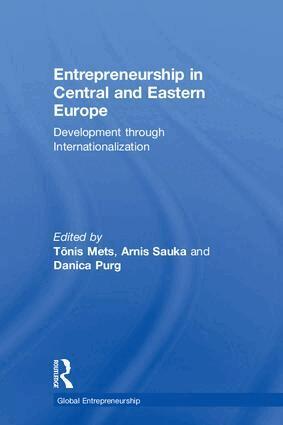
Entrepreneurship in Central and Eastern Europe
Development through Internationalization
Inbunden, Engelska, 2018
2 596 kr
Skickas inom 10-15 vardagar
The process of the transition to a market-oriented economy for countries from Central and Eastern Europe (CEE) and the Commonwealth of Independent States (CIS) started some 25 years ago. A new technology base triggered the fast growth of new investments into intangible assets by global economic leaders at the beginning of the 1990s, providing the basis for a move towards a knowledge economy. During the past 25 years, entrepreneurs in CEE and the CIS have reshaped traditional industries and created new industries, combining innovative ideas with traditional competencies. Yet we still do not know very much about how and why companies led by entrepreneurs develop, how they expand globally and what the role of new knowledge and innovation is in the internationalization process. Understanding the pathways of entrepreneurial development, especially growth through internationalization, is important for the overall development of countries in transition and beyond. Entrepreneurship in Central and Eastern Europe: Development through Internationalization provides an overview of entrepreneurship in a range of important emerging markets. This book aims to fill the gap in the literature by providing up-to-date data and case-based evidence.With coverage of a range of national firms from countries including Belarus, Estonia, Hungary, Poland, Latvia, Lithuania, Serbia, Slovakia, Slovenia and Ukraine, this book will be vital supplementary reading around international entrepreneurship and essential reading for those studying the business environment in this vital emerging market.
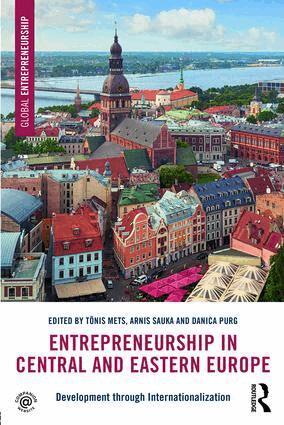
Entrepreneurship in Central and Eastern Europe
Development through Internationalization
Häftad, Engelska, 2018
987 kr
Skickas inom 10-15 vardagar
The process of the transition to a market-oriented economy for countries from Central and Eastern Europe (CEE) and the Commonwealth of Independent States (CIS) started some 25 years ago. A new technology base triggered the fast growth of new investments into intangible assets by global economic leaders at the beginning of the 1990s, providing the basis for a move towards a knowledge economy. During the past 25 years, entrepreneurs in CEE and the CIS have reshaped traditional industries and created new industries, combining innovative ideas with traditional competencies. Yet we still do not know very much about how and why companies led by entrepreneurs develop, how they expand globally and what the role of new knowledge and innovation is in the internationalization process. Understanding the pathways of entrepreneurial development, especially growth through internationalization, is important for the overall development of countries in transition and beyond. Entrepreneurship in Central and Eastern Europe: Development through Internationalization provides an overview of entrepreneurship in a range of important emerging markets. This book aims to fill the gap in the literature by providing up-to-date data and case-based evidence.With coverage of a range of national firms from countries including Belarus, Estonia, Hungary, Poland, Latvia, Lithuania, Serbia, Slovakia, Slovenia and Ukraine, this book will be vital supplementary reading around international entrepreneurship and essential reading for those studying the business environment in this vital emerging market.
2 456 kr
Skickas inom 10-15 vardagar
It is now widely recognized that in regions like Africa, for economic and other reasons, the public sector has had to disengage and divest from many areas of the economy and allow private enterprise, especially scalable start-ups and new ventures, to enter and flourish if economic development and employment are to grow. There is, however, a training and education gap since entrepreneurship is rarely taught formally at African universities and, when it is, it is often approached from a Western perspective which may not be appropriate given that African environments are significantly different from most Western ones in terms of economic infrastructure and political considerations.This book allows readers to understand the African entrepreneurial context by guiding them through the principal stages in the life of a new venture, and offers approaches, both Western and indigenous, that can inform their entrepreneurial actions. It concludes by examining some specialized topics, including female, youth, and social entrepreneurship, as well as real estate and technology. Exercises throughout the book will enable readers to evaluate their motivations and preparedness for entrepreneurship and learn how to communicate a new venture’s key features to potential stakeholders. By focusing on the distinctive features of entrepreneurship in the African context, and taking a conversational tone, this is an informative and practical text that will be useful for students of Global Entrepreneurship and Business as well as actual and prospective entrepreneurs in the private, non-profit, and public sectors.
707 kr
Skickas inom 10-15 vardagar
It is now widely recognized that in regions like Africa, for economic and other reasons, the public sector has had to disengage and divest from many areas of the economy and allow private enterprise, especially scalable start-ups and new ventures, to enter and flourish if economic development and employment are to grow. There is, however, a training and education gap since entrepreneurship is rarely taught formally at African universities and, when it is, it is often approached from a Western perspective which may not be appropriate given that African environments are significantly different from most Western ones in terms of economic infrastructure and political considerations.This book allows readers to understand the African entrepreneurial context by guiding them through the principal stages in the life of a new venture, and offers approaches, both Western and indigenous, that can inform their entrepreneurial actions. It concludes by examining some specialized topics, including female, youth, and social entrepreneurship, as well as real estate and technology. Exercises throughout the book will enable readers to evaluate their motivations and preparedness for entrepreneurship and learn how to communicate a new venture’s key features to potential stakeholders. By focusing on the distinctive features of entrepreneurship in the African context, and taking a conversational tone, this is an informative and practical text that will be useful for students of Global Entrepreneurship and Business as well as actual and prospective entrepreneurs in the private, non-profit, and public sectors.