Great Cultural Eras of the Western World – serie
Visar alla böcker i serien Great Cultural Eras of the Western World. Handla med fri frakt och snabb leverans.
14 produkter
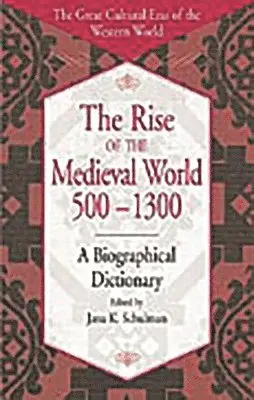
Rise of the Medieval World 500-1300
A Biographical Dictionary
E-bok, 2002
1044 kr
Lägg i varukorg
Beginning in 500 with the fusion of classical, Christian, and Germanic cultures and ending in 1300 with a Europe united by a desire for growth, knowledge, and change, this volume provides basic information on the significant cultural figures of the Middle Ages. It includes over 400 people whose …
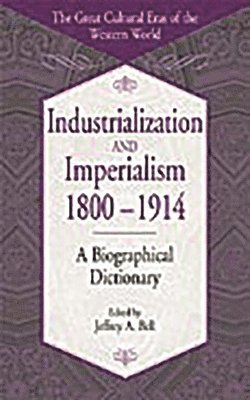
Industrialization and Imperialism, 1800-1914
A Biographical Dictionary
E-bok, 2002
1076 kr
Lägg i varukorg
This book presents an age of nationalism, imperialism, modernization, industrialism, and great cultural achievement, stretching from 1800, when Europe was awash in the wake of the French Revolution, the reign of terror, and the coming rise of Napoleon, to Archduke Franz Ferdinand's assassination in …
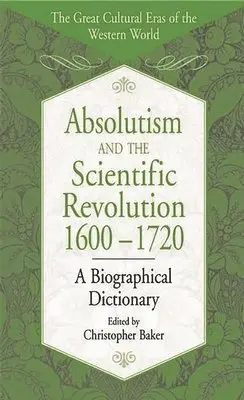
Absolutism and the Scientific Revolution, 1600-1720
A Biographical Dictionary
E-bok, 2002
1021 kr
Lägg i varukorg
This book—the sixth volume in The Great Cultural Eras of the Western World series—provides information on more than 400 individuals who created and played a role in the era's intellectual and cultural activity. The book's focus is on cultural figures—those whose inventions and discoveries …
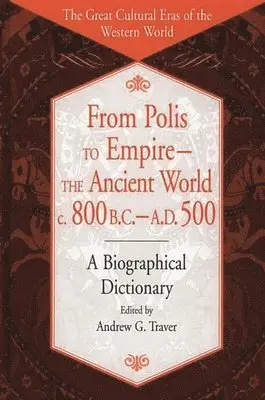
From Polis to Empire--The Ancient World, c. 800 B.C. - A.D. 500
A Biographical Dictionary
E-bok, 2001
1044 kr
Lägg i varukorg
Covering the very beginnings of Western civilization, this biographical dictionary introduces readers to the great cultural figures of the ancient world, including those who contributed significantly to architecture, astronomy, history, literature, mathematics, philosophy, painting, sculpture, and …
Renaissance and Reformation, 1500-1620
A Biographical Dictionary
Av Jo Carney, Jo Eldridge Carney
Inbunden, 2000
1604 kr
Lägg i varukorg
Covering the period comprising the Renaissance and Reformation, this volume introduces a unique set of interdisciplinary biographical dictionaries providing basic information on the people who have contributed significantly to the culture of Western civilization. Unlike general dictionaries which …
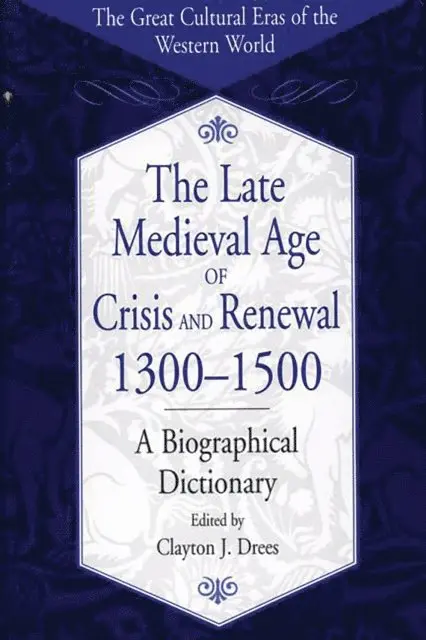
Late Medieval Age of Crisis and Renewal, 1300-1500
A Biographical Dictionary
Av Clayton J. Drees, Clayton J. Drees
Inbunden, 2000
951 kr
Lägg i varukorg
As part of a unique series covering the grand sweep of Western civilization from ancient to present times, this biographical dictionary provides introductory information on 315 leading cultural figures of late medieval and early modern Europe. Taking a cultural approach not typically found in …
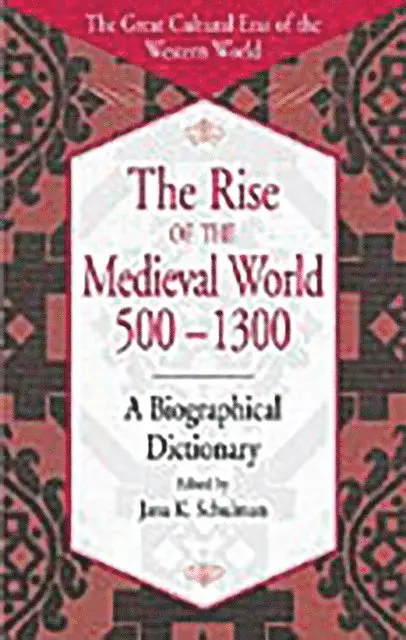
Rise of the Medieval World 500-1300
A Biographical Dictionary
Av Jana K. Schulman, Jana K. Schulman
Inbunden, 2002
951 kr
Lägg i varukorg
Beginning in 500 with the fusion of classical, Christian, and Germanic cultures and ending in 1300 with a Europe united by a desire for growth, knowledge, and change, this volume provides basic information on the significant cultural figures of the Middle Ages. It includes over 400 people whose …
Absolutism and the Scientific Revolution, 1600-1720
A Biographical Dictionary
Av Christopher Baker, Christopher Baker
Inbunden, 2002
951 kr
Lägg i varukorg
This book—the sixth volume in The Great Cultural Eras of the Western World series—provides information on more than 400 individuals who created and played a role in the era's intellectual and cultural activity. The book's focus is on cultural figures—those whose inventions and discoveries …
From Polis to Empire--The Ancient World, c. 800 B.C. - A.D. 500
A Biographical Dictionary
Av Andrew G. Traver, Andrew G. Traver
Inbunden, 2001
951 kr
Lägg i varukorg
Covering the very beginnings of Western civilization, this biographical dictionary introduces readers to the great cultural figures of the ancient world, including those who contributed significantly to architecture, astronomy, history, literature, mathematics, philosophy, painting, sculpture, and …
Industrialization and Imperialism, 1800-1914
A Biographical Dictionary
Av Jeffrey A. Bell, Jeffrey A. Bell
Inbunden, 2002
980 kr
Lägg i varukorg
This book presents an age of nationalism, imperialism, modernization, industrialism, and great cultural achievement, stretching from 1800, when Europe was awash in the wake of the French Revolution, the reign of terror, and the coming rise of Napoleon, to Archduke Franz Ferdinand's assassination in …
Renaissance and Reformation, 1500-1620
A Biographical Dictionary
Av Jo Carney
E-bok, 2000
1820 kr
Lägg i varukorg
Covering the period comprising the Renaissance and Reformation, this volume introduces a unique set of interdisciplinary biographical dictionaries providing basic information on the people who have contributed significantly to the culture of Western civilization. Unlike general dictionaries which …
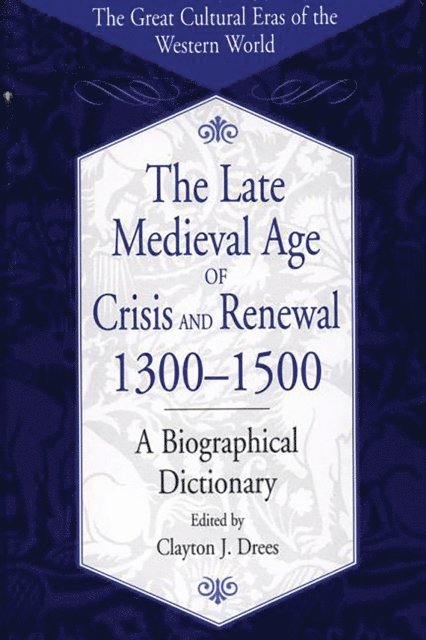
Late Medieval Age of Crisis and Renewal, 1300-1500
A Biographical Dictionary
E-bok, 2000
1021 kr
Lägg i varukorg
As part of a unique series covering the grand sweep of Western civilization from ancient to present times, this biographical dictionary provides introductory information on 315 leading cultural figures of late medieval and early modern Europe. Taking a cultural approach not typically found in …
Late Medieval Age of Crisis and Renewal, 1300-1500
A Biographical Dictionary
E-bok, 2000
1044 kr
Lägg i varukorg
As part of a unique series covering the grand sweep of Western civilization from ancient to present times, this biographical dictionary provides introductory information on 315 leading cultural figures of late medieval and early modern Europe. Taking a cultural approach not typically found in …
Rise of the Medieval World 500-1300
A Biographical Dictionary
E-bok, 2002
1044 kr
Lägg i varukorg
Beginning in 500 with the fusion of classical, Christian, and Germanic cultures and ending in 1300 with a Europe united by a desire for growth, knowledge, and change, this volume provides basic information on the significant cultural figures of the Middle Ages. It includes over 400 people whose …