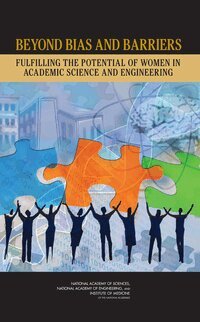
The United States economy relies on the productivity, entrepreneurship, and creativity of its people. To maintain its scientific and engineering leadership amid increasing economic and educational globalization, the United States must aggressively pursue the innovative capacity of all its people—women and men. However, women face barriers to success in every field of science and engineering; obstacles that deprive the country of an important source of talent. Without a transformation of academic institutions to tackle such barriers, the future vitality of the U.S. research base and economy are in jeopardy. Beyond Bias and Barriers explains that eliminating gender bias in academia requires immediate overarching reform, including decisive action by university administrators, professional societies, federal funding agencies and foundations, government agencies, and Congress. If implemented and coordinated across public, private, and government sectors, the recommended actions will help to improve workplace environments for all employees while strengthening the foundations of America's competitiveness.
In the United States, broad study in an array of different disciplines —arts, humanities, science, mathematics, engineering— as well as an in-depth study within a special area of interest, have been defining characteristics of a higher education. But over time, in-depth study in a major discipline has come to dominate the curricula at many institutions. This evolution of the curriculum has been driven, in part, by increasing specialization in the academic disciplines. There is little doubt that disciplinary specialization has helped produce many of the achievement of the past century. Researchers in all academic disciplines have been able to delve more deeply into their areas of expertise, grappling with ever more specialized and fundamental problems. Yet today, many leaders, scholars, parents, and students are asking whether higher education has moved too far from its integrative tradition towards an approach heavily rooted in disciplinary "silos". These "silos" represent what many see as an artificial separation of academic disciplines. This study reflects a growing concern that the approach to higher education that favors disciplinary specialization is poorly calibrated to the challenges and opportunities of our time. The Integration of the Humanities and Arts with Sciences, Engineering, and Medicine in Higher Education examines the evidence behind the assertion that educational programs that mutually integrate learning experiences in the humanities and arts with science, technology, engineering, mathematics, and medicine (STEMM) lead to improved educational and career outcomes for undergraduate and graduate students. It explores evidence regarding the value of integrating more STEMM curricula and labs into the academic programs of students majoring in the humanities and arts and evidence regarding the value of integrating curricula and experiences in the arts and humanities into college and university STEMM education programs.
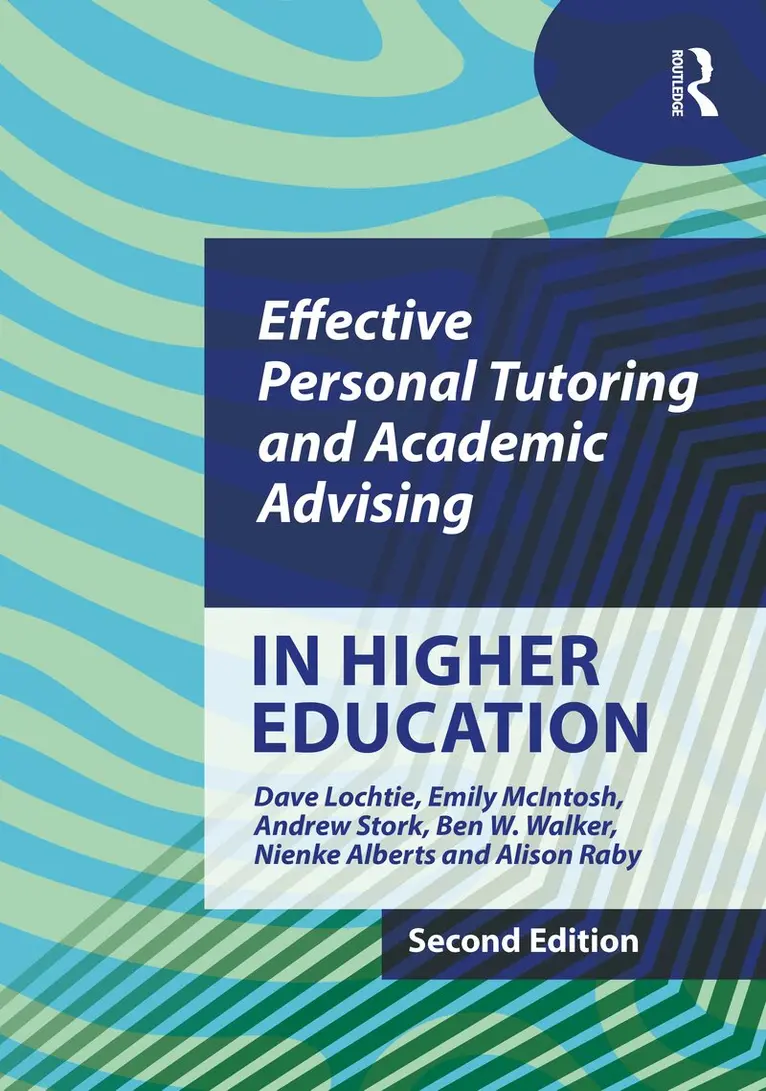
This is a comprehensive guide for higher education professionals engaged in student support, advising or personal tutoring roles. It covers a range of key topics relating to tutoring in the HE landscape including definitions, pedagogy, coaching, core values and skills, boundaries, monitoring students, undertaking group and individual tutorials and the need to measure impact.A scholarly and practical text, it brings together relevant academic literature to inform personal tutoring practice and contextualise the role within HE policy. This second edition has been thoroughly updated, and explores topical and timely content with new chapters that examine the pedagogy of personal tutoring, key concepts surrounding effective student interactions, and inclusive personal tutoring. Further emphasis is placed on student engagement and motivation as well as how to effectively share responsibility and manage expectations. Reflective exercises are provided throughout the text to encourage critical thinking about this key role and support tutors’ own professional development.Packed with actionable steps, this is a vital toolkit for higher education professionals at any stage of their career, and offers a wealth of expert guidance, resources and checklists to help develop meaningful and impactful connections with students throughout their learning journey.
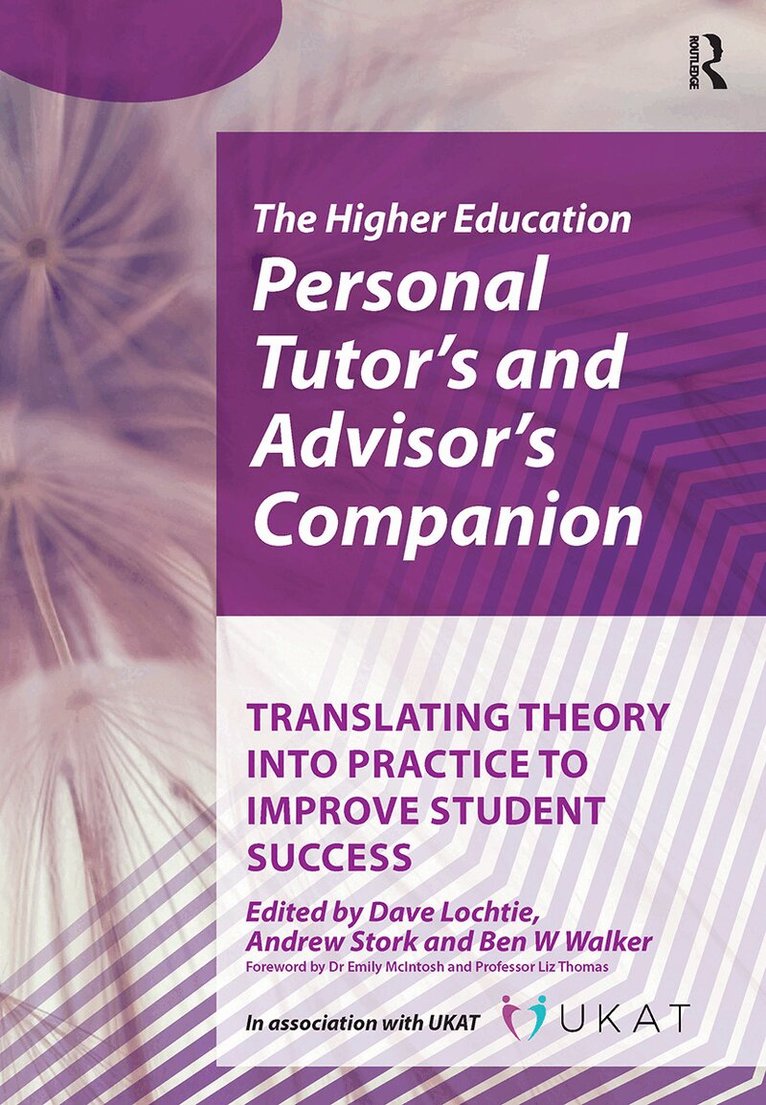
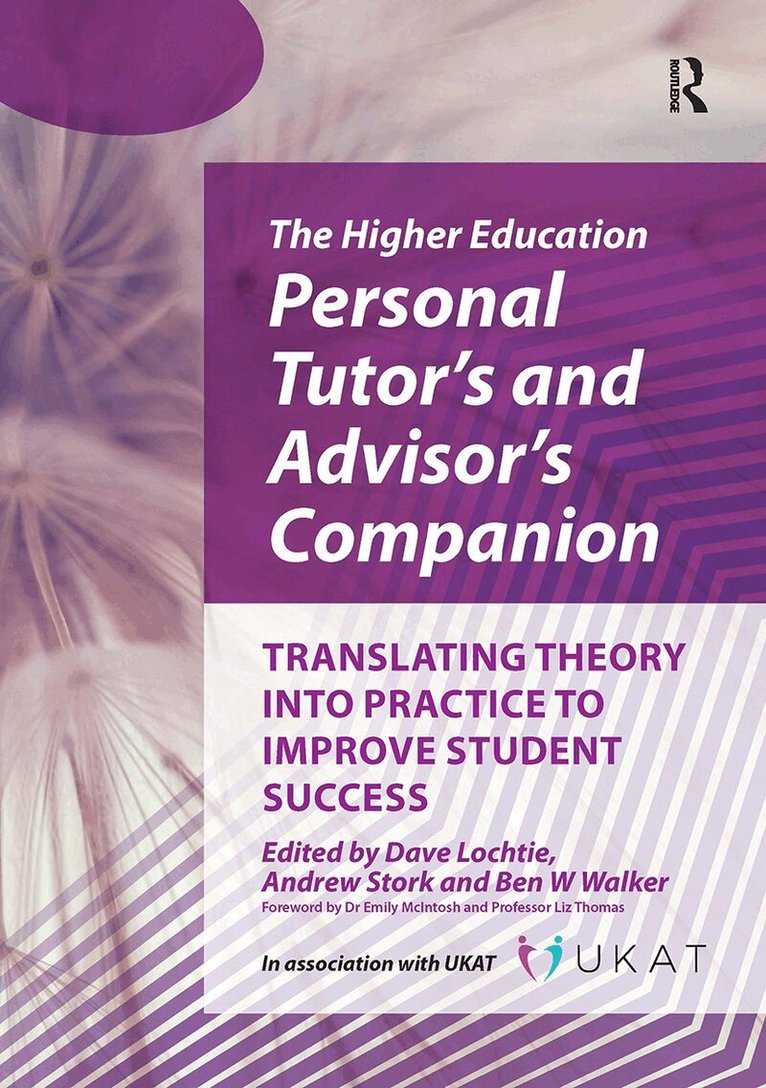
Professional learning and development for higher education personal tutors and academic advisors. With contributions from 50 practitioners from across the sector, this text examines the key themes, theories and concepts relevant to personal tutors and academic advisors and translates these into real-world practice. Case study narratives from a range of settings demonstrate how student learning and outcomes can be improved, and related critical thinking activities encourage reflection on how these learnings can be applied in specific contexts. The book provides invaluable insights and support for all personal tutors and academic advisors, enabling practitioners to learn from each other, develop innovative ideas, and feel part of a community of learning.Please also see Effective Personal Tutoring in Higher Education for the themes on which the case studies in this collection are based.
This is a comprehensive guide for higher education professionals engaged in student support, advising or personal tutoring roles. It covers a range of key topics relating to tutoring in the HE landscape including definitions, pedagogy, coaching, core values and skills, boundaries, monitoring students, undertaking group and individual tutorials and the need to measure impact.A scholarly and practical text, it brings together relevant academic literature to inform personal tutoring practice and contextualise the role within HE policy. This second edition has been thoroughly updated, and explores topical and timely content with new chapters that examine the pedagogy of personal tutoring, key concepts surrounding effective student interactions, and inclusive personal tutoring. Further emphasis is placed on student engagement and motivation as well as how to effectively share responsibility and manage expectations. Reflective exercises are provided throughout the text to encourage critical thinking about this key role and support tutors’ own professional development.Packed with actionable steps, this is a vital toolkit for higher education professionals at any stage of their career, and offers a wealth of expert guidance, resources and checklists to help develop meaningful and impactful connections with students throughout their learning journey.
The undergraduate years are a turning point in producing scientifically literate citizens and future scientists and engineers. Evidence from research about how students learn science and engineering shows that teaching strategies that motivate and engage students will improve their learning. So how do students best learn science and engineering? Are there ways of thinking that hinder or help their learning process? Which teaching strategies are most effective in developing their knowledge and skills? And how can practitioners apply these strategies to their own courses or suggest new approaches within their departments or institutions? Reaching Students strives to answer these questions. Reaching Students presents the best thinking to date on teaching and learning undergraduate science and engineering. Focusing on the disciplines of astronomy, biology, chemistry, engineering, geosciences, and physics, this book is an introduction to strategies to try in your classroom or institution.Concrete examples and case studies illustrate how experienced instructors and leaders have applied evidence-based approaches to address student needs, encouraged the use of effective techniques within a department or an institution, and addressed the challenges that arose along the way. The research-based strategies in Reaching Students can be adopted or adapted by instructors and leaders in all types of public or private higher education institutions. They are designed to work in introductory and upper-level courses, small and large classes, lectures and labs, and courses for majors and non-majors. And these approaches are feasible for practitioners of all experience levels who are open to incorporating ideas from research and reflecting on their teaching practices. This book is an essential resource for enriching instruction and better educating students.