Hot Spots in Global Politics - Böcker
Visar alla böcker i serien Hot Spots in Global Politics. Handla med fri frakt och snabb leverans.
18 produkter
18 produkter
719 kr
Skickas inom 7-10 vardagar
Afghanistan has become synonymous with violence. In the past 25 years alone, the country has endured Russian invasion and occupation, civil war and a US-led military campaign, resulting in the combined loss of over 2 million lives, most of them civilian. Even now, following the overthrow of the Taliban regime, old ethnic animosities have resurfaced which seem likely to push the country into another spell of internal war. But why is it that Afghanistan has experienced such bloody conflict and slaughter? What factors have allowed the country to be exploited by external powers who have intervened to determine its politics, social structure and, consequently, its place in the world? In this fascinating new book, Amalendu Misra seeks to provide answers to these pressing questions. By analysing the nature of conflict in Afghanistan, he exposes the various geopolitical, ethnic, economic and religious variables which have contributed to the breakdown of the Afghan state, and ponders whether post-war reconstruction could lead to a more democratic and peaceful Afghanistan.
218 kr
Skickas inom 7-10 vardagar
Afghanistan has become synonymous with violence. In the past 25 years alone, the country has endured Russian invasion and occupation, civil war and a US-led military campaign, resulting in the combined loss of over 2 million lives, most of them civilian. Even now, following the overthrow of the Taliban regime, old ethnic animosities have resurfaced which seem likely to push the country into another spell of internal war. But why is it that Afghanistan has experienced such bloody conflict and slaughter? What factors have allowed the country to be exploited by external powers who have intervened to determine its politics, social structure and, consequently, its place in the world? In this fascinating new book, Amalendu Misra seeks to provide answers to these pressing questions. By analysing the nature of conflict in Afghanistan, he exposes the various geopolitical, ethnic, economic and religious variables which have contributed to the breakdown of the Afghan state, and ponders whether post-war reconstruction could lead to a more democratic and peaceful Afghanistan.
893 kr
Skickas inom 5-8 vardagar
For almost three decades the troubles in Northern Ireland raged, claiming over 3,600 lives, with civilians accounting for almost half the fatalities. In this book, Jonathan Tonge examines the reasons for that conflict; the motivations of the groups involved and explores the prospects for a post-conflict Northern Ireland. The book: assesses the motivations and campaigns of the IRA, UVF and UDA and other armed groups discusses what each paramilitary group achieved through violence analyses the continuing controversies surrounding the Northern Irelands dirty war outlines the extent of collusion between British security forces and loyalist paramilitaries explores how governments and political parties shaped the peace process scrutinizes prospects for the political development of unionism and nationalism within a devolved power sharing framework examines whether the sectarian divide is strengthening or weakening concludes by assessing whether Northern Ireland can move permanently from violence and instability to become a normal peaceful polity, in which the war is merely a historic relic Written by an acknowledged expert in the field, Northern Ireland combines incisive analysis, original research and a lucid style to provide an important assessment of what has been described as an 800 year old problem.
318 kr
Skickas inom 5-8 vardagar
For almost three decades the troubles in Northern Ireland raged, claiming over 3,600 lives, with civilians accounting for almost half the fatalities. In this book, Jonathan Tonge examines the reasons for that conflict; the motivations of the groups involved and explores the prospects for a post-conflict Northern Ireland. The book: assesses the motivations and campaigns of the IRA, UVF and UDA and other armed groups discusses what each paramilitary group achieved through violence analyses the continuing controversies surrounding the Northern Irelands dirty war outlines the extent of collusion between British security forces and loyalist paramilitaries explores how governments and political parties shaped the peace process scrutinizes prospects for the political development of unionism and nationalism within a devolved power sharing framework examines whether the sectarian divide is strengthening or weakening concludes by assessing whether Northern Ireland can move permanently from violence and instability to become a normal peaceful polity, in which the war is merely a historic relic Written by an acknowledged expert in the field, Northern Ireland combines incisive analysis, original research and a lucid style to provide an important assessment of what has been described as an 800 year old problem.
813 kr
Skickas inom 5-8 vardagar
Korea is one of the critical flashpoints in the world today. News of North Korea's recent nuclear tests, conducted in defiance of international pressure, drew widespread condemnation and raised serious concerns about the threat now posed to regional and international security by the regime of North Korea's dear leader Kim Jong-Il. This book penetrates the veil surrounding the conflict on the Korean peninsula and North Korea's missile and nuclear programmes. It provides a thorough historical analysis of relations between the two Koreas since the Korean War, which traces both North Korea's path to economic ruin and South Korea's transition from struggling dictatorship to vibrant democracy. As well as examining the political and economic development of North and South Korea at the domestic level, the book goes on to explore regional relations with Russia, China and Japan and, most importantly, America's dealings with Korea and its negotiations with North Korea, in particular. It concludes with an analysis of North Korea's current nuclear programme and its likely impact on international security in the 21st century.
224 kr
Skickas inom 7-10 vardagar
Korea is one of the critical flashpoints in the world today. News of North Korea's recent nuclear tests, conducted in defiance of international pressure, drew widespread condemnation and raised serious concerns about the threat now posed to regional and international security by the regime of North Korea's dear leader Kim Jong-Il. This book penetrates the veil surrounding the conflict on the Korean peninsula and North Korea's missile and nuclear programmes. It provides a thorough historical analysis of relations between the two Koreas since the Korean War, which traces both North Korea's path to economic ruin and South Korea's transition from struggling dictatorship to vibrant democracy. As well as examining the political and economic development of North and South Korea at the domestic level, the book goes on to explore regional relations with Russia, China and Japan and, most importantly, America's dealings with Korea and its negotiations with North Korea, in particular. It concludes with an analysis of North Korea's current nuclear programme and its likely impact on international security in the 21st century.
643 kr
Skickas inom 7-10 vardagar
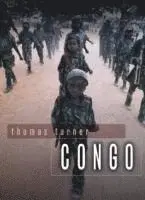
The Democratic Republic of Congo has become one of the world's bloodiest hot spots. 2003 saw the end of a five-year war in which millions lost their lives - one of the deadliest conflicts since World War II. Despite recent peace agreements and democratic elections, the country is still plagued by army and militia violence. Congo remains deeply troubled, since the deep-rooted causes of conflict have not been adequately addressed. The conflict in the DRC has divided opinion; some call it a civil war, or a war of aggression by the country's neighbours; others a continuation of Rwanda's Hutu-Tutsi conflict on Congolose soil, and a war of partition and pillage. The prevalence of rape and sexual violence has led some analysts to mark it out as a hidden ‘war against women'. Tom Turner's insightful book reveals how each of these descriptions accurately captures the separate elements of this complex and multidimensional political conflict. In exploring each of these contributory factors, he shows how current attempts to rebuild the shattered state and society of DRC are doomed to fail. So long as the full complexity of the Congo crisis is not taken into account and a clear consensus as to its precise dimensions reached, the future looks bleak. The DRC, he argues, will likely remain a global hot spot for some time to come.
218 kr
Skickas inom 7-10 vardagar
The Democratic Republic of Congo has become one of the world's bloodiest hot spots. 2003 saw the end of a five-year war in which millions lost their lives - one of the deadliest conflicts since World War II. Despite recent peace agreements and democratic elections, the country is still plagued by army and militia violence. Congo remains deeply troubled, since the deep-rooted causes of conflict have not been adequately addressed. The conflict in the DRC has divided opinion; some call it a civil war, or a war of aggression by the country's neighbours; others a continuation of Rwanda's Hutu-Tutsi conflict on Congolose soil, and a war of partition and pillage. The prevalence of rape and sexual violence has led some analysts to mark it out as a hidden ‘war against women'. Tom Turner's insightful book reveals how each of these descriptions accurately captures the separate elements of this complex and multidimensional political conflict. In exploring each of these contributory factors, he shows how current attempts to rebuild the shattered state and society of DRC are doomed to fail. So long as the full complexity of the Congo crisis is not taken into account and a clear consensus as to its precise dimensions reached, the future looks bleak. The DRC, he argues, will likely remain a global hot spot for some time to come.
813 kr
Skickas inom 7-10 vardagar
Few countries can claim to have endured such a difficult and tortuous history as that of Iraq. Its varied peoples have had to contend with externally imposed state-building at the end of the First World War, through to the rise of authoritarian military regimes, to the all-encompassing power of Saddam Hussein�s dictatorship. They have endured destructive wars, internationally-imposed sanctions, and a further bout of destabilizing regime change and subsequent state-building from 2003. The recent rise of the Islamic State, the consolidation of the Kurdistan Region, and the response of the Shi�i populace have brought the country to a de facto partition that may bring about Iraq�s final demise.The second edition of Iraq: People, History, Politics provides a comprehensive analysis of the political, societal, and economic dynamics that have governed Iraq�s modern development. Situating recent events within a longer historical timeframe, this book is a must-read for anyone wanting to understand the deep histories that underpin the contemporary politics of this war-torn and troubled state.
238 kr
Skickas inom 7-10 vardagar
Few countries can claim to have endured such a difficult and tortuous history as that of Iraq. Its varied peoples have had to contend with externally imposed state-building at the end of the First World War, through to the rise of authoritarian military regimes, to the all-encompassing power of Saddam Hussein�s dictatorship. They have endured destructive wars, internationally-imposed sanctions, and a further bout of destabilizing regime change and subsequent state-building from 2003. The recent rise of the Islamic State, the consolidation of the Kurdistan Region, and the response of the Shi�i populace have brought the country to a de facto partition that may bring about Iraq�s final demise.The second edition of Iraq: People, History, Politics provides a comprehensive analysis of the political, societal, and economic dynamics that have governed Iraq�s modern development. Situating recent events within a longer historical timeframe, this book is a must-read for anyone wanting to understand the deep histories that underpin the contemporary politics of this war-torn and troubled state.
719 kr
Skickas inom 7-10 vardagar
The Horn of Africa is a deeply troubled region engulfed in three interlocking crises. The first is a security crisis characterized by a range of devastating inter-state and inter-communal conflicts, including civil wars. The second is an economic crisis, evidenced by widespread debilitating poverty, chronic food insecurity, and frequent cycles of famines. The effects of the third - environmental - crisis are all too visible in the droughts, deforestation and desertification ravaging the region. What is more, these three crises are mutually reinforcing locking the region into a cycle of disaster. Conflicts contribute to poverty, which in turn intensifies environmental degradation, leading to scarcities which fuel further conflicts. In this clear and authoritative guide, Kidane Mengisteab explores the key drivers of instability in the Horn of Africa, suggesting structural and institutional changes that - if implemented - could help lift the region out of crisis. The Horn’s complex crises must be tackled in a comprehensive manner. But, he contends, this can only be achieved if the causes of conflict are addressed head-on. Without peace, the region cannot resolve its economic problems, and nor can it develop the capabilities required to cope with environmental change. The Horn of Africa will be essential reading for students and scholars in conflict and security studies, as well as anyone with an interest in learning more about the dynamics of this troubled region
218 kr
Skickas inom 7-10 vardagar
The Horn of Africa is a deeply troubled region engulfed in three interlocking crises. The first is a security crisis characterized by a range of devastating inter-state and inter-communal conflicts, including civil wars. The second is an economic crisis, evidenced by widespread debilitating poverty, chronic food insecurity, and frequent cycles of famines. The effects of the third - environmental - crisis are all too visible in the droughts, deforestation and desertification ravaging the region. What is more, these three crises are mutually reinforcing locking the region into a cycle of disaster. Conflicts contribute to poverty, which in turn intensifies environmental degradation, leading to scarcities which fuel further conflicts. In this clear and authoritative guide, Kidane Mengisteab explores the key drivers of instability in the Horn of Africa, suggesting structural and institutional changes that - if implemented - could help lift the region out of crisis. The Horn’s complex crises must be tackled in a comprehensive manner. But, he contends, this can only be achieved if the causes of conflict are addressed head-on. Without peace, the region cannot resolve its economic problems, and nor can it develop the capabilities required to cope with environmental change. The Horn of Africa will be essential reading for students and scholars in conflict and security studies, as well as anyone with an interest in learning more about the dynamics of this troubled region
662 kr
Skickas inom 7-10 vardagar
Libya is teetering on the edge of collapse, having become a new haven for terrorist organizations and an epicenter of the refugee crisis. Few could have imagined that the uprising against the longstanding regime of Mu'ammar Al-Gaddafi would expose a polity deeply fractured by internal divisions. Fewer still could have predicted the intractability of the conflicts that emerged in the wake of this revolution.Jacob Mundy's Libya is the first book to explain the political, security, and humanitarian crises that have engulfed Libya – Africa's largest oil-exporting country – since the Arab Spring of 2011. Examining the roots of the anti-Gaddafi revolution and the failures that resulted in the country's descent into chaos, Mundy identifies new centers of power that coalesced in the wake of the regime's collapse. The more these rival coalitions vied for political authority and control over Libya's vast oil wealth, the more they reached out to external actors who were playing their own "great game" in Libya and across the region. In the face of such a multifaceted crisis, the future looks grim as the international community seems unable to bring peace to this divided and conflict-ridden nation.
211 kr
Skickas inom 7-10 vardagar
Libya is teetering on the edge of collapse, having become a new haven for terrorist organizations and an epicenter of the refugee crisis. Few could have imagined that the uprising against the longstanding regime of Mu'ammar Al-Gaddafi would expose a polity deeply fractured by internal divisions. Fewer still could have predicted the intractability of the conflicts that emerged in the wake of this revolution.Jacob Mundy's Libya is the first book to explain the political, security, and humanitarian crises that have engulfed Libya – Africa's largest oil-exporting country – since the Arab Spring of 2011. Examining the roots of the anti-Gaddafi revolution and the failures that resulted in the country's descent into chaos, Mundy identifies new centers of power that coalesced in the wake of the regime's collapse. The more these rival coalitions vied for political authority and control over Libya's vast oil wealth, the more they reached out to external actors who were playing their own "great game" in Libya and across the region. In the face of such a multifaceted crisis, the future looks grim as the international community seems unable to bring peace to this divided and conflict-ridden nation.
643 kr
Skickas inom 7-10 vardagar
Egypt is one of the few great empires of antiquity that exists today as a nation state. Despite its extraordinary record of national endurance, the pressures to which Egypt currently is subjected and which are bound to intensify are already straining the ties that hold its political community together, while rendering ever more difficult the task of governing it.In this timely book, leading expert on Egyptian affairs Robert Springborg explains how a country with such a long and impressive history has now arrived at this parlous condition. As Egyptians become steadily more divided by class, religion, region, ethnicity, gender and contrasting views of how, by whom and for what purposes they should be governed, so their rulers become ever more fearful, repressive and unrepresentative. Caught in a downward spiral in which poor governance is both cause and consequence, Egypt is facing a future so uncertain that it could end up resembling neighboring countries that have collapsed under similar loads. The Egyptian "hot spot", Springborg argues, is destined to become steadily hotter, with ominous implications for its peoples, the Middle East and North Africa, and the wider world.
218 kr
Skickas inom 7-10 vardagar
Egypt is one of the few great empires of antiquity that exists today as a nation state. Despite its extraordinary record of national endurance, the pressures to which Egypt currently is subjected and which are bound to intensify are already straining the ties that hold its political community together, while rendering ever more difficult the task of governing it.In this timely book, leading expert on Egyptian affairs Robert Springborg explains how a country with such a long and impressive history has now arrived at this parlous condition. As Egyptians become steadily more divided by class, religion, region, ethnicity, gender and contrasting views of how, by whom and for what purposes they should be governed, so their rulers become ever more fearful, repressive and unrepresentative. Caught in a downward spiral in which poor governance is both cause and consequence, Egypt is facing a future so uncertain that it could end up resembling neighboring countries that have collapsed under similar loads. The Egyptian "hot spot", Springborg argues, is destined to become steadily hotter, with ominous implications for its peoples, the Middle East and North Africa, and the wider world.
741 kr
Skickas inom 7-10 vardagar
With more than 500,000 people killed and at least half the population displaced, Syria's conflict is the most deadly of the twenty-first century. Russia's decision to join the war has broken the long military and political stalemate but it looks unlikely to deliver any of the core demands that spawned the original uprising against the Ba'athist regime.In this fully revised second edition of his acclaimed text, Samer Abboud provides an in-depth analysis of Syria's descent into civil war, the subsequent stalemate, and the consequences of Russian military involvement after 2015. He unravels the complex and multi-layered drivers of the conflict and demonstrates how rebel fragmentation, sustained regime violence, international actors, and the emergence of competing centers of power tore Syria apart in wholly irreversible ways. A resolution to the Syrian catastrophe seems to have emerged in the aftermath of Russia's intervention, but, as Abboud argues, this "authoritarian peace" contains the seeds of continued and future conflict in Syria. While the Assad regime has so far survived, the instability, violence, and insecurity that continue to shape everyday life for the Syrian people portend an uncertain future that will have repercussions on the wider Middle East for years to come.
205 kr
Skickas inom 7-10 vardagar
With more than 500,000 people killed and at least half the population displaced, Syria's conflict is the most deadly of the twenty-first century. Russia's decision to join the war has broken the long military and political stalemate but it looks unlikely to deliver any of the core demands that spawned the original uprising against the Ba'athist regime.In this fully revised second edition of his acclaimed text, Samer Abboud provides an in-depth analysis of Syria's descent into civil war, the subsequent stalemate, and the consequences of Russian military involvement after 2015. He unravels the complex and multi-layered drivers of the conflict and demonstrates how rebel fragmentation, sustained regime violence, international actors, and the emergence of competing centers of power tore Syria apart in wholly irreversible ways. A resolution to the Syrian catastrophe seems to have emerged in the aftermath of Russia's intervention, but, as Abboud argues, this "authoritarian peace" contains the seeds of continued and future conflict in Syria. While the Assad regime has so far survived, the instability, violence, and insecurity that continue to shape everyday life for the Syrian people portend an uncertain future that will have repercussions on the wider Middle East for years to come.