Hybrid Energy Systems - Böcker
1 922 kr
Skickas inom 7-10 vardagar
Hybrid Technologies for Power Generation addresses the topics related to hybrid technologies by coupling conventional thermal engines with novel technologies, including fuel cells, batteries, thermal storage and electrolysis, and reporting on the most recent advances concerning transport and stationary applications. Potential operating schemes of hybrid power generation systems are covered, highlighting possible combinations of technology and guideline selection according to the energy demands of end-users. Going beyond state-of-the-art technological developments for processes, devices and systems, this book discusses the environmental impact and existing hurdles of moving from a single device to new approaches for efficient energy generation, transfer, conversion, high-density storage and consumption.
By describing the practical viability of novel devices coupled to conventional thermal devices, this book has a decisive impact in energy system research, supporting those in the energy research and engineering communities.
Covers detailed thermodynamic requirements for multiple smart technologies included in hybrid systems (i.e., FC, electrolysers, supercapacitors, batteries, thermal storage, etc.) Features fundamental analysis and modeling to optimize the combination of smart technologies with traditional engines Details protocols for the analysis, operation and requirements of large-scale production1 690 kr
Skickas inom 7-10 vardagar
Hybrid Nuclear Energy Systems: A Sustainable Solution for the 21st Century provides practical insights on the environmental impact of the hybrid systems discussed, as well as important technical, economic, licensing and safety considerations. This book acts as a guide for the implementation of hybrid energy systems and authoritatively compares the benefits and possible downfalls of each technology. This enables the reader to analyze their own setting or research and evaluate the most economical and effective solution. Energy engineering researchers and professional engineers will benefit from the practical and technical approach of this book.
This book will also benefit regulators and economists who will gain a clear understanding of how a hybrid system is not only designed, but also how societies will benefit from a cleaner and more abundant energy source.
Provides a comprehensive analysis of hybrid energy systems and their associated benefits and possible shortcomings Provides the latest technical, environmental, economic, safety and regulatory research Ranks key energy production methods against novel hybrid systems to highlight possibilities1 629 kr
Skickas inom 7-10 vardagar
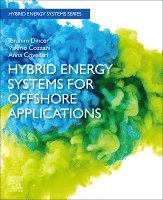
There has been a strong need to enhance the utilization of renewable energy systems (RESs) from onshore to offshore applications where oil and gas companies are pivoting to integrate such renewable energy options into their offshore operations to lower their carbon footprint, extend the lifetime of their assets, and expand their market. In this regard, innovative hybrid energy systems, such as "Power to Gas� (P2G) and "Power to Liquid� (P2L) options, as well as novel integration strategies for "Gas to Power� (G2P) systems, offer the opportunity to implement solutions energy transition, paving the way to offshore RES deployment.
Hybrid Energy Systems for Offshore Applications delivers a comprehensive presentation of state of the art and perspective developments of offshore RES exploitation strategies and technologies, and provides a unique portfolio of decision-making methodologies supporting the selection of the most suitable options for offshore renewable energy production at a specific site. System modeling and analysis along with the definitions of multicriteria methodologies and strategies based on sustainability, environmental impact, and safety performance indicators are addressed in an integrated fashion. Rounding out with both research and practical applications explained, this book gives academicians and industrial professionals fundamentals and methods for integrated performance analysis of innovative systems addressing offshore RES exploitation, sustainable chemical and power production, better efficiency, lower costs, lower environmental impact, and higher inherent safety.
Harmonized presentation of RESs Unique coverage on hybrid energy systems and their offshore applications Comprehensive thermodynamic analysis and evaluation of the developed systems Process and system modeling, analysis, and decision-making methodologies for offshore P2G, P2L, and G2P solutions Sustainability modeling and assessment studies for various offshore applications Distinct parametric studies, illustrations, and case studies Specific sustainability and safety performance indicators for comparative evaluations1 544 kr
Skickas inom 7-10 vardagar
Power-to-Gas: Bridging the Electricity and Gas Networks introduces the concept of Power-to-Gas (P2G) technologies in the Whole Energy System framework and related Vector-Coupling Technologies (VCTs). The boo provides a comprehensive approach to the economic, technical and environmental evaluation of P2G technology to make more effective use of the surplus power of renewable units. It covers converting electricity to hydrogen or methane, and the challenges, analytical solutions and future trends of P2G applications. Moreover, the reference features technology overviews and literature reviews in each chapter, along with concepts, appropriate definitions, fundamentals and contexts in the energy systems.
Finally, modeling issues and requirements for analysis Gas and Power Vector-Coupling Technologies are presented and supported by real-world case studies and experimental examples. By uniquely analyzing issues from the whole energy system perspective, this book plays a pivotal role in supporting researchers and academicians in electrical, mechanical and energy engineering in their long-term decarbonization strategies.
Includes a reliability assessment of cyber-physical power applications Presents practical methods, along with evidence from applications to real-world and simulated coupled energy systems Provides sample computer codes/pseudocodes and analytical examples for the presented methodsSolar Thermal Systems and Applications
New Design Techniques for Improved Thermal Performance
2 190 kr
Skickas inom 7-10 vardagar
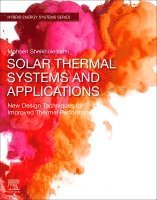
Solar Thermal Systems and Applications: New Design Techniques for Improved Thermal Performance brings together the latest advances for the improved performance, efficiency, and integration of solar thermal energy (STE) technology.This book begins by introducing solar energy and solar thermal energy as a viable option in terms of green energy for industrial, commercial, and residential applications, as well as its role and potential within hybrid energy systems. This is followed by detailed chapters that focus on key innovations in solar thermal energy systems, covering novel approaches and techniques in areas such as flat plate solar collectors, modified evacuated tube solar collectors, solar parabolic trough collectors, linear Fresnel reflectors, photovoltaic thermal systems (PVT), phase change materials (PCMs), nanotechnology, combined PVT-PCM systems, solar thermal systems and Trombe wall design, solar still units, and solar dish systems. Throughout this book, the coverage is supported by experimental and numerical modeling methods, and techniques are discussed and assessed with a view to improved electrical and thermal efficiency and performance.Solar Thermal Systems and Applications is a valuable resource for researchers and advanced students in solar energy, thermal engineering, hybrid energy systems, renewable energy, mechanical engineering, nanotechnology, and materials science. This is also of interest to engineers, R&D professionals, scientists, and policy makers with an interest in solar thermal energy in an industrial, residential, or commercial setting.
Introduces solar thermal energy (STE) and details the current state and future opportunitiesReviews and analyzes the latest advances in solar thermal energy technology, design, methods, and applicationsCovers, in detail, the role of phase change materials and nanomaterials in STE systems