Infant Nutrition and Healthcare – Serie
Visar alla böcker i serien Infant Nutrition and Healthcare. Handla med fri frakt och snabb leverans.
10 produkter
10 produkter
Feeding Infants and Children from Birth to 24 Months
Summarizing Existing Guidance
Häftad, Engelska, 2020
964 kr
Tillfälligt slut
Recommendations for feeding infants and young children have changed substantially over time owing to scientific advances, cultural influences, societal trends, and other factors. Atthe same time, stronger approaches to reviewing and synthesizing scientific evidence have evolved, such that there are now established protocols for developing evidence-based health recommendations. However, not all authoritative bodies have used such approaches for developing infant feeding guidance, and for many feeding questions there is little or no sound evidence available to guide best practices, despite the fact that research on infant and young child feeding has expanded in recent decades. Summarizing the current landscape of feeding recommendations for infants and young children can reveal the level of consistency of existing guidance, shed light on the types of evidence that underpin each recommendation, and provide insight into the feasibility of harmonizing guidelines.Feeding Infants and Children from Birth to 24 Months collects, compares, and summarizes existing recommendations on what and how to feed infants and young children from birth to 24 months of age. This report makes recommendations to stakeholders on strategies for communicating and disseminating feeding recommendations.
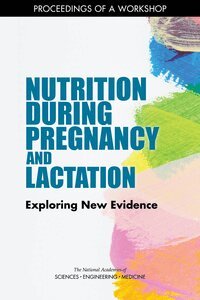
Nutrition During Pregnancy and Lactation
Exploring New Evidence: Proceedings of a Workshop
Häftad, Engelska, 2020
725 kr
Tillfälligt slut
The National Academies of Sciences, Engineering, and Medicine last reviewed the state of the science on nutrition during pregnancy and lactation 30 years ago. The resulting consensus study reports from the Institute of Medicine—Nutrition During Pregnancy (IOM, 1990) and Nutrition During Lactation (IOM, 1991)—summarized the scientific evidence and provided nutrient recommendations. In the decades since the release of these two reports, the body of evidence on the relationships between nutrition during pregnancy and lactation and maternal and infant health and chronic disease has continued to grow and evolve. At the same time, the demographics of the population have shifted, giving rise to new considerations. To explore the evidence that has emerged, the National Academies conducted a 2-day workshop in January 2020. This publication summarizes the presentations and discussions from the workshop.
Future Pediatric Subspecialty Physician Workforce
Meeting the Needs of Infants, Children, and Adolescents
Häftad, Engelska, 2023
486 kr
Tillfälligt slut
Pediatric subspecialists are critical to ensuring quality care and pursuing research to improve prevention, diagnosis, and treatment for children. However, there are substantial disincentives to pursuing a career as a pediatric subspecialist, which are often heightened for individuals from groups underrepresented in medicine, and more effective collaboration with primary care clinicians is needed. Changing health care needs, increasing care complexity, and access barriers to pediatric subspecialty care have raised concerns about the current and future availability of pediatric subspecialty care and research.In response, the National Academies, with support from a coalition of sponsors, formed the Committee on the Pediatric Subspecialty Workforce and Its Impact on Child Health and Well-Being to recommend strategies and actions to ensure an adequate pediatric subspecialty physician workforce to support broad access to high quality subspecialty care and a robust research portfolio to advance the health and health care of infants, children, and adolescents. This report outlines recommendations that, if fully implemented, can improve the quality of pediatric medical subspecialty care through a well-supported, superbly trained, and appropriately used primary care, subspecialty, and physician-scientist workforce.
Complementary Feeding Interventions for Infants and Young Children Under Age 2
Scoping of Promising Interventions to Implement at the Community or State Level
Häftad, Engelska, 2023
366 kr
Tillfälligt slut
Complementary feeding refers to the introduction of foods other than human milk or formula to an infants diet. In response to a request from the Centers for Disease Control and Prevention, the National Academies Health and Medicine Division convened the Committee on Complementary Feeding Interventions for Infants and Young Children under Age 2 to conduct a consensus study scoping review of peer-reviewed literature and other publicly available information on interventions addressing complementary feeding of infants and young children. The interventions studied took place in the U.S. and other high-income country health care systems; early care and education settings; university cooperative extension programs; the Special Supplemental Nutrition Program for Women, Infants, and Children (WIC); home visiting programs; and other settings. This consensus study report summarizes evidence and provides information on interventions that could be scaled up or implemented at a community or state level.
Challenges in Supply, Market Competition, and Regulation of Infant Formula in the United States
Häftad, Engelska, 2024
510 kr
Tillfälligt slut
Infant formula is a primary or supplementary source of nutrition for many infants in the U.S. Consequently, disruptions to the supply of infant formula can have a severe impact on infants' health and well-being. In late 2021 and early 2022, a recall of specific infant formula products, followed by a pause in production, resulted in a widespread, national shortage. The incident demonstrated that additional risk management planning is needed to protect infants from the consequences of potential future supply chain disruptions.In 2023, the U.S. Food and Drug Administration contracted with the National Academies to convene an expert committee to examine and report on challenges in supply, market competition, and regulation of infant formula. The resulting consensus study report explains policy and marketplace vulnerabilities that were exposed during the shortage, describes the extent to which actions taken by relevant stakeholders addressed these vulnerabilities, identifies remaining gaps in the system, and recommends actions to reduce the risk and lessen the effect of any future disruption to the infant formula supply chain.
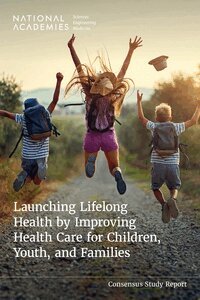
Launching Lifelong Health by Improving Health Care for Children, Youth, and Families
Häftad, Engelska, 2024
773 kr
Tillfälligt slut
Ensuring every child is on an optimal trajectory to a healthy and productive adulthood is imperative for the nation's future. Investments in children and families improves child health, but also health equity, education outcomes, workforce productivity, and cost-effectiveness in public spending. Despite advances in health care, children, especially those from historically marginalized groups, face rising rates of chronic diseases, obesity, and mental health challenges.Launching Lifelong Health by Improving Health Care for Children, Youth, And Families presents a vision for transforming the child and adolescent health care system. This report also examines how the health care system can be better positioned to equitably address the needs of all children and families and leverage community supports. This requires transforming key components, such as health care financing, public health investment, community partnerships, and accountability strategies, to encourage team-based care delivery models and attention to and health promotion, prevention, and root causes of health disparities.
Protein Quality and Growth Monitoring Studies
Quality Factor Requirements for Infant Formula
Häftad, Engelska, 2025
426 kr
Tillfälligt slut
Formula is often the sole source of nutrition for many infants, making its safety and quality particularly critical. While most food laws and regulations apply to infant formulas, they are also subject to additional requirements and manufacturer regulations for certain quality factors. These include an assessment of protein quality and demonstration that the formula supports normal infant physical growth.Per the Food and Drug Omnibus Reform Act of 2022, the U.S. Food and Drug Administration asked the National Academies to examine and report on the state of the science regarding methodologies for assessing the biological quality of protein in infant formula and the ability of infant formula to support normal physical growth. The committee's statement of task noted that its analysis should include the examination of current study designs and methods that could demonstrate quality factors have been met. The resulting report presents conclusions, recommendations, and areas of future research to improve standardized procedures for assessing protein quality in infant formula.
Breastfeeding in the United States
Strategies to Support Families and Achieve National Goals
Häftad, Engelska, 2025
356 kr
Tillfälligt slut
Breastfeeding supports lifelong health and development for both infants and mothers. It is associated with lower risks of chronic disease, improved maternal health outcomes, and potential health care cost savings. While most families in the United States begin breastfeeding, many are unable to continue as long as they intend due to systemic challenges such as limited parental leave, inconsistent access to lactation support, and inadequate workplace accommodations.The report Breastfeeding in the United States: Strategies to Support Families and Achieve National Goals provides a roadmap for helping families meet their breastfeeding goals and improving population-level outcomes. It emphasizes the need for strong federal coordination, comprehensive health care and community-based support, and inclusive public policies. Using a life course perspective, the report identifies key intervention points that begin before birth and continue through the return to work or school.To meet national breastfeeding objectives and improve health equity, the report recommends expanding effective community-based interventions, improving access to high-quality care, enacting supportive policies such as paid family leave, and investing in coordinated research. With sustained leadership and investment, families across the country can have the support they need to achieve their infant feeding goals and help the nation move closer to reaching the Healthy People 2030 targets.
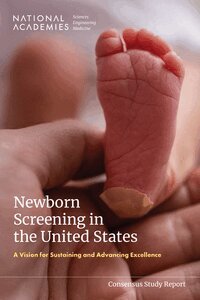
Newborn Screening in the United States
A Vision for Sustaining and Advancing Excellence
Häftad, Engelska, 2025
438 kr
Tillfälligt slut
For over 60 years, public health newborn screening programs have served families in the United States by identifying babies at risk of serious but treatable conditions and connecting them to clinical care. Today, more than 98% of infants receive dried blood spot screening, which entails collecting a few drops of blood during the first days of life, applying them to a paper card, and sending the card to a lab to be tested for markers of specific health conditions like congenital hypothyroidism, cystic fibrosis, and sickle cell disease. The public health impacts of newborn screening are vast, with over 7,000 infants identified annually for timely interventions. Despite these achievements, challenges in implementing newborn screening programs persist.In response to a congressional request, the Office on Women's Health of the U.S. Department of Health and Human Services asked the National Academies to convene an ad hoc committee of subject matter experts to examine the current landscape of newborn screening in the United States, recommend options to strengthen this public health service, and establish a vision for the future. Supplementary funding was provided by the Chan Zuckerberg Initiative to enable additional public engagement. The resulting report provides actionable recommendations for navigating the path ahead while preserving and enhancing what is already considered a valuable and effective public health achievement.
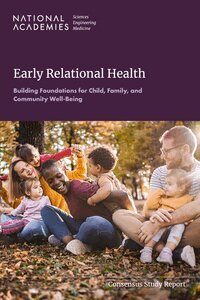
Early Relational Health
Building Foundations for Child, Family, and Community Well-Being
Häftad, Engelska, 2025
330 kr
Tillfälligt slut
Early relationships are foundational for lifelong health, learning, and well-being. Mutual, meaningful, and affirming moments of connection in the youngest relationships support brain development, resilience, and social-emotional growth. These experiences, known as early relational health (ERH), can also buffer the impacts of adversity and help create pathways toward thriving children, families, and communities.Early Relational Health: Building Foundations for Child, Family, and Community Well-Being provides evidence-based opportunities for advancing ERH. Developed by a committee of experts, this report highlights opportunities for practice, policy, and research to strengthen supportive relationships. It emphasizes asset-based approaches, family and community leadership, workforce supports, and cross-sector collaboration to promote ERH across health care, education, and social systems.