Information and Behavior Series - Böcker
Visar alla böcker i serien Information and Behavior Series. Handla med fri frakt och snabb leverans.
8 produkter
8 produkter
670 kr
Skickas inom 10-15 vardagar
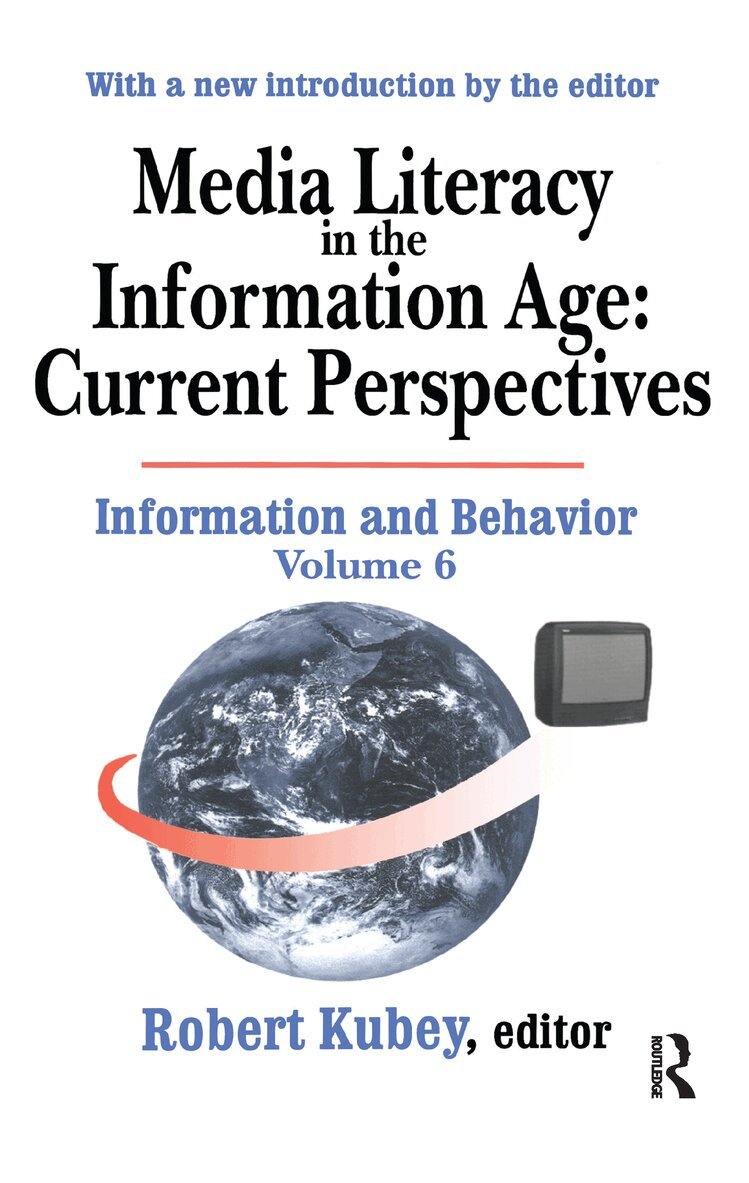
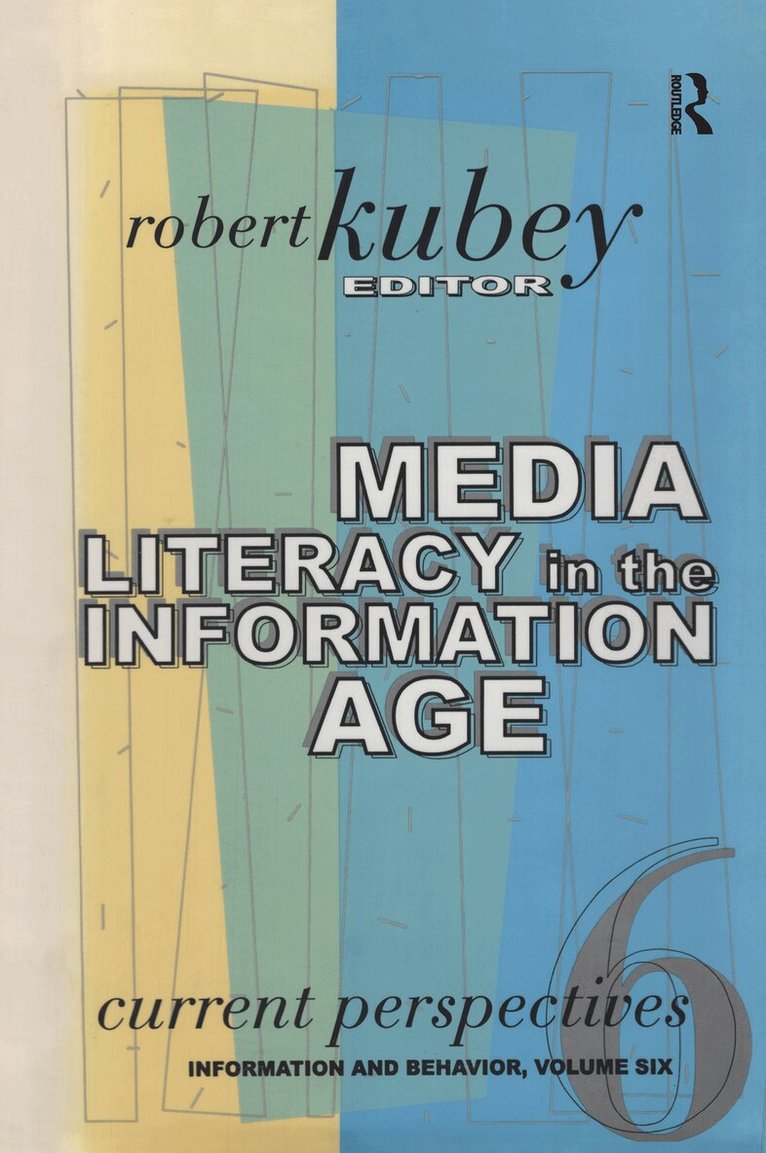
At the dawn of the twenty-first century, education about and through the media has become a worldwide phenomenon, and is playing an increasingly important role in educational reform. The theory and practice of media education have profited greatly from recent and intensive development and application of new information and telecommunications technologies. Consequently, the importance of media and information literacy is taking on an even greater urgency. With this in mind, the contributors to this volume survey what has taken place over the last decade in different parts of the world, examine the current state of theoretical, conceptual, and research development, and consider where media education is going and where it ought to go. With two-thirds of its 22 contributions coming from outside the United States, Media Literacy around the World is a genuine international effort, with many leading media and information educators in the world taking part. The work converts the notion of globalism from a slogan into a working hypothesis. The concerns in this volume are with literacy not just in computer technology, but as a broad concern of the educational process.
1 099 kr
Tillfälligt slut
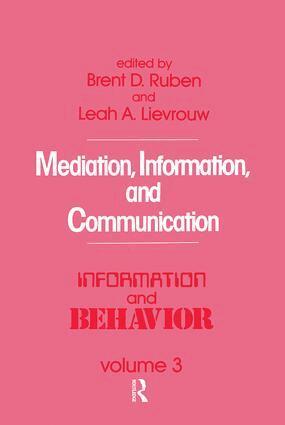
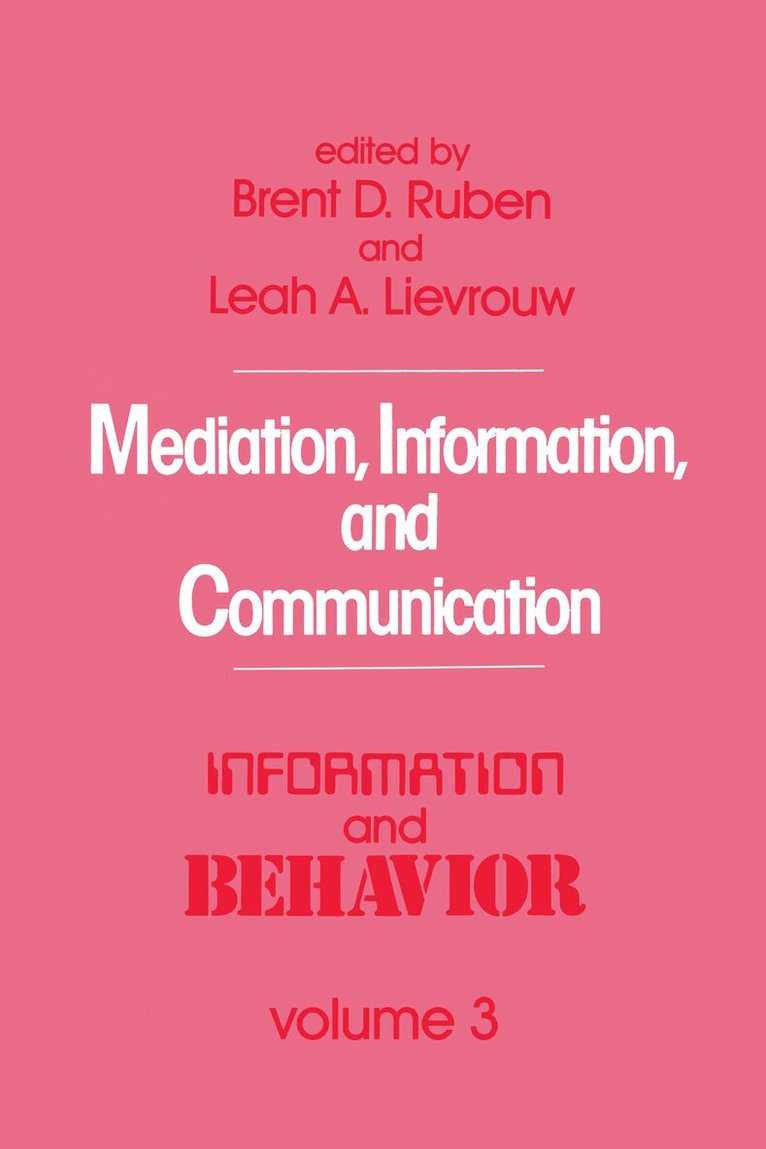
This third volume of Information and Behavior shows broad continuities with previous volumes in this series, but it also represents an important evolution. In emphasizing theoretical advances in mediation, information, and communication processes, this volume has unifying themes at the cutting edge of communication research, linking communication with areas as far-ranging as cognitive psychology, intellectual history, social psychology, policy, and macroeconomics.A sampling of the contents indicates both continuities and discontinuities of communication research embodied in this volume. Contributions include Joseph Turow, "Mass Communication as Concept"; Gary Grumpert and Robert Cathcart, "A Theory of Mediation;" Leah Lievrouw and T. Andrew Finn, "Common Dimensions of Communication"; Joshua Meyrowitz, "Mediated and Unmediated Behavior"; Kathleen Reardon, "Teaching Children About AIDS"; Sari Thomas, "The Death of Intellectual History and the Birth of the Transient Past"; Sheizaf Rafaeli, "Interacting with Media."The second part of the work, emphasizing research and policy in specific information societies and regions, includes an opening essay by Everett M. Rogers, and follow-up studies by Judith K. Larsen on "Silicon Valley"; Quentin W. Lindsey on "The North Carolina Research Triangle"; Luis Fonseca, "High Technology in Brazil"; Ruyzo Ogasawara, "High Technology in Japan"; and Mitchell Moss, "Telecommunications and Financial Centers."The final two portions of the book cover social theory and cultural processes. They include articles by Jerry Salvaggio and Richard Nelson, "Models for Developing Telecommunications and Information Industries"; Everett M. Rogers and James Dearing, "University-Industry Technology Transfer"; Frederick Williams, "The Communications Revolution Revisited"; Rolf Wigand, "Recurring Questions about the Information Society"; Lee Thayer, "Tropes and Things"; Gordon L. Miller, "The Energy of Intelligence"; David Carr, "Thinking in Museums;" Benjamin J. Bates, "Information as an Economic Good"; Jorge Schement and Daniel Stout, "A Time-Line of Information Technology."
670 kr
Skickas inom 10-15 vardagar
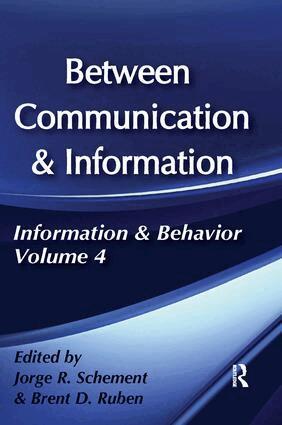
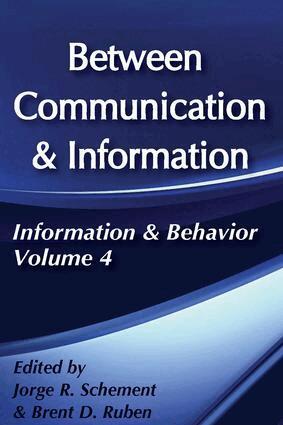
The current popularity of such phrases as "information age" and 'information society" suggests thatlinks between information,communication, and: behavior have become closer and more complex in a technology-dominated culture. Social scientists have adopted an integrated approach to these concepts, opening up new theoretical perspectives on the media, social psychology, personal relationships, group process, international diplomacy, and consumer behavior. Between Communication and Information maps out a richly interdisciplinary approach to this development, offering innovative research and advancing our understanding of integrative frameworks.This fourth volume in the series reflects recently established lines of research as well as the continuing interest in basic areas of communications theory and practice. In Part I contributors explore the junction between communication and information from various theoretical perspectives, delving into the multilayered relationship between the two phenomena. Cross-disciplinary approaches in the fields of etymology and library science are presented in the second section. Part III. brings together case studies that examine the interaction of information and communication at individual and group levels; information exchanges between doctors and patients, children and computers, journalists and electronic news sources are analyzed in depth. The concluding segment focuses on large social contexts in which the interaction of communication and information affects the evolution of institutions and culture.Between Information and Communication both extends and challenges current thinking on the mutually supporting interplay of information and human behavior. It will be of interest to sociologists, media analysts, and communication specialists.
670 kr
Skickas inom 10-15 vardagar
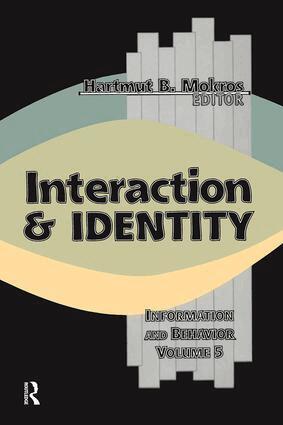
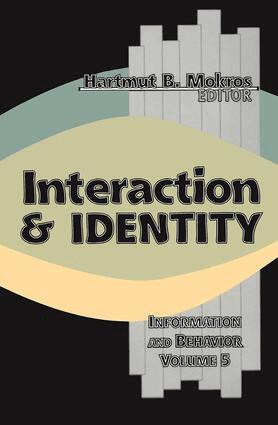
Scholarly interest in issues of self-identity has exploded across disciplines within the humanities and social sciences in recent years. Common to these concerns are the assumptions that self-identity is not an a priori, not given or fixed, but created in the process of communication. This also assumes that social institutions and values are produced and reproduced by individuals in interaction. To capture the essential characteristics of a person requires analysis of how the social and psychological intersect in moments of communication.Interaction and Identity contributes, theoretically and empirically, to contemporary scholarly interest in issues of identity. Chapters and contributors to this stand alone volume include: "Part/Whole Discovery: Stages of Inquiry" by Thomas Scheff; "Communication" by Gregory Bateson; "Internal Muzak: An Examination of Intrapersonal Relationships" by Linda Lederman; "The Constitution of Identity as Gendered in Psychoanalytic Therapy: Ideology and Interaction" by Margaret Carr; and "The (Reconstruction and Negotiation of Cultural Identities in the Age of Globalization" by Getinet Belay.The multiple disciplines of social research with contemporary interest in identity are ably reflected in Interaction and Identity. The authors are drawn from eight disciplines: anthropology, communication, information science, linguistics, philosophy, psychoanalysis, psychology, and sociology. This book will be invaluable to scholars in all these areas above all in communication research as such.
660 kr
Skickas inom 10-15 vardagar
This third volume of Information and Behavior shows broad continuities with previous volumes in this series, but it also represents an important evolution. In emphasizing theoretical advances in mediation, information, and communication processes, this volume has unifying themes at the cutting edge of communication research, linking communication with areas as far-ranging as cognitive psychology, intellectual history, social psychology, policy, and macroeconomics.A sampling of the contents indicates both continuities and discontinuities of communication research embodied in this volume. Contributions include Joseph Turow, "Mass Communication as Concept"; Gary Grumpert and Robert Cathcart, "A Theory of Mediation;" Leah Lievrouw and T. Andrew Finn, "Common Dimensions of Communication"; Joshua Meyrowitz, "Mediated and Unmediated Behavior"; Kathleen Reardon, "Teaching Children About AIDS"; Sari Thomas, "The Death of Intellectual History and the Birth of the Transient Past"; Sheizaf Rafaeli, "Interacting with Media."The second part of the work, emphasizing research and policy in specific information societies and regions, includes an opening essay by Everett M. Rogers, and follow-up studies by Judith K. Larsen on "Silicon Valley"; Quentin W. Lindsey on "The North Carolina Research Triangle"; Luis Fonseca, "High Technology in Brazil"; Ruyzo Ogasawara, "High Technology in Japan"; and Mitchell Moss, "Telecommunications and Financial Centers."The final two portions of the book cover social theory and cultural processes. They include articles by Jerry Salvaggio and Richard Nelson, "Models for Developing Telecommunications and Information Industries"; Everett M. Rogers and James Dearing, "University-Industry Technology Transfer"; Frederick Williams, "The Communications Revolution Revisited"; Rolf Wigand, "Recurring Questions about the Information Society"; Lee Thayer, "Tropes and Things"; Gordon L. Miller, "The Energy of Intelligence"; David Carr, "Thinking in Museums;" Benjamin J. Bates, "Information as an Economic Good"; Jorge Schement and Daniel Stout, "A Time-Line of Information Technology."
2 044 kr
Skickas inom 10-15 vardagar
The current popularity of such phrases as "information age" and 'information society" suggests thatlinks between information,communication, and: behavior have become closer and more complex in a technology-dominated culture. Social scientists have adopted an integrated approach to these concepts, opening up new theoretical perspectives on the media, social psychology, personal relationships, group process, international diplomacy, and consumer behavior. Between Communication and Information maps out a richly interdisciplinary approach to this development, offering innovative research and advancing our understanding of integrative frameworks.This fourth volume in the series reflects recently established lines of research as well as the continuing interest in basic areas of communications theory and practice. In Part I contributors explore the junction between communication and information from various theoretical perspectives, delving into the multilayered relationship between the two phenomena. Cross-disciplinary approaches in the fields of etymology and library science are presented in the second section. Part III. brings together case studies that examine the interaction of information and communication at individual and group levels; information exchanges between doctors and patients, children and computers, journalists and electronic news sources are analyzed in depth. The concluding segment focuses on large social contexts in which the interaction of communication and information affects the evolution of institutions and culture.Between Information and Communication both extends and challenges current thinking on the mutually supporting interplay of information and human behavior. It will be of interest to sociologists, media analysts, and communication specialists.
1 069 kr
Tillfälligt slut
Scholarly interest in issues of self-identity has exploded across disciplines within the humanities and social sciences in recent years. Common to these concerns are the assumptions that self-identity is not an a priori, not given or fixed, but created in the process of communication. This also assumes that social institutions and values are produced and reproduced by individuals in interaction. To capture the essential characteristics of a person requires analysis of how the social and psychological intersect in moments of communication.Interaction and Identity contributes, theoretically and empirically, to contemporary scholarly interest in issues of identity. Chapters and contributors to this stand alone volume include: "Part/Whole Discovery: Stages of Inquiry" by Thomas Scheff; "Communication" by Gregory Bateson; "Internal Muzak: An Examination of Intrapersonal Relationships" by Linda Lederman; "The Constitution of Identity as Gendered in Psychoanalytic Therapy: Ideology and Interaction" by Margaret Carr; and "The (Reconstruction and Negotiation of Cultural Identities in the Age of Globalization" by Getinet Belay.The multiple disciplines of social research with contemporary interest in identity are ably reflected in Interaction and Identity. The authors are drawn from eight disciplines: anthropology, communication, information science, linguistics, philosophy, psychoanalysis, psychology, and sociology. This book will be invaluable to scholars in all these areas—above all in communication research as such.
1 630 kr
Skickas inom 10-15 vardagar
At the dawn of the twenty-first century, education about and through the media has become a worldwide phenomenon, and is playing an increasingly important role in educational reform. The theory and practice of media education have profited greatly from recent and intensive development and application of new information and telecommunications technologies. Consequently, the importance of media and information literacy is taking on an even greater urgency. With this in mind, the contributors to this volume survey what has taken place over the last decade in different parts of the world, examine the current state of theoretical, conceptual, and research development, and consider where media education is going and where it ought to go. With two-thirds of its 22 contributions coming from outside the United States, Media Literacy around the World is a genuine international effort, with many leading media and information educators in the world taking part. The work converts the notion of globalism from a slogan into a working hypothesis. The concerns in this volume are with literacy not just in computer technology, but as a broad concern of the educational process.