Brent D. Ruben – författare
684 kr
Skickas inom 5-8 vardagar
566 kr
Skickas inom 5-8 vardagar
268 kr
Läs direkt efter köp
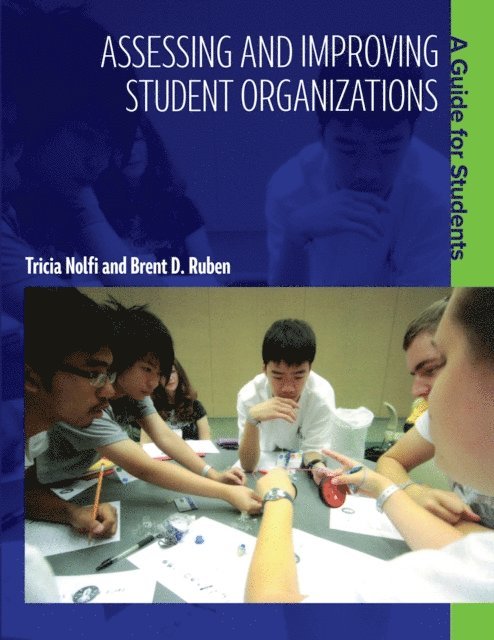
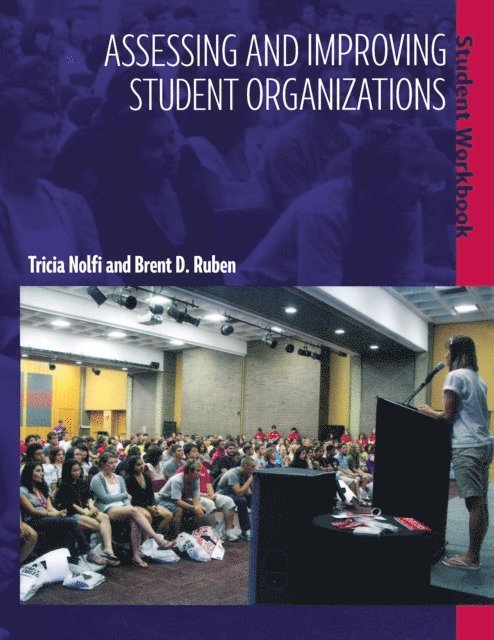
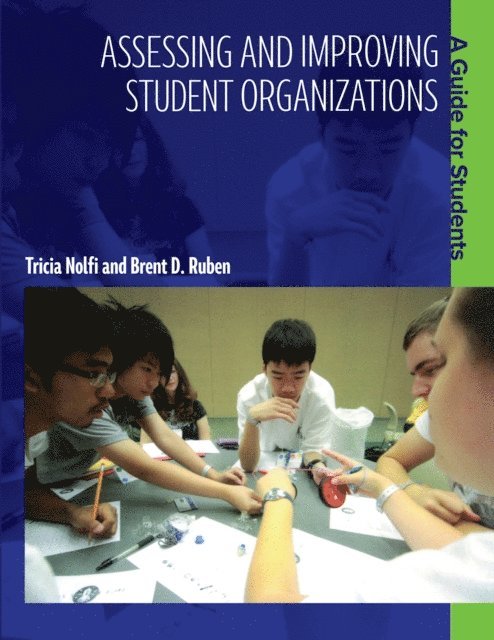
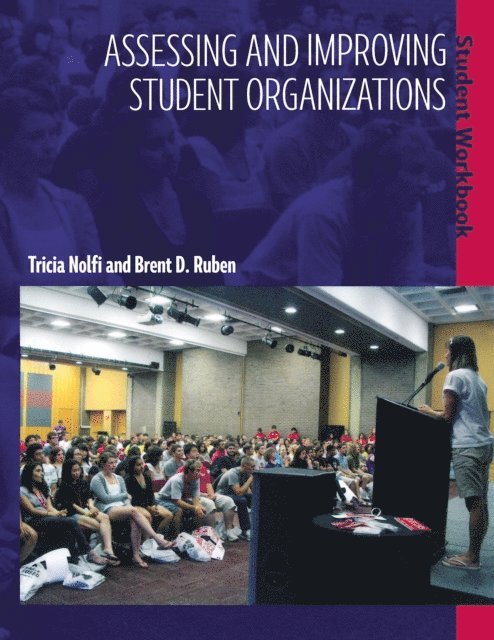
This Assessing and Improving Student Organization (AISO) program is intended as a guide for leaders of student-led college organizations. It is designed to promote the assessment of their organization by leaders and members, help them with planning and improvement, and assist them in responding to reviews by governing bodies and national chapters. Apart from affording their members a structure for engaging with peers in activities of mutual interest, collegiate organizations provide them with hands-on opportunities for enhancing understanding of groups and organizations, and how they operate, and for acquiring and practicing the leadership, communication and collaborative skills that are so important for personal and professional effectiveness throughout life. This Guide provides you with a structure for analyzing the workings of your organization. It will generate insights to help you determine how effectively the organization is functioning, identify strengths and weaknesses, devise priorities and plans for future improvement, and in the process, promote your reflective learning.The AISO process constitutes an ideal laboratory to practice and refine your capabilities for analyzing and improving groups and organizations.Purpose and Elements of the AISO ProgramThe Assessing and Improving Student Organization (AISO) program is intended as a guide for leaders of student-led college organizations. It is designed to promote the assessment of student organizations by their leaders and their members, to help them with planning and improvement, and assist them in responding to reviews by governing bodies and national chapters. Apart from affording their members a structure for engaging with peers in activities of mutual interest, collegiate organizations provide them with hands-on opportunities for enhancing understanding of groups and organizations, and how they operate, and for acquiring and practicing the leadership, communication and collaborative skills that are so important for personal and professional effectiveness throughout life.In addition, the AISO leadership process – unlike comparable programs – provides students with immediate and authentic feedback to evaluate their leadership, and how they impact their organization, community, and campus. The program consists of three elements: a Guide for Students, a Student Workbook, and a CD-ROM for facilitators.AISO has been developed under the auspices of NACA and ACPA by two authors who are experts in organizational and leadership development, student affairs, and human resources management.This is a unique, easy to use, and effective process that reflects input from student leaders.An ACPA Publication
521 kr
Läs direkt efter köp
FIRST EDITION SPECIAL RECOGNITION:Winner of the 2018 Sue DeWine Distinguished Scholarly Book Award, National Communication Association, Applied Communication Division REVIEWS OF THE FIRST EDITION“The book provides frameworks and resources that would be highly relevant for new and aspiring department chairs. In fact, this text is ideally designed to serve as a selection for a book discussion group.”—The Department Chair“Succeeds in providing accessible and useful resources to individuals across different leadership roles… As a midpoint between textbook and reference work, it is successful at both and provides a clear and unbiased background to issues facing current leaders.”—Reflective TeachingDuring a time of unprecedented challenges facing higher education, the need for effective leadership – for informal and formal leaders across the organization – has never been more imperative.Since publication of the first edition, the environment for higher education has become more critical and complex. Whether facing falling enrollments, questions of economic sustainability, the changing composition of the faculty and student bodies, differential retention and graduation rates, declining public confidence in the enterprise, or the rise in the use of virtual technologies – not to mention how COVID-19 and an intensified focus on long standing issues of racial and gender representation and equity have impacted institutions and challenged many long-standing assumptions – it is clear that learning on the job no longer suffices. Leadership development in higher education has become essential for advancing institutional effectiveness, which is the focus of this book.Taking into account the imperative issues of diversity, inclusion, and belonging, and the context of institutional mission and culture, this book centers on developing capacities for designing and implementing plans, strategies, and structures; connecting and engaging with colleagues and students; and communicating and collaborating with external constituencies in order to shape decisions and policies. It highlights the need to think broadly about the purposes of higher education and the dynamics of organizational excellence, and to apply these insights effectively in goal setting, planning and change leadership, outcomes assessment, addressing crises, and continuous improvement at both the level of the individual and organization.The concepts and tools in this book are equally valuable for faculty and staff leaders, whether in formal leadership roles, such as deans, chairs, or directors of institutes, committees, or task forces, or those who perform informal leadership functions within their departments, disciplines, or institutions. It can be used as a professional guide, a textbook in graduate courses, or as a resource in leadership training and development programs. Each chapter concludes with a series of case studies and guiding questions.
394 kr
Läs direkt efter köp
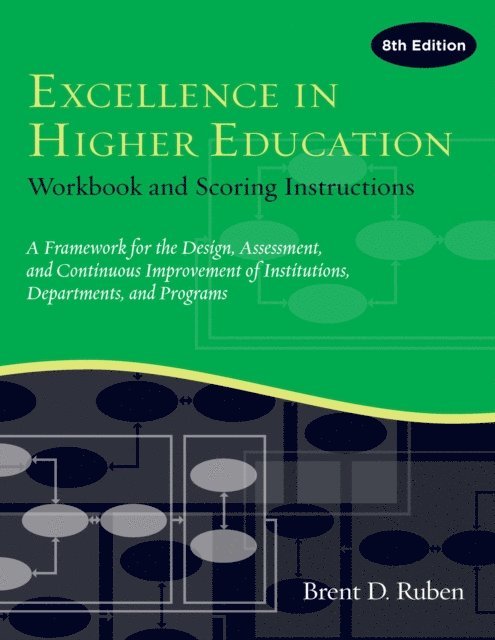
This ebook will be very useful for those who lead an EHE program. These facilitator’s materials will also make it possible to customize the EHE materials and adapt exercises to the needs of particular organizations.The eighth edition of Excellence in Education updates and extends the classic EHE series, including a broad and integrated approach to design, assessment, planning, and improvement of colleges and universities of all types, as well as individual academic, student affairs, administrative and services units. The framework included in the Guide is adaptable to institutions and units with any mission, and is consistent with the current directions within regional and programmatic accreditation. Click here for more information on the Guide.The eighth edition series also includes a Workbook and Scoring Instructions (available in print and electronic format. The Facilitator''s Materials are also sold as an ebook bundle with the Guide.
331 kr
Läs direkt efter köp
This Assessing and Improving Student Organization (AISO) program is intended as a guide for leaders of student-led college organizations. It is designed to promote the assessment of their organization by leaders and members, help them with planning and improvement, and assist them in responding to reviews by governing bodies and national chapters. Apart from affording their members a structure for engaging with peers in activities of mutual interest, collegiate organizations provide them with hands-on opportunities for enhancing understanding of groups and organizations, and how they operate, and for acquiring and practicing the leadership, communication and collaborative skills that are so important for personal and professional effectiveness throughout life. This Guide provides you with a structure for analyzing the workings of your organization. It will generate insights to help you determine how effectively the organization is functioning, identify strengths and weaknesses, devise priorities and plans for future improvement, and in the process, promote your reflective learning.The AISO process constitutes an ideal laboratory to practice and refine your capabilities for analyzing and improving groups and organizations.Purpose and Elements of the AISO ProgramThe Assessing and Improving Student Organization (AISO) program is intended as a guide for leaders of student-led college organizations. It is designed to promote the assessment of student organizations by their leaders and their members, to help them with planning and improvement, and assist them in responding to reviews by governing bodies and national chapters. Apart from affording their members a structure for engaging with peers in activities of mutual interest, collegiate organizations provide them with hands-on opportunities for enhancing understanding of groups and organizations, and how they operate, and for acquiring and practicing the leadership, communication and collaborative skills that are so important for personal and professional effectiveness throughout life.In addition, the AISO leadership process – unlike comparable programs – provides students with immediate and authentic feedback to evaluate their leadership, and how they impact their organization, community, and campus. The program consists of three elements: a Guide for Students, a Student Workbook, and a CD-ROM for facilitators.AISO has been developed under the auspices of NACA and ACPA by two authors who are experts in organizational and leadership development, student affairs, and human resources management.This is a unique, easy to use, and effective process that reflects input from student leaders.An ACPA Publication
552 kr
Läs direkt efter köp
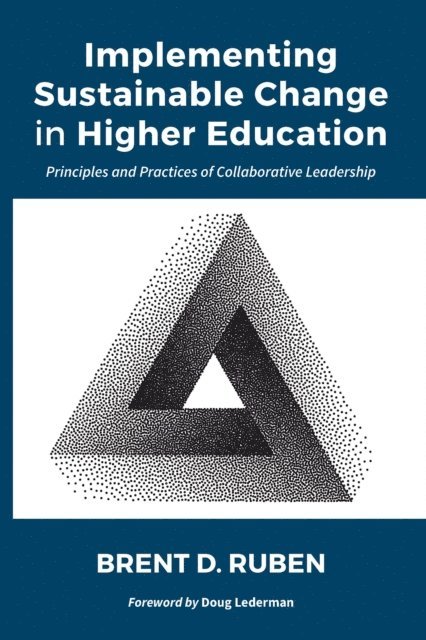
This book offers formal and informal leaders at all levels of their institution theory-informed and practical guidance on implementing and sustaining change through collaborative leadership. The framework and concepts presented are applicable at the department, program, campus, or system level to guide minor, incremental, or transformative change.Achieving a shared organizational vision can be a daunting challenge, given the multiple missions of higher education, varied and often conflicting stakeholder viewpoints, siloed organizational structures, traditions of shared governance, and a highly educated workforce bringing together colleagues with diverse disciplinary perspectives. Achieving these aims requires taking into account the organization’s systems and values and the needs and aspirations of corresponding stakeholders across the enterprise. Ruben provides a guide for achieving and sustaining these goals in an engaged and collaborative manner.Employing the author’s widely used Excellence in Higher Education (EHE) framework, this book offers principles and practices relative to change, collaboration, and organizational vision that can greatly enhance the prospects for effective outcomes, highlighting three key themes:·Understanding and leveraging the dynamics of change. ·Leading collaboratively, and meaningfully engaging one’s colleagues. ·Adopting and pursuing a shared vision of organizational purpose and aspirations.The book is intended for faculty and staff who want to advance the effectiveness and impact of their program, department, and institution, and to do so in a way that creates a shared vision to sustain these benefits into the future. It serves as a text for the growing number of leadership development programs, and for courses with a focus on higher education leadership.
552 kr
Läs direkt efter köp
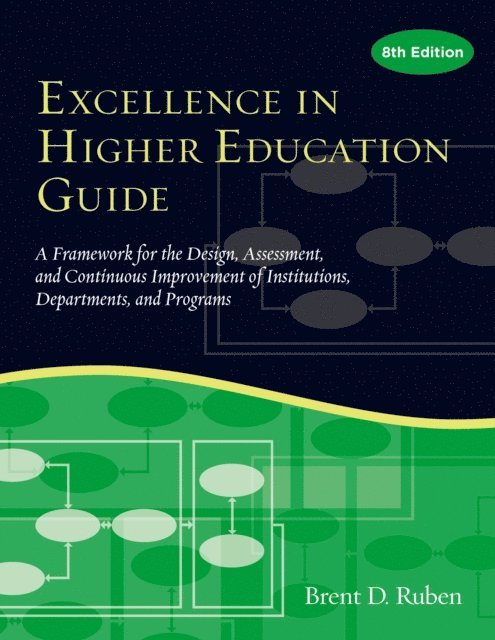
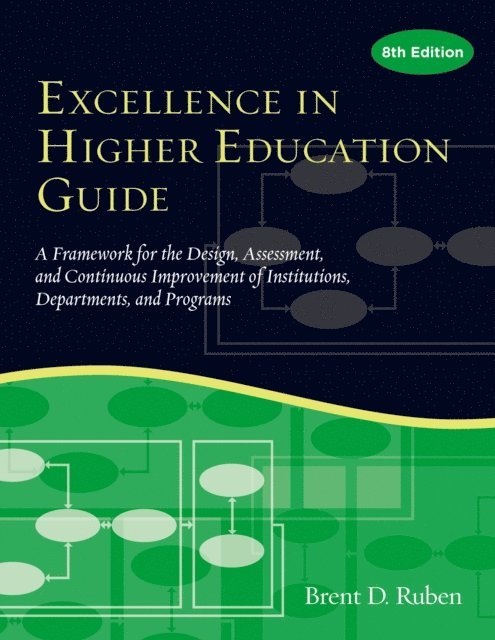
The new (eighth) edition of the Excellence in Higher Education Guide: A Framework for the Design, Assessment and Continuous Improvement of Institutions, Departments and Programs updates and extends the classic EHE series. This edition includes a broad and integrated approach to design, assessment, planning, and improvement of colleges and universities of all types, as well as individual academic, student affairs, administrative and services units. The framework included in the Guide is adaptable to institutions and units with any mission, and is consistent with the current directions within regional and programmatic accreditation.Based on the Malcolm Baldridge National Quality Award framework, this bestseller is the definitive tool for college and university administrators. The flexibility of the EHE model makes it appropriate for use with administrative or academic departments, with administrative or faculty councils or senate, and with programs, centers, or institutes. Moreover, the framework can be used by an entire college or university or with a particular department, division or campus.The EHE program includes everything you need to conduct a self-assessment workshop. The Guide provides facilitators with a solid understanding of the EHE model, providing detailed guidance in each of the seven areas:• Leadership• Purposes and Plans• Beneficiary and Constituency Relationships• Programs and Services• Faculty/Staff and Workplace• Metrics, Assessment and Analysis• Outcomes and AchievementsThe eighth edition series also includes a Workbook and Scoring Instructions (available in print and electronic format) and Facilitator’s Materials (available only by download). The Guide is also sold as an ebook bundle with the Facilitator''s materials.
268 kr
Läs direkt efter köp
This Assessing and Improving Student Organization (AISO) program is intended as a guide for leaders of student-led college organizations. It is designed to promote the assessment of their organization by leaders and members, help them with planning and improvement, and assist them in responding to reviews by governing bodies and national chapters. Apart from affording their members a structure for engaging with peers in activities of mutual interest, collegiate organizations provide them with hands-on opportunities for enhancing understanding of groups and organizations, and how they operate, and for acquiring and practicing the leadership, communication and collaborative skills that are so important for personal and professional effectiveness throughout life. This Guide provides you with a structure for analyzing the workings of your organization. It will generate insights to help you determine how effectively the organization is functioning, identify strengths and weaknesses, devise priorities and plans for future improvement, and in the process, promote your reflective learning.The AISO process constitutes an ideal laboratory to practice and refine your capabilities for analyzing and improving groups and organizations.Purpose and Elements of the AISO ProgramThe Assessing and Improving Student Organization (AISO) program is intended as a guide for leaders of student-led college organizations. It is designed to promote the assessment of student organizations by their leaders and their members, to help them with planning and improvement, and assist them in responding to reviews by governing bodies and national chapters. Apart from affording their members a structure for engaging with peers in activities of mutual interest, collegiate organizations provide them with hands-on opportunities for enhancing understanding of groups and organizations, and how they operate, and for acquiring and practicing the leadership, communication and collaborative skills that are so important for personal and professional effectiveness throughout life.In addition, the AISO leadership process – unlike comparable programs – provides students with immediate and authentic feedback to evaluate their leadership, and how they impact their organization, community, and campus. The program consists of three elements: a Guide for Students, a Student Workbook, and a CD-ROM for facilitators.AISO has been developed under the auspices of NACA and ACPA by two authors who are experts in organizational and leadership development, student affairs, and human resources management.This is a unique, easy to use, and effective process that reflects input from student leaders.An ACPA Publication
521 kr
Läs direkt efter köp
FIRST EDITION SPECIAL RECOGNITION:Winner of the 2018 Sue DeWine Distinguished Scholarly Book Award, National Communication Association, Applied Communication Division REVIEWS OF THE FIRST EDITION“The book provides frameworks and resources that would be highly relevant for new and aspiring department chairs. In fact, this text is ideally designed to serve as a selection for a book discussion group.”—The Department Chair“Succeeds in providing accessible and useful resources to individuals across different leadership roles… As a midpoint between textbook and reference work, it is successful at both and provides a clear and unbiased background to issues facing current leaders.”—Reflective TeachingDuring a time of unprecedented challenges facing higher education, the need for effective leadership – for informal and formal leaders across the organization – has never been more imperative.Since publication of the first edition, the environment for higher education has become more critical and complex. Whether facing falling enrollments, questions of economic sustainability, the changing composition of the faculty and student bodies, differential retention and graduation rates, declining public confidence in the enterprise, or the rise in the use of virtual technologies – not to mention how COVID-19 and an intensified focus on long standing issues of racial and gender representation and equity have impacted institutions and challenged many long-standing assumptions – it is clear that learning on the job no longer suffices. Leadership development in higher education has become essential for advancing institutional effectiveness, which is the focus of this book.Taking into account the imperative issues of diversity, inclusion, and belonging, and the context of institutional mission and culture, this book centers on developing capacities for designing and implementing plans, strategies, and structures; connecting and engaging with colleagues and students; and communicating and collaborating with external constituencies in order to shape decisions and policies. It highlights the need to think broadly about the purposes of higher education and the dynamics of organizational excellence, and to apply these insights effectively in goal setting, planning and change leadership, outcomes assessment, addressing crises, and continuous improvement at both the level of the individual and organization.The concepts and tools in this book are equally valuable for faculty and staff leaders, whether in formal leadership roles, such as deans, chairs, or directors of institutes, committees, or task forces, or those who perform informal leadership functions within their departments, disciplines, or institutions. It can be used as a professional guide, a textbook in graduate courses, or as a resource in leadership training and development programs. Each chapter concludes with a series of case studies and guiding questions.
394 kr
Läs direkt efter köp
This ebook will be very useful for those who lead an EHE program. These facilitator’s materials will also make it possible to customize the EHE materials and adapt exercises to the needs of particular organizations.The eighth edition of Excellence in Education updates and extends the classic EHE series, including a broad and integrated approach to design, assessment, planning, and improvement of colleges and universities of all types, as well as individual academic, student affairs, administrative and services units. The framework included in the Guide is adaptable to institutions and units with any mission, and is consistent with the current directions within regional and programmatic accreditation. Click here for more information on the Guide.The eighth edition series also includes a Workbook and Scoring Instructions (available in print and electronic format. The Facilitator''s Materials are also sold as an ebook bundle with the Guide.
334 kr
Läs direkt efter köp
This Assessing and Improving Student Organization (AISO) program is intended as a guide for leaders of student-led college organizations. It is designed to promote the assessment of their organization by leaders and members, help them with planning and improvement, and assist them in responding to reviews by governing bodies and national chapters. Apart from affording their members a structure for engaging with peers in activities of mutual interest, collegiate organizations provide them with hands-on opportunities for enhancing understanding of groups and organizations, and how they operate, and for acquiring and practicing the leadership, communication and collaborative skills that are so important for personal and professional effectiveness throughout life. This Guide provides you with a structure for analyzing the workings of your organization. It will generate insights to help you determine how effectively the organization is functioning, identify strengths and weaknesses, devise priorities and plans for future improvement, and in the process, promote your reflective learning.The AISO process constitutes an ideal laboratory to practice and refine your capabilities for analyzing and improving groups and organizations.Purpose and Elements of the AISO ProgramThe Assessing and Improving Student Organization (AISO) program is intended as a guide for leaders of student-led college organizations. It is designed to promote the assessment of student organizations by their leaders and their members, to help them with planning and improvement, and assist them in responding to reviews by governing bodies and national chapters. Apart from affording their members a structure for engaging with peers in activities of mutual interest, collegiate organizations provide them with hands-on opportunities for enhancing understanding of groups and organizations, and how they operate, and for acquiring and practicing the leadership, communication and collaborative skills that are so important for personal and professional effectiveness throughout life.In addition, the AISO leadership process – unlike comparable programs – provides students with immediate and authentic feedback to evaluate their leadership, and how they impact their organization, community, and campus. The program consists of three elements: a Guide for Students, a Student Workbook, and a CD-ROM for facilitators.AISO has been developed under the auspices of NACA and ACPA by two authors who are experts in organizational and leadership development, student affairs, and human resources management.This is a unique, easy to use, and effective process that reflects input from student leaders.An ACPA Publication
552 kr
Läs direkt efter köp
This book offers formal and informal leaders at all levels of their institution theory-informed and practical guidance on implementing and sustaining change through collaborative leadership. The framework and concepts presented are applicable at the department, program, campus, or system level to guide minor, incremental, or transformative change.Achieving a shared organizational vision can be a daunting challenge, given the multiple missions of higher education, varied and often conflicting stakeholder viewpoints, siloed organizational structures, traditions of shared governance, and a highly educated workforce bringing together colleagues with diverse disciplinary perspectives. Achieving these aims requires taking into account the organization’s systems and values and the needs and aspirations of corresponding stakeholders across the enterprise. Ruben provides a guide for achieving and sustaining these goals in an engaged and collaborative manner.Employing the author’s widely used Excellence in Higher Education (EHE) framework, this book offers principles and practices relative to change, collaboration, and organizational vision that can greatly enhance the prospects for effective outcomes, highlighting three key themes:·Understanding and leveraging the dynamics of change. ·Leading collaboratively, and meaningfully engaging one’s colleagues. ·Adopting and pursuing a shared vision of organizational purpose and aspirations.The book is intended for faculty and staff who want to advance the effectiveness and impact of their program, department, and institution, and to do so in a way that creates a shared vision to sustain these benefits into the future. It serves as a text for the growing number of leadership development programs, and for courses with a focus on higher education leadership.
552 kr
Läs direkt efter köp
The new (eighth) edition of the Excellence in Higher Education Guide: A Framework for the Design, Assessment and Continuous Improvement of Institutions, Departments and Programs updates and extends the classic EHE series. This edition includes a broad and integrated approach to design, assessment, planning, and improvement of colleges and universities of all types, as well as individual academic, student affairs, administrative and services units. The framework included in the Guide is adaptable to institutions and units with any mission, and is consistent with the current directions within regional and programmatic accreditation.Based on the Malcolm Baldridge National Quality Award framework, this bestseller is the definitive tool for college and university administrators. The flexibility of the EHE model makes it appropriate for use with administrative or academic departments, with administrative or faculty councils or senate, and with programs, centers, or institutes. Moreover, the framework can be used by an entire college or university or with a particular department, division or campus.The EHE program includes everything you need to conduct a self-assessment workshop. The Guide provides facilitators with a solid understanding of the EHE model, providing detailed guidance in each of the seven areas:• Leadership• Purposes and Plans• Beneficiary and Constituency Relationships• Programs and Services• Faculty/Staff and Workplace• Metrics, Assessment and Analysis• Outcomes and AchievementsThe eighth edition series also includes a Workbook and Scoring Instructions (available in print and electronic format) and Facilitator’s Materials (available only by download). The Guide is also sold as an ebook bundle with the Facilitator''s materials.
693 kr
Skickas inom 10-15 vardagar
683 kr
Skickas inom 10-15 vardagar
857 kr
Skickas inom 10-15 vardagar
796 kr
Skickas inom 10-15 vardagar
2 145 kr
Skickas inom 10-15 vardagar
915 kr
Läs direkt efter köp
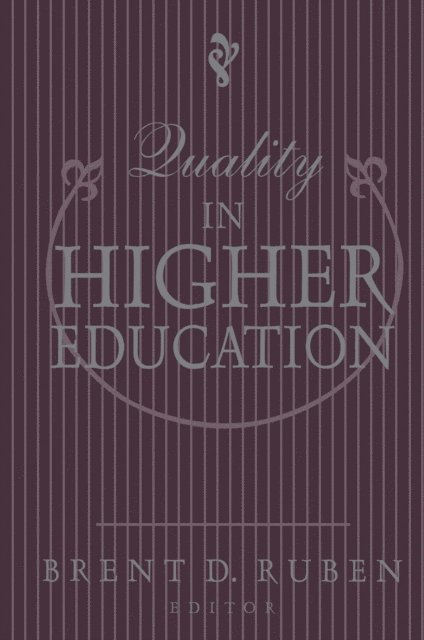
The concept of quality in higher education is by no means a new one. By one set of definitions or another, colleges and universities throughout the world have always held the pursuit of excellence as their primary goal. Why then has the quality approach, developed and popularized in industry, and how increasingly applied in health care and government, receiving so much attention in higher education at this moment? What does this perspective add to the approaches to excellence with which they have long embraced?These are the two primary questions that this book seeks to address. Chapters and contributors include: "The New Productivity" by Peter F. Drucker; "World War n and the Quality Movement" by J. M. Juran; "The Quality Approach to Higher Education: Context of Concepts for Change" by Brent Ruben; "The Big Questions in Higher Education Today" by L. Edwin Coate; "An American Approach to Quality" by Marilyn R. Zuckerman and Lewis J. Hatala; "Quality hi Higher Education: Critical Issues in Definition and Assessment" by Brent Ruben; and "Ten Areas for Future Research in Total Quality Management" by A. Blanton Godfrey. The volume is graced with an opening essay by Francis L. Lawrence, president of Rutgers University.Higher education is in the public spotlight today due to the many challenges it now faces: rising tuition costs; frustration about a tight job market for graduates; calls for increased faculty productivity; concerns about political correctness; and criticisms regarding the use of grant and research funds, among others. Quality in Higher Education is a particularly timely book that will greatly benefit educators, university administrators, students, and sociologists, and all those who are interested in higher education today.
915 kr
Läs direkt efter köp
The concept of quality in higher education is by no means a new one. By one set of definitions or another, colleges and universities throughout the world have always held the pursuit of excellence as their primary goal. Why then has the quality approach, developed and popularized in industry, and how increasingly applied in health care and government, receiving so much attention in higher education at this moment? What does this perspective add to the approaches to excellence with which they have long embraced?These are the two primary questions that this book seeks to address. Chapters and contributors include: "The New Productivity" by Peter F. Drucker; "World War n and the Quality Movement" by J. M. Juran; "The Quality Approach to Higher Education: Context of Concepts for Change" by Brent Ruben; "The Big Questions in Higher Education Today" by L. Edwin Coate; "An American Approach to Quality" by Marilyn R. Zuckerman and Lewis J. Hatala; "Quality hi Higher Education: Critical Issues in Definition and Assessment" by Brent Ruben; and "Ten Areas for Future Research in Total Quality Management" by A. Blanton Godfrey. The volume is graced with an opening essay by Francis L. Lawrence, president of Rutgers University.Higher education is in the public spotlight today due to the many challenges it now faces: rising tuition costs; frustration about a tight job market for graduates; calls for increased faculty productivity; concerns about political correctness; and criticisms regarding the use of grant and research funds, among others. Quality in Higher Education is a particularly timely book that will greatly benefit educators, university administrators, students, and sociologists, and all those who are interested in higher education today.
795 kr
Läs direkt efter köp
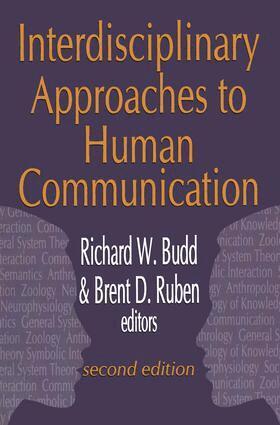
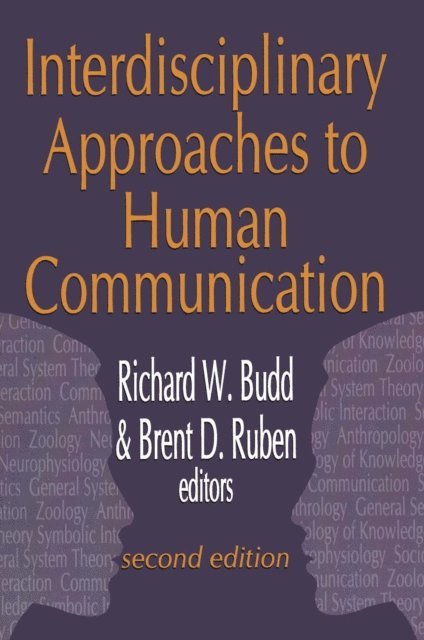
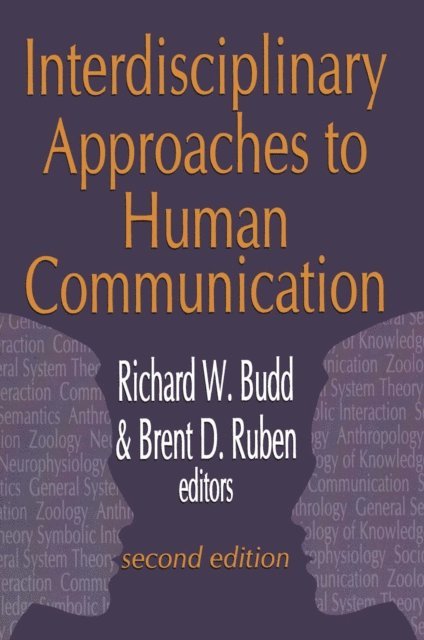
This volume brings together diverse and divergent essays on communication as viewed by outstanding scholars in various disciplines. The authors review the mainstream of each approach to communication, sketch the dimensions of that concern, and discuss the problems and potential for future progress.Contents: Lee Thayer, "Communication: Sine Qua Non of the Behavioral Sciences"; Hubert Frings, "Zoology"; Alfred G. Smith, "Anthropology"; Richard W. Budd, "General Semantics"; Brent D. Ruben, "General System Theory"; Joseph M.R. Del-gado, "Neurophysiology"; Herbert Blumer, "Symbolic Interaction"; and Peter L. Berger, "Sociology of Knowledge."
795 kr
Läs direkt efter köp
This volume brings together diverse and divergent essays on communication as viewed by outstanding scholars in various disciplines. The authors review the mainstream of each approach to communication, sketch the dimensions of that concern, and discuss the problems and potential for future progress.Contents: Lee Thayer, "Communication: Sine Qua Non of the Behavioral Sciences"; Hubert Frings, "Zoology"; Alfred G. Smith, "Anthropology"; Richard W. Budd, "General Semantics"; Brent D. Ruben, "General System Theory"; Joseph M.R. Del-gado, "Neurophysiology"; Herbert Blumer, "Symbolic Interaction"; and Peter L. Berger, "Sociology of Knowledge."
746 kr
Läs direkt efter köp
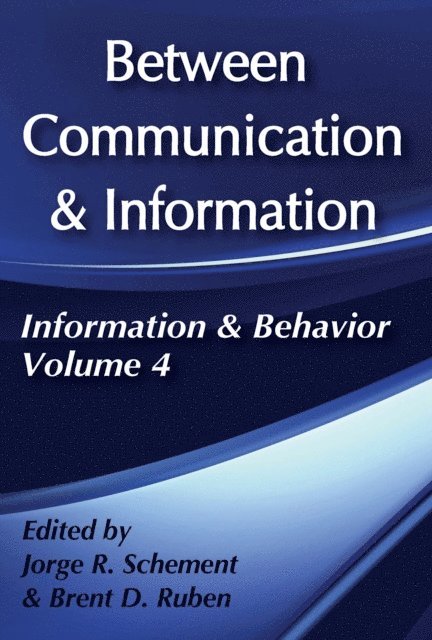
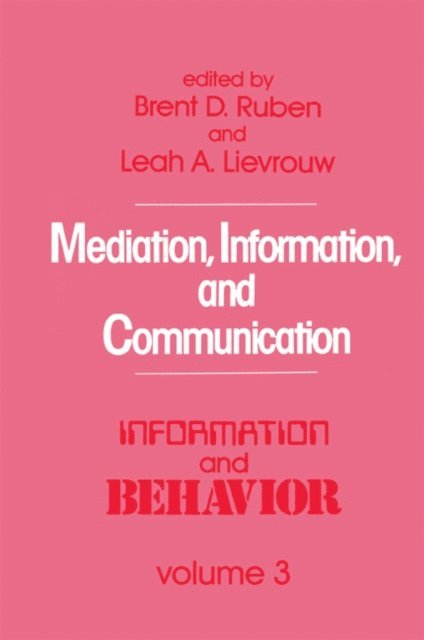
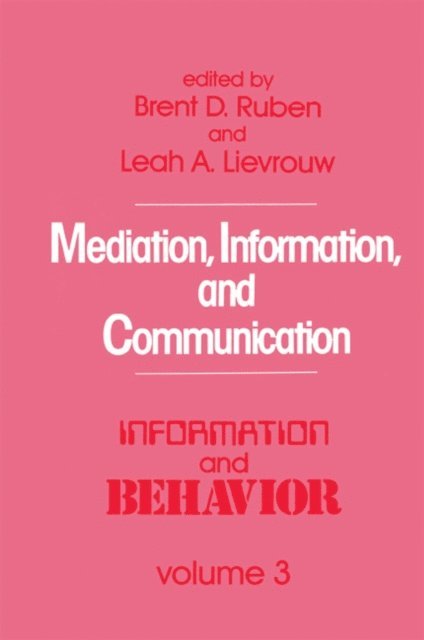
This third volume of Information and Behavior shows broad continuities with previous volumes in this series, but it also represents an important evolution. In emphasizing theoretical advances in mediation, information, and communication processes, this volume has unifying themes at the cutting edge of communication research, linking communication with areas as far-ranging as cognitive psychology, intellectual history, social psychology, policy, and macroeconomics.
A sampling of the contents indicates both continuities and discontinuities of communication research embodied in this volume. Contributions include Joseph Turow, "Mass Communication as Concept"; Gary Grumpert and Robert Cathcart, "A Theory of Mediation;" Leah Lievrouw and T. Andrew Finn, "Common Dimensions of Communication"; Joshua Meyrowitz, "Mediated and Unmediated Behavior"; Kathleen Reardon, "Teaching Children About AIDS"; Sari Thomas, "The Death of Intellectual History and the Birth of the Transient Past"; Sheizaf Rafaeli, "Interacting with Media."
The second part of the work, emphasizing research and policy in specific information societies and regions, includes an opening essay by Everett M. Rogers, and follow-up studies by Judith K. Larsen on "Silicon Valley"; Quentin W. Lindsey on "The North Carolina Research Triangle"; Luis Fonseca, "High Technology in Brazil"; Ruyzo Ogasawara, "High Technology in Japan"; and Mitchell Moss, "Telecommunications and Financial Centers."
The final two portions of the book cover social theory and cultural processes. They include articles by Jerry Salvaggio and Richard Nelson, "Models for Developing Telecommunications and Information Industries"; Everett M. Rogers and James Dearing, "University-Industry Technology Transfer"; Frederick Williams, "The Communications Revolution Revisited"; Rolf Wigand, "Recurring Questions about the Information Society"; Lee Thayer, "Tropes and Things"; Gordon L. Miller, "The Energy of Intelligence"; David Carr, "Thinking in Museums;" Benjamin J. Bates, "Information as an Economic Good"; Jorge Schement and Daniel Stout, "A Time-Line of Information Technology."
746 kr
Läs direkt efter köp
This third volume of Information and Behavior shows broad continuities with previous volumes in this series, but it also represents an important evolution. In emphasizing theoretical advances in mediation, information, and communication processes, this volume has unifying themes at the cutting edge of communication research, linking communication with areas as far-ranging as cognitive psychology, intellectual history, social psychology, policy, and macroeconomics.
A sampling of the contents indicates both continuities and discontinuities of communication research embodied in this volume. Contributions include Joseph Turow, "Mass Communication as Concept"; Gary Grumpert and Robert Cathcart, "A Theory of Mediation;" Leah Lievrouw and T. Andrew Finn, "Common Dimensions of Communication"; Joshua Meyrowitz, "Mediated and Unmediated Behavior"; Kathleen Reardon, "Teaching Children About AIDS"; Sari Thomas, "The Death of Intellectual History and the Birth of the Transient Past"; Sheizaf Rafaeli, "Interacting with Media."
The second part of the work, emphasizing research and policy in specific information societies and regions, includes an opening essay by Everett M. Rogers, and follow-up studies by Judith K. Larsen on "Silicon Valley"; Quentin W. Lindsey on "The North Carolina Research Triangle"; Luis Fonseca, "High Technology in Brazil"; Ruyzo Ogasawara, "High Technology in Japan"; and Mitchell Moss, "Telecommunications and Financial Centers."
The final two portions of the book cover social theory and cultural processes. They include articles by Jerry Salvaggio and Richard Nelson, "Models for Developing Telecommunications and Information Industries"; Everett M. Rogers and James Dearing, "University-Industry Technology Transfer"; Frederick Williams, "The Communications Revolution Revisited"; Rolf Wigand, "Recurring Questions about the Information Society"; Lee Thayer, "Tropes and Things"; Gordon L. Miller, "The Energy of Intelligence"; David Carr, "Thinking in Museums;" Benjamin J. Bates, "Information as an Economic Good"; Jorge Schement and Daniel Stout, "A Time-Line of Information Technology."
1 560 kr
Skickas inom 5-8 vardagar
2 115 kr
Skickas inom 10-15 vardagar
2 115 kr
Skickas inom 10-15 vardagar
292 kr
Skickas inom 10-15 vardagar
2 115 kr
Skickas inom 10-15 vardagar