
Information and Learning Sciences – serie
Visar alla böcker i serien Information and Learning Sciences. Handla med fri frakt och snabb leverans.
2 produkter
2 produkter
1 372 kr
Skickas inom 5-8 vardagar
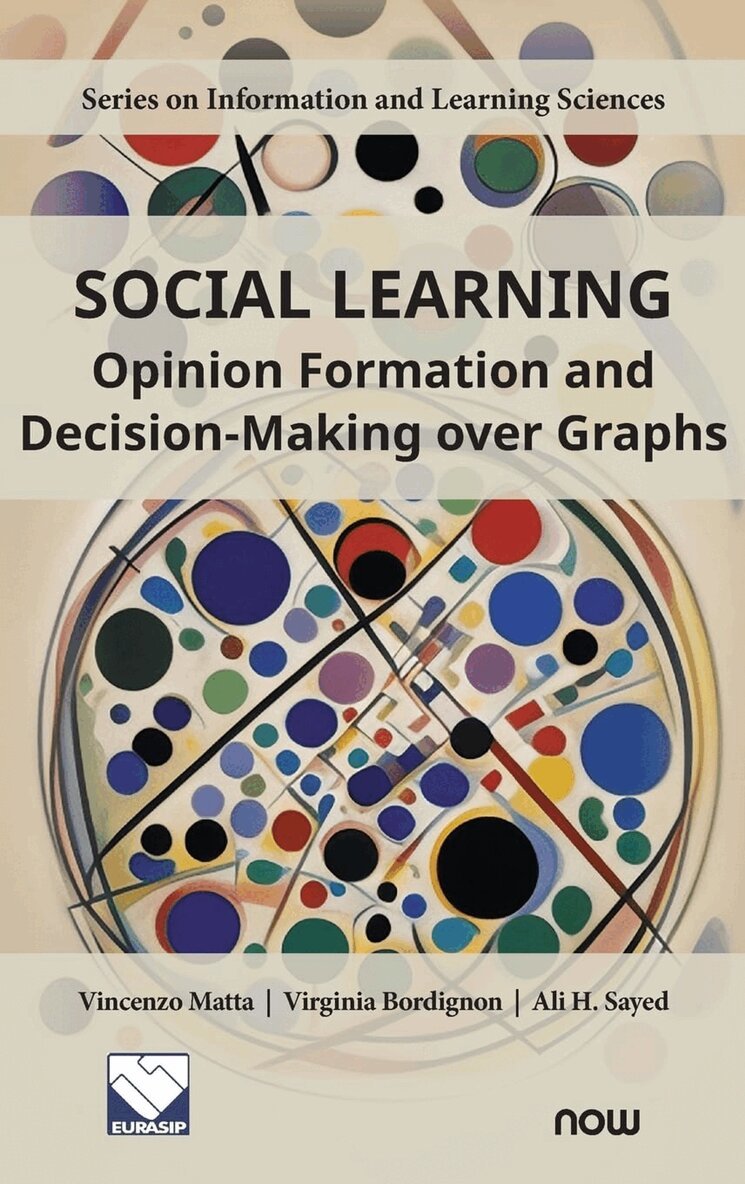
Complex cognitive systems, such as social networks, robotic swarms, or biological networks, are composed of individual entities (the agents) whose actions typically arise from some sophisticated form of “social” interaction with other agents. For example, consider the way humans form their individual opinions about a certain phenomenon. The opinions take shape via repeated interactions with other individuals, whether through physical contact or virtually. A diffusion mechanism emerges through which opinions, information, or even fake news propagate.Social learning also arises over man-made systems in the form of decision-making strategies by multiple agents interacting over a network. Consider a robotic swarm deployed over a hazardous area, where some robots operating under disadvantageous conditions (e.g., with limited visibility or partial information) would only be able to perform their task (such as saving a life during a rescue operation) by leveraging significant cooperation from other robots that have better access to critical information. Nature itself provides many other excellent examples of cooperative learning in the form of biological networks. The main topic of this book relates to mechanisms for information diffusion and decision-making over graphs, and the study of how agents’ decisions evolve dynamically through interactions with neighbors and the environment.
1 241 kr
Skickas inom 5-8 vardagar
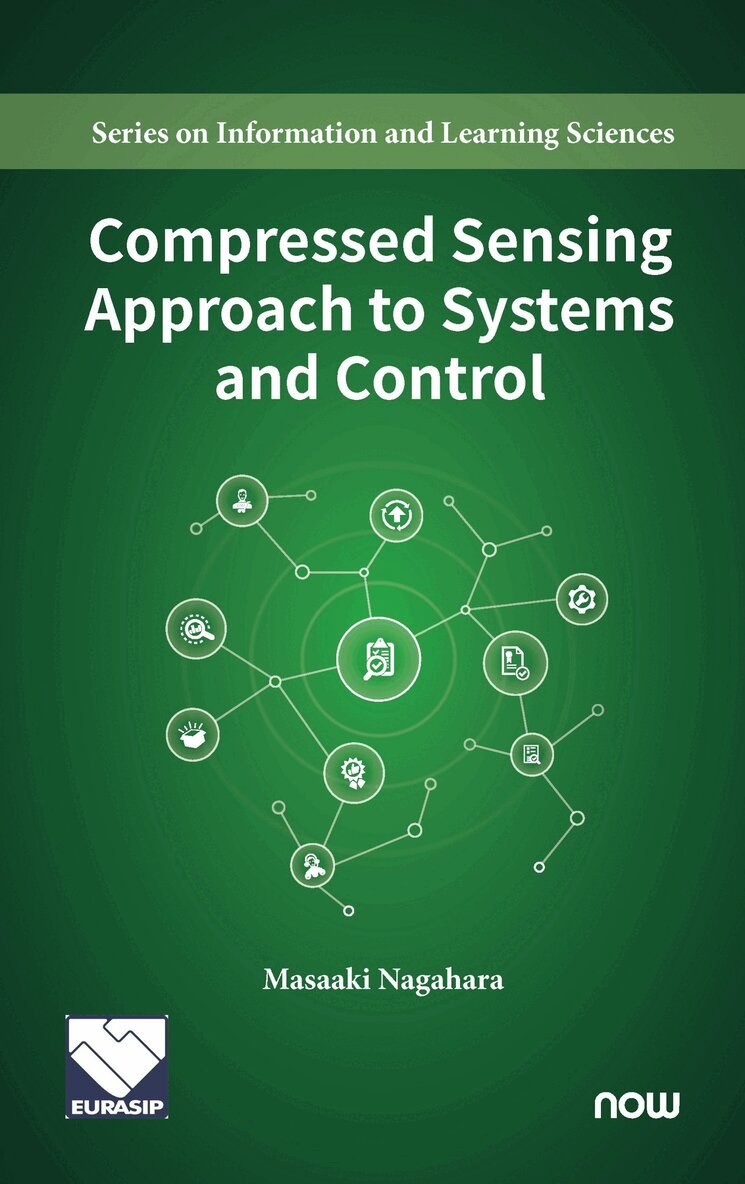
The ebook edition of this title is Open Access and freely available to read online.Compressed sensing, also known as sparse representation or sparse modeling, has experienced substantial growth in research fields such as signal processing, machine learning, and statistics. In recent years, this powerful tool has been successfully applied to the design of control systems.This book provides a comprehensive guide to compressed sensing-based techniques, focusing primarily on their application to systems and control. This book is intended for graduate students and researchers who already have a foundational understanding of basic calculus and linear algebra. Its primary objective is to equip readers with the practical skills to apply compressed sensing techniques to a range of engineering problems, with a particular emphasis on systems and control. It presents a comprehensive collection of efficient algorithms for addressing the problems discussed in the text. Moreover, the book includes accompanying Python programs, which enable readers to actively experiment with these algorithms first-hand. By engaging with these practical examples, readers will develop a deeper understanding of compressed sensing techniques and their applications to systems and control.This book is the second edition of the author’s previous work, Sparsity Methods for Systems and Control, published by Now Publishers in 2020. This edition incorporates significant updates to reflect the latest advancements in the field. Notably, it includes new chapters and sections covering the following key topics: Distributed optimization, Sparse system identification, Sparse controller design, and Distributed hands-off control.