Emerging Trends in Science, Innovation and Business – serie
Visar alla böcker i serien Emerging Trends in Science, Innovation and Business. Handla med fri frakt och snabb leverans.
3 produkter
3 produkter
Inbunden, Engelska, 2026
2 264 kr
Skickas inom 10-15 vardagar
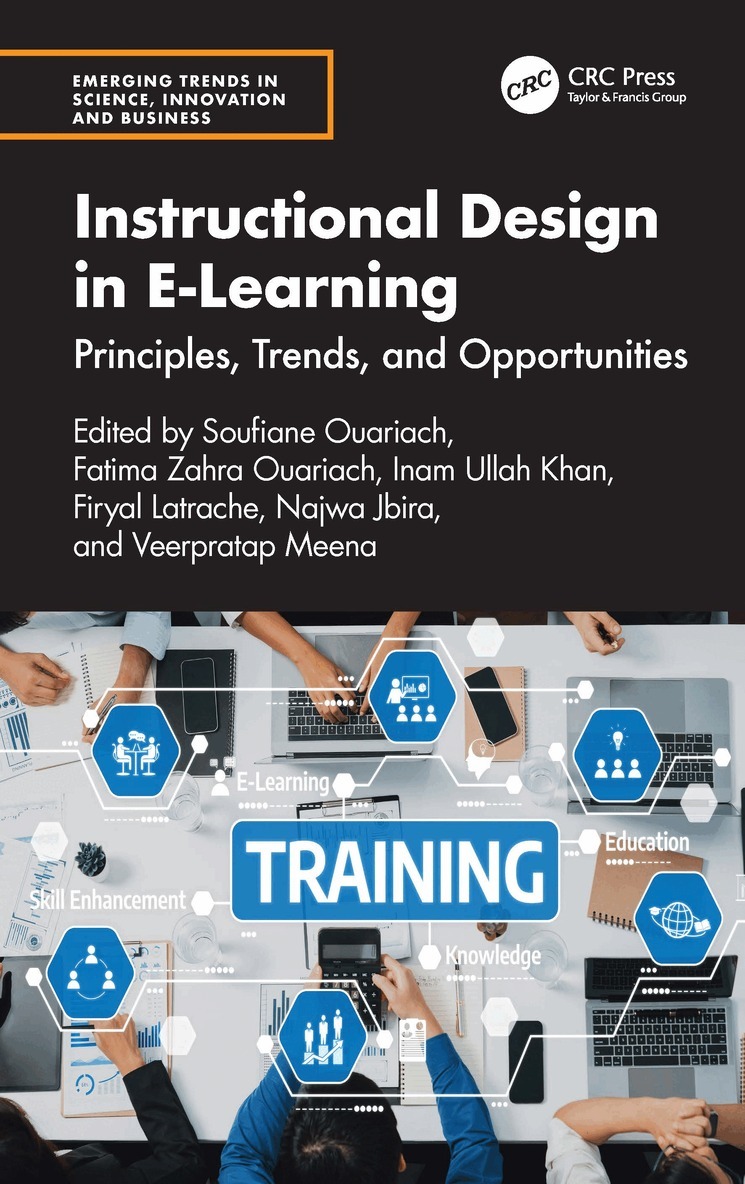
This comprehensive guide examines the restructuring of instructional design principles and practices for digital learning environments. It combines established pedagogical principles with the latest technological innovations to help practitioners create effective, learner‑centered online experiences.The volume grounds its recommendations in foundational instructional design models, including ADDIE, TPACK, and the Community of Inquiry framework, to demonstrate how these approaches are being reconfigured for digital transformation. It explores multimedia learning design through Cognitive Load Theory, Dual Coding Theory, and Mayer’s Cognitive Theory of Multimedia Learning, offering guidance on optimizing the integration of text, images, audio, video and interactive elements. The text presents architectural frameworks for flipped classrooms using Small Private Online Courses and examines the integration of synchronous and asynchronous modalities in blended higher education. Accessibility is addressed through Universal Design for Learning and Web Content Accessibility Guidelines implementation strategies, while emotional design principles illustrate the creation of meaningful learner‑content connections. The volume explores emerging technologies, including GenAI integration within learning management systems for personalized feedback and intelligent tutoring, AI‑driven adaptive learning systems, and virtual reality and augmented reality applications that foster embodied cognition and situated learning across disciplines, from medical education to historical reconstruction.This collection is designed for instructional designers, educational technologists and faculty members seeking evidence‑based strategies for digital course development. It will help graduate students, curriculum developers, and policymakers in promoting equitable access to quality online education.
Inbunden, Engelska, 2026
1 489 kr
Kommande
This book discusses the key concepts of AI in imaging and healthcare. It includes a critical analysis of its algorithms and applications, along with emerging trends in medical diagnostics, device optimization, and personalized medicine. The book uses metadata heuristic algorithms, deep learning for disease detection, medical image segmentation, explainable AI, and IoT and hybrid algorithms integrating all this into the healthcare system. Besides, the book touches on specific issues such as CNNs, multi-class and multi-label disease classification, and digital transformation of health services. Special features of the book include:Multidisciplinary approach covering topics such as AI, deep learning, IoT, and metaheuristics with a focus on healthcare.Real examples with detailed information for analyzing current technologies.Discusses several topics on interpretability and ethical considerations in AI, making it rich material for technical experts and healthcare professionals.Identifies efficient models, with which the automated medical diagnosis and prognosis is possible.The book is specifically oriented towards researchers, practitioners, and students in the areas of artificial intelligence, medical imaging, healthcare technology, and bioinformatics.
Inbunden, Engelska, 2026
1 372 kr
Kommande
Artificial intelligence (AI) and the Internet of Things (IoT) are redefining the educational landscape across schools, universities, and training institutions worldwide. This book explores how these technologies are reshaping teaching, learning, assessment, governance, and institutional strategy in the evolving EduTech era.Bringing together international scholars and practitioners, this volume examines the integration of AI and IoT from multiple perspectives: pedagogical, institutional, strategic, ethical, and environmental. It addresses resistance to technological change, the development of smart classrooms, prompt literacy for educators, AI-ready school models, and policy-to-practice transitions in higher education. The book also explores teacher identity transformation through AI co-teaching tools, equity challenges in global EdTech ecosystems, and empirical insights such as evidence from British universities. Furthermore, it analyzes smart diagnostics, personalized learning systems, sustainability concerns related to AI and IoT infrastructures, and the broader connection between digital transformation and education. Through conceptual frameworks, case studies, and policy analysis, the book provides a comprehensive roadmap for responsible and effective AI-driven educational innovation.This book is intended for researchers, policymakers, school leaders, higher education administrators, EdTech professionals, and graduate students in education, digital transformation, and innovation management. It will also benefit practitioners seeking strategic guidance for implementing AI and IoT solutions in educational environments.