Innovations in Intelligent Internet of Everything IoE - Böcker
Visar alla böcker i serien Innovations in Intelligent Internet of Everything IoE. Handla med fri frakt och snabb leverans.
16 produkter
16 produkter
1 686 kr
Skickas inom 10-15 vardagar
Supply chain management, often known as SCM, refers to the extensive variety of operations that are required to plan, monitor, and coordinate the movement of a product from its raw materials to its finished state in the most time- and money-efficient manner possible. How the supply chain is managed has an impact not only on the quality of the product and the service but also on the distribution, costs, and overall customer experience. Supply chain management is a massive undertaking that needs firms to reevaluate the method in which they operate their supply chains. Blockchain, IoT, and AI Technologies for Supply Chain Management discusses the problems and difficulties that the facilitators of the supply chain confront, in addition to the possible solutions to such problems and difficulties. This book will be the only one of its kind to address the impact of COVID-19 on supply chain systems involving different stakeholders such as producers, dealers, and manufacturers and will provide a foundation for future research opportunities that will allow for the unrestricted expansion and prosperity of business. It will serve as a foundation for academics, scientists, and educationists interested in the use of modern technologies in the field of supply chain management, such as the Internet of Things (IoT), Artificial Intelligence (AI), and Blockchain. In addition to those engaged in research, undergraduate and postgraduate students in higher education can also use this publication as a reference book. This book also presents a multifaceted perspective for the general public, including topics such as computer science, the food business, hotel management, fashion, medical, inventory management, and agricultural spheres.
679 kr
Skickas inom 10-15 vardagar
Supply chain management, often known as SCM, refers to the extensive variety of operations that are required to plan, monitor, and coordinate the movement of a product from its raw materials to its finished state in the most time- and money-efficient manner possible. How the supply chain is managed has an impact not only on the quality of the product and the service but also on the distribution, costs, and overall customer experience. Supply chain management is a massive undertaking that needs firms to reevaluate the method in which they operate their supply chains. Blockchain, IoT, and AI Technologies for Supply Chain Management discusses the problems and difficulties that the facilitators of the supply chain confront, in addition to the possible solutions to such problems and difficulties. This book will be the only one of its kind to address the impact of COVID-19 on supply chain systems involving different stakeholders such as producers, dealers, and manufacturers and will provide a foundation for future research opportunities that will allow for the unrestricted expansion and prosperity of business. It will serve as a foundation for academics, scientists, and educationists interested in the use of modern technologies in the field of supply chain management, such as the Internet of Things (IoT), Artificial Intelligence (AI), and Blockchain. In addition to those engaged in research, undergraduate and postgraduate students in higher education can also use this publication as a reference book. This book also presents a multifaceted perspective for the general public, including topics such as computer science, the food business, hotel management, fashion, medical, inventory management, and agricultural spheres.
1 637 kr
Skickas inom 10-15 vardagar
The Social Internet of Things (SIoT) has become a hot topic in academic research. It employs the theory of social networks into the different levels of the Internet of Things (IoTs) and has brought new possibilities for the development of IoTs. Essentially, the SIoT is a subset of IoTs. It uses intelligent hardware and humans as the node, a social network as the organization type, the social relationship between things, things and humans, and between humans, formatting research methods and models with social network characteristics to realize the connection, service, and application of the IoTs.Moreover, SIoT is a form of realization of technology, architecture, and application of the IoTs using social network research methods. It further promotes the integration between real-world and virtual cyberspace, contributes the realization of the IoTs, expands the research scope of the social networking, and provides a new solution for the specific problems of the IoTs. Consequently, there is a tremendous need for researchers to have a comprehensive knowledge of the advances in SIoT.This special issue is soliciting scientific research papers that can present a snapshot of the latest research status of SIoT.
836 kr
Skickas inom 10-15 vardagar
The Social Internet of Things (SIoT) has become a hot topic in academic research. It employs the theory of social networks into the different levels of the Internet of Things (IoTs) and has brought new possibilities for the development of IoTs. Essentially, the SIoT is a subset of IoTs. It uses intelligent hardware and humans as the node, a social network as the organization type, the social relationship between things, things and humans, and between humans, formatting research methods and models with social network characteristics to realize the connection, service, and application of the IoTs.Moreover, SIoT is a form of realization of technology, architecture, and application of the IoTs using social network research methods. It further promotes the integration between real-world and virtual cyberspace, contributes the realization of the IoTs, expands the research scope of the social networking, and provides a new solution for the specific problems of the IoTs. Consequently, there is a tremendous need for researchers to have a comprehensive knowledge of the advances in SIoT.This special issue is soliciting scientific research papers that can present a snapshot of the latest research status of SIoT.
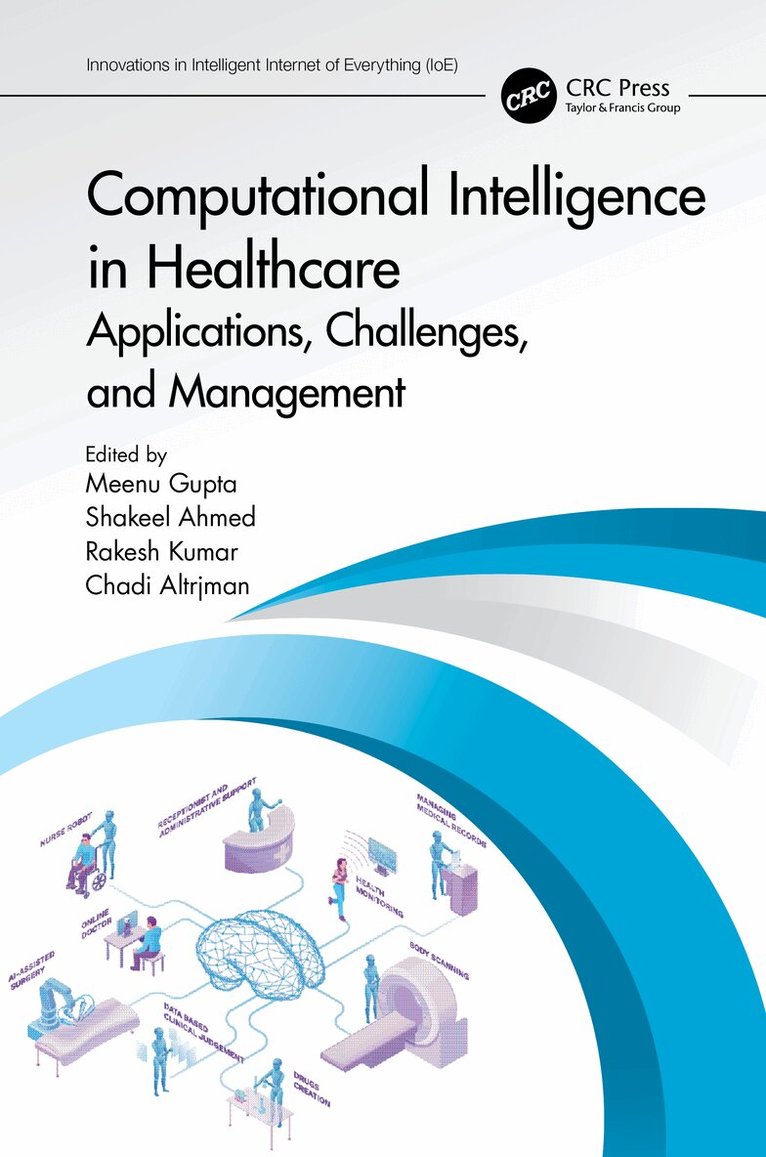
Computational Intelligence in Healthcare
Applications, Challenges, and Management
Inbunden, Engelska, 2023
1 616 kr
Skickas inom 10-15 vardagar
Computational intelligence (CI) refers to the ability of computers to accomplish tasks that are normally completed by intelligent beings such as humans and animals. Artificial intelligent systems offer great improvement in healthcare systems by providing more intelligent and convenient solutions and services assisted by machine learning, wireless communications, data analytics, cognitive computing, and mobile computing. Modern health treatments are faced with the challenge of acquiring, analysing, and applying the large amount of knowledge necessary to solve complex problems. AI techniques are being effectively used in the field of healthcare systems by extracting the useful information from the vast amounts of data by applying human expertise and CI methods, such as fuzzy models, artificial neural networks, evolutionary algorithms, and probabilistic methods which have recently emerged as promising tools for the development and application of intelligent systems in healthcare practice.This book starts with the fundamentals of computer intelligence and the techniques and procedures associated with them. Contained in the book are state-of-the-art CI methods and other allied techniques used in healthcare systems as well as advances in different CI methods that confront the problem of effective data analysis and storage faced by healthcare institutions.The objective of this book is to provide the latest research related to the healthcare sector to researchers and engineers with a platform encompassing state-of-the-art innovations, research and design, and the implementation of methodologies.
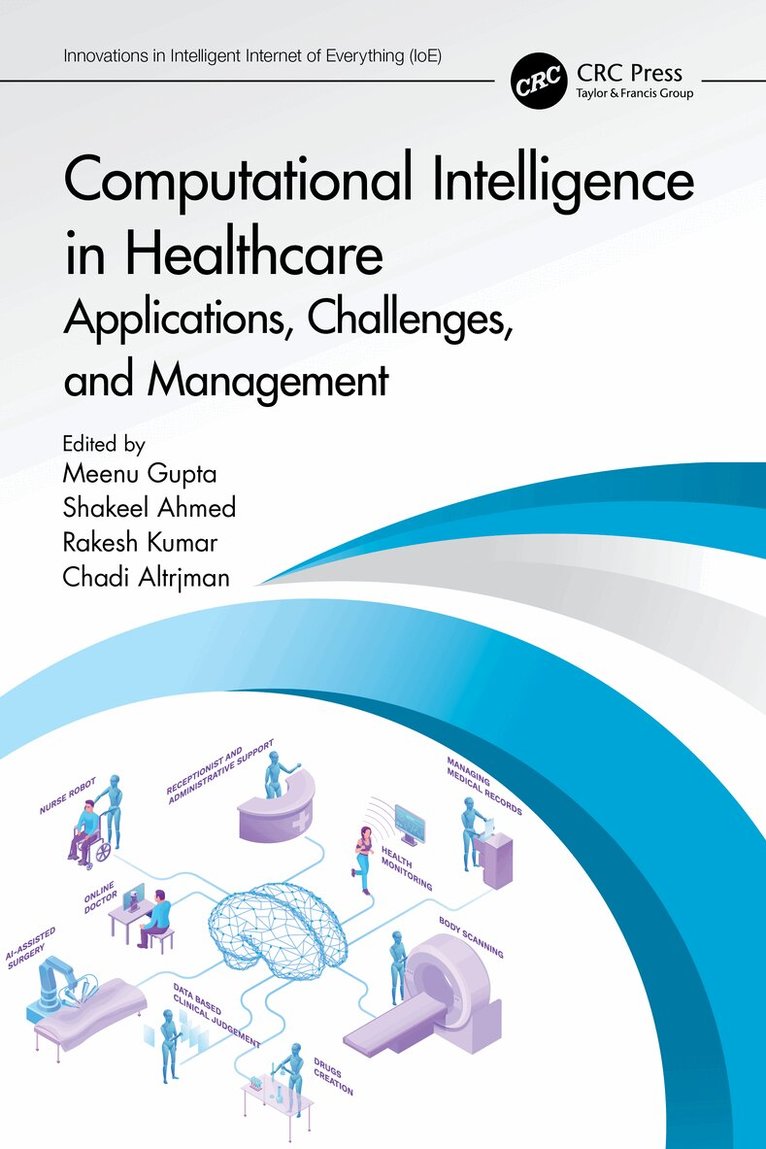
Computational Intelligence in Healthcare
Applications, Challenges, and Management
Häftad, Engelska, 2024
679 kr
Skickas inom 10-15 vardagar
Computational intelligence (CI) refers to the ability of computers to accomplish tasks that are normally completed by intelligent beings such as humans and animals. Artificial intelligent systems offer great improvement in healthcare systems by providing more intelligent and convenient solutions and services assisted by machine learning, wireless communications, data analytics, cognitive computing, and mobile computing. Modern health treatments are faced with the challenge of acquiring, analysing, and applying the large amount of knowledge necessary to solve complex problems. AI techniques are being effectively used in the field of healthcare systems by extracting the useful information from the vast amounts of data by applying human expertise and CI methods, such as fuzzy models, artificial neural networks, evolutionary algorithms, and probabilistic methods which have recently emerged as promising tools for the development and application of intelligent systems in healthcare practice.This book starts with the fundamentals of computer intelligence and the techniques and procedures associated with them. Contained in the book are state-of-the-art CI methods and other allied techniques used in healthcare systems as well as advances in different CI methods that confront the problem of effective data analysis and storage faced by healthcare institutions.The objective of this book is to provide the latest research related to the healthcare sector to researchers and engineers with a platform encompassing state-of-the-art innovations, research and design, and the implementation of methodologies.
1 637 kr
Skickas inom 10-15 vardagar
Electronic device usage has increased considerably in the past two decades. System configurations are continuously requiring upgrades; existing systems often become obsolete in a matter of 2–3 years. Green computing is the complete effective management of design, manufacture, use, and disposal, involving as little environmental impact as possible. This book intends to explore new and innovative ways of conserving energy, effective e-waste management, and renewable energy sources to harness and nurture a sustainable eco-friendly environment.This book:• Highlights innovative principles and practices using effective e-waste management and disposal• Explores artificial intelligence based sustainable models• Discovers alternative sources and mechanisms for minimizing environmental hazards• Highlights successful case studies in alternative sources of energy• Presents solid illustrations, mathematical equations, as well as practical in-the-field applications• Serves as a one-stop reference guide to stakeholders in the domain of green computing, e-waste management, renewable energy alternatives, green transformational leadership including theory concepts, practice and case studies• Explores cutting-edge technologies like internet of energy and artificial intelligence, especially the role of machine learning and deep learning in renewable energy and creating a sustainable ecosystem• Explores futuristic trends in renewable energyThis book aims to address the increasing interest in reducing the environmental impact of energy as well as its further development and will act as a useful reference for engineers, architects, and technicians interested in and working with energy systems; scientists and engineers in developing countries; industries, manufacturers, inventors, universities, researchers, and interested consultants to explain the foundation to advanced concepts and research trends in the domain of renewable energy and sustainable computing. The content coverage of the book is organized in the form of 11 clear and thorough chapters providing a comprehensive view of the global renewable energy scenario, as well as how science and technology can play a vital role in renewable energy.
727 kr
Skickas inom 10-15 vardagar
Electronic device usage has increased considerably in the past two decades. System configurations are continuously requiring upgrades; existing systems often become obsolete in a matter of 2–3 years. Green computing is the complete effective management of design, manufacture, use, and disposal, involving as little environmental impact as possible. This book intends to explore new and innovative ways of conserving energy, effective e-waste management, and renewable energy sources to harness and nurture a sustainable eco-friendly environment.This book:• Highlights innovative principles and practices using effective e-waste management and disposal• Explores artificial intelligence based sustainable models• Discovers alternative sources and mechanisms for minimizing environmental hazards• Highlights successful case studies in alternative sources of energy• Presents solid illustrations, mathematical equations, as well as practical in-the-field applications• Serves as a one-stop reference guide to stakeholders in the domain of green computing, e-waste management, renewable energy alternatives, green transformational leadership including theory concepts, practice and case studies• Explores cutting-edge technologies like internet of energy and artificial intelligence, especially the role of machine learning and deep learning in renewable energy and creating a sustainable ecosystem• Explores futuristic trends in renewable energyThis book aims to address the increasing interest in reducing the environmental impact of energy as well as its further development and will act as a useful reference for engineers, architects, and technicians interested in and working with energy systems; scientists and engineers in developing countries; industries, manufacturers, inventors, universities, researchers, and interested consultants to explain the foundation to advanced concepts and research trends in the domain of renewable energy and sustainable computing. The content coverage of the book is organized in the form of 11 clear and thorough chapters providing a comprehensive view of the global renewable energy scenario, as well as how science and technology can play a vital role in renewable energy.
Advances in Technological Innovations in Higher Education
Theory and Practices
Inbunden, Engelska, 2024
1 723 kr
Skickas inom 10-15 vardagar
The evolution of technology in education can no longer be comprehended simply by looking at the use of computers and networks. Technology is not just a supplementary tool to the conventional method of education. Education has to undergo a complete transformation with technological innovations for the sustainability of quality education as a system and not in silos. Sustainability in education also necessitates a more workable strategy to realize socially viable educational policies and practices which can focus more on personalized learning. Due to various factors like emerging technologies; changing needs of the learners; policy reforms for enhancing employability; and emphasis on uninterrupted education as in the case of the pandemic scenario of COVID-19, there is a need to steer a major transition in the education system. The education system has to be real and proficient for it to be instrumental to nurture an informed and knowledgeable society. This book on technological innovations in higher education is organized, largely, based on the diversity of higher education ecosystems that are supported by technological innovations. Various author viewpoints give insights into the full potential of technology as well as its risks in interrelated areas of higher education to work towards sustainability of value-based quality education across the globe.
727 kr
Skickas inom 10-15 vardagar
The evolution of technology in education can no longer be comprehended simply by looking at the use of computers and networks. Technology is not just a supplementary tool to the conventional method of education. Education has to undergo a complete transformation with technological innovations for the sustainability of quality education as a system and not in silos. Sustainability in education also necessitates a more workable strategy to realize socially viable educational policies and practices which can focus more on personalized learning. Due to various factors like emerging technologies; changing needs of the learners; policy reforms for enhancing employability; and emphasis on uninterrupted education as in the case of the pandemic scenario of COVID-19, there is a need to steer a major transition in the education system. The education system has to be real and proficient for it to be instrumental to nurture an informed and knowledgeable society. This book on technological innovations in higher education is organized, largely, based on the diversity of higher education ecosystems that are supported by technological innovations. Various author viewpoints give insights into the full potential of technology as well as its risks in interrelated areas of higher education to work towards sustainability of value-based quality education across the globe.
2 317 kr
Skickas inom 10-15 vardagar
Practical and informative, AI and Machine Learning for Mechanical and Electrical Engineering examines how artificial intelligence (AI) is changing the status quo in mechanical engineering, electrical systems, and management. Real-world examples and case studies demonstrate the application of AI in such diverse settings as industry and policymaking. This book illustrates how AI is playing a crucial role in enhancing productivity and innovation in various industries. It discusses transition methods and the ethical implications of using AI in mechanical engineering. Chapter highlights include the following:Developing a smart algorithm to integrate fault detection and classificationAlgorithms to investigate different testing scenarios for various anomalies in electric motorsData fusion to detect and assess electromechanical damageNeural networks for rolling bearing fault diagnosisEvolutionary algorithms to optimize deep learning models for water industry forecastsAI-based anomaly detection and root-cause analysisAn overarching theme is the transition from traditional mechanical, electrical, and management systems to AI-enabled smart systems. The book helps readers make sense of the challenges of integrating smart systems. It equips engineers with theoretical understanding as well as insight based on hands-on expertise. It shows how to better link and automate systems and improve productivity. This book not only shows how to implement smart solutions now but also shows the way to a more intelligent, productive, and interconnected future.
2 792 kr
Skickas inom 10-15 vardagar
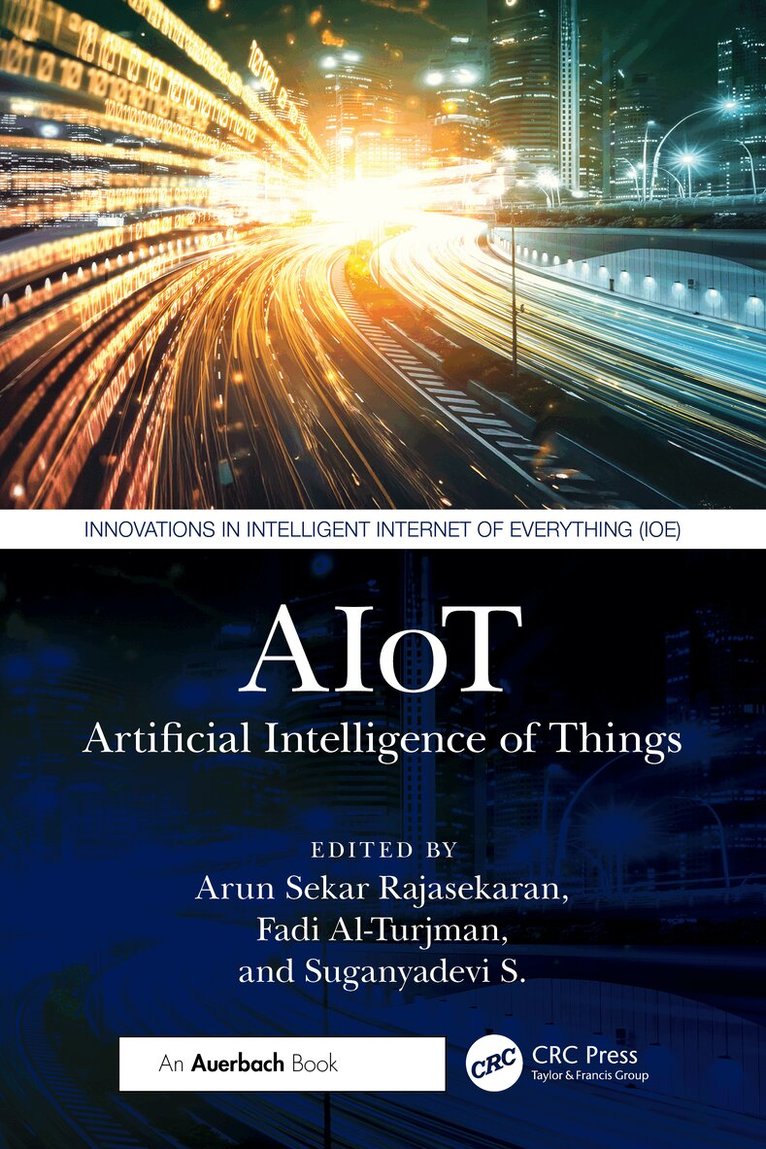
AIoT: Artificial Intelligence of Things explores the integration of Artificial Intelligence (AI) into everyday objects and devices to allow them to analyze data, make decisions, and communicate with each other, which leads to improved efficiency, convenience, and new possibilities in various aspects of daily life.With a wide-ranging scope, the book covers various aspects of Artificial Intelligence of Things (AIoT) from fundamental concepts to advanced applications. It begins with an introduction to AI, Internet of Things (IoT), and their synergistic relationship and explains how AI technologies enhance the capabilities of IoT devices. The book then explores the key components of AIoT, including sensors, connectivity, data processing, and machine learning algorithms. Highlights include the following:Edge computing and AIoTPrivacy and security in AIoTAIoT applications in such domains as healthcare, finance, and manufacturing.Smart cities and AIoTAIoT and wearablesEthical considerations concerning AIoTAIoT and augmented reality and virtual realityAIoT and blockchainAIoT and 5G technology.The book presents AIoT architectures, such as cloud-based, edge-based, and hybrid systems, and discusses their advantages and challenges. Exploring the role of big data analytics in AIoT, it highlights how large-scale data collection and analysis can drive intelligent decision-making and predictive insights. It delves into such AI techniques employed in AIoT systems as natural language processing, computer vision, deep learning, and reinforcement learning.The book concludes with a discussion of emerging trends and future directions in AIoT, which includes the integration of blockchain technology, edge computing, and swarm intelligence. It also discusses the societal implications of AIoT and its effect on the job market, privacy, and ethics.
1 107 kr
Skickas inom 10-15 vardagar
AIoT: Artificial Intelligence of Things explores the integration of Artificial Intelligence (AI) into everyday objects and devices to allow them to analyze data, make decisions, and communicate with each other, which leads to improved efficiency, convenience, and new possibilities in various aspects of daily life.With a wide-ranging scope, the book covers various aspects of Artificial Intelligence of Things (AIoT) from fundamental concepts to advanced applications. It begins with an introduction to AI, Internet of Things (IoT), and their synergistic relationship and explains how AI technologies enhance the capabilities of IoT devices. The book then explores the key components of AIoT, including sensors, connectivity, data processing, and machine learning algorithms. Highlights include the following:Edge computing and AIoTPrivacy and security in AIoTAIoT applications in such domains as healthcare, finance, and manufacturing.Smart cities and AIoTAIoT and wearablesEthical considerations concerning AIoTAIoT and augmented reality and virtual realityAIoT and blockchainAIoT and 5G technology.The book presents AIoT architectures, such as cloud-based, edge-based, and hybrid systems, and discusses their advantages and challenges. Exploring the role of big data analytics in AIoT, it highlights how large-scale data collection and analysis can drive intelligent decision-making and predictive insights. It delves into such AI techniques employed in AIoT systems as natural language processing, computer vision, deep learning, and reinforcement learning.The book concludes with a discussion of emerging trends and future directions in AIoT, which includes the integration of blockchain technology, edge computing, and swarm intelligence. It also discusses the societal implications of AIoT and its effect on the job market, privacy, and ethics.
1 686 kr
Skickas inom 10-15 vardagar
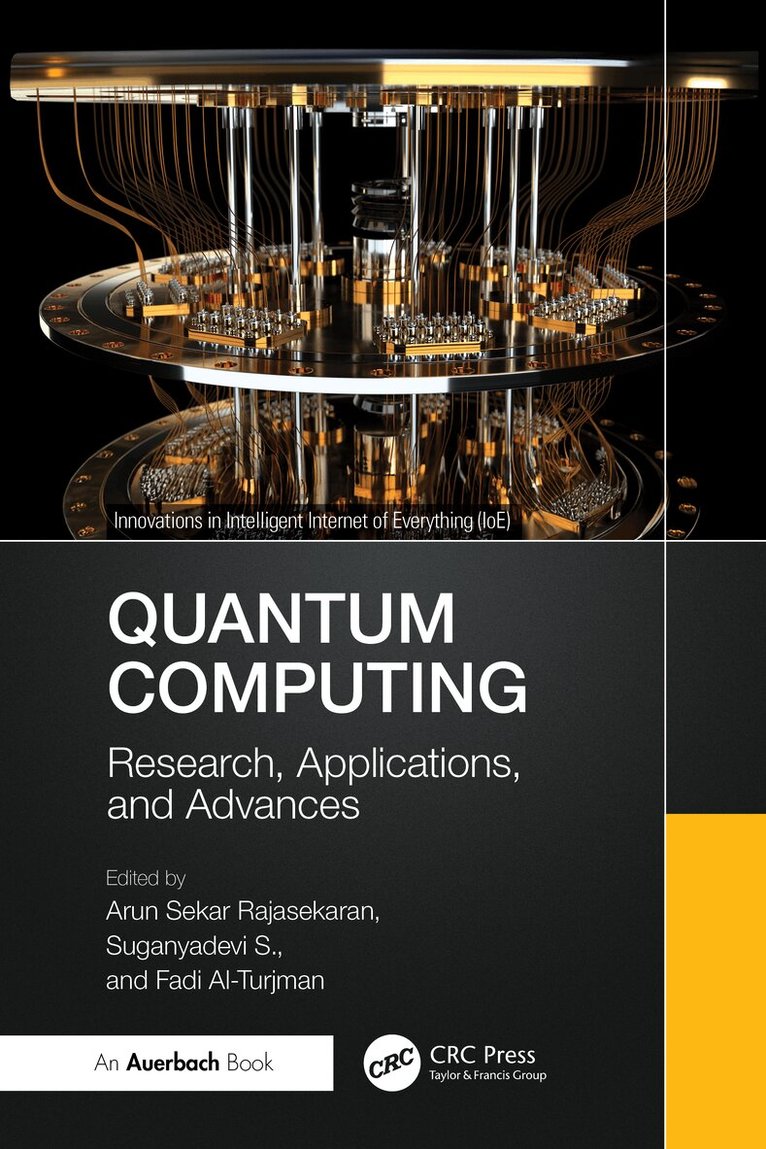
Quantum computing is a rapidly emerging technology that harnesses the laws of quantum mechanics to solve problems too complex for classical computers. It is a multidisciplinary field comprising aspects of computer science, physics, and mathematics that utilizes quantum mechanics to solve complex problems faster than classical computers. It is a computational technology that uses the principles of quantum mechanics, such as entanglement, superposition, and interference to process, store, and manipulate large amounts of data and perform complex calculations for conventional computing systems and supercomputers cannot fathom.Quantum Computing: Research, Applications, and Advances provides a comprehensive overview of the foundational principles of quantum mechanics that underpin quantum computing. It explains such concepts as superposition, entanglement, and quantum gates to demystify the esoteric nature of quantum phenomena. It delves into the current state of quantum computing research, presenting an insightful analysis of the latest breakthroughs and technological advancements. From the race to achieve quantum supremacy to the development of scalable quantum hardware, the book offers a detailed exploration of the key players, their methodologies, and the challenges they face in pushing the boundaries of quantum computing capabilities. It explores the practical applications of quantum computing across various domains. From cryptography to optimization problems and drug discovery, the book also illustrates how quantum algorithms have the potential to outperform classical counterparts to open doors to new possibilities where traditional computing falls short. The book integrates theoretical concepts and practical applications. The highlights include the following:Quantum computing in machine learningHarnessing quantum computing for predictive analysisQuantum-powered financial fraud detectionEnhancing deep learning with quantum computingQuantum computing in medical imaging
2 400 kr
Kommande
Data analytics and generative AI (GenAI) are transformative technologies that play a critical role inmodern decision-making and innovation.Data analytics enables organizations to extract actionable insights from vast amounts of structured and unstructured data, driving efficiency, improving customer experiences, and identifying trends. Generative AI, on the other hand, enhances creativity and problem-solving by producing new content, such as text, images, and designs, based on learned patterns. Together, they empower people and organizations to make data-driven decisions, automate complex processes, and unlock new opportunities for growth and innovation.Generative AI 2.0 and Data Analytics explores the intersection between GenAI and data analytics and addresses its profound effects on industries and organizations across the globe. Highlights of the book include:Deep learning architectures for generative models in business data managementOptimizing human-AI collaboration for strategic decision-making in business practisesBenchmarking practices and evaluation metrics for generative AI in business data analyticsNot only covering the fundamental concepts and techniques of generative AI and their practical application, the book also investigates how these techniques foster innovation and improve the quality of data in various business domains. It examines a broad range of topics from artificial data generation, security analytics, anomaly detection, reinforcement management, ethical consideration, challenges, and future scenarios. The book also features expert opinions and case studies to provide practical direction and valuable insight.
Artificial Intelligence Learning Facilitators
Creating Smart Education Systems
Inbunden, Engelska, 2025
1 705 kr
Skickas inom 10-15 vardagar
Artificial Intelligence Learning Facilitators: Creating Smart Education Systems delves into the various AI-based techniques, such as machine learning and natural language processing, that can help in automating management tasks such as lecture preparation, students’ performance evaluation, and predictive performance assessment. It highlights the importance of AI in handling the increasing learning complexities. The book explores the use of AI-based virtual assistants and chatbots in enhancing teaching services for students and instructors. It also discusses the potential of AI in creating personalized and targeted learning experiences. The centerpiece of the book is a presentation of the learning and teaching system, AI Prof. DUX. The use cases cover such scenarios as:Question generation for quizzes and examsThe development and implementation of lecture schedulingThe lecture notes’ generatorExamination platformLecture video link generationClassroom chat platformCourses managementThe book is an exploration of the crucial role of AI as a game-changer in educational transformation. It emphasizes how AI can positively impact various aspects of smart education systems.