Innovations in Qualitative Research – serie
Visar alla böcker i serien Innovations in Qualitative Research. Handla med fri frakt och snabb leverans.
16 produkter
16 produkter
Häftad, Engelska, 2017
535 kr
Skickas inom 5-8 vardagar
The concept of “gender” has recently become one of the symbols of what many consider “a clash of civilizations” between the West and Muslim countries. Recent events highlight how gender issues are emblematic of the basic traits of a country's culture, and thus constitute some of the elements allowing for the construction of dividing lines between cultures, arbitrarily distinguishing between the “evolved” and “backward” ones, therefore with the aim to establish demarcation lines between “Us” and the “Others”. The existential condition of migration leads to formation of multiple and diasporic identities, de- territorialized and reassembled at the individual level. In this scenario the integration of migrants is the result of a two-way process, in which rely significantly the social representations that migrants are being built on the population and of the host society (before and after the arrival) and intangible resources (cognitive and relational) experienced by migrants.Gender studies usually employing a constructionist perspective have seldom dealt with the issue of migration by analysing the experiences of the migrants themselves. The few studies have highlighted how migrants' gender and sexuality underline the persistence of a model of domination and alteration typical of the colonial era, emphasizing the social identity allocation mechanisms used by Western societies that follow essentialist visions of migrants' ethnic and sexual identity, that is, of a social status considered as inferior and undesirable. There are several theoretical and methodological challenges calling for a perspective that takes into account the interconnection between gender, sexuality and migration. Studies on sexuality have now taken two roads, often strongly polarized and non-communicating between them: on the one hand, also because of the spread of sexually transmitted diseases, appeared a new generation of surveys on sexual behaviour of Western (and others) populations and on the changes in sexual behaviour along the main socio-economic and cultural fractures. On the other, a research trend on sexuality (New Sexuality Studies) has developed with mixed purposes, both analytical and critical-emancipatory ones. This branch, which focuses almost exclusively on the study of minority sexual subcultures, portrayed sexuality mostly through the lens of power and regarded with suspicion any attempt to develop a systematic and methodologically documented analysis of sexuality.The book will have repercussions on the progress of knowledge from a macro dimension represented by the growth and the transformation of migration flows across the Mediterranean to Europe to meso dimension of social representations of gender and sexuality that the migrant builds himself and the population of the host society; finally, the micro dimension through the analysis of case studies. From these problems, the book aims to initiate a transdisciplinary reflection on such issues and sexuality, in part by reducing the clear vacuum in scientific research taking shape as an experimental laboratory of new research perspectives because we recognize, critically, how the methods of the social sciences do not simply reproduce the phenomena under study, but also contribute - a greater or lesser degree - to their construction. And at the same time making an issue of sex, sexuality and the multiple identifications of gender of and in migration, involving migratory experiences both on the side of leaving a country and on that of arriving to another.
Inbunden, Engelska, 2017
996 kr
Skickas inom 5-8 vardagar
The concept of “gender” has recently become one of the symbols of what many consider “a clash of civilizations” between the West and Muslim countries. Recent events highlight how gender issues are emblematic of the basic traits of a country's culture, and thus constitute some of the elements allowing for the construction of dividing lines between cultures, arbitrarily distinguishing between the “evolved” and “backward” ones, therefore with the aim to establish demarcation lines between “Us” and the “Others”. The existential condition of migration leads to formation of multiple and diasporic identities, de- territorialized and reassembled at the individual level. In this scenario the integration of migrants is the result of a two-way process, in which rely significantly the social representations that migrants are being built on the population and of the host society (before and after the arrival) and intangible resources (cognitive and relational) experienced by migrants.Gender studies usually employing a constructionist perspective have seldom dealt with the issue of migration by analysing the experiences of the migrants themselves. The few studies have highlighted how migrants' gender and sexuality underline the persistence of a model of domination and alteration typical of the colonial era, emphasizing the social identity allocation mechanisms used by Western societies that follow essentialist visions of migrants' ethnic and sexual identity, that is, of a social status considered as inferior and undesirable. There are several theoretical and methodological challenges calling for a perspective that takes into account the interconnection between gender, sexuality and migration. Studies on sexuality have now taken two roads, often strongly polarized and non-communicating between them: on the one hand, also because of the spread of sexually transmitted diseases, appeared a new generation of surveys on sexual behaviour of Western (and others) populations and on the changes in sexual behaviour along the main socio-economic and cultural fractures. On the other, a research trend on sexuality (New Sexuality Studies) has developed with mixed purposes, both analytical and critical-emancipatory ones. This branch, which focuses almost exclusively on the study of minority sexual subcultures, portrayed sexuality mostly through the lens of power and regarded with suspicion any attempt to develop a systematic and methodologically documented analysis of sexuality.The book will have repercussions on the progress of knowledge from a macro dimension represented by the growth and the transformation of migration flows across the Mediterranean to Europe to meso dimension of social representations of gender and sexuality that the migrant builds himself and the population of the host society; finally, the micro dimension through the analysis of case studies. From these problems, the book aims to initiate a transdisciplinary reflection on such issues and sexuality, in part by reducing the clear vacuum in scientific research taking shape as an experimental laboratory of new research perspectives because we recognize, critically, how the methods of the social sciences do not simply reproduce the phenomena under study, but also contribute - a greater or lesser degree - to their construction. And at the same time making an issue of sex, sexuality and the multiple identifications of gender of and in migration, involving migratory experiences both on the side of leaving a country and on that of arriving to another.
Häftad, Engelska, 2018
601 kr
Skickas inom 5-8 vardagar
Though many psychological theories refer to imagination as a relevant phenomena, we still lack knowledge about imaginative processes. The book “The Method of Imagination” is aimed at expanding the knowledge about imaginative processes as higher mental function, by starting from the empirical and phenomenological studies.The volume is an innovative multidisciplinary exploration in the study of imaginative processes as complex phenomena. It covers a wide range of fields, from psychology to sociology, from art and design to marketing and education. The book gathers young and experienced scholars from 6 different countries worldwide, providing a fresh look into the theoretical, methodological and applicative aspects of imagination studies.The audience for this book includes scholars and students in social and human sciences interested in the study and the use of imaginative processes. The volume can be also used as textbook/integrative reading in undergrad and master courses.
Inbunden, Engelska, 2018
1 062 kr
Skickas inom 5-8 vardagar
Though many psychological theories refer to imagination as a relevant phenomena, we still lack knowledge about imaginative processes. The book “The Method of Imagination” is aimed at expanding the knowledge about imaginative processes as higher mental function, by starting from the empirical and phenomenological studies.The volume is an innovative multidisciplinary exploration in the study of imaginative processes as complex phenomena. It covers a wide range of fields, from psychology to sociology, from art and design to marketing and education. The book gathers young and experienced scholars from 6 different countries worldwide, providing a fresh look into the theoretical, methodological and applicative aspects of imagination studies.The audience for this book includes scholars and students in social and human sciences interested in the study and the use of imaginative processes. The volume can be also used as textbook/integrative reading in undergrad and master courses.
Häftad, Engelska, 2019
535 kr
Skickas inom 5-8 vardagar
As academics in postcolonial Caribbean countries, we have been trained to believe that research should be objective: a measurable benefit to the public good and quantifiable in nature so as to generalize findings to develop knowledge societies for economic growth. What happens, however when the very word 'research' connotes a derogatory term or semblance of distrust? Smith (1999) speaks towards the distrustful nature of the term as a legacy of European imperialism and colonialism. Against this backdrop, how do Caribbean researchers leverage recognized and valued (indigenous) methods of knowing and understanding for and by the Caribbean populace? How do we learn from indigenous research methods such as Kaupapa Maori (Smith, 1999) and develop an understanding of research that is emancipatory in nature? Decolonizing qualitative methods are rooted in critical theory and grounded in social justice, resistance, change and emancipatory research for and by the Other (Said, 1978). Rodney’s (1969) legacy of 'groundings' provides a Caribbean oriented ethnographic approach to collecting data about people and culture. It is an anti-imperialist method of data collection focused on the socioeconomic and political environment within the (post) colonial context. Similar to Rodney, other critical Caribbean scholars have moved the research discourse to center on the notions of resistance, struggle (Chevannes, 1995; Feraria, 2009) and decolonoizing methodologies. This proposed edited volume will provide a collective body of scholarship for innovative uses of decolonizing qualitative research.In order to theorize and conduct decolonizing research, one can argue that the researcher as self and as the Other needs to be interrogated. Borrowing from an autoethnographic ontology, the researcher or investigator recognizes the self as the unit of measure, and there is a concerted effort to continuously see the self, seeing the self through and as the other (Alexander, 2005; Ellis, 2004). This level of interrogation may require frameworks such as Reasonable Humanism in which there is a clear understanding of the role of the researcher and researched from a physiological and psychosocial standpoint. Thereafter, the researcher is better prepared to enter into a discourse about decolonizing methodologies.The origins of qualitative inquiry in the Caribbean can be traced to political and economic discourses – Marxism, postcolonialism, neocolonialism, capitalism, liberalism, postmodernism- which have challenged ways of knowing and the construction of knowledge. Evans (2009) traced the origins of qualitative inquiry to slave narratives, proprietor’s journals, missionaries’ reports and travelogues. Common to the Caribbean is an understanding of how colonial legacies of research have ridiculed oral traditions, language, and ways of knowing, often rendering them valueless and inconsequential. This proposed edited volume acknowledges the significance of decolonizing approaches to qualitative research in the Caribbean and the wider Caribbean diaspora. It includes an audience of scholars, teacher/ researchers and students primarily in and across the humanities, social sciences and educational studies. This proposed volume would provide much needed knowledge and best practice strategies to the community of researchers engaged in decolonizing methodologies. Additionally, this volume will allow readers to think of new imaginings of research design that deconstruct power and privilege to benefit knowledge, communities and participants. It will spark key objectives, directions and frameworks for deeper discussions and interrogations of normative, westernized and hegemonic approaches to qualitative research. Lastly, the volume will welcome empirical studies of application of decolonizing methodologies and theoretical studies that frame critical discourse.
Inbunden, Engelska, 2019
996 kr
Skickas inom 5-8 vardagar
As academics in postcolonial Caribbean countries, we have been trained to believe that research should be objective: a measurable benefit to the public good and quantifiable in nature so as to generalize findings to develop knowledge societies for economic growth. What happens, however when the very word 'research' connotes a derogatory term or semblance of distrust? Smith (1999) speaks towards the distrustful nature of the term as a legacy of European imperialism and colonialism. Against this backdrop, how do Caribbean researchers leverage recognized and valued (indigenous) methods of knowing and understanding for and by the Caribbean populace? How do we learn from indigenous research methods such as Kaupapa Maori (Smith, 1999) and develop an understanding of research that is emancipatory in nature? Decolonizing qualitative methods are rooted in critical theory and grounded in social justice, resistance, change and emancipatory research for and by the Other (Said, 1978). Rodney’s (1969) legacy of 'groundings' provides a Caribbean oriented ethnographic approach to collecting data about people and culture. It is an anti-imperialist method of data collection focused on the socioeconomic and political environment within the (post) colonial context. Similar to Rodney, other critical Caribbean scholars have moved the research discourse to center on the notions of resistance, struggle (Chevannes, 1995; Feraria, 2009) and decolonoizing methodologies. This proposed edited volume will provide a collective body of scholarship for innovative uses of decolonizing qualitative research.In order to theorize and conduct decolonizing research, one can argue that the researcher as self and as the Other needs to be interrogated. Borrowing from an autoethnographic ontology, the researcher or investigator recognizes the self as the unit of measure, and there is a concerted effort to continuously see the self, seeing the self through and as the other (Alexander, 2005; Ellis, 2004). This level of interrogation may require frameworks such as Reasonable Humanism in which there is a clear understanding of the role of the researcher and researched from a physiological and psychosocial standpoint. Thereafter, the researcher is better prepared to enter into a discourse about decolonizing methodologies.The origins of qualitative inquiry in the Caribbean can be traced to political and economic discourses – Marxism, postcolonialism, neocolonialism, capitalism, liberalism, postmodernism- which have challenged ways of knowing and the construction of knowledge. Evans (2009) traced the origins of qualitative inquiry to slave narratives, proprietor’s journals, missionaries’ reports and travelogues. Common to the Caribbean is an understanding of how colonial legacies of research have ridiculed oral traditions, language, and ways of knowing, often rendering them valueless and inconsequential. This proposed edited volume acknowledges the significance of decolonizing approaches to qualitative research in the Caribbean and the wider Caribbean diaspora. It includes an audience of scholars, teacher/ researchers and students primarily in and across the humanities, social sciences and educational studies. This proposed volume would provide much needed knowledge and best practice strategies to the community of researchers engaged in decolonizing methodologies. Additionally, this volume will allow readers to think of new imaginings of research design that deconstruct power and privilege to benefit knowledge, communities and participants. It will spark key objectives, directions and frameworks for deeper discussions and interrogations of normative, westernized and hegemonic approaches to qualitative research. Lastly, the volume will welcome empirical studies of application of decolonizing methodologies and theoretical studies that frame critical discourse.
Häftad, Engelska, 2020
686 kr
Skickas inom 5-8 vardagar
In our current digital era, imagination and the cultural and material conditions by which it is developed are more crucially than ever implicated in the experienced adversities and contradictions of drug use. The technological changes of society underscore the need for rethinking dominant understandings which portray addiction as an immediate and even mindless relation between a person and a substance or behavior, only minimally affected by subjective significance and historical alterations of everyday life. Indeed, from ancient mythology to our modern times drugs have been part of our cultural history. Understandings and practices of their uses have developed through cultural ideas and cultural-material conditions like traditions, rituals and routines. Today, the omnipresence of digital media in everyday life is massively changing and expanding such cultural and material conditions. Digital media equip people with associations between drugs and an incredible abundance of images, ideas, facts, fiction, narratives, plots, soundtracks, characters, and much more, and thereby expanding their imaginable potentials for providing answers to biographical questions. People and potential drug use become connected in novel and labyrinthine ways through digital communities and arrangements of everyday life. And digital media are part of and transform the cultural-material practices in which activities and experiences of intoxication actually take place. In the book, all these details are extensively analyzed empirically based on qualitative data on the lives of a number of young, Danish people who were undergoing treatment for drug-related problems at the time of the research. An underlying premise of the entire work is that addiction may be seen as a more extreme expression of how the technological developments in our contemporary world more generally speaking magnify the contradictory implications of imagination for modern living.Over the recent years, psychological research into the significance of the human capacity to imagine for how people deal with and live their lives has received growing attention. Yet, the complex involvement of imagination in actual living and consequently the theoretical cruxes this engenders continue to amaze and surprise research and researchers. This book also contributes to these theoretical ambitions with a substantial work on the concept of imagination. It primarily suggests that a critical discussion of how imagining is essentially a contradictory process in everyday life and how it is always grounded in the agency of material aspects, ranging anywhere from mundane artifacts over mediated content to advanced technologies, is ultimately what makes the scientific study of imagination relevant to understanding and intervening in the dilemmas and crises of modern life and society.The book will primarily interest scholars of social psychology of everyday life, scholars working conceptually and empirically on imagination, scholars of social studies of media, materiality and technology, and researchers or practitioners working with addictions.
Inbunden, Engelska, 2020
1 161 kr
Skickas inom 5-8 vardagar
In our current digital era, imagination and the cultural and material conditions by which it is developed are more crucially than ever implicated in the experienced adversities and contradictions of drug use. The technological changes of society underscore the need for rethinking dominant understandings which portray addiction as an immediate and even mindless relation between a person and a substance or behavior, only minimally affected by subjective significance and historical alterations of everyday life. Indeed, from ancient mythology to our modern times drugs have been part of our cultural history. Understandings and practices of their uses have developed through cultural ideas and cultural-material conditions like traditions, rituals and routines. Today, the omnipresence of digital media in everyday life is massively changing and expanding such cultural and material conditions. Digital media equip people with associations between drugs and an incredible abundance of images, ideas, facts, fiction, narratives, plots, soundtracks, characters, and much more, and thereby expanding their imaginable potentials for providing answers to biographical questions. People and potential drug use become connected in novel and labyrinthine ways through digital communities and arrangements of everyday life. And digital media are part of and transform the cultural-material practices in which activities and experiences of intoxication actually take place. In the book, all these details are extensively analyzed empirically based on qualitative data on the lives of a number of young, Danish people who were undergoing treatment for drug-related problems at the time of the research. An underlying premise of the entire work is that addiction may be seen as a more extreme expression of how the technological developments in our contemporary world more generally speaking magnify the contradictory implications of imagination for modern living.Over the recent years, psychological research into the significance of the human capacity to imagine for how people deal with and live their lives has received growing attention. Yet, the complex involvement of imagination in actual living and consequently the theoretical cruxes this engenders continue to amaze and surprise research and researchers. This book also contributes to these theoretical ambitions with a substantial work on the concept of imagination. It primarily suggests that a critical discussion of how imagining is essentially a contradictory process in everyday life and how it is always grounded in the agency of material aspects, ranging anywhere from mundane artifacts over mediated content to advanced technologies, is ultimately what makes the scientific study of imagination relevant to understanding and intervening in the dilemmas and crises of modern life and society.The book will primarily interest scholars of social psychology of everyday life, scholars working conceptually and empirically on imagination, scholars of social studies of media, materiality and technology, and researchers or practitioners working with addictions.
Häftad, Engelska, 2021
601 kr
Skickas inom 5-8 vardagar
This book presents procedures and research techniques that are based on critical perspectives of Psychology and Education. The content is characterized by innovations on the relationship between the researcher and the investigated context, and it problematizes different perspectives and approaches to the psychological phenomenon proposing new understandings of the subject, the world, the social and the field of investigation itself as a permanent dialectical movement. The book reports to Marxist-based perspectives - especially to Vygotsky's ideas and concepts. Therefore, it assumes the comprehension that in order to understand the phenomenon in its historical dimension it is necessary to put it into motion seeking to access the genesis of the manifestations evidenced at the moment of the investigation. That is, the historicity that characterizes the process of constitution of the human psyche can only be apprehended in its movement, thus, what matters is the process and not the product of its development. Nevertheless, apprehending phenomena in movement is a challenge for researchers interested in human processes within the scope of relationships or practices of professionals and/or subjects of various scenarios, which leads to the need to problematize the different moments of research and their dimension in the theoretical and practical fields. Which methodological techniques or procedures allow the apprehension of the meaning movement produced by the subjects in the investigated scenarios? To what extent does dialectical materialism derived from Marxism support the apprehension and analysis of research information of this nature? What other theoretical-methodological perspectives, related to Cultural-Historical Psychology, offer subsidies to these investigations? The theoretical perspectives based on the Social and Cultural analysis focus on the understandings of collective contexts precisely because of the subject view constituted in the inter-subjective relations that it undertakes - which adds even more complexity to the investigative processes. From this perspective, both the subject and other participants transform themselves during the investigation, such transformation needs to be permanently reflected and included in the research objectives and purposes, in order to follow the movement of the meanings in the expressed phenomenon.
Inbunden, Engelska, 2021
1 062 kr
Skickas inom 5-8 vardagar
This book presents procedures and research techniques that are based on critical perspectives of Psychology and Education. The content is characterized by innovations on the relationship between the researcher and the investigated context, and it problematizes different perspectives and approaches to the psychological phenomenon proposing new understandings of the subject, the world, the social and the field of investigation itself as a permanent dialectical movement. The book reports to Marxist-based perspectives - especially to Vygotsky's ideas and concepts. Therefore, it assumes the comprehension that in order to understand the phenomenon in its historical dimension it is necessary to put it into motion seeking to access the genesis of the manifestations evidenced at the moment of the investigation. That is, the historicity that characterizes the process of constitution of the human psyche can only be apprehended in its movement, thus, what matters is the process and not the product of its development. Nevertheless, apprehending phenomena in movement is a challenge for researchers interested in human processes within the scope of relationships or practices of professionals and/or subjects of various scenarios, which leads to the need to problematize the different moments of research and their dimension in the theoretical and practical fields. Which methodological techniques or procedures allow the apprehension of the meaning movement produced by the subjects in the investigated scenarios? To what extent does dialectical materialism derived from Marxism support the apprehension and analysis of research information of this nature? What other theoretical-methodological perspectives, related to Cultural-Historical Psychology, offer subsidies to these investigations? The theoretical perspectives based on the Social and Cultural analysis focus on the understandings of collective contexts precisely because of the subject view constituted in the inter-subjective relations that it undertakes - which adds even more complexity to the investigative processes. From this perspective, both the subject and other participants transform themselves during the investigation, such transformation needs to be permanently reflected and included in the research objectives and purposes, in order to follow the movement of the meanings in the expressed phenomenon.
Inbunden, Engelska, 2026
530 kr
Skickas inom 5-8 vardagar
Discourse Analysis in Practice: Perspectives and Lessons Learned is a comprehensive and multifaceted exploration of discourse analysis methodologies and their applications across a range of contemporary issues and contexts. By compiling contributions from diverse scholars, this book aims to highlight the versatility and depth of discourse analysis, showcasing its potential to uncover hidden power dynamics, societal structures, and cultural implications within various discourses. The book extends current knowledge in the field, offering new insights and critical perspectives that address previously unrecognized or infrequently considered topics. It serves as both a reference volume and a practical guide for academics, researchers, and practitioners, enhancing their understanding and application of discourse analysis in their respective domains. The primary audience for this book is educators and researchers who are interested in implementing discourse analysis in their research and/or practice in K-16 contexts. Readers can utilize this book as a reference guide to gain insights into various discourse analysis methodologies and their applications. It serves as an advanced guide for conducting research and analyzing different types of discourse in educational, social, and political contexts.
Häftad, Engelska, 2026
465 kr
Skickas inom 5-8 vardagar
Discourse Analysis in Practice: Perspectives and Lessons Learned is a comprehensive and multifaceted exploration of discourse analysis methodologies and their applications across a range of contemporary issues and contexts. By compiling contributions from diverse scholars, this book aims to highlight the versatility and depth of discourse analysis, showcasing its potential to uncover hidden power dynamics, societal structures, and cultural implications within various discourses. The book extends current knowledge in the field, offering new insights and critical perspectives that address previously unrecognized or infrequently considered topics. It serves as both a reference volume and a practical guide for academics, researchers, and practitioners, enhancing their understanding and application of discourse analysis in their respective domains. The primary audience for this book is educators and researchers who are interested in implementing discourse analysis in their research and/or practice in K-16 contexts. Readers can utilize this book as a reference guide to gain insights into various discourse analysis methodologies and their applications. It serves as an advanced guide for conducting research and analyzing different types of discourse in educational, social, and political contexts.
Inbunden, Engelska, 2025
1 017 kr
Skickas inom 5-8 vardagar
In a society that is still experiencing the crisis generated by the pandemic due to the spread of the SARS-CoV-2 virus, aggravated also by the conflict in Ukraine, it is necessary to rethink the concept of culture, which must be declined in its factual reality of everyday life, since the cultural system and its elements not only produce relationships (meaningful interactions) but also individual and collective social action, hence the use of the term rela(c)tion in the title.The text proposes to discuss the theme of culture and cultural processes with an innovative slant that takes into account the changes that have occurred in recent years. One thinks, for example, of the great interest in processes that lead to social justice, particularly in the Global South, and the sustainability strongly brought about by Generation Z. The authors, without omitting theoretical insights necessary for understanding the transformation of this concept, will proceed to outline the areas, dimensions and cultural processes that influence the dynamics of everyday life and that in turn influence culture itself.The idea behind this book was to construct a reflection on culture that goes beyond the individual definitions of this concept and allows for the exploration of the processes that take place in contemporary society on different levels (individual, social, and cultural) in the unfolding of individuals' everyday lives. To sum up, the objective pursued is to provide a picture of the dynamics, but at the same time of the future challenges to be faced by the different cultural systems due to the continuous changes in society, without neglecting to highlight what may be the orientations and/or innovative models (sustainability, social justice, democratic culture, etc.) that should be pursued for the construction of a cultural system that favours the peaceful and cohesive existence of differences.
Häftad, Engelska, 2025
546 kr
Skickas inom 5-8 vardagar
In a society that is still experiencing the crisis generated by the pandemic due to the spread of the SARS-CoV-2 virus, aggravated also by the conflict in Ukraine, it is necessary to rethink the concept of culture, which must be declined in its factual reality of everyday life, since the cultural system and its elements not only produce relationships (meaningful interactions) but also individual and collective social action, hence the use of the term rela(c)tion in the title.The text proposes to discuss the theme of culture and cultural processes with an innovative slant that takes into account the changes that have occurred in recent years. One thinks, for example, of the great interest in processes that lead to social justice, particularly in the Global South, and the sustainability strongly brought about by Generation Z. The authors, without omitting theoretical insights necessary for understanding the transformation of this concept, will proceed to outline the areas, dimensions and cultural processes that influence the dynamics of everyday life and that in turn influence culture itself.The idea behind this book was to construct a reflection on culture that goes beyond the individual definitions of this concept and allows for the exploration of the processes that take place in contemporary society on different levels (individual, social, and cultural) in the unfolding of individuals' everyday lives. To sum up, the objective pursued is to provide a picture of the dynamics, but at the same time of the future challenges to be faced by the different cultural systems due to the continuous changes in society, without neglecting to highlight what may be the orientations and/or innovative models (sustainability, social justice, democratic culture, etc.) that should be pursued for the construction of a cultural system that favours the peaceful and cohesive existence of differences.
Häftad, Engelska, 2024
702 kr
Skickas inom 5-8 vardagar
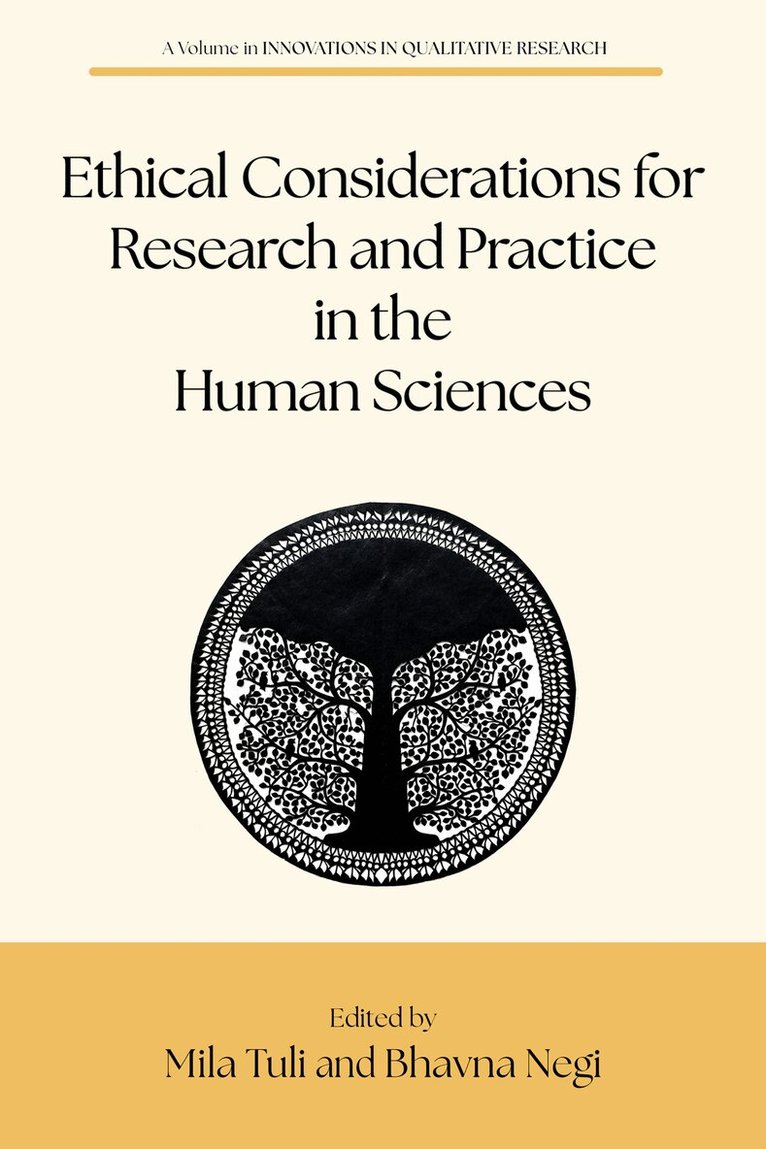
Research in the Human Sciences is constantly evolving, and its challenges multiply as we increasingly acknowledge the complexities and diversity of human existence. Research is an integral activity in institutions of higher education. Every discipline sets its own standards, protocols and ethical considerations while engaging in research. Research ethics are interpreted at institutional and departmental levels to establish what constitutes reliable, replicable and responsible paradigms. Human interactions are inherently dynamic and are embedded in the social, ecological and cultural settings in which they occur. As researchers, we are obligated to ensure that every aspect of our enquiry is grounded in the recognition, disclosure, and dissemination of truth, safeguarding a culturally accurate representation of persons and phenomena. To be accurate and authentic any enquiry must begin with an understanding and exploration of these realities. Social research typically addresses complex problems for which there may not be clear ethical guidelines available.The book offers an understanding of research ethics and practice in the human sciences through an examination of the epistemology of ethics, the diverse learnings from nuanced field practices and the link between the two. The chapters in the volume review the homogenisation of research paradigms, procedures and the complex issues of the social and human sciences using a critical lens. The authors explore the multiple elements of research ethics, several of which co-exist despite being contradictory. Accounts of research experiences from the contributing authors highlight the variations in research settings and the importance of developing reflexive and responsive research processes. The role of established protocols for research ethics and the contribution of Institutional Review Boards in promoting an over simplified, bureaucratized approach to researching human communities is critiqued through diverse field experiences.
Inbunden, Engelska, 2024
1 043 kr
Skickas inom 5-8 vardagar
Research in the Human Sciences is constantly evolving, and its challenges multiply as we increasingly acknowledge the complexities and diversity of human existence. Research is an integral activity in institutions of higher education. Every discipline sets its own standards, protocols and ethical considerations while engaging in research. Research ethics are interpreted at institutional and departmental levels to establish what constitutes reliable, replicable and responsible paradigms. Human interactions are inherently dynamic and are embedded in the social, ecological and cultural settings in which they occur. As researchers, we are obligated to ensure that every aspect of our enquiry is grounded in the recognition, disclosure, and dissemination of truth, safeguarding a culturally accurate representation of persons and phenomena. To be accurate and authentic any enquiry must begin with an understanding and exploration of these realities. Social research typically addresses complex problems for which there may not be clear ethical guidelines available.The book offers an understanding of research ethics and practice in the human sciences through an examination of the epistemology of ethics, the diverse learnings from nuanced field practices and the link between the two. The chapters in the volume review the homogenisation of research paradigms, procedures and the complex issues of the social and human sciences using a critical lens. The authors explore the multiple elements of research ethics, several of which co-exist despite being contradictory. Accounts of research experiences from the contributing authors highlight the variations in research settings and the importance of developing reflexive and responsive research processes. The role of established protocols for research ethics and the contribution of Institutional Review Boards in promoting an over simplified, bureaucratized approach to researching human communities is critiqued through diverse field experiences.