Inbunden, Engelska, 2021
794 kr
Skickas inom 5-8 vardagar
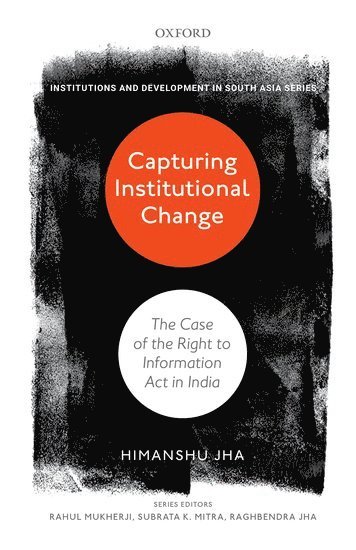
Institutions are norms that undergird organizations and are reflected in laws and practices. Over time, institutions take root and persist as they are path dependent and thus change resistant. Therefore, it is puzzling when institutions change. One such puzzle has been the enactment of the Right to Information (RTI) Act in India in 2005, which brought about institutional change by transforming the ‘information regime’. Why did the government upend the norm of secrecy, which had historically been entrenched within the Indian State? This book uses archival material, internal government documents, and interviews to understand the why and how of institutional change. It demonstrates that the institutional change resulted from ‘ideas’ emerging gradually and incrementally, leading to a ‘tipping point’.About the IDSA Series: This series interrogates the interplay between globalization, the state, and social forces in the making and un-making of institutions in South Asia. Why do institutions persist and change? Do we need to transcend materialism and dwell in ideas and culture as well to understand why institutions perform and fail?The first book in the Institutions and Development in South Asia series, this volume studies the historical institutionalism in the information regime in India by presenting an alternative narrative about the evolution of the RTI Act.