Interfaces: Studies in Visual - Böcker
Visar alla böcker i serien Interfaces: Studies in Visual. Handla med fri frakt och snabb leverans.
3 produkter
3 produkter
210 kr
Skickas inom 7-10 vardagar
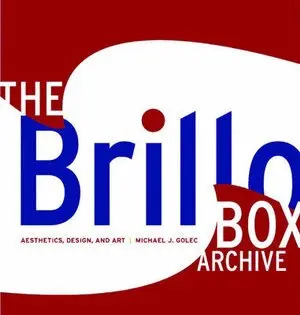
In The Brillo Box Archive, Michael J. Golec situates the image of the Brillo® box at the intersection of design, aesthetics, and art history, tracking the familiar household item from the kitchen, to the art world, and into a critical and theoretical discourse. This tripartite approach posits the Brillo® box as a record, an archive of mid-twentieth-century visual and industrial culture. While the Brillo® box was a fixture in American homes beginning in the early twentieth century, a 1961 redesign by James Harvey imbued the red and blue box with a new wave of Cold War-era patriotic values and the promise of domestic efficiency. The subsequent ubiquity of Harvey's apropos design thrust the quotidian object headlong into the realm of art, prompting both Arthur Danto and Andy Warhol to adopt the box as a source of philosophical and artistic inspiration. Golec's interdisciplinary approach to the archive of modernity investigates the progression from industrial design to artistic reinterpretation to aesthetic theory. Warhol's appropriation of Harvey's design, employing his considerable reputation and imagination to reanimate the cardboard containers as pieces of Pop art rather than mere storage devices, opened the door for contemporary art critic Arthur Danto's assertions about the relationship between artwork and referent, inspiration and appropriation. This unique and truly interdisciplinary work will appeal to scholars of art history, design history, visual culture studies, and aesthetics.
425 kr
Skickas inom 7-10 vardagar
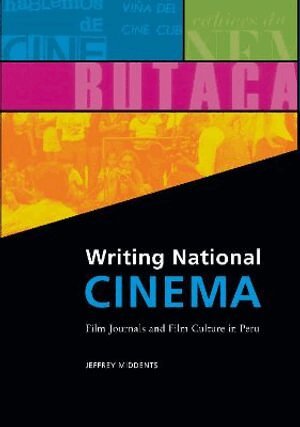
Writing National Cinema traces the twenty-year history of the Peruvian film journal Hablemos de cine alongside that of Peruvian filmmaking and film culture. Similar to the influential French journal Cahiers du cinéma, Hablemos de cine began with a group of young critics interested in claiming the director's use of mise-en-scène as the exclusive method of film analysis rather than thematic or star-oriented topics - hence, the title of the publication, derived from their battle cry at post-screening discussions: "Let's talk about film." Their critical authority grew with the rise of local filmmaking and the nationalist fervor of the late 1960s and early 1970s. When government sponsorship spurred feature filmmaking in the mid-1970s, their perspective eschewed the politically militant readings that characterized most writing and film from the rest of Latin America at the time. By the 1980s, the critics at Hablemos de cine had helped to engender a commercial, Hollywood-influenced cinematic vision-best exemplified by Peruvian auteur Francisco Lombardi-and stimulated a unique, if isolating, national identity through film. The first book-length study of Peruvian film culture to appear in English, Middents's work offers thoughtful consideration of the impact of criticism on the visual stylings of a national cinema.
361 kr
Skickas inom 7-10 vardagar
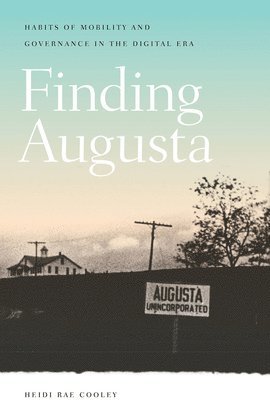
Finding Augusta breaks new ground, revising how media studies interpret the relationship between our bodies and technology. This is a challenging exploration of how, for both good and ill, the sudden ubiquity of mobile devices, GPS systems, haptic technologies, and other forms of media alter individuals' experience of their bodies and shape the social collective. The author succeeds in problematizing the most salient fact of contemporary mobile media technologies, namely, that they have become, like highways and plumbing, an infrastructure that regulates habit.Audacious in its originality, Finding Augusta will be of great interest to art and media scholars alike.