International Higher Education - Böcker
Visar alla böcker i serien International Higher Education. Handla med fri frakt och snabb leverans.
14 produkter
14 produkter
518 kr
Skickas inom 7-10 vardagar
While universities world over are undergoing reforms and change, in the case of African universities as illustrated in this book, the reforms and changes are profound and can best be described as transformative. This book is unique in many ways, which makes it extraordinary. First, unlike other books that have examined issues on higher education in Africa from externalist positions, the contributors to this book are scholars who have been educated, are currently teaching in African universities or have taught in African universities. The book specifically focuses on transformations in the governance of African universities and its implications on equity, entrepreneurship, innovation, quality assurance, information and communication technologies (ICTs), and reform issues in higher education in Africa.The book presents pertinent research on governance in African universities in an experiential and empirical manner. The contributors of the book chapters include individuals actively involved in teaching, researching and governance of higher education institutions in Africa. The chapters are based on empirical data, including review of relevant literature. The book also recognizes that university governance is more than just crisis in financial or economic issues, but includes best management practices, shared governance, meaningful reforms, strategic planning, consultation, transparency and accountability, client (students, lecturers, parents and the public) satisfaction, as well as the role of the university in development.The contributions take cognizance of the fact that governance as a concept is facing fundamental changes in the context of global knowledge economy, and African local conditions. Contributors also take cognizance of the fact that one important source of change in Africa has been the accelerating speed of scientific and technological advancement in learning at universities where lifelong learning programs, adult learning programs, distance and online learning are relatively new. The chapters are also sensitive to new changes in gender, demographical, technological, education reforms, social and economic transformations in the governance of African universities. The book is basically an academic book for use by undergraduates and graduate students at universities, policy makers and formulators in African ministries of Education; supra national organizations, foreign organizations working in Africa, NGOs and CBOs as well as development stakeholders, and community organizers.
Governance and Transformations of Universities in Africa
A Global Perspective
Inbunden, Engelska, 2014
953 kr
Skickas inom 7-10 vardagar
While universities world over are undergoing reforms and change, in the case of African universities as illustrated in this book, the reforms and changes are profound and can best be described as transformative. This book is unique in many ways, which makes it extraordinary. First, unlike other books that have examined issues on higher education in Africa from externalist positions, the contributors to this book are scholars who have been educated, are currently teaching in African universities or have taught in African universities. The book specifically focuses on transformations in the governance of African universities and its implications on equity, entrepreneurship, innovation, quality assurance, information and communication technologies (ICTs), and reform issues in higher education in Africa.The book presents pertinent research on governance in African universities in an experiential and empirical manner. The contributors of the book chapters include individuals actively involved in teaching, researching and governance of higher education institutions in Africa. The chapters are based on empirical data, including review of relevant literature. The book also recognizes that university governance is more than just crisis in financial or economic issues, but includes best management practices, shared governance, meaningful reforms, strategic planning, consultation, transparency and accountability, client (students, lecturers, parents and the public) satisfaction, as well as the role of the university in development.The contributions take cognizance of the fact that governance as a concept is facing fundamental changes in the context of global knowledge economy, and African local conditions. Contributors also take cognizance of the fact that one important source of change in Africa has been the accelerating speed of scientific and technological advancement in learning at universities where lifelong learning programs, adult learning programs, distance and online learning are relatively new. The chapters are also sensitive to new changes in gender, demographical, technological, education reforms, social and economic transformations in the governance of African universities. The book is basically an academic book for use by undergraduates and graduate students at universities, policy makers and formulators in African ministries of Education; supra national organizations, foreign organizations working in Africa, NGOs and CBOs as well as development stakeholders, and community organizers.
549 kr
Skickas inom 7-10 vardagar
This book addresses an important topic - Conflict, mediation and dialogue. Conflicts are a part of life. Although many people assume conflicts are negative and, therefore, should be avoided, conflict is truly neutral. The engagement in conflict is what can be constructive or destructive. There are many positive outcomes experienced when a conflict is well managed, hence the critical role of this book. For instance, most change is driven by some level of conflict. You must learn, grow and develop effective conflict management skills as a way to manage change. Thus, the conflicts we deal with in our personal lives and in the workplace are essential to our development and our organizations' healthy development. However, if managed poorly, some conflicts can escalate to the point that they can destroy individuals or organizations. As illustrated in this book, the key to managing conflicts is to understand conflicts; expect conflicts, and manage conflicts before they escalate into destructive or costly loss of personnel, diminished climate or lead to lawsuits. The book provides one of the growing and recognized methods of dealing with conflicts - mediation and dialogue. The contents of this book reflect areas of importance addressed in mediation training: alternative dispute resolution practices, conflict management intervention options, models of thinking about conflict, the mediation format, and the skill set needed by a strong conflict management and mediator. Readers are challenged to reflect upon their biases and beliefs that may negatively impact the mediation process.
1 010 kr
Skickas inom 7-10 vardagar
This book addresses an important topic - Conflict, mediation and dialogue. Conflicts are a part of life. Although many people assume conflicts are negative and, therefore, should be avoided, conflict is truly neutral. The engagement in conflict is what can be constructive or destructive. There are many positive outcomes experienced when a conflict is well managed, hence the critical role of this book. For instance, most change is driven by some level of conflict. You must learn, grow and develop effective conflict management skills as a way to manage change. Thus, the conflicts we deal with in our personal lives and in the workplace are essential to our development and our organizations' healthy development. However, if managed poorly, some conflicts can escalate to the point that they can destroy individuals or organizations. As illustrated in this book, the key to managing conflicts is to understand conflicts; expect conflicts, and manage conflicts before they escalate into destructive or costly loss of personnel, diminished climate or lead to lawsuits. The book provides one of the growing and recognized methods of dealing with conflicts - mediation and dialogue. The contents of this book reflect areas of importance addressed in mediation training: alternative dispute resolution practices, conflict management intervention options, models of thinking about conflict, the mediation format, and the skill set needed by a strong conflict management and mediator. Readers are challenged to reflect upon their biases and beliefs that may negatively impact the mediation process.
518 kr
Skickas inom 7-10 vardagar
Cultural Impact on Conflict Management in Higher Education shares information regarding conflict management and resolution in higher education from a global perspective. In this book, we introduced many conflict resolution methods from different regions in the world. You can borrow some successful strategies and examine the differences and similarities between contexts. The book shares a conflict resolution model which may direct the reader to start thinking about addressing and managing conflicts from different levels of organizations.This book is a collective work of authors coming from all over the world. We chose higher education as the context because it is a place where diverse thoughts, perspectives, and people come together. Because of the potential richness of diversity on a college campus, the opportunity for conflicts occurs.Managing conflict does not work when there is a 'one-way only approach/model' for addressing conflict. Some conflict resolution encompasses multiple dimensions: (a) one’s personal beliefs or beliefs about an issue; (b) an individual’s personal history in terms of how the conflict was perceived as something to be discussed or not; (c) work culture of the conflict where if ‘one has a conflict,’ the person or unit is messing up or there is a problem person; (d) the unconscious strategies of ‘face saving’ (trying to maintain one’s image) present; (e) social hierarchies or relationships; and (f) the diversity dimensions and issues that may be present.
953 kr
Skickas inom 7-10 vardagar
Cultural Impact on Conflict Management in Higher Education shares information regarding conflict management and resolution in higher education from a global perspective. In this book, we introduced many conflict resolution methods from different regions in the world. You can borrow some successful strategies and examine the differences and similarities between contexts. The book shares a conflict resolution model which may direct the reader to start thinking about addressing and managing conflicts from different levels of organizations.This book is a collective work of authors coming from all over the world. We chose higher education as the context because it is a place where diverse thoughts, perspectives, and people come together. Because of the potential richness of diversity on a college campus, the opportunity for conflicts occurs.Managing conflict does not work when there is a 'one-way only approach/model' for addressing conflict. Some conflict resolution encompasses multiple dimensions: (a) one’s personal beliefs or beliefs about an issue; (b) an individual’s personal history in terms of how the conflict was perceived as something to be discussed or not; (c) work culture of the conflict where if ‘one has a conflict,’ the person or unit is messing up or there is a problem person; (d) the unconscious strategies of ‘face saving’ (trying to maintain one’s image) present; (e) social hierarchies or relationships; and (f) the diversity dimensions and issues that may be present.
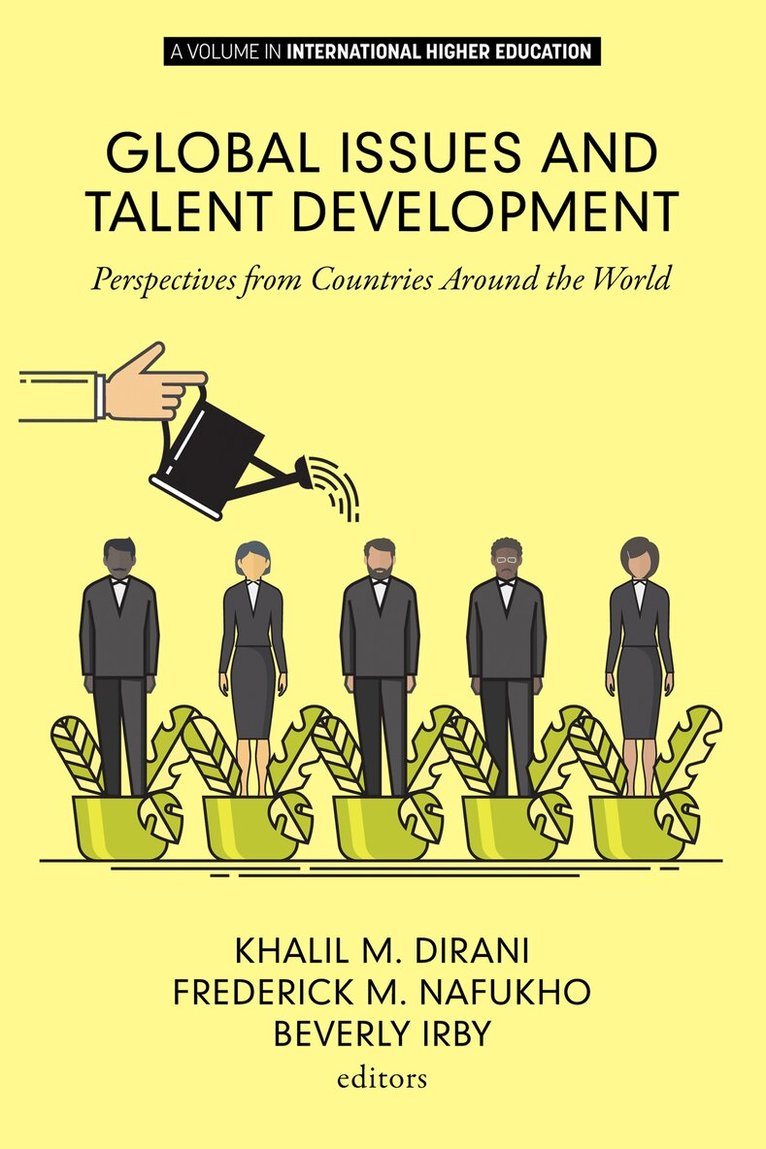
Global Issues and Talent Development
Perspectives from Countries Around the World
Häftad, Engelska, 2018
549 kr
Skickas inom 7-10 vardagar
Talent management (TM) and talent development (TD) are of the most important areas of focus for organizational leaders and scholars around the world (Machado, 2015). Geographic boundaries have become increasingly permeable, with talent considerations being a key factor in the decision of where organizations locate their operations (Farndale, Scullion, & Sparrow, 2010). These changes in global market conditions have lead organizations to develop robust global talent management and development strategies that help organizations attract and retain the best talent (Nilsson & Ellström, 2012). Still, most international TM and TD initiatives can be described as ad hoc, non-strategic, or based on exported models from the West (Machado, 2015)From an operational perspective, although there is a surge in research on TM and TD practices across different regions, most of what we know about these topics is based on government and practitioners’ reports. Nowadays, organizations are operating in diverse environments catalyzed by globalization, economic openness, and governmental smart visions and practical policies. Governments and organizations alike, are aspiring to become talent magnet destination, attracting expatriates from all over the world. The question we try to answer in this book is whether entities are able to continue their growth through current TM and TD practices or whether a more strategic approach is needed in order to address the current TM and TD challenges and to meet the needs of individuals, organizations, and governments.In particular, in this book we provide different perspectives of current status of TM and TD practices in select countries across the world. Our aim is to provide scholars and practitioners interested in the topic with a better understanding of TM and TD practices, and an overview of factors that affect these practices. Once we understand the different challenges, practitioners and leaders can use TM and TD as a source of power, or a strategy, that can lead people and organizations into success.
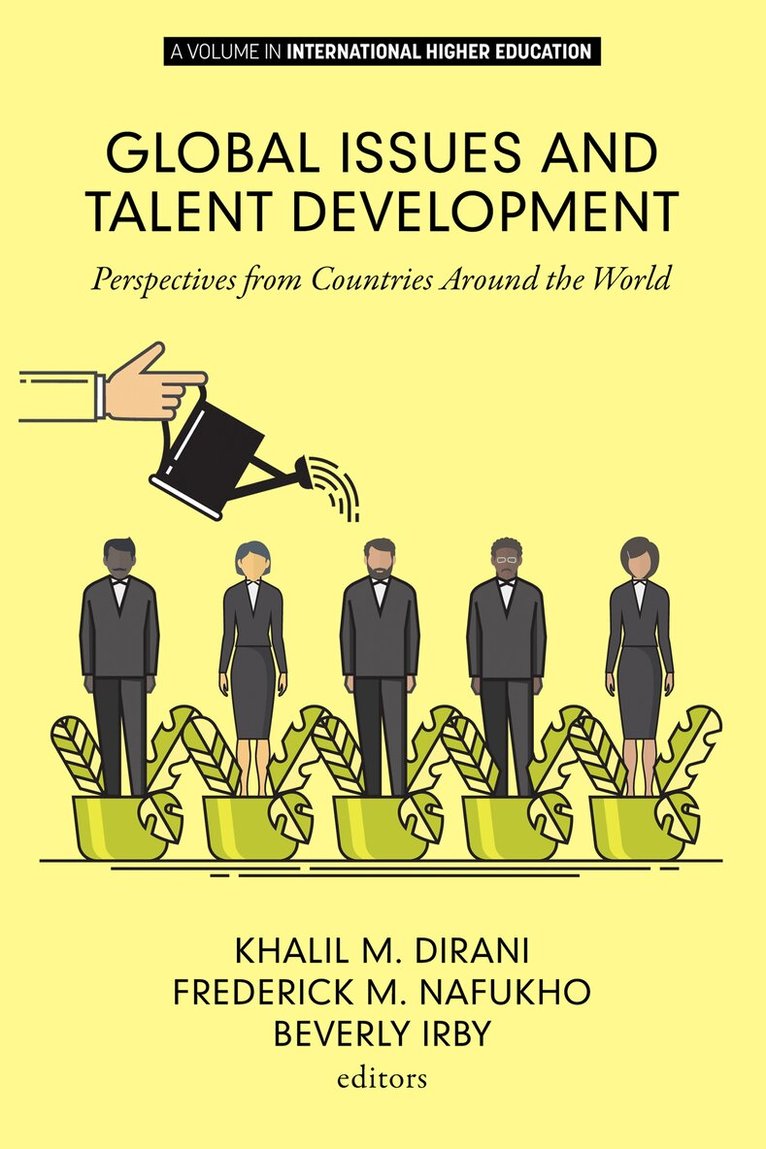
Global Issues and Talent Development
Perspectives from Countries Around the World
Inbunden, Engelska, 2018
1 010 kr
Skickas inom 7-10 vardagar
Talent management (TM) and talent development (TD) are of the most important areas of focus for organizational leaders and scholars around the world (Machado, 2015). Geographic boundaries have become increasingly permeable, with talent considerations being a key factor in the decision of where organizations locate their operations (Farndale, Scullion, & Sparrow, 2010). These changes in global market conditions have lead organizations to develop robust global talent management and development strategies that help organizations attract and retain the best talent (Nilsson & Ellström, 2012). Still, most international TM and TD initiatives can be described as ad hoc, non-strategic, or based on exported models from the West (Machado, 2015)From an operational perspective, although there is a surge in research on TM and TD practices across different regions, most of what we know about these topics is based on government and practitioners’ reports. Nowadays, organizations are operating in diverse environments catalyzed by globalization, economic openness, and governmental smart visions and practical policies. Governments and organizations alike, are aspiring to become talent magnet destination, attracting expatriates from all over the world. The question we try to answer in this book is whether entities are able to continue their growth through current TM and TD practices or whether a more strategic approach is needed in order to address the current TM and TD challenges and to meet the needs of individuals, organizations, and governments.In particular, in this book we provide different perspectives of current status of TM and TD practices in select countries across the world. Our aim is to provide scholars and practitioners interested in the topic with a better understanding of TM and TD practices, and an overview of factors that affect these practices. Once we understand the different challenges, practitioners and leaders can use TM and TD as a source of power, or a strategy, that can lead people and organizations into success.
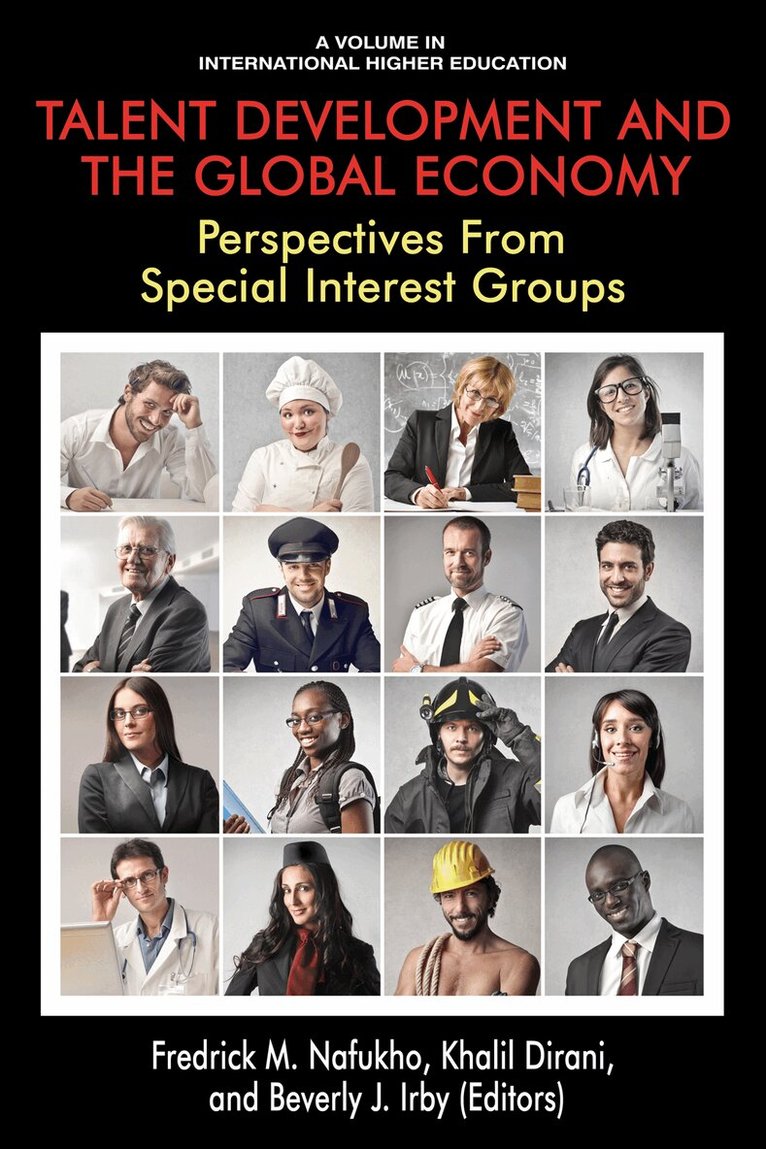
Talent Development and the Global Economy
Perspectives from Special Interest Groups
Häftad, Engelska, 2017
549 kr
Skickas inom 7-10 vardagar
Talent has been identified as the only differentiator for an organization’s, nations’ or any region’s success in this uncertain, complex, competitive and global environment. Ulrich (2008) defined talent as the equation of 3Cs: Talent = Competence x Commitment x Contribution. Malaeb and Chanaron (2010, p. 2), noted “Competence means that employees have the skills and abilities today and in the future for required business results. ... Commitment means that employees are involved and engaged ... while Contribution means that employees find personal abundance at occupation ...” While Ulrich (2008) observed that commitment focused on meaning and identity and other restraints that tap employee’s heart. This book is unique in many ways, which makes it extraordinary. First, unlike other books that have examined issues of change facing the global economy no book has examined the issue of talent development from the perspective of special interest groups including management international students, women refugees, refugees, non-governmental organizations, for profit, for benefit and nonprofit organizations. Thus, talent development world over has become one of the most important issues when it comes to developing human resources especially through education and training. The book presents pertinent research and practice on talent development management and argues that the term talent development broadly refers to management and development of high performing and high potential individuals in society required to carry out critical organizational and society roles aimed at improving human development. The contributors of the book chapters include individuals actively involved in research, teaching and practice in higher education and in business and industry. The chapters are based on empirical data, including review of relevant literature. The book also recognizes that talent development is more than just crisis management and includes best talent management practices, shared governance, meaningful reforms, strategic planning, transparency and accountability, social justice and respect for human life and the need to develop humane organizations and humane communities. The contributions take cognizance of the fact that talent development as a concept is facing fundamental changes in the global knowledge economy, and especially with political changes taking place world over. Contributors also take cognizance of the fact that one important source of change in society has been the accelerating speed of scientific and technological advancement driven by the power of the Internet hence the need to develop talent for the 21st century and beyond. The book is basically an academic book for use by undergraduates and graduate students at universities, for-profit, for-benefit, and non-profit organizations, policy makers and formulators in ministries of Education; supra national organizations, foreign organizations multilateral organizations, non-governmental organizations, community based organizations as well as development stakeholders, and community organizers.
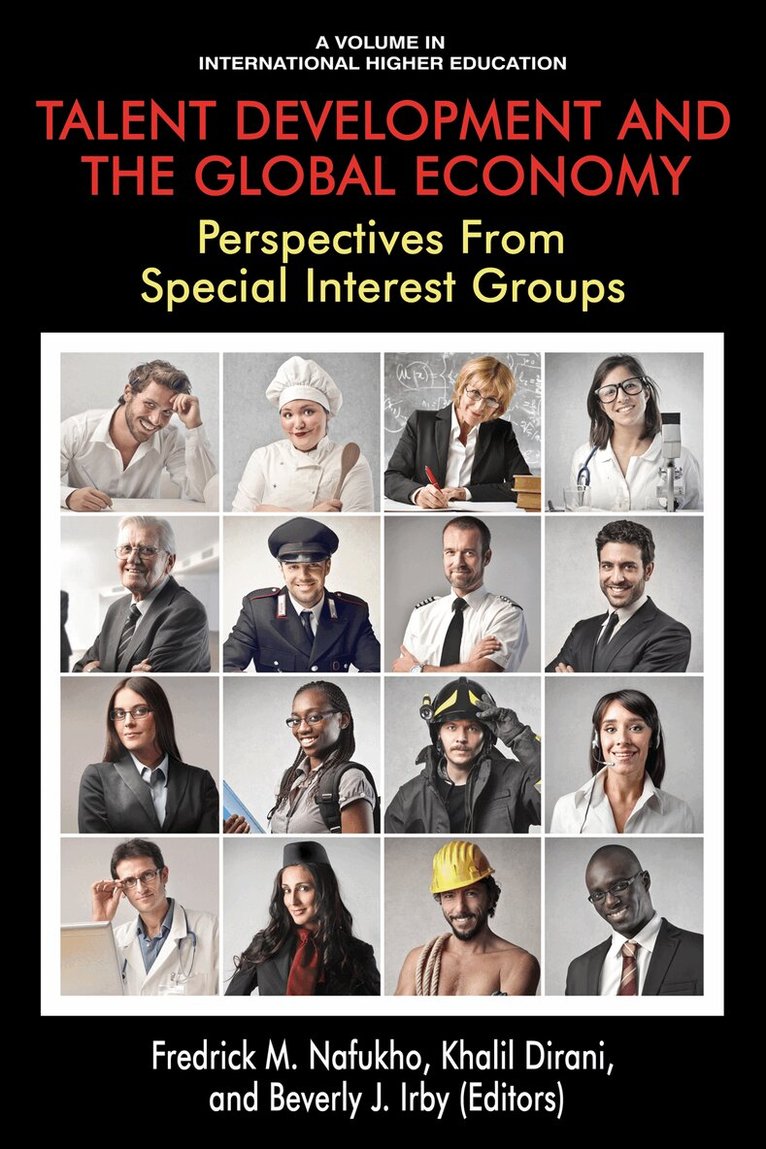
Talent Development and the Global Economy
Perspectives from Special Interest Groups
Inbunden, Engelska, 2017
1 010 kr
Skickas inom 7-10 vardagar
Talent has been identified as the only differentiator for an organization’s, nations’ or any region’s success in this uncertain, complex, competitive and global environment. Ulrich (2008) defined talent as the equation of 3Cs: Talent = Competence x Commitment x Contribution. Malaeb and Chanaron (2010, p. 2), noted “Competence means that employees have the skills and abilities today and in the future for required business results. ... Commitment means that employees are involved and engaged ... while Contribution means that employees find personal abundance at occupation ...” While Ulrich (2008) observed that commitment focused on meaning and identity and other restraints that tap employee’s heart. This book is unique in many ways, which makes it extraordinary. First, unlike other books that have examined issues of change facing the global economy no book has examined the issue of talent development from the perspective of special interest groups including management international students, women refugees, refugees, non-governmental organizations, for profit, for benefit and nonprofit organizations. Thus, talent development world over has become one of the most important issues when it comes to developing human resources especially through education and training. The book presents pertinent research and practice on talent development management and argues that the term talent development broadly refers to management and development of high performing and high potential individuals in society required to carry out critical organizational and society roles aimed at improving human development. The contributors of the book chapters include individuals actively involved in research, teaching and practice in higher education and in business and industry. The chapters are based on empirical data, including review of relevant literature. The book also recognizes that talent development is more than just crisis management and includes best talent management practices, shared governance, meaningful reforms, strategic planning, transparency and accountability, social justice and respect for human life and the need to develop humane organizations and humane communities. The contributions take cognizance of the fact that talent development as a concept is facing fundamental changes in the global knowledge economy, and especially with political changes taking place world over. Contributors also take cognizance of the fact that one important source of change in society has been the accelerating speed of scientific and technological advancement driven by the power of the Internet hence the need to develop talent for the 21st century and beyond. The book is basically an academic book for use by undergraduates and graduate students at universities, for-profit, for-benefit, and non-profit organizations, policy makers and formulators in ministries of Education; supra national organizations, foreign organizations multilateral organizations, non-governmental organizations, community based organizations as well as development stakeholders, and community organizers.
517 kr
Skickas inom 7-10 vardagar
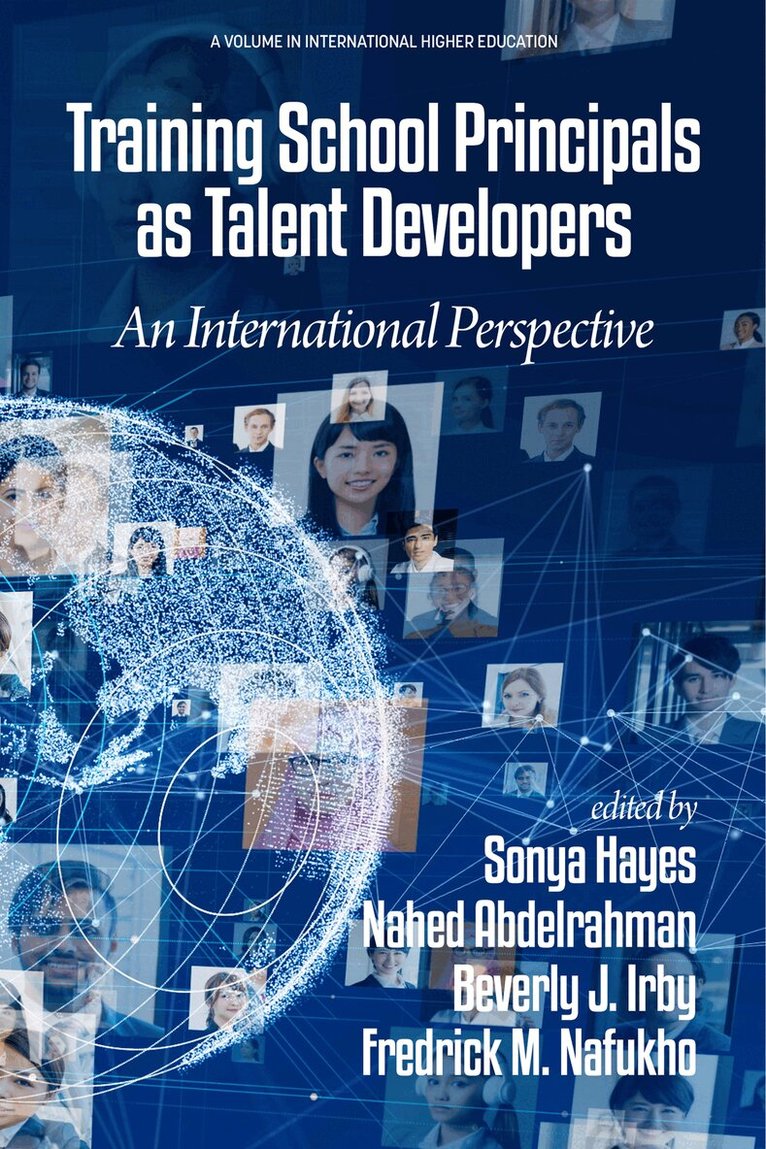
Training School Principals as Talent Developers: An International Perspective focuses on how to prepare school principals to lead their schools by training and supporting teachers in their craft. The main goal of schools is improving teaching and learning in order to maximize students’ potential to be college ready and career ready. Principals play significant role in improving the instructions which improves students’ learning. In order to do so, we need inspiring principals to be talent developers. The book is comprised of chapters written by faculty and researchers from various countries and offers multiple perspectives on training and developing principals to be talent developers.In the ten chapters of this edited book, we wanted to address the perspectives of “who is the role model of a principal, what are the qualities needed to make a good principal and what are the challenges that the talent developer principals encounter to achieve their goals. We also wanted to broaden the lens by addressing these perspectives in the United States and globally.
952 kr
Skickas inom 7-10 vardagar
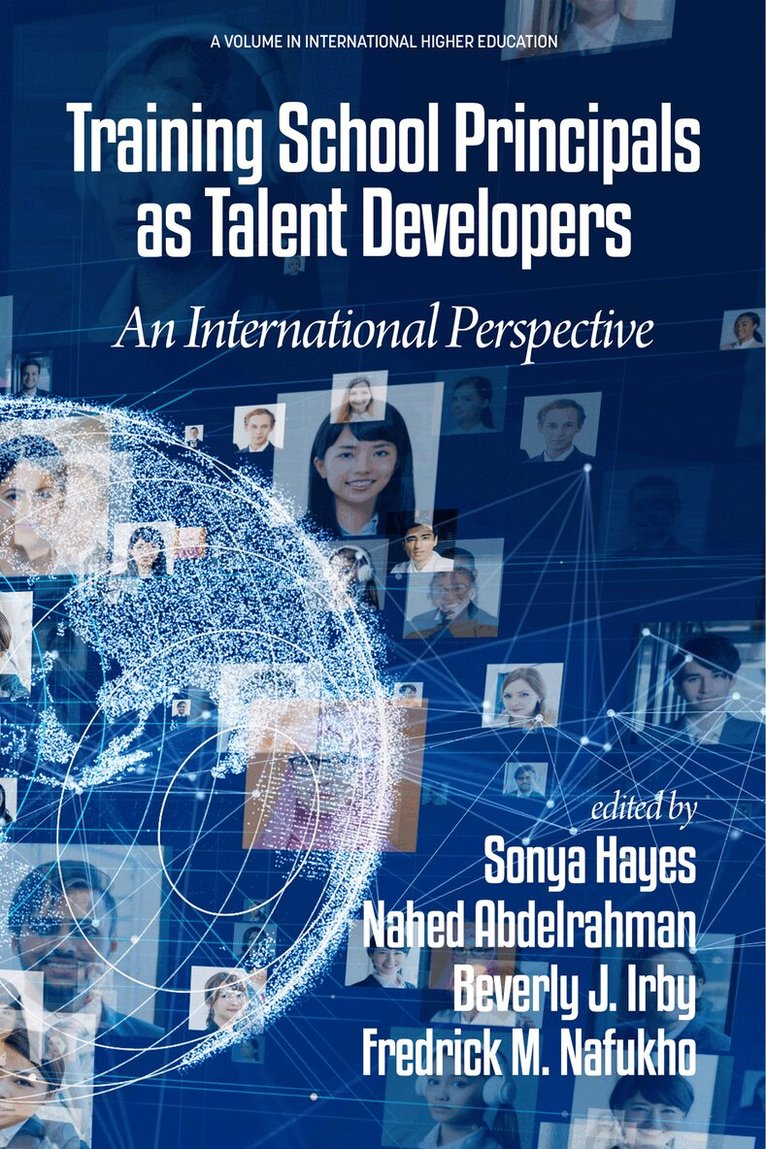
Training School Principals as Talent Developers: An International Perspective focuses on how to prepare school principals to lead their schools by training and supporting teachers in their craft. The main goal of schools is improving teaching and learning in order to maximize students’ potential to be college ready and career ready. Principals play significant role in improving the instructions which improves students’ learning. In order to do so, we need inspiring principals to be talent developers. The book is comprised of chapters written by faculty and researchers from various countries and offers multiple perspectives on training and developing principals to be talent developers.In the ten chapters of this edited book, we wanted to address the perspectives of “who is the role model of a principal, what are the qualities needed to make a good principal and what are the challenges that the talent developer principals encounter to achieve their goals. We also wanted to broaden the lens by addressing these perspectives in the United States and globally.
453 kr
Skickas inom 7-10 vardagar
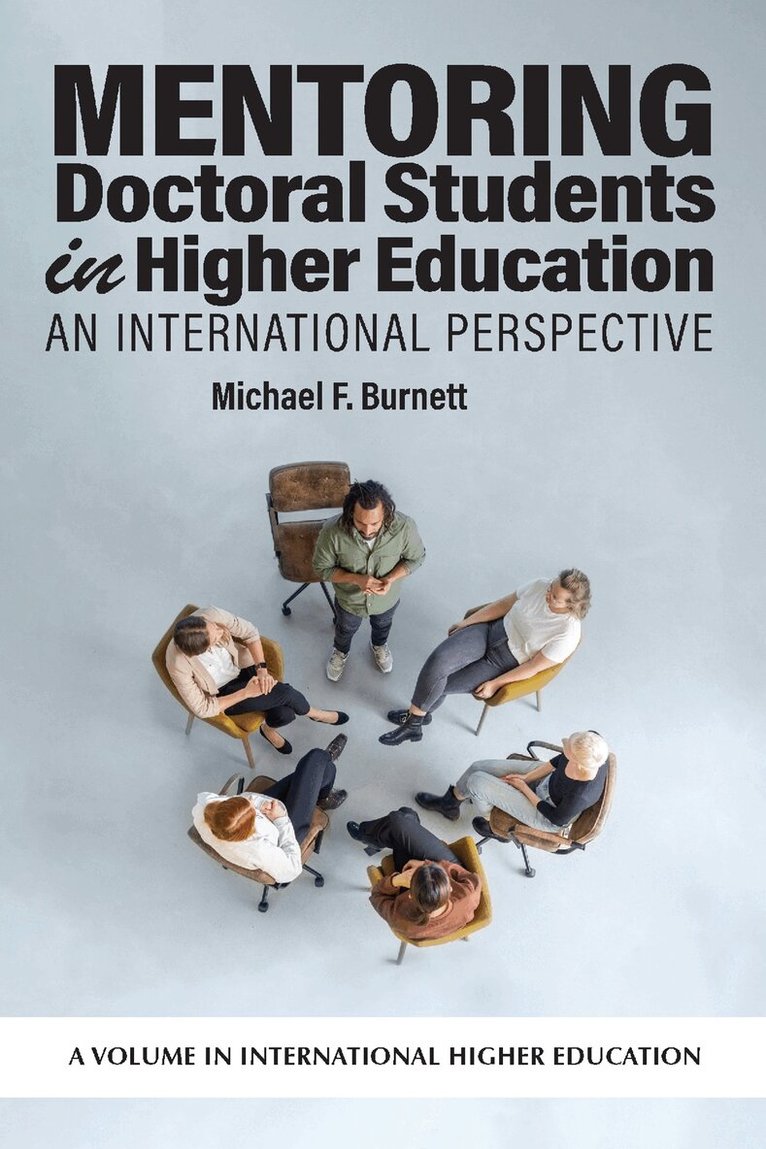
Many students world over who decide to pursue a doctorate have a very specific career path in mind when they enter a doctoral program. Some of these know they want to work in the world of academia. After the author’s more than forty years in academia, this trend is changing with time in that many doctoral students now end up working in business and industry, for profit, non-profit agencies and government agencies. For prospective or current doctoral students reading this book, please remember that if you land your position in academia, you must then work diligently toward achieving tenure or building a successful career as a teaching professor. If you want to be successful in academia, you should do as much as you can to achieve the skills and abilities needed to be successful while you are enrolled in your doctoral program.This book is organized in a “generally” chronological order, but when I felt the need, I have drawn from experiences with students throughout my career. The first lesson in the book is drawn directly from the experiences with my first doctoral student and for a very good reason. I think it will become evident when you read the first chapter. One thing that I sincerely hope is evident throughout the book is my unwavering belief in the value of effective mentoring. In my opinion, this is something that has been seriously damaged in our age of mass production and immediate gratification. You cannot become an effective mentor in a few sessions. It takes a lot of time and effort.One of my dearest friends in the world is a colleague with whom I worked for many years. He has been retired now for several years, but he has continued to be one of my most cherished friends and mentors. A few years ago, my friend’s wife (who is also one of my dear friends) hand-stitched a beautiful picture of a cardinal sitting on a flowering tree limb and gave it to me for a Christmas present. The picture is beautiful, and I treasure it. It has a place of prominence on the wall in my office. However, the note that she gave me with the picture is even more treasured. She starts by saying, “I wanted to thank you for being my husband’s mentor.” As he is a true elder statesman in our program, I always considered him my mentor. The following words in her note helped to affirm the worthiness of the doctoral advising aspect of my efforts over these last 40 plus years: She said that we (I and her husband),“. . . help students to go out in the world as blessed human beings and spread knowledge to the next generation.”
836 kr
Skickas inom 7-10 vardagar
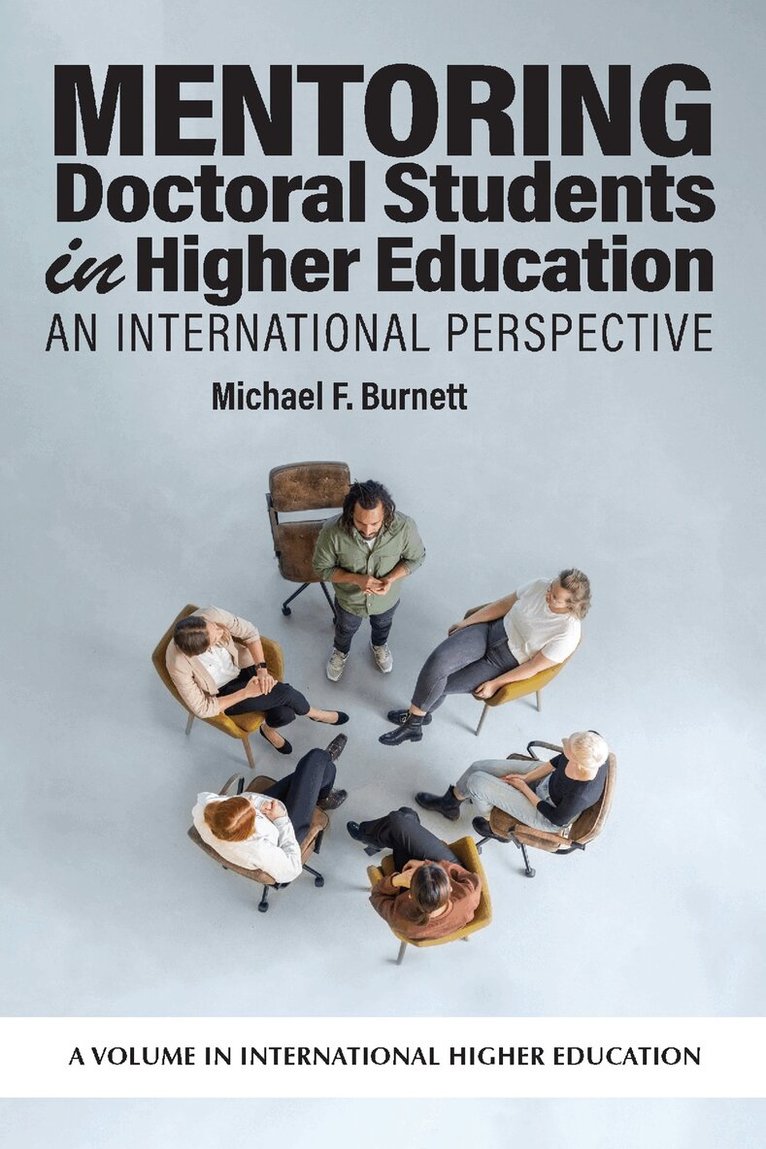
Many students world over who decide to pursue a doctorate have a very specific career path in mind when they enter a doctoral program. Some of these know they want to work in the world of academia. After the author’s more than forty years in academia, this trend is changing with time in that many doctoral students now end up working in business and industry, for profit, non-profit agencies and government agencies. For prospective or current doctoral students reading this book, please remember that if you land your position in academia, you must then work diligently toward achieving tenure or building a successful career as a teaching professor. If you want to be successful in academia, you should do as much as you can to achieve the skills and abilities needed to be successful while you are enrolled in your doctoral program.This book is organized in a “generally” chronological order, but when I felt the need, I have drawn from experiences with students throughout my career. The first lesson in the book is drawn directly from the experiences with my first doctoral student and for a very good reason. I think it will become evident when you read the first chapter. One thing that I sincerely hope is evident throughout the book is my unwavering belief in the value of effective mentoring. In my opinion, this is something that has been seriously damaged in our age of mass production and immediate gratification. You cannot become an effective mentor in a few sessions. It takes a lot of time and effort.One of my dearest friends in the world is a colleague with whom I worked for many years. He has been retired now for several years, but he has continued to be one of my most cherished friends and mentors. A few years ago, my friend’s wife (who is also one of my dear friends) hand-stitched a beautiful picture of a cardinal sitting on a flowering tree limb and gave it to me for a Christmas present. The picture is beautiful, and I treasure it. It has a place of prominence on the wall in my office. However, the note that she gave me with the picture is even more treasured. She starts by saying, “I wanted to thank you for being my husband’s mentor.” As he is a true elder statesman in our program, I always considered him my mentor. The following words in her note helped to affirm the worthiness of the doctoral advising aspect of my efforts over these last 40 plus years: She said that we (I and her husband),“. . . help students to go out in the world as blessed human beings and spread knowledge to the next generation.”