IntUne - Böcker
Visar alla böcker i serien IntUne. Handla med fri frakt och snabb leverans.
5 produkter
5 produkter
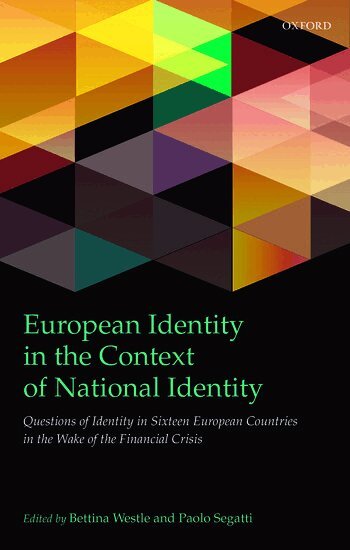
European Identity in the Context of National Identity
Questions of Identity in Sixteen European Countries in the Wake of the Financial Crisis
Inbunden, Engelska, 2016
1 740 kr
Skickas inom 5-8 vardagar
In the age of grand recession, nationalism seems to have returned to Europe. In every EU country, many citizens are unhappy with the perceived intrusion of 'Europe' in their way-of-life. Any idea of a genuine pan-European identity seems to be in retreat. This book provides an unprecedented insight into the multiple ways through which citizens of 16 countries connect their own national identity to European identity. The book's theoretical claim is that European identity, as well as national identity, should be empirically assessed taking into account its multi-dimensionality. The volume's contributors suggest that European identity was always unlikely to be a source of political integration and political legitimacy in the way national identities have been in the past and are today. Europeans' primary identity is national rather than supranational. Mutual trust between European peoples exists, but is somewhat fragile. Yet, European identity is intertwined with national identities in manifold ways. The 'imagined communities' at the national and European level show strong similarities - criteria for being a European are strongly associated with the criteria used to define who national belonging. These complex links also manifest themselves in citizen's feelings of interdependence between the nations in the European Union - which, the volume suggests, support the EU in the face of severe crises.The IntUne series is edited by Maurizio Cotta (University of Siena) and Pierangelo Isernia (University of Siena). The INTUNE Project - Integrated and United: A Quest for Citizenship in an Ever Closer Europe - is one of the most recent and ambitious research attempts to empirically study how citizenship is changing in Europe. The book series is organized around the two main axes of the project, to report how the issues of identity, representation and standards of good governance are constructed and reconstructed at the elite and citizen levels, and how mass-elite interactions affect the ability of elites to shape identity, representation and the scope of governance. A first set of four books examines how identity, scope of governance and representation have been changing over time respectively at elites, media and public level. The next two books present cross-level analysis of European and national identity on the one hand and problems of national and European representation and scope of governance on the other, in doing so comparing data at both the mass and elite level. A concluding volume summarizes the main results, framing them in a wider theoretical context.
2 324 kr
Skickas inom 5-8 vardagar
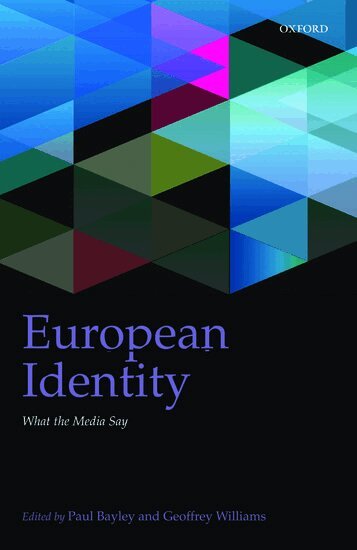
European Identity examines how Europe is represented linguistically in the news media of four EU countries, France, Italy, Poland, and the UK, through the use of an electronic corpus built from newspapers and television news transcripts. This multilingual comparable corpus, is composed of the entire contents of four newspapers published in each country, collected over two periods of three months, and the transcriptions of two TV news broadcasts, collected over two periods of two months. The theoretical and methodological frameworks adopted include discourse analysis, corpus linguistics and corpus-assisted discourse analysis. The individual chapters investigate various aspects of European identity as it is discursively construed in the news media of the different countries, such as Europe as a political and geographic entity, European Union institutions, European history, citizenship, and immigration. Based on a bottom-up orientation and using both quantitative and qualitative methods, all chapters but one use a comparative approach to the data, juxtaposing the journalist representations of Europe in two or more languages. The fundamental aim of the volume is to demonstrate how linguistic analysis, and in particular the study of large amounts of linguistic data, can make a vital contribution to the analysis of political and social issues
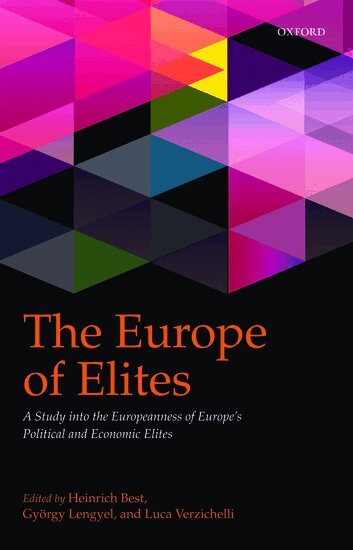
The Europe of Elites
A Study into the Europeanness of Europe's Political and Economic Elites
Inbunden, Engelska, 2012
1 461 kr
Skickas inom 5-8 vardagar
This is an open access title available under the terms of a CC BY-NC-ND 3.0 International licence. It is free to read at Oxford Scholarship Online and offered as a free PDF download from OUP and selected open access locations. It has been widely acknowledged that the process of European integration and unification was started and is still pursued as an elite project, designed to put an end to debilitating conflicts and rivalries by consolidating a common power base and by pooling Europe's economic resources. Nevertheless elites have remained the known unknowns of the European integration process. The present volume is designed to change this. Based on surveys of political and economic elites in 18 European countries, it is a comprehensive study of the visions, fears, cognitions and values of members of national parliaments and top business leaders underlying their attitudes towards European integration. It also investigates political and economic elites' embeddedness in transnational networks and their ability to communicate in multicultural settings. The book strongly supports the view of an elitist character of the process of European integration on the one hand, while challenging the idea that European national elites have merged or are even merging into a coherent Eurelite on the other. As the 11 chapters of this book show the process of European integration is much more colourful and even contradictory than concepts of a straight forward normative and structural integration suggest. In particular this process is deeply rooted in, and conditional on, the social and political settings in national contexts. The empirical basis for this book is provided by the data of the international IntUne project, which has for the first time created a comprehensive database combining coordinated surveys of Europe-related attitudes at the elite and general population level.
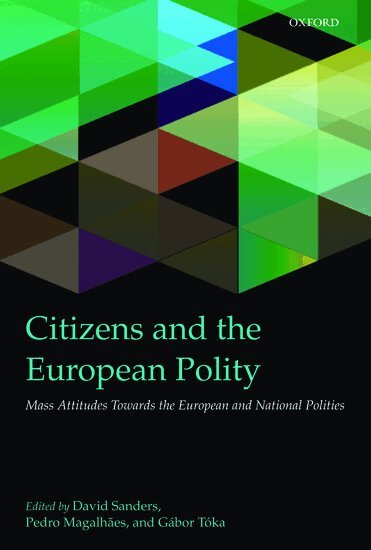
Citizens and the European Polity
Mass Attitudes Towards the European and National Polities
Inbunden, Engelska, 2012
2 280 kr
Skickas inom 5-8 vardagar
This book provides a broad overview of the main trends in mass attitudes towards domestic politics and European integration from the 1970s until today. Particularly in the last two decades, the "end of the permissive consensus" around European integration has forced analysts to place public opinion at the centre of their concerns. The book faces this challenge head on, and the overview it provides goes well beyond the most commonly used indicators. On the one hand, it shows how integration's deepening and enlargement involved polities and societies whose fundamental traits in terms of political culture - regime support, political engagement, ideological polarization - have remained anything but static or homogeneous. On the other hand, it addresses systematically what Scharpf (1999) has long identified as the main sources of the democratic deficits of the EU: the lack of a sense of collective identity, the lack of a Europe-wide structure for political accountability, and the lack of recognition of the EU as a legitimate political authority. In other words, it focuses on the fundamental dimensions of how Europeans relate to the EU: identity (the sense of an "European political community"; representation (the perception that European elites and institutions articulate citizens' interests and are responsive to them); and policy scope (the legitimacy awarded to the EU as a proper locus of policy-making). It does so by employing a cohesive theoretical framework derived from the entire IntUne project, survey and macro-social data encompassing all EU member countries, and state-of-the-art methods.The IntUne series is edited by Maurizio Cotta and Pierangelo IserniaIn a moment in which the EU is facing an important number of social, economic, political and cultural challenges, and its legitimacy and democratic capacities are increasingly questioned, it seems particularly important to address the issue of if and how EU citizenship is taking shape. This series intends to address this complex issue. It reports the main results of a quadrennial Europe-wide research project, financed under the 6th Framework Programme of the EU. That programme has studied the changes in the scope, nature and characteristics of citizenship presently underway as a result of the process of deepening and enlargement of the European Union. The INTUNE Project - Integrated and United: A Quest for Citizenship in an Ever Closer Europe - is one of the most recent and ambitious research attempts to empirically study how citizenship is changing in Europe. The Project lasted four years (2005-2009) and it involved 30 of the most distinguished European universities and research centres, with more than 100 senior and junior scholars as well as several dozen graduate students working on it. It had as its main focus an examination of how integration and decentralization processes, at both the national and European level, are affecting three major dimensions of citizenship: identity, representation, and scope of governance. It looked, in particular, at the relationships between political, social and economic elites, the general public, policy experts and the media, whose interactions nurture the dynamics of collective political identity, political legitimacy, representation, and standards of performance. In order to address empirically these issues, the INTUNE Project carried out two waves of mass and political, social and economic elite surveys in 18 countries, in 2007 and 2009; in-depth interviews with experts in five policy areas; extensive media analysis in four countries; and a documentary analysis of attitudes toward European integration, identity and citizenship. The book series presents and discusses in a coherent way the results coming out of this extensive set of new data.
The Europeanization of National Polities?
Citizenship and Support in a Post-Enlargement Union
Inbunden, Engelska, 2012
1 339 kr
Skickas inom 5-8 vardagar
The central concern ofThe Europeanization of National Polities? is to know and describe how far EU 'legal' citizens feel that they are actually part of a functioning European political system and how much they think of themselves as EU citizens. The authors report evidence of the levels of European identity, sense of EU representation and preferences for EU policy scope among European mass publics, which are the main dimensions of EU citizenship. The analysis uses a new comparative dataset on EU attitudes derived from a survey in 16 EU countries plus Serbia in 2007. This study shows that, despite initial expectations, levels of European identity, sense of EU representation, and preferences for EU policy scope among European mass publics did not display a strong trend in any particular direction during the period between 1975 and 2007. However, there are interesting variations in these measures of EU citizenship both across individuals and across countries that are described and explained by reference to a series of relevant hypotheses. The book pays particular attention to the inter-linkages among the three dimensions of citizenship itself. EU identity, representation and scope are all reciprocally related, but the representation dimension is key to the development of a generalised sense of a sense of citizenship at the EU level. This in turn places a significant premium on the need to address popular doubts about the EU's 'democratic deficit'.