Environmental Humanities: Transformation, Governance, Ethics, Law – serie
Visar alla böcker i serien Environmental Humanities: Transformation, Governance, Ethics, Law. Handla med fri frakt och snabb leverans.
10 produkter
10 produkter
Inbunden, Engelska, 2022
1 307 kr
Skickas inom 10-15 vardagar
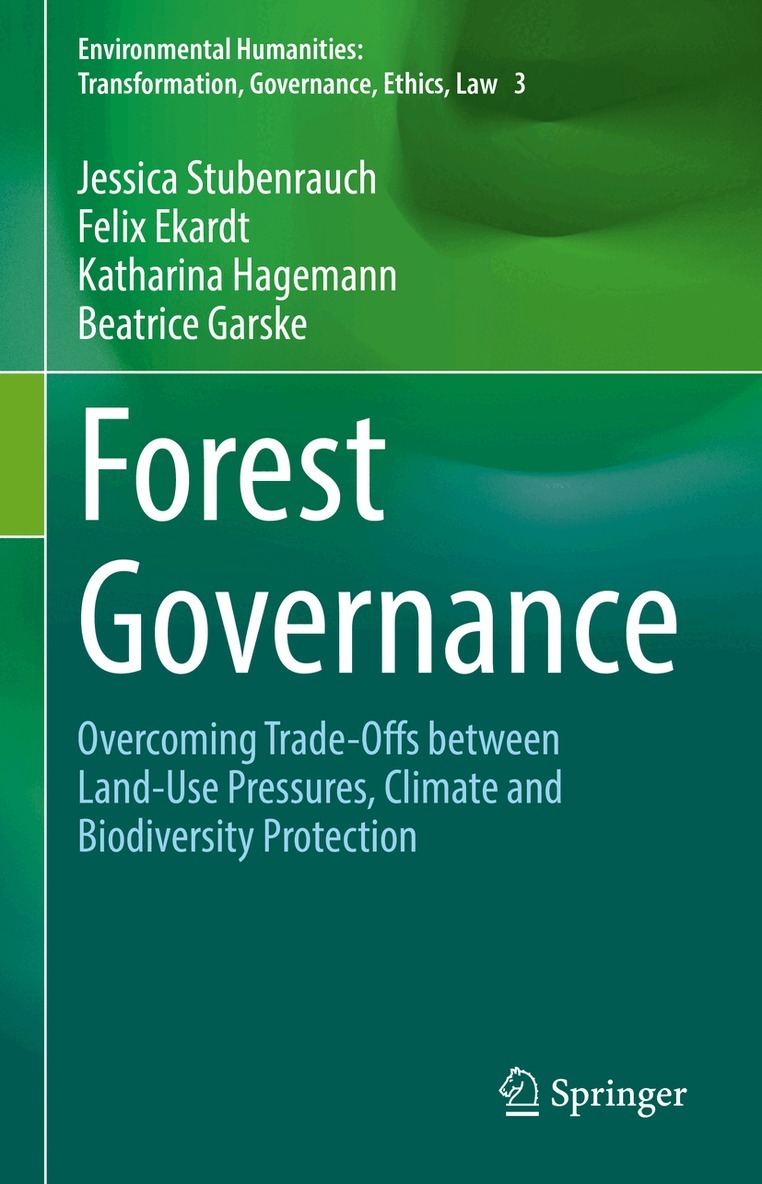
This book analyses and develops overarching concepts for forest policy and forest governance and includes a detailed investigation into the historical discussion on forests. It examines opportunities and limits for negative emissions in a sector that – like peatlands – appears significantly less ambivalent compared to highly technical large-scale forms of climate geoengineering. The analysis shows that the binding climate and biodiversity targets under international law are much more ambitious than most people assume. Measured against that, the volume critically reviews the potentials of afforestation and reforestation for climate mitigation, which is often presented as the new saviour to fulfil the commitments of the Paris Agreement and to reach climate neutrality in the future. It becomes clear that ultimately only biodiverse and thus resilient forests can function as a carbon sink in the long term. The volume shows that the existing European and international forest governance approaches fail to comply with these targets and insights. Furthermore, the book develops a bundle of policy measures. Quantity governance systems for livestock farming, fossil fuels and similar drivers of deforestations represent the most important approach. They are most effective when not directly targeting forests due to their heterogeneity but central damaging factors. With regard to the dominant regulatory and subsidy-based governance for forests we show that it remains necessary to supplement these quantity governance systems with certain easily graspable and thus controllable regulatory and subsidy regulations such as a regulatory protection of old-growth forests with almost no exceptions; extension of the livestock-to-land-ratio established in organic farming to all farming; far-reaching restriction of bioenergy use to certain residues flanked by import bans; and a national and international complete conversion of all agricultural and forest subsidies to “public money for publicservices” to promote nature conservation and afforestation in addition to the quantity control systems.
Häftad, Engelska, 2023
1 307 kr
Skickas inom 10-15 vardagar
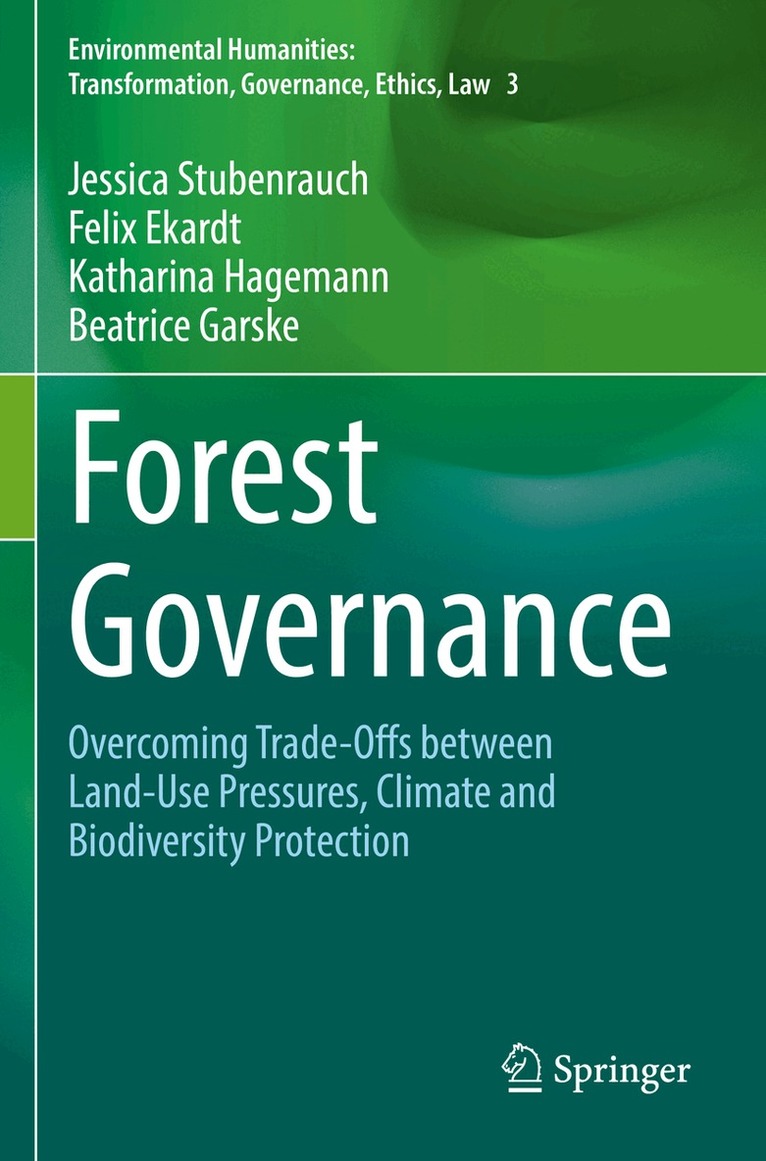
This book analyses and develops overarching concepts for forest policy and forest governance and includes a detailed investigation into the historical discussion on forests. It examines opportunities and limits for negative emissions in a sector that – like peatlands – appears significantly less ambivalent compared to highly technical large-scale forms of climate geoengineering. The analysis shows that the binding climate and biodiversity targets under international law are much more ambitious than most people assume. Measured against that, the volume critically reviews the potentials of afforestation and reforestation for climate mitigation, which is often presented as the new saviour to fulfil the commitments of the Paris Agreement and to reach climate neutrality in the future. It becomes clear that ultimately only biodiverse and thus resilient forests can function as a carbon sink in the long term. The volume shows that the existing European and international forest governance approaches fail to comply with these targets and insights. Furthermore, the book develops a bundle of policy measures. Quantity governance systems for livestock farming, fossil fuels and similar drivers of deforestations represent the most important approach. They are most effective when not directly targeting forests due to their heterogeneity but central damaging factors. With regard to the dominant regulatory and subsidy-based governance for forests we show that it remains necessary to supplement these quantity governance systems with certain easily graspable and thus controllable regulatory and subsidy regulations such as a regulatory protection of old-growth forests with almost no exceptions; extension of the livestock-to-land-ratio established in organic farming to all farming; far-reaching restriction of bioenergy use to certain residues flanked by import bans; and a national and international complete conversion of all agricultural and forest subsidies to “public money for publicservices” to promote nature conservation and afforestation in addition to the quantity control systems.
Inbunden, Engelska, 2022
1 416 kr
Skickas inom 10-15 vardagar
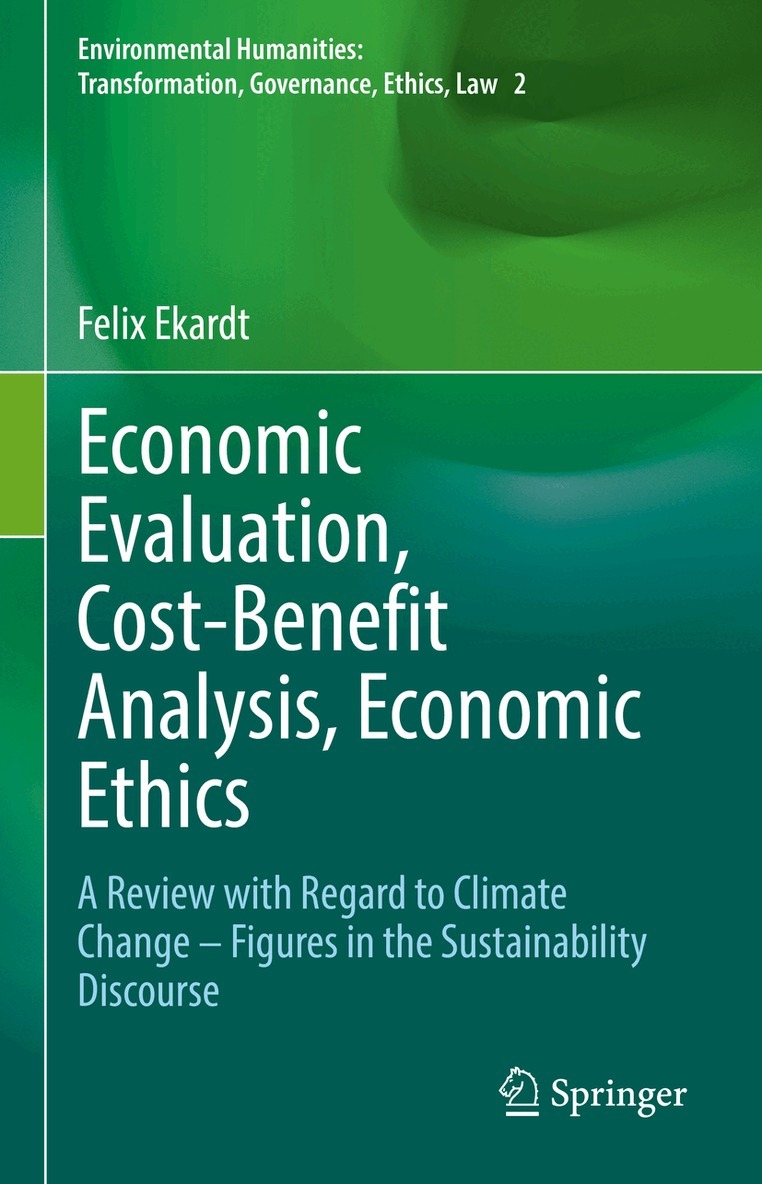
With cost-benefit analysis, economic sciences cultivate a specific decision-making procedure, which has also been partially adopted in politics. Although economists do not experience the approach as normative, on closer examination the approach can be identified as an economic ethics. The present philosophical and at the same time transdisciplinary (with special legal and economic components) treatment examines the persuasive power of this approach using climate change as an example, as the most important sustainability issue. The objections raised against the economisation of decision-making with regard to the utilitarian tradition, such as the criticism of the orientation towards weighing up options, the alleged lack of distributive justice or the tendency to describe people in behavioural science as selfish, are hardly or not at all convincing on closer examination. In several respects, however, it turns out that cost-benefit analysis faces insoluble problems. Firstly, the theoretical basis of (hidden normative) cost-benefit analysis in philosophical empiricism does not seem tenable. This means the idea of empiricism that normative questions must be transformed into questions of factual (countable and reproduceable) preferences of people. Secondly, there are massive collisions of cost-benefit analysis with a liberal-democratic constitutional law, whose principles are universal ethical principles. This concerns both freedom rights (which must not depend on the ability of humans to pay) and the model of democracy and respect for the rule of law. Thirdly, insoluble problems of application arise for cost-benefit analyses, which are particularly (but not only) apparent in the context of climate protection, in general considerations as in the case of legislation as well as in individual analyses, as done when constructing a coal-fired power plant. A strongly deflated cost-benefit analysis could nevertheless contribute factual material – such as partial aspects of decision consequences that can actually be depicted in monetary terms – to ethical or legal decision-making processes. In this respect the approach appears helpful and complementary, but not beyond that.
Häftad, Engelska, 2023
1 416 kr
Skickas inom 10-15 vardagar
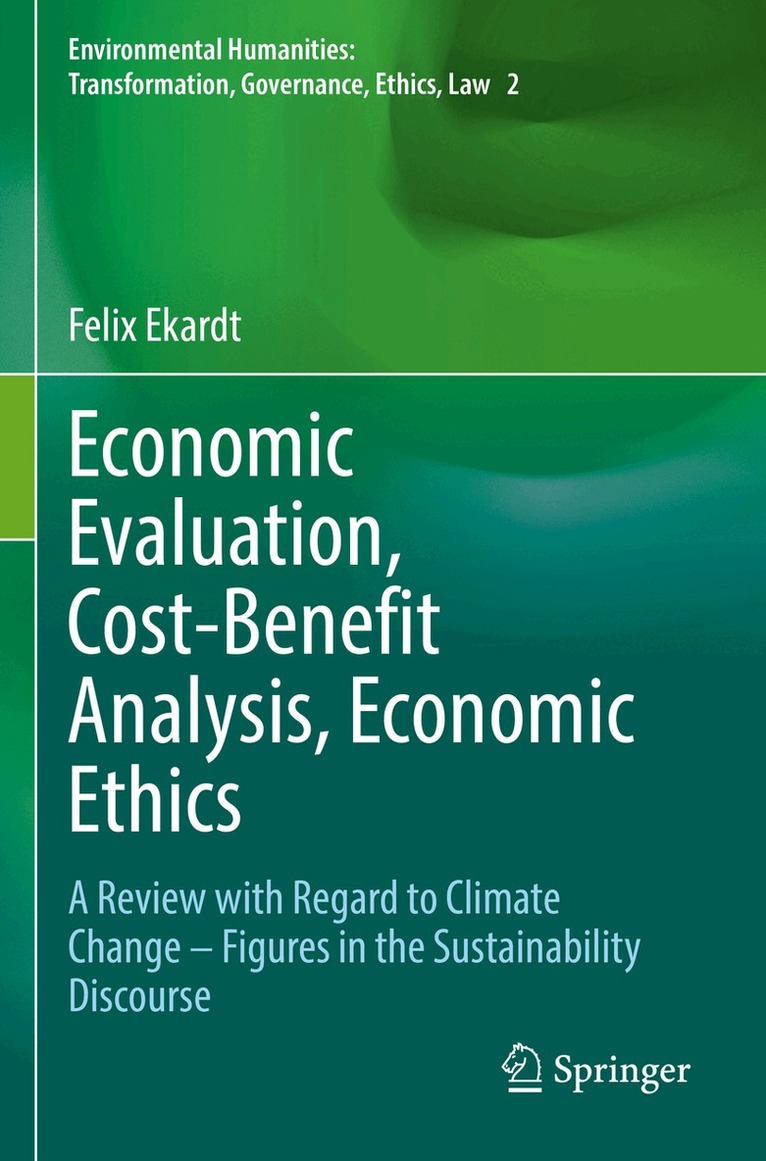
With cost-benefit analysis, economic sciences cultivate a specific decision-making procedure, which has also been partially adopted in politics. Although economists do not experience the approach as normative, on closer examination the approach can be identified as an economic ethics. The present philosophical and at the same time transdisciplinary (with special legal and economic components) treatment examines the persuasive power of this approach using climate change as an example, as the most important sustainability issue. The objections raised against the economisation of decision-making with regard to the utilitarian tradition, such as the criticism of the orientation towards weighing up options, the alleged lack of distributive justice or the tendency to describe people in behavioural science as selfish, are hardly or not at all convincing on closer examination. In several respects, however, it turns out that cost-benefit analysis faces insoluble problems. Firstly, the theoretical basis of (hidden normative) cost-benefit analysis in philosophical empiricism does not seem tenable. This means the idea of empiricism that normative questions must be transformed into questions of factual (countable and reproduceable) preferences of people. Secondly, there are massive collisions of cost-benefit analysis with a liberal-democratic constitutional law, whose principles are universal ethical principles. This concerns both freedom rights (which must not depend on the ability of humans to pay) and the model of democracy and respect for the rule of law. Thirdly, insoluble problems of application arise for cost-benefit analyses, which are particularly (but not only) apparent in the context of climate protection, in general considerations as in the case of legislation as well as in individual analyses, as done when constructing a coal-fired power plant. A strongly deflated cost-benefit analysis could nevertheless contribute factual material – such as partial aspects of decision consequences that can actually be depicted in monetary terms – to ethical or legal decision-making processes. In this respect the approach appears helpful and complementary, but not beyond that.
Inbunden, Engelska, 2024
1 851 kr
Skickas inom 10-15 vardagar
Since the issues and discourses surrounding sustainable development entered its phase in our contemporary world, the political, social, economic, ecological, and cultural existence of our modern world has inevitably adopted varied measures to respond better to the demands of our time. This book contributes to the global call for transitions and transformations towards a more sustainable human society. This contribution is specific, dialogic and comparative and also has deep cultural and ethnological consciousness based on the Nigerian experiences and, by extension, the African experience.The research work presents as its background the hypothesis that varied forms of structures—socio-political, socio-economic, socio-ecological and socio-cultural—unite to constitute ‘structural sins’ (John Paul II) and, consequently, the banes to authentic and sustainable development. These dysfunctional structures were critically analysed and evaluated.Furthermore, the research work takes up the contemporary discourse on sustainable development, beginning with earlier development concepts, the impactful contribution of social documents of the church to development discourse, the timeline of the general global and sustainable development approach and governance, as well as the specifics of the twin documents of the year 2015, namely Agenda 2030 and Laudato Si. Again, an indigenised manuscript for development discourse known as Nigeria Vision 20:2020 was examined to delineate the fact that forms of indigenous efforts to discuss and administrate the development process are noticeable. However, such efforts have remained negatively exploited by both internal and external man-made corrupt factors. One such factors discussed in this book, among others, is the failure of Nigeria since independence to stabilise its power and energy sector.
Del 5 - Environmental Humanities: Transformation, Governance, Ethics, Law
Sustainability
Transformation, Governance, Ethics, Law
Inbunden, Engelska, 2024
766 kr
Skickas inom 10-15 vardagar
This book proposes a holistic transdisciplinary approach to sustainability as a subject of social sciences. At the same time, this approach shows new ways, as perspectives of philosophy, political science, law, economics, sociology, cultural studies and others are here no longer regarded separately. Instead, integrated perspectives on the key issues are carved out: Perspectives on conditions of transformation to sustainability, on key instruments and the normative questions. This allows for a concise answer to urgent and controversial questions such as the following: Is the EU an environmental pioneer? Is it possible to achieve sustainability by purely technical means? If not: will that mean to end of the growth society? How to deal with the follow-up problems? How will societal change be successful? Are political power and capitalism the main barriers to sustainability? What is the role of emotions and conceptions of normality in the transformation process? To which degree are reboundand shifting effects the reason why sustainability politics fail? How much climate protection can be claimed ethically and legally e.g. on grounds of human rights? And what is freedom? Despite all rhetoric, the weak transition in energy, climate, agriculture and conservation serves as key example in this book. It is shown how the Paris Agreement is weak with regard to details and at the same time overrules the growth society by means of a radical 1,5-1,8 degrees temperature limit. It is shown how emissions trading must – and can – be reformed radically. It is shown why CSR, education, cooperation and happiness research are overrated. And we will see what an integrated politics on climate, biodiversity, nitrogen and soil might look like. “This book deals with conditions of transformation, governance instruments, ethics and law of sustainability. The relevance of the humanities to sustainability has never before been demonstrated so vividly and broadly as here. And in every areait opens up some completely new perspectives.” (Prof. Dr. Dr. h.c. mult. Ernst Ulrich von Weizsäcker, Club of Rome, Honorary President) “Taking a transdisciplinary perspective, the book canvasses the entire spectrum of issues relevant to sustainability. A most valuable and timely contribution to the debate.” (Prof. Dr. Klaus Bosselmann, University of Auckland, Author of “The Principle of Sustainability”) “This books breathes life into the concept of sustainability. Felix Ekardt tears down the barriers between disciplines and builds a holistic fundament for sustainablility; fit to guide long-term decision-making on the necessary transformation and societal change.” (Prof. Dr. Christina Voigt, Oslo University, Dept. of Public and International Law)
Del 5 - Environmental Humanities: Transformation, Governance, Ethics, Law
Sustainability
Transformation, Governance, Ethics, Law
Häftad, Engelska, 2025
549 kr
Skickas inom 10-15 vardagar
This book proposes a holistic transdisciplinary approach to sustainability as a subject of social sciences. At the same time, this approach shows new ways, as perspectives of philosophy, political science, law, economics, sociology, cultural studies and others are here no longer regarded separately. Instead, integrated perspectives on the key issues are carved out: Perspectives on conditions of transformation to sustainability, on key instruments and the normative questions. This allows for a concise answer to urgent and controversial questions such as the following: Is the EU an environmental pioneer? Is it possible to achieve sustainability by purely technical means? If not: will that mean to end of the growth society? How to deal with the follow-up problems? How will societal change be successful? Are political power and capitalism the main barriers to sustainability? What is the role of emotions and conceptions of normality in the transformation process? To which degree are reboundand shifting effects the reason why sustainability politics fail? How much climate protection can be claimed ethically and legally e.g. on grounds of human rights? And what is freedom? Despite all rhetoric, the weak transition in energy, climate, agriculture and conservation serves as key example in this book. It is shown how the Paris Agreement is weak with regard to details and at the same time overrules the growth society by means of a radical 1,5-1,8 degrees temperature limit. It is shown how emissions trading must – and can – be reformed radically. It is shown why CSR, education, cooperation and happiness research are overrated. And we will see what an integrated politics on climate, biodiversity, nitrogen and soil might look like. “This book deals with conditions of transformation, governance instruments, ethics and law of sustainability. The relevance of the humanities to sustainability has never before been demonstrated so vividly and broadly as here. And in every areait opens up some completely new perspectives.” (Prof. Dr. Dr. h.c. mult. Ernst Ulrich von Weizsäcker, Club of Rome, Honorary President) “Taking a transdisciplinary perspective, the book canvasses the entire spectrum of issues relevant to sustainability. A most valuable and timely contribution to the debate.” (Prof. Dr. Klaus Bosselmann, University of Auckland, Author of “The Principle of Sustainability”) “This books breathes life into the concept of sustainability. Felix Ekardt tears down the barriers between disciplines and builds a holistic fundament for sustainablility; fit to guide long-term decision-making on the necessary transformation and societal change.” (Prof. Dr. Christina Voigt, Oslo University, Dept. of Public and International Law)
Del 6 - Environmental Humanities: Transformation, Governance, Ethics, Law
Strategies for a Sustainable and Environmentally Friendly Hospital Foodservice Management
Inbunden, Engelska, 2025
1 634 kr
Skickas inom 10-15 vardagar
Sustainable catering aspires to reduce the environmental impacts of foodservice by serving nutritional, safe and environmentally friendly meals, and Italy has embraced the adoption of environmentally friendly diets and the minimization of food waste by introducing the minimum environmental criteria. However, there may be some tension between these two actions as environmentally friendly diets may lead to greater waste. The present book, in the field of the research projects entitled “Monitoring agri-food resilience and environmental savings in Puglia” and “Green supply chain management in the hospital catering service”, has the overarching purpose to improve the understanding of environmental, economic and social sustainability of foodservice, by considering the significant variables of energy efficiency, environmental impacts, waste management, customer satisfaction and user nutrition. The book reports the findings of different studies conducted in the hospital foodservice.
Del 6 - Environmental Humanities: Transformation, Governance, Ethics, Law
Strategies for a Sustainable and Environmentally Friendly Hospital Foodservice Management
Häftad, Engelska, 2026
1 200 kr
Skickas inom 10-15 vardagar
Sustainable catering aspires to reduce the environmental impacts of foodservice by serving nutritional, safe and environmentally friendly meals, and Italy has embraced the adoption of environmentally friendly diets and the minimization of food waste by introducing the minimum environmental criteria. However, there may be some tension between these two actions as environmentally friendly diets may lead to greater waste. The present book, in the field of the research projects entitled “Monitoring agri-food resilience and environmental savings in Puglia” and “Green supply chain management in the hospital catering service”, has the overarching purpose to improve the understanding of environmental, economic and social sustainability of foodservice, by considering the significant variables of energy efficiency, environmental impacts, waste management, customer satisfaction and user nutrition. The book reports the findings of different studies conducted in the hospital foodservice.
Inbunden, Engelska, 2026
848 kr
Kommande
This open access book marks the interfaces between life sciences, social, and spiritual sciences on the one hand and real-worlds problems and solutions on the other. How can hope made possible by action-oriented transdisciplinary collaboration? This question is highly relevant considering the aggravating climate crisis and biodiversity loss, as well as the justice and migration issues that become more and more serious. Undoubtetly, scientific answers should meet the expectations of decision-makers in politics and industries. But, at the same time, they cannot ignore cultural and thus spiritual preconditions for good decisions and the change of human behaviour. This volume presents the contributions to the 3th Biennial International Transdisciplinary Conference on Environmental Justice that took place in 2024 in Switzerland.