Lives and Afterlives - Böcker
Visar alla böcker i serien Lives and Afterlives. Handla med fri frakt och snabb leverans.
6 produkter
6 produkter
441 kr
Tillfälligt slut
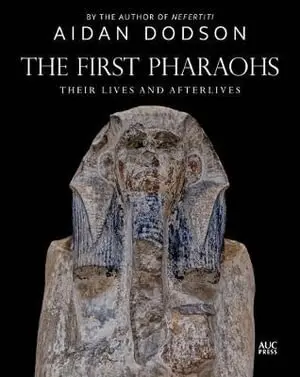
A richly illustrated account of the rulers of the first three dynasties of the ancient Egyptian civilization, written by renowned Egyptologist Aidan DodsonThe five centuries that followed the unification of Egypt around 3100 BC—the first three dynasties—were crucial in the evolution of the Egyptian state. During this time all the key elements of the civilization that would endure for three millennia were put in place, centered on the semidivine king himself. The First Pharaohs: Their Lives and Afterlives looks at what we know about the two-dozen kings (and one queen-regent) who ruled Egypt during this formative era, from the scanty evidence for the events of their reigns, through to their surviving monuments. It also considers how they were remembered under their successors, when some of the earliest kings’ names were attributed to allegedly ancient ideas and events, and the ways in which some of their monuments became tourist attractions or were even wholly repurposed.Aidan Dodson recounts how two centuries of modern scholarship have allowed these rulers to emerge from an oblivion so total that some archaeologists had come to doubt their very existence outside the works of ancient chroniclers. Then, within a decade at the end of the nineteenth century, archaeological discoveries revealed a whole series of tombs and other monuments that not only confirmed these rulers’ existence, but also showcased the skills of Egyptian craftsmen at the dawn of history.
441 kr
Tillfälligt slut
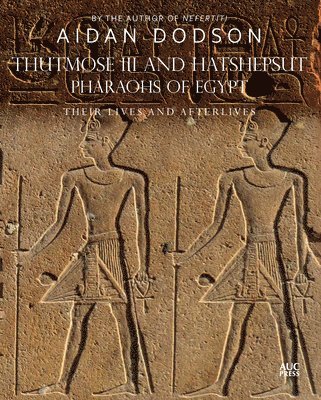
"A veritable roadmap, not only to the complex issues surrounding their reigns, but also to the tale of their modern rediscovery. "—Stephen P. Harvey, Ahmose and Tetisheri Project, AbydosAn innovative account of the lives and times of the ‘warrior king’ Thutmose III, and the female pharaoh Hatshepsut, by renowned Egyptologist Aidan DodsonThutmose III and Hatshepsut are among the best-known figures in Egyptian history. Thutmose has been called the “Napoleon of ancient Egypt,” during whose reign Egypt’s armies penetrated deep into northern Syria and consolidated Egyptian dominion over much of Sudan. Hatshepsut, one of the handful of female pharaohs, also took to the battlefield, but is best known today for a great trading expedition, down the Red Sea coast to the mysterious land of Punt.At first, Hatshepsut served simply as regent for her young nephew-stepson Thutmose, but subsequently the two shared the throne of Egypt as co-pharaohs for over a decade. Later, as sole king, Thutmose devoted much of the rest of his life to military matters and large-scale building works, continuing the work of Hatshepsut that created much of the core of the great temple of Karnak. During the very last years of his life, Thutmose launched an attack on the memory of Hatshepsut, with most of her images destroyed. Yet, some four centuries later, Thutmose III and Hatshepsut were still remembered together as great figures of the past, whose conception of pharaonic kingship served as the model for later rulers, into the eighth century BC.This book, illustrated in full color, traces what we know about the lives and times of Thutmose and Hatshepsut, and the monuments they built to guarantee their afterlives. It then explores their posthumous reputations in ancient times, and ends with the story of how the two pharaohs emerged from the mists of time during the nineteenth century AD, to resume their places in history.
441 kr
Skickas inom 5-8 vardagar
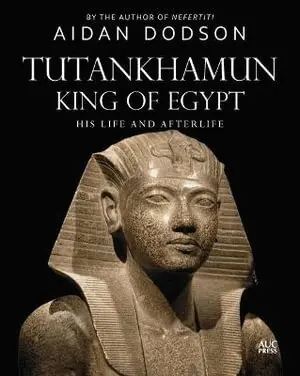
An innovative account of the life of Tutankhamun, the rediscovery of his existence, and the enduring impact of the finding of his tomb, by leading Egyptologist Aidan DodsonThe spectacular discovery of Tutankhamun’s tomb in 1922 has given him an afterlife that has all but eclipsed the young king’s real career. This authoritative yet accessible book tells the story of Tutankhamun, from his own lifetime in the fourteenth century BC, down to modern times. It explores the various theories as to his parentage, his role in the ‘counter-reformation’ that followed the religious revolution of Akhenaten, and his premature death. It also looks at the monuments built during the king’s reign, his key officials, and the arrangements made for his funeral.Moving forward in time, Tutankhamun, King of Egypt considers the way in which Tutankhamun was written out of official history. The story is then picked up again in the early nineteenth century AD when, with the first decipherment of hieroglyphs, Tutankhamun’s name could once again be read, and the problem of his place in history considered by Egyptologists. Aidan Dodson traces possible solutions through the decades as more and more data came to light, culminating in the discovery of the king’s tomb. Yet, dazzling as that discovery was, many matters regarding Tutankhamun remain obscure today, even with the aid of genetic data. Dodson also looks at how the discovery of Tutankhamun’s tomb brought about the first of many outbreaks of "Tut-mania," and explores some of its manifestations.Richly illustrated in full color throughout, this fascinating book by a leading Egyptologist will be essential reading for anyone interested in the life and enduring legacy of ancient Egypt’s most famous king.
452 kr
Skickas inom 3-6 vardagar
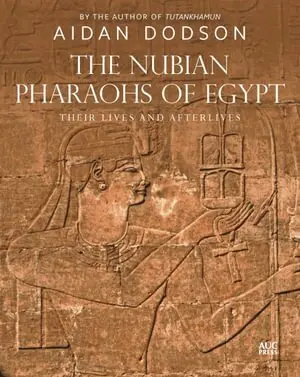
An innovative account of the careers of the Nubians who occupied the Egyptian throne, written by a leading Egyptologist and author of Tutankhamun, King of EgyptThe region of Nubia—now spanning the modern border between Egypt and Sudan—was long a subject of Egyptian imperial domination by its ancient pharaohs. However, in the eighth century BC matters were suddenly reversed, when the kings of Kush, the ancient name for Nubia, became the overlords of Egypt for nearly a century, before being forced to withdraw in the face of Assyrian invasions. Yet the Kushite kingdom would endure back in its heartlands for another millennium, the heritage of its Egyptian sojourn still visible in its fields of pyramid-tombs.This authoritative yet accessible book tells the story of these Nubian pharaohs of Egypt, from the origins of their kingdom of Kush, through their time as rulers of Egypt, to their heritage in the heart of Sudan—and their rediscovery in modern times. The latter uncovers some very unsavory examples of the racist attitudes of some earlier scholars. These engendered enduringly negative attitudes to aspects of careers of the Nubian pharaohs that find little support in the actual surviving evidence. The latter includes a fascinating network of texts from not only Egypt and Sudan, but also Assyria and the Bible, reflecting the interactions and conflicts of the period. There are also the standing monuments of Nubian pharaohs, ranging from temples they built throughout their dominions, to their tombs: pyramids, constructed in their ancestral heartland, in which Nubian and Egyptian funerary customs were intriguingly entangled.Richly illustrated in full color throughout, this fascinating book by a leading Egyptologist will be essential reading for anyone interested in the lives and times of Egypt’s Nubian pharaohs.
408 kr
Skickas
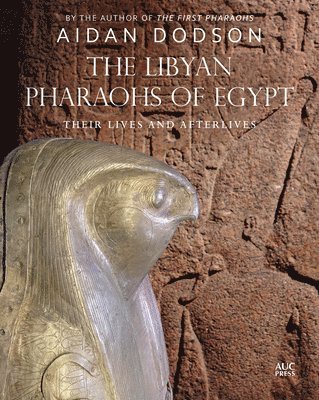
A comprehensive account of the Libyan pharaohs of Egypt, who ruled from the tenth through the seventh centuries BC, accessibly written by renowned Egyptologist Aidan DodsonDuring the tenth through the seventh centuries BC, Egypt was ruled by a series of pharaohs of Libyan ancestry, who ranged from Shoshenq I, conqueror of Jerusalem, to individuals so obscure that some may actually be spelling errors. The Libyans had hitherto been enemies of the Egyptians, with conflicts going back into the third millennium BC. Yet during the eleventh century we find Libyan names among members of Egyptian elite families, and early in the next century a pharaoh of Libyan descent ascended the Egyptian throne. There is no evidence of any violent take-over, so it appears likely that ongoing immigration and intermarriage with the Egyptian elites had brought a Libyan line to this point.Although the earlier Libyan pharaohs seem to have maintained the tradition of a unitary Egyptian state, as time went by, Libyan ideas of decentralized control became more prevalent. As a result, we find individuals holding both Libyan and Egyptian titles controlling distinct territories around Egypt, some of whom assumed the names and titles of a pharaoh. Conflict sometimes accompanied this process, with a long civil war fought for the control of southern Egypt and the great religious capital of Thebes. Some degree of central control was imposed with the advent of a further set of rulers from Nubia during the eight century, but a single Egyptian state would not be restored until the middle of the seventh century.The Libyan Pharaohs of Egypt reconstructs the story of this era, covering not only its complex political history, but also its monuments – both for the living and the dead—and its aftermath, including the rediscovery of its kings and monuments in modern times.
Amenhotep-son-of-Hapu, High Official, Architect, Demigod
His Life and Afterlife
Inbunden, Engelska, 2027
452 kr
Kommande
A compelling account of a unique New Kingdom figure, from his early life to the pinnacle of his power under Amenhotep III to his manifestation as a cult figureAmenhotep-son-of-Hapu was one of the most remarkable non-royal figures in Egyptian history. In life, he was an official of Amenhotep III, of exceptional prominence, but apparently modest origins. Holding a vast array of titles, he was responsible for the management of the king’s principal works, and was honored with numerous statues and a unique mortuary temple in royal style. Then, a millennium after his death, we find him elevated to divine status, in conjunction with an even more ancient royal builder, Imhotep of the Third Dynasty. As such, he appears in temples around Thebes, even having a a colossal statue erected for his cult in front of the great temple at Karnak. This is the first full-length book in English dedicated to him. It begins with an overview of the fourteenth century BC reign of Amenhotep III, during which the known events of Amenhotep-son-of-Hapu’s life took place. It then investigates what we know of Amenhotep-son-of-Hapu’s background, and reviews the material surviving from his lifetime to reconstruct his activities. Also described are the funerary arrangements of Amenhotep-son-of-Hapu, in the context of contemporary practice, underlining how these were far more elaborate than those of any other official, and approaching royal standards. The authors then jump forward to the second century BC to explore how the cult of Amenhotep-son-of-Hapu was manifested, and the various monuments that were decorated in his honor. The final chapter describes the rediscovery of Amenhotep-son-of-Hapu and his monuments by modern scholarship.