LMX Leadership: The Series – serie
Visar alla böcker i serien LMX Leadership: The Series. Handla med fri frakt och snabb leverans.
18 produkter
18 produkter
Häftad, Engelska, 2000
639 kr
Skickas inom 5-8 vardagar
This installment in the book series "LMX Leadership", edited by George B. Graen, focuses on New Frontiers of Leadership.
Inbunden, Engelska, 2000
1 130 kr
Skickas inom 5-8 vardagar
This installment in the book series "LMX Leadership", edited by George B. Graen, focuses on New Frontiers of Leadership.
Häftad, Engelska, 2005
620 kr
Skickas inom 5-8 vardagar
This third volume of LMX Leadership: The Series addresses the question of how leaders prepare their teams for required loosely directed, highly coordinated, and above all, flexible operations. It is our hope that this volume will stimulate scholarly sweat, blood, and tears needed to make continued progress toward our goal of understanding how the powerful tools of relational leadership can be employed properly to create the flexible organizational structures required to compete successfully in the environmental turbulence of the 21st century. As we stated before, the rapidly changing information age is all around us and we are struggling to cope with our out-dated, rigid bureaucratic structures. The “China Price” has redefined the standards of performance world wide and they cannot be met with obsolete organizing designs.
Inbunden, Engelska, 2005
1 097 kr
Skickas inom 5-8 vardagar
This third volume of LMX Leadership: The Series addresses the question of how leaders prepare their teams for required loosely directed, highly coordinated, and above all, flexible operations. It is our hope that this volume will stimulate scholarly sweat, blood, and tears needed to make continued progress toward our goal of understanding how the powerful tools of relational leadership can be employed properly to create the flexible organizational structures required to compete successfully in the environmental turbulence of the 21st century. As we stated before, the rapidly changing information age is all around us and we are struggling to cope with our out-dated, rigid bureaucratic structures. The “China Price” has redefined the standards of performance world wide and they cannot be met with obsolete organizing designs.
Häftad, Engelska, 2006
639 kr
Skickas inom 5-8 vardagar
In this book, we elaborate on the dynamic process of leadership sharing in creative project networks by pointing out that the boundaries and relationships of the networks change over time. As the project requirements evolve, new leaders emerge, make their contribution, and move into support positions. This leadership sharing dynamic is a necessary condition for mature LMX and member-member exchange (MMX). This insight about the sharing of leadership within networks directs us to the process of microbehavior being transformed to meso-options and being converted to macrostrategies. This sequence of micro to macro directs us to a marriage of the formal with the informal organization. At this stage we are post Simon, March, and Weick. This book is about putting authentic people back into the social creations we call productive organizations—warts and all. The design of these organizations is as old as human civilization. It helped construct ancient Greece, Egypt, and China. It was improved in the West by the Romans and in the East by the Chinese. During more recent times it was improved by the British Empire whose command and control models gradually gave way to the knowledge models of today. This book is about how we can discover the alternative processes by which fallible humans use sense making to continuously improve organizations at the macrostrategy level.
Inbunden, Engelska, 2006
1 130 kr
Skickas inom 5-8 vardagar
In this book, we elaborate on the dynamic process of leadership sharing in creative project networks by pointing out that the boundaries and relationships of the networks change over time. As the project requirements evolve, new leaders emerge, make their contribution, and move into support positions. This leadership sharing dynamic is a necessary condition for mature LMX and member-member exchange (MMX). This insight about the sharing of leadership within networks directs us to the process of microbehavior being transformed to meso-options and being converted to macrostrategies. This sequence of micro to macro directs us to a marriage of the formal with the informal organization. At this stage we are post Simon, March, and Weick. This book is about putting authentic people back into the social creations we call productive organizations—warts and all. The design of these organizations is as old as human civilization. It helped construct ancient Greece, Egypt, and China. It was improved in the West by the Romans and in the East by the Chinese. During more recent times it was improved by the British Empire whose command and control models gradually gave way to the knowledge models of today. This book is about how we can discover the alternative processes by which fallible humans use sense making to continuously improve organizations at the macrostrategy level.
Häftad, Engelska, 2007
569 kr
Skickas inom 5-8 vardagar
This book employs a network-centric approach to the new field of multinational leadership and network sharing. Networks go beyond teams but may include teams of various types from homogeneous project teams to multinational strategy teams and every type of team between. Conventional wisdom was that nothing larger than a relatively small team could be led effectively because the number of relationships between people is about one half of the square of the size of the team. For a team in which every member depends on every other member, the number of interdependent relationships becomes overwhelming with relatively small team sizes. Fortunately, recent technical advances in network analysis and multicultural cooperation have been developed to rescue us from mind boggling bombardments of everyone trying to communicate over all others at once. Merely thinking about such a Kafkaesque situation hurts our heads. Armed with these two breakthroughs fairly large networks, both national and multinational, can be led effectively with appropriate selection and training. This book furthers our attempts to make functional networks perform their promise of becoming “superteams.”
Inbunden, Engelska, 2007
1 060 kr
Skickas inom 5-8 vardagar
This book employs a network-centric approach to the new field of multinational leadership and network sharing. Networks go beyond teams but may include teams of various types from homogeneous project teams to multinational strategy teams and every type of team between. Conventional wisdom was that nothing larger than a relatively small team could be led effectively because the number of relationships between people is about one half of the square of the size of the team. For a team in which every member depends on every other member, the number of interdependent relationships becomes overwhelming with relatively small team sizes. Fortunately, recent technical advances in network analysis and multicultural cooperation have been developed to rescue us from mind boggling bombardments of everyone trying to communicate over all others at once. Merely thinking about such a Kafkaesque situation hurts our heads. Armed with these two breakthroughs fairly large networks, both national and multinational, can be led effectively with appropriate selection and training. This book furthers our attempts to make functional networks perform their promise of becoming “superteams.”
Häftad, Engelska, 2008
639 kr
Skickas inom 5-8 vardagar
This book is about preparing our thinking, feeling, and acting for the rapidly expanding “knowledge era.” We discuss the following queries in the chapters. We begin with a discussion of what an appropriate knowledge-driven corporation (KDC) is. Next, we explore a number of design issues about this transformed charter company and present two examples of new knowledgedriven corporations that are described in strategic and tactical terms. At this point, the questions of management and leadership selections and development for the KDC are discussed in the next two chapters. These are followed by two chapters discussing the “political side” of human KDC in terms of “fit” or “no fit.” Following this discussion of our frail interpersonal habits, project teams’ research shows how an orderly process of team leadership development unfoldsover the project life cycle. Finally, the last chapter discusses where we are concerning emergent response leadership in building real knowledge-driven corporations. This book is dedicated to survival of the best of the best of our corporations in the knowledge era through complex creative destruction.
Inbunden, Engelska, 2008
1 130 kr
Skickas inom 5-8 vardagar
This book is about preparing our thinking, feeling, and acting for the rapidly expanding “knowledge era.” We discuss the following queries in the chapters. We begin with a discussion of what an appropriate knowledge-driven corporation (KDC) is. Next, we explore a number of design issues about this transformed charter company and present two examples of new knowledgedriven corporations that are described in strategic and tactical terms. At this point, the questions of management and leadership selections and development for the KDC are discussed in the next two chapters. These are followed by two chapters discussing the “political side” of human KDC in terms of “fit” or “no fit.” Following this discussion of our frail interpersonal habits, project teams’ research shows how an orderly process of team leadership development unfoldsover the project life cycle. Finally, the last chapter discusses where we are concerning emergent response leadership in building real knowledge-driven corporations. This book is dedicated to survival of the best of the best of our corporations in the knowledge era through complex creative destruction.
Häftad, Engelska, 2009
569 kr
Skickas inom 5-8 vardagar
When the tried and true formula for an organization’s performance (its game plan) begins to fail, it must change its game or become obsolete. Publicly recognizing that the old formula is becoming less useful and a new formula must be developed and implemented is difficult for most stakeholders, but for survival the stages of grief must be endured and the conclusion accepted. Moreover, the romance of the “grand old formula” must be overcome by the realization that a new and more attractive formula must be invented or found to replace it. The fate of thousands of organizations that did not change their games when WalMart came to town bears witness to the Iron Law of Capitalistic Markets: “Change your game when necessary to remain competitive”. As Mr. Sam Walton told my son, Mike, stay the course as long as you can, but be willing to change it when it’s not working. Clearly, Mr. Sam’s protégés got the message.This book describes game-changing designs using the latest research-based strategies for inside organizational participants from CEOs, Boards of Directors, top, middle and lower managers and participants, and those people outside with a stake in its continued performance.We have had the unique opportunity to understand from the “inside-out” both Mr. Sam Walton’s miracle at WalMart and the great turnaround at Cincinnati’s Procter and Gamble over the last 15 plus years. We conclude from these studies that Mr. Sam has become a modern patron saint of American game-changers. WalMart has been seen by most business reviewers as a clear business case study of a “stay the course” formula of “lowest price” for the customer, but our research shows that Mr. Sam created a “game-changing design culture”. Yes, Mr. Sam began to build his juggernaut using a “lowest price” strategy that changed the game by “shock and awe” strategies in small markets. Moreover, Mr. Sam next changed the game by employing advanced information technology to reduce supply chain costs and go international. Later, Mr. Sam changed the game again by partnering with his reluctant vendors and requiring that most large suppliers maintain a permanent WalMart team near WalMart headquarters in Bentonville, Arkansas. Later, Mr. Scott, the CEO successor to Mr. Sam, changed the game again by “going green”. In addition, the effective integrative partnering with originally adversarial supplier teams by Mike Graen’s coaches set of new standard for inter-organizational cooperation. Mr. Sam’s legacy continues to inspire new game-changing designs across many different kinds of organizations in America and beyond. Once CEOs understand that their competition is as bright and hard working as they and they need to leap-frog to new games, Mr. Sam’s examples of carefully designed and implemented game-changing research-based innovations become their bible. As our domestic and international markets have become increasingly discontinuous and what worked yesterday doesn’t work today, our CEOs should look to Mr. Sam’s approach that changed the game before his competitors many times.
Inbunden, Engelska, 2009
1 060 kr
Skickas inom 5-8 vardagar
When the tried and true formula for an organization’s performance (its game plan) begins to fail, it must change its game or become obsolete. Publicly recognizing that the old formula is becoming less useful and a new formula must be developed and implemented is difficult for most stakeholders, but for survival the stages of grief must be endured and the conclusion accepted. Moreover, the romance of the “grand old formula” must be overcome by the realization that a new and more attractive formula must be invented or found to replace it. The fate of thousands of organizations that did not change their games when WalMart came to town bears witness to the Iron Law of Capitalistic Markets: “Change your game when necessary to remain competitive”. As Mr. Sam Walton told my son, Mike, stay the course as long as you can, but be willing to change it when it’s not working. Clearly, Mr. Sam’s protégés got the message.This book describes game-changing designs using the latest research-based strategies for inside organizational participants from CEOs, Boards of Directors, top, middle and lower managers and participants, and those people outside with a stake in its continued performance.We have had the unique opportunity to understand from the “inside-out” both Mr. Sam Walton’s miracle at WalMart and the great turnaround at Cincinnati’s Procter and Gamble over the last 15 plus years. We conclude from these studies that Mr. Sam has become a modern patron saint of American game-changers. WalMart has been seen by most business reviewers as a clear business case study of a “stay the course” formula of “lowest price” for the customer, but our research shows that Mr. Sam created a “game-changing design culture”. Yes, Mr. Sam began to build his juggernaut using a “lowest price” strategy that changed the game by “shock and awe” strategies in small markets. Moreover, Mr. Sam next changed the game by employing advanced information technology to reduce supply chain costs and go international. Later, Mr. Sam changed the game again by partnering with his reluctant vendors and requiring that most large suppliers maintain a permanent WalMart team near WalMart headquarters in Bentonville, Arkansas. Later, Mr. Scott, the CEO successor to Mr. Sam, changed the game again by “going green”. In addition, the effective integrative partnering with originally adversarial supplier teams by Mike Graen’s coaches set of new standard for inter-organizational cooperation. Mr. Sam’s legacy continues to inspire new game-changing designs across many different kinds of organizations in America and beyond. Once CEOs understand that their competition is as bright and hard working as they and they need to leap-frog to new games, Mr. Sam’s examples of carefully designed and implemented game-changing research-based innovations become their bible. As our domestic and international markets have become increasingly discontinuous and what worked yesterday doesn’t work today, our CEOs should look to Mr. Sam’s approach that changed the game before his competitors many times.
Häftad, Engelska, 2012
569 kr
Skickas inom 5-8 vardagar
The proper balance of managerial “administrative-control” and managerial “team-leadership” depends upon the work context. After organizational procedures are designed by work-process engineers, managers and their directreports in the business units, are charged to “save our ship” (SOS) by their employers. Their ships, their business units, often were built for calm seas. Unfortunately, turbulent seas may happen unexpectedly and stress their ships and crews. Under extreme conditions, the sea may put their ships squarely in “harm’s way”. If they are not well prepared, their chances of survival are few and none. This book is about managing and being managed under conditions of “extreme contexts” where only the “special teams” survive and prosper.
Inbunden, Engelska, 2012
1 060 kr
Skickas inom 5-8 vardagar
The proper balance of managerial “administrative-control” and managerial “team-leadership” depends upon the work context. After organizational procedures are designed by work-process engineers, managers and their directreports in the business units, are charged to “save our ship” (SOS) by their employers. Their ships, their business units, often were built for calm seas. Unfortunately, turbulent seas may happen unexpectedly and stress their ships and crews. Under extreme conditions, the sea may put their ships squarely in “harm’s way”. If they are not well prepared, their chances of survival are few and none. This book is about managing and being managed under conditions of “extreme contexts” where only the “special teams” survive and prosper.
Häftad, Engelska, 2014
338 kr
Skickas inom 5-8 vardagar
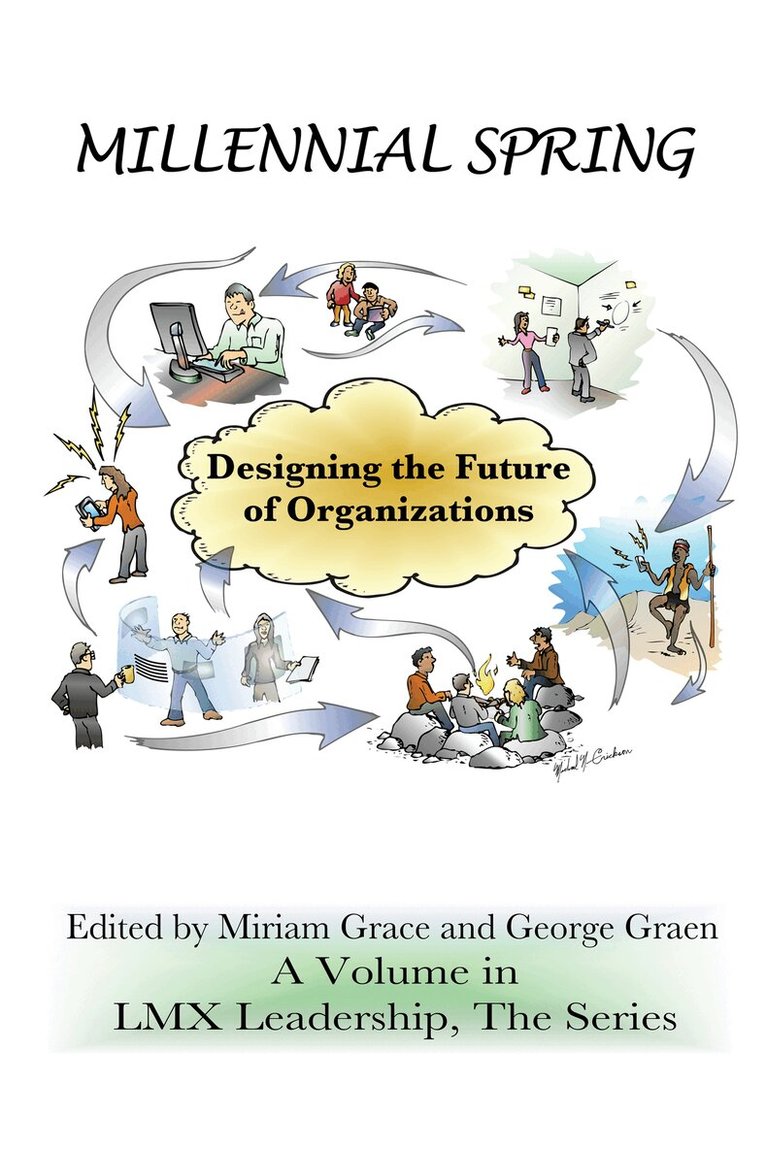
Our corporate dominated world is resisting the best efforts of the “under 30s” to shape it into the information age. This eBook contains information about what the careers of the “under 30s” corporation will become. This was done examining recent trends in careers of “growing-tip” companies like Apple, Boeing, Microsoft and US and international design schools.The world of careers is changing fast, and the millennials – the generation of people who became adults around 2000, or in the decade or so after – have been right in the middle of it. From Independence Square in Kyiv to the streets of Caracas, from Taksim Square in Istanbul to Zuccoti Park in New York, and from Silicon Valley to Wall Street, it’s the 30-and-under crowd courageously leading the quest for different ways. Less invested in past approaches, tech-savvy to a fault, and painfully aware of the challenges left to them by earlier generations, they’re not willing to “settle” – to make the same compromises (and mistakes) they think their parents made. And although they sometimes get rapped for being self-centered, all the evidence I see – and I’ve taught thousands of them on two continents, and even have one in my own family -- suggests that the millennials represent real hope for the future. Please consider this a call to all millennials – here, in the pages of this book, are some of the means. Get out there and create the under-30s revolution. Solve the problems your parents couldn’t. Do it together, with a conscientious eye to what works for all involved. Get out there and save the world.
Inbunden, Engelska, 2014
669 kr
Skickas inom 5-8 vardagar
Our corporate dominated world is resisting the best efforts of the “under 30s” to shape it into the information age. This eBook contains information about what the careers of the “under 30s” corporation will become. This was done examining recent trends in careers of “growing-tip” companies like Apple, Boeing, Microsoft and US and international design schools.The world of careers is changing fast, and the millennials – the generation of people who became adults around 2000, or in the decade or so after – have been right in the middle of it. From Independence Square in Kyiv to the streets of Caracas, from Taksim Square in Istanbul to Zuccoti Park in New York, and from Silicon Valley to Wall Street, it’s the 30-and-under crowd courageously leading the quest for different ways. Less invested in past approaches, tech-savvy to a fault, and painfully aware of the challenges left to them by earlier generations, they’re not willing to “settle” – to make the same compromises (and mistakes) they think their parents made. And although they sometimes get rapped for being self-centered, all the evidence I see – and I’ve taught thousands of them on two continents, and even have one in my own family -- suggests that the millennials represent real hope for the future. Please consider this a call to all millennials – here, in the pages of this book, are some of the means. Get out there and create the under-30s revolution. Solve the problems your parents couldn’t. Do it together, with a conscientious eye to what works for all involved. Get out there and save the world.
Häftad, Engelska, 2000
840 kr
Skickas inom 5-8 vardagar
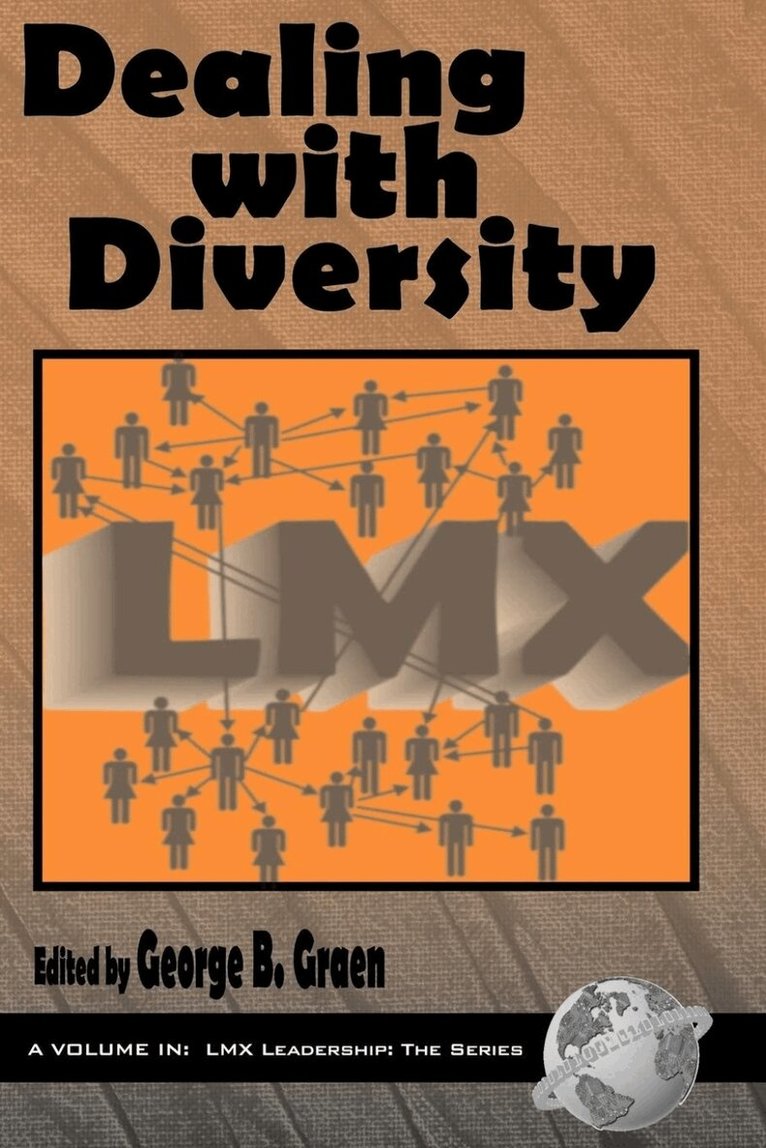
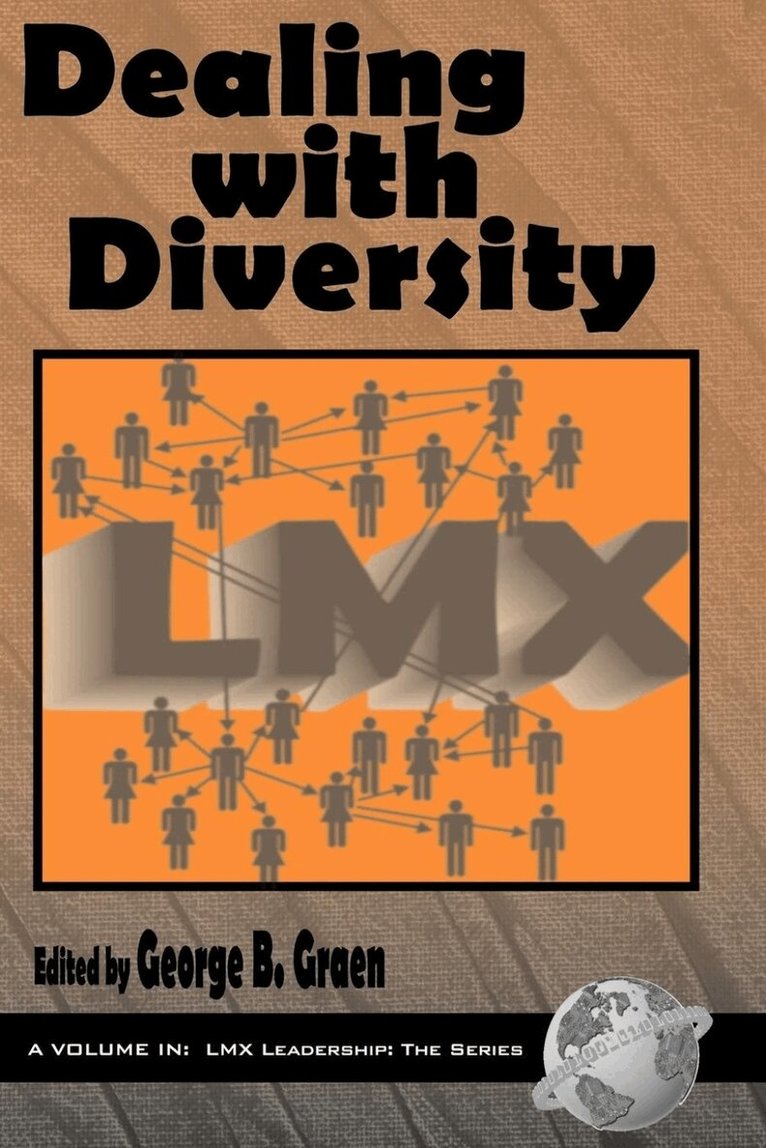
Diversity in the workplace has made significant progress in United States companies. Unfortunately, much of the apparent progress has been at the surface level of diversity (Hiller & Day, 2004), where readily visible characteristics identify people of varying genders, ages, ethnicity, and religions. What are needed are prescriptions, based on solid theory and research, that will allow the deep-level diversity to transform well intentioned affirmative action programs from their old reliance on surface-level diversity to a new reliance on deep-level diversity. It is our hope that this volume will stimulate the scholarly activity needed to make progress toward the above stated goal of making deep-level diversity the benchmark of human progress in the workplace.
Inbunden, Engelska, 2000
1 482 kr
Skickas inom 5-8 vardagar
Diversity in the workplace has made significant progress in United States companies. Unfortunately, much of the apparent progress has been at the surface level of diversity (Hiller & Day, 2004), where readily visible characteristics identify people of varying genders, ages, ethnicity, and religions. What are needed are prescriptions, based on solid theory and research, that will allow the deep-level diversity to transform well intentioned affirmative action programs from their old reliance on surface-level diversity to a new reliance on deep-level diversity. It is our hope that this volume will stimulate the scholarly activity needed to make progress toward the above stated goal of making deep-level diversity the benchmark of human progress in the workplace.