Media / Art / Politics - Böcker
Visar alla böcker i serien Media / Art / Politics. Handla med fri frakt och snabb leverans.
4 produkter
4 produkter
583 kr
Skickas inom 7-10 vardagar
Big Books in Times of Big Data examines recent trends of size and scale in the novel in terms of the shift from the bound book to the newer materialities of the digital. Using a wide-ranging international archive of hefty tomes by authors such as Mark Z. Danielewski, Roberto Bolaño, Elena Ferrante, and Karl Ove Knausgård, George R.R. Martin, Jonathan Franzen, and William T. Vollmann, Van de Ven reflects on the place of big book-bound literature in a media genealogy which includes film and television but also online databases, social media, selfies, and Global Information Systems. This study makes a case for the cultural agency of the big book—as a material object and a discursive phenomenon, entangled in complex ways with questions of canonicity, mediality, gender, and power. Van de Ven takes us into a contested bookish terrain beyond the 1,000-page mark, where issues of scale and readerly comprehension clash with authorial aggrandizement and the pleasures of 'binging' and serial consumption.
624 kr
Skickas inom 7-10 vardagar
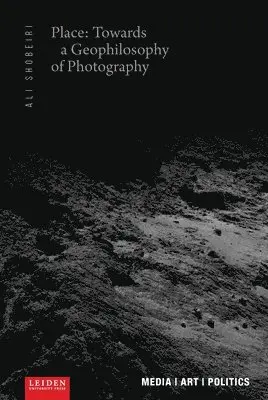
By examining photography through geography and philosophy, this book makes evident that place is not the content of a definite representation. To do this, it breaks down the participatory elements of photography into six tropes: the photographer, the camera, the photograph, the image, the spectator, and the genre. Afterwards, through a rigorous theoretical analysis of each of these themes vis-à-vis the notion of place, it shows how they manifest inactive, contingent, unlocalizable, liminal, evental, agential and exigent features. In doing so, it establishes a ‘geophilosophy of photography’, which regards place as that which resists being restricted to where it is (the photographer), to what it is (the camera), to where it goes (the photograph), to what it encloses (the photographic image), to how and when it occurs (the spectator), and to what it represents (the genre).
Del 3 - Media / Art / Politics
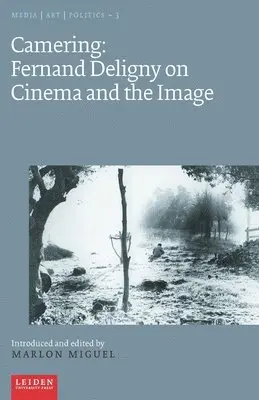
Camering: Fernand Deligny on Cinema and the Image
Häftad, Engelska, 2022
532 kr
Skickas inom 7-10 vardagar
Fernand Deligny (1913-1996), ‘poet and ethologist’, is mostly known for his work with autistic children and for his influence on the revolutions in French post-war psychiatry. Though neither director nor a theorist of the image, cinema is constantly called into his social, pedagogical, and clinical experimentations. More interested in the processes of making, he distinguishes ‘camering’ from filming, thus emphasizing not the finished film but a ‘film to come’. This volume provides Deligny’s essential corpus on cinema and the image. It shows both the role of cameras in many of his experimental ‘attempts’ with delinquents and autistic children and his highly speculative reflections on image.
1 445 kr
Skickas inom 7-10 vardagar
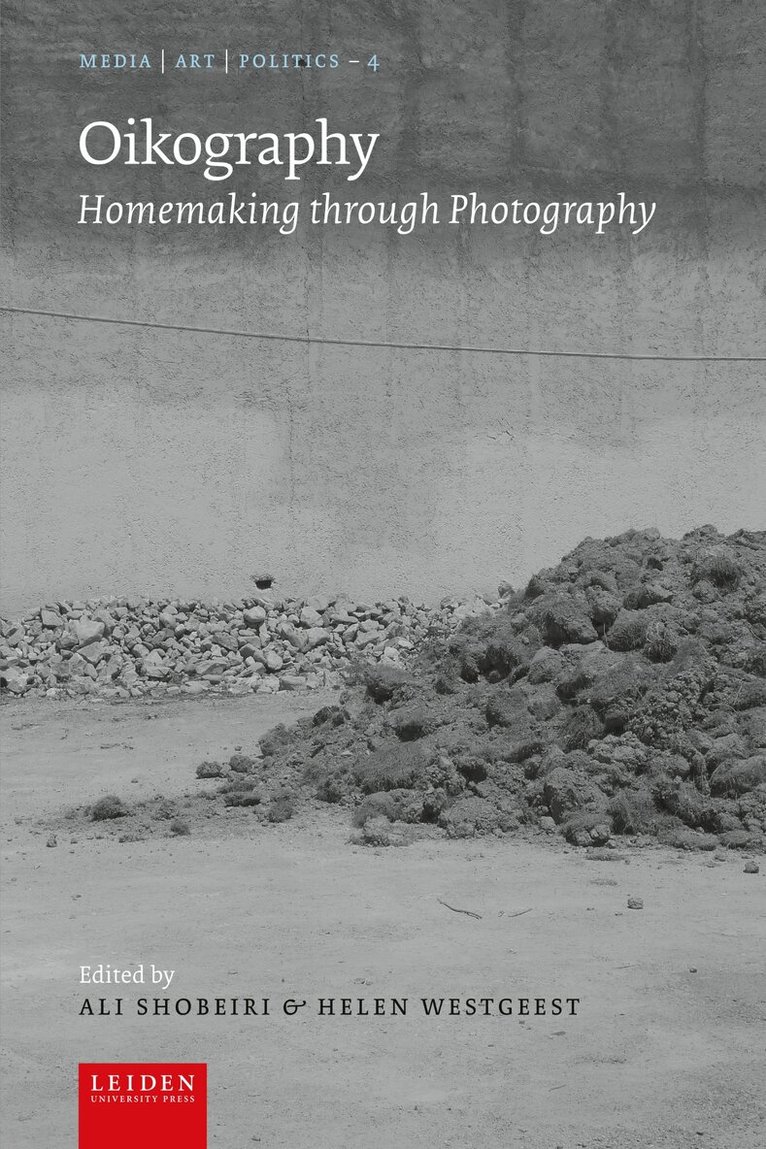
Whether one is in front of the camera or behind it, inside their home or outside their house, photographs have proven indispensable in probing into the idea of home. In a time when displacement, migration, and homelessness have become commonplace due to geopolitical conflicts and oppressive ideologies, the role of photography in exploring the process of homemaking has become an irrefutable fact of sociopolitical debates. With that in mind, how can a representational medium deal with home as something that is not necessarily limited to the photographic frame? In other words, can photography embody the emotional and interpersonal aspects of home as well as participate in the social, political, and cultural debates on homemaking?Echoing the word photography, which is a compound of phōtós (light) and graphé (writing/drawing), this book defines "oikography" (oikos graphé) as "homemaking through photography". Following the same logic, it considers "oikographs" as photographs whose principal function is twofold: reflecting on the idea of home and dwelling on the process of homemaking. With the concept of home at its methodological and theoretical core, Oikography aims to show how photography envisages, embodies and apperceives home as a spatial idea, regardless of whether that space is idealized or ideologized, ontologized or theorized, materialized or dematerialized, territorialized or deterritorialized, or internalized within us or externalized around us. To this end, Oikography asks: How can photography represent the lived, perceived, and conceived experiences of homemaking?