Mercer University Lamar Memorial Lectures Series – serie
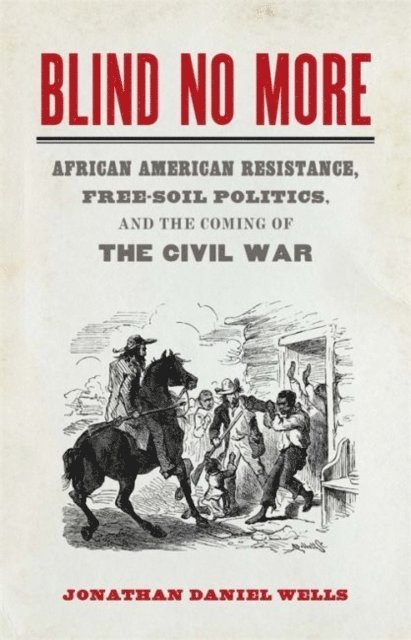
Blind No More
African American Resistance, Free-Soil Politics, and the Coming of the Civil War
427 kr
Läs direkt efter köp
With a fresh interpretation of African American resistance to kidnapping and pre–Civil War political culture, Blind No More sheds new light on the coming of the Civil War by focusing on a neglected truism: the antebellum free states experienced a dramatic ideological shift that questioned the value of the Union. Jonathan Daniel Wells explores the cause of disunion as the persistent determination on the part of enslaved people that they would flee bondage no matter the risks. By protesting against kidnappings and fugitive slave renditions, they brought slavery to the doorstep of the free states, forcing those states to recognize the meaning of freedom and the meaning of states’ rights in the face of a federal government equally determined to keep standing its divided house.Through these actions, African Americans helped northerners and westerners question whether the constitutional compact was still worth upholding, a reevaluation of the republican experiment that would ultimately lead not just to Civil War but to the Thirteenth Amendment, ending slavery. Wells contends that the real story of American freedom lay not with the Confederate rebels nor even with the Union army but instead rests with the tens of thousands of self-emancipated men and women who demonstrated to the Founders, and to succeeding generations of Americans, the value of liberty.
362 kr
Läs direkt efter köp
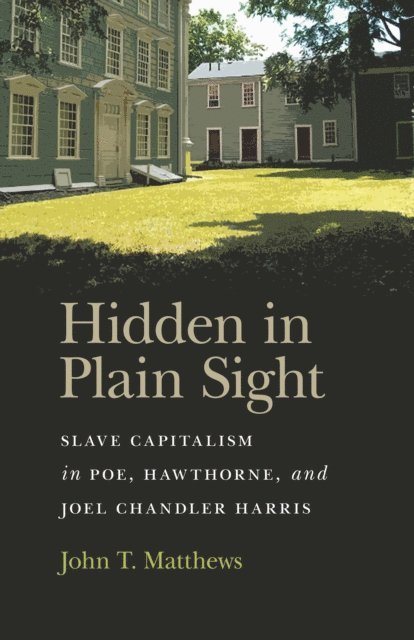
For as long as the United States owed its prosperity to a New World plantation complex, from colonial settlement until well into the twentieth century, the toxic practices associated with its permutations stimulated imaginary solutions to the contradiction with the nation’s enlightenment ideals and republican ideology. Ideals of liberty, democracy, and individualism could not be separated from a history of forcible coercion, oligarchic power, and state-protected economic opportunism. While recent historical scholarship about the relation of capitalism to slavery explores the depths at which U.S. ascension was indebted to global plantation slave economies, John T. Matthews probes how exemplary works of literature represented the determination to deny the open secret of a national atrocity. Difficult truths were hidden in plain sight, allowing beholders at once to recognize and disavow knowledge they would not act on.What were the habits of mind that enabled free Americans to acknowledge what was intolerable yet act as if they did not? In what ways did non-slave-owning Americans imagine a relation to slavery that both admitted its iniquity and accepted its benefits? How did the reconfiguration of the plantation system after the Civil War elicit new literary forms for dealing with its perpetuation of racial injustice, expropriation of labor, and exploitation for profit of the land? Hidden in Plain Sight examines signal nineteenth-century works by Edgar Allan Poe, Nathaniel Hawthorne, Herman Melville, and Joel Chandler Harris to show how writers portrayed a nation founded on the unseen seen of slavery’s capitalism.