Mind/Brain/Behavior Initiative - Böcker
Visar alla böcker i serien Mind/Brain/Behavior Initiative. Handla med fri frakt och snabb leverans.
7 produkter
7 produkter
Del 1 - Mind/Brain/Behavior Initiative
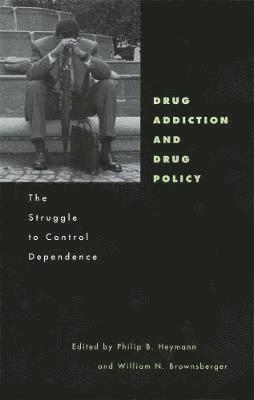
Drug Addiction and Drug Policy
The Struggle to Control Dependence
Inbunden, Engelska, 2001
771 kr
Skickas inom 10-15 vardagar
This book is the culmination of five years of impassioned conversations among distinguished scholars in law, public policy, medicine, and biopsychology, about the most difficult questions in drug policy and the study of addictions. As these intensely argued chapters show, the obvious answers are always alluring but frequently wrong. Do drug addicts have an illness, or is their addiction under their control? Should they be treated as patients, or as criminals? Challenging the conventional wisdom in both the psychiatric community and the enforcement community, the authors show the falsity of these standard dichotomies. They argue that the real question is how coercion and support can be used together to steer addicts toward productive life. Written in clear and forceful language, without ideological blinkers and with close attention to empirical data, this book has something to teach both novice and expert in the fields of drug addiction and drug policy. The authors' resistance to sloganeering from right or left will raise the quality of public discussion of a complex issue, and contribute to the management of one of the most painful and enduring problems of American society.
373 kr
Skickas inom 10-15 vardagar
The scientific research literature on memory is enormous. Yet until now no single book has focused on the complex interrelationships of memory and belief. This book brings together eminent scholars from neuroscience, cognitive psychology, literature, and medicine to discuss such provocative issues as “false memories,” in which people can develop vivid recollections of events that never happened; retrospective biases, in which memories of past experiences are influenced by one’s current beliefs; and implicit memory, or the way in which nonconscious influences of past experience shape current beliefs.Ranging from cognitive, neurological, and pathological perspectives on memory and belief, to relations between conscious and nonconscious mental processes, to memory and belief in autobiographical narratives, this book will be uniquely stimulating to scholars in several academic disciplines.
1 448 kr
Skickas inom 10-15 vardagar
The only way we can convey our thoughts in detail to another person is through verbal language. Does this imply that our thoughts ultimately rely on words? Is there only one way in which thoughts can occur? This ambitious book takes the contrary position, arguing that many possible "languages of thought" play different roles in the life of the mind."Language" is more than communication. It is also a means of representing information in both working and long-term memory. It provides a set of rules for combining and manipulating those representations. A stellar lineup of international cognitive scientists, philosophers, and artists make the book's case that the brain is multilingual. Among topics discussed in the section on verbal languages are the learning of second languages, recovering language after brain damage, and sign language, and in the section on nonverbal languages, mental imagery, representations of motor activity, and the perception and representation of space.
Del 4 - Mind/Brain/Behavior Initiative
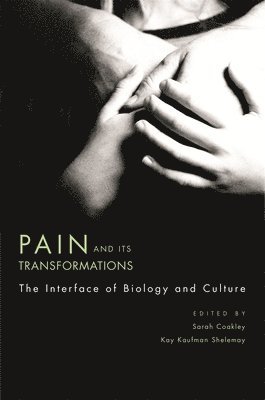
Pain and Its Transformations
The Interface of Biology and Culture
Inbunden, Engelska, 2008
739 kr
Skickas inom 10-15 vardagar
Pain is immediate and searing but remains a deep mystery for sufferers, their physicians, and researchers. As neuroscientific research shows, even the immediate sensation of pain is shaped by psychological state and interpretation. At the same time, many individuals and cultures find meaning, particularly religious meaning, even in chronic and inexplicable pain.This ambitious interdisciplinary book includes not only essays but also discussions among a wide range of specialists. Neuroscientists, psychiatrists, anthropologists, musicologists, and scholars of religion examine the ways that meditation, music, prayer, and ritual can mediate pain, offer a narrative that transcends the sufferer, and give public dignity to private agony. They discuss topics as disparate as the molecular basis of pain, the controversial status of gate control theory, the possible links between the relaxation response and meditative practices in Christianity and Buddhism, and the mediation of pain and intense emotion in music, dance, and ritual. The authors conclude by pondering the place of pain in understanding--or the human failure to understand--good and evil in history.
297 kr
Skickas inom 10-15 vardagar
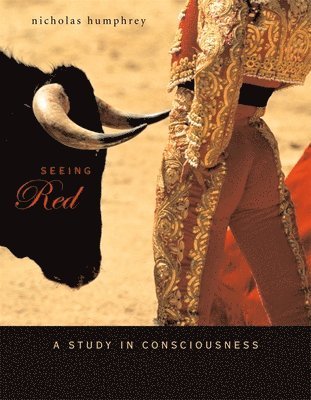
"Consciousness matters. Arguably it matters more than anything. The purpose of this book is to build towards an explanation of just what the matter is."Nicholas Humphrey begins this compelling exploration of the biggest of big questions with a challenge to the reader, and himself. What's involved in "seeing red"? What is it like for us to see someone else seeing something red?Seeing a red screen tells us a fact about something in the world. But it also creates a new fact--a sensation in each of our minds, the feeling of redness. And that's the mystery. Conventional science so far hasn't told us what conscious sensations are made of, or how we get access to them, or why we have them at all. From an evolutionary perspective, what's the point of consciousness?Humphrey offers a daring and novel solution, arguing that sensationsare not things that happen to us, they are things we do--originating in our primordial ancestors' expressions of liking or disgust. Tracing the evolutionary trajectory through to human beings, he shows how this has led to sensations playing the key role in the human sense of Self.The Self, as we now know it from within, seems to have fascinating other-worldly properties. It leads us to believe in mind-body duality and the existence of a soul. And such beliefs--even if mistaken--can be highly adaptive, because they increase the value we place on our own and others' lives."Consciousness matters," Humphrey concludes with striking paradox, "because it is its function to matter. It has been designed to create in human beings a Self whose life is worth pursuing."
Del 7 - Mind/Brain/Behavior Initiative
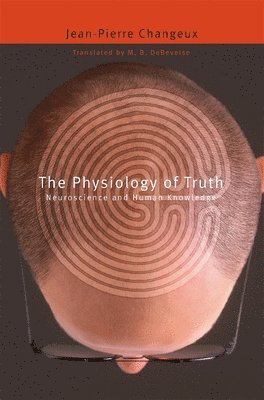
Physiology of Truth
Neuroscience and Human Knowledge
Häftad, Engelska, 2009
289 kr
Skickas inom 10-15 vardagar
In this wide-ranging book, one of the boldest thinkers in modern neuroscience confronts an ancient philosophical problem: can we know the world as it really is?Drawing on provocative new findings about the psychophysiology of perception and judgment in both human and nonhuman primates, and also on the cultural history of science, Jean-Pierre Changeux makes a powerful case for the reality of scientific progress and argues that it forms the basis for a coherent and universal theory of human rights. On this view, belief in objective knowledge is not a mere ideological slogan or a naïve confusion; it is a characteristic feature of human cognition throughout evolution, and the scientific method its most sophisticated embodiment. Seeking to reconcile science and humanism, Changeux holds that the capacity to recognize truths that are independent of subjective personal experience constitutes the foundation of a human civil society.
Del 8 - Mind/Brain/Behavior Initiative
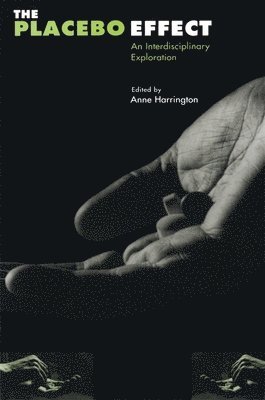
Placebo Effect
An Interdisciplinary Exploration
Häftad, Engelska, 1999
406 kr
Skickas inom 10-15 vardagar
A mere "symbol" of medicine--the sugar pill, saline injection, doctor in a white lab coat--the placebo nonetheless sometimes produces "real" results. Medical science has largely managed its discomfort with this phenomenon by discounting the placebo effect, subtracting it as an impurity in its data through double-blind tests of new treatments and drugs. This book is committed to a different perspective--namely, that the placebo effect is a "real" entity in its own right, one that has much to teach us about how symbols, settings, and human relationships literally get under our skin.Anne Harrington's introduction and a historical overview by Elaine Shapiro and the late Arthur Shapiro, which open the book, review the place of placebos in the history of medicine, investigate the current surge in interest in them, and probe the methodological difficulties of saying scientifically just what placebos can and cannot do. Combining individual essays with a dialogue among writers from fields as far-flung as cultural anthropology and religion, pharmacology and molecular biology, the book aims to expand our ideas about what the placebo effect is and how it should be seen and studied. At the same time, the book uses the challenges and questions raised by placebo phenomena to initiate a broader interdisciplinary discussion about our nature as cultural animals: animals with minds, brains, and bodies that somehow manage to integrate "biology" and "culture," "mechanism" and "meaning," into a seamless whole.