Mining the American West - Böcker
Visar alla böcker i serien Mining the American West. Handla med fri frakt och snabb leverans.
9 produkter
9 produkter
365 kr
Skickas inom 5-8 vardagar
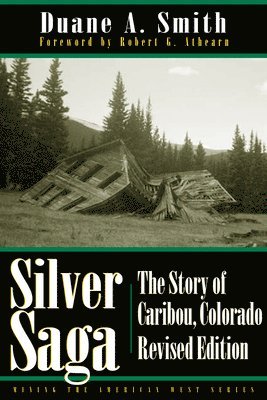
Revised and updated, Duane A. Smith's classic study of this important silver mining town is back in print.
333 kr
Skickas inom 3-6 vardagar
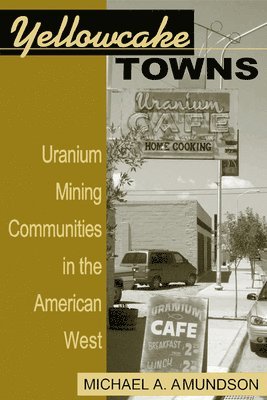
Michael Amundson presents a detailed analysis of the four mining communities at the hub of the twentieth-century uranium booms: Moab, Utah; Grants, New Mexico; Uravan, Colorado; and Jeffrey City, Wyoming. He follows the ups and downs of these "Yellowcake Towns" from uranium's origins as the crucial element in atomic bombs and the 1950s boom to its use in nuclear power plants, the Three Mile Island accident, and the 1980s bust. Yellowcake Towns provides a look at the supply side of the Atomic Age and serves as an important contribution to the growing bibliography of atomic history.
524 kr
Tillfälligt slut
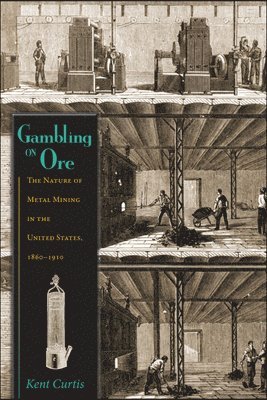
Gambling on Ore examines the development of the western mining industry from the tumultuous and violent Gold Rush to the elevation of large-scale copper mining in the early twentieth century, using Montana as representative of mining developments in the broader US mining west. Employing abundant new historical evidence in key primary and secondary sources, Curtis tells the story of the inescapable relationship of mining to nature in the modern world as the United States moved from a primarily agricultural society to a mining nation in the second half of the nineteenth century.In Montana, legal issues and politics—such as unexpected consequences of federal mining law and the electrification of the United States—further complicated the mining industry’s already complex relationship to geology, while government policy, legal frameworks, dominant understandings of nature, and the exigencies of profit and production drove the industry in momentous and surprising directions. Despite its many uncertainties, mining became an important part of American culture and daily life. Gambling on Ore unpacks the tangled relationships between mining and the natural world that gave material possibility to the age of electricity. Metal mining has had a profound influence on the human ecology and the social relationships of North America through the twentieth century and throughout the world after World War II. Understanding how we forged these relationships is central to understanding the environmental history of the United States after 1850.
579 kr
Tillfälligt slut
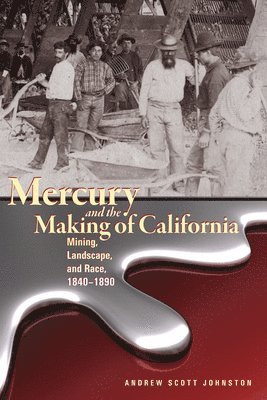
Mercury and the Making of California, Andrew Johnston’s multidisciplinary examination of the history and cultural landscapes of California’s mercury-mining industry, raises mercury to its rightful place alongside gold and silver in the development of the American West.Gold and silver could not be refined without mercury; therefore, its production and use were vital to securing power and wealth in the West. The first industrialized mining in California, mercury mining had its own particular organization, structure, and built environments. These were formed within the Spanish Empire, subsequently transformed by British imperial ambitions, and eventually manipulated by American bankers and investors. In California mercury mining also depended on a workforce differentiated by race and ethnicity. The landscapes of work and camp and the relations among the many groups involved in the industry—Mexicans, Chileans, Spanish, English, Irish, Cornish, American, and Chinese—form a crucial chapter in the complex history of race and ethnicity in the American West. This pioneering study explicates the mutual structuring of the built environments of the mercury-mining industry and the emergence of California’s ethnic communities. Combining rich documentary sources with a close examination of the existing physical landscape, Johnston explores both the detail of everyday work and life in the mines and the larger economic and social structures in which mercury mining was enmeshed, revealing the significance of mercury mining for Western history.
331 kr
Tillfälligt slut
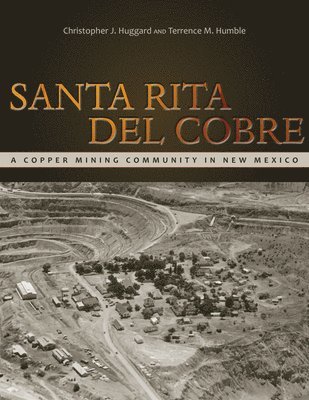
The Spanish, Mexicans, and Americans, successively, mined copper for more than 200 years in Santa Rita, New Mexico. Starting in 1799 after an Apache man led the Spanish to the native copper deposits, miners at the site followed industry developments in the nineteenth century to create a network of underground mines. In the early twentieth century these works became part of the Chino Copper Company's open-pit mining operations-operations that would overtake Santa Rita by 1970. In Santa Rita del Cobre, Huggard and Humble detail these developments with in-depth explanations of mining technology, and describe the effects on and consequences for the workers, the community, and the natural environment. Originally known as El Cobre, the mining-military camp of Santa Rita del Cobre ultimately became the company town of Santa Rita, which after World War II evolved into an independent community. From the town's beginnings to its demise, its mixed-heritage inhabitants from Mexico and United States cultivated rich family, educational, religious, social, and labor traditions. Extensive archival photographs, many taken by officials of the Kennecott Copper Corporation, accompany the text, providing an important visual and historical record of a town swallowed up by the industry that created it.
703 kr
Tillfälligt slut
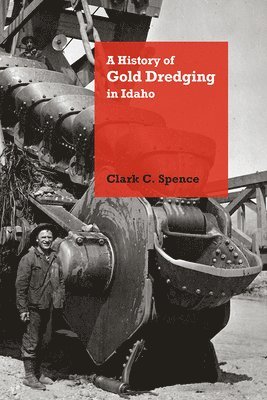
A History of Gold Dredging in Idaho tells the story of a revolution in placer mining—and its subsequent impact on the state of Idaho—from its inception in the early 1880s until its demise in the early 1960s. Idaho was the nation’s fourth-leading producer of dredged gold after 1910 and therefore provides an excellent lens through which to observe the practice and history of gold dredging.Author Clark Spence focuses on the two most important types of dredges in the state—the bucket-line dredge and the dragline dredge—and describes their financing, operation, problems, and effect on the state and environment. These dredges made it possible to work ground previously deemed untouchable because bedrock where gold collected could now be reached. But they were also highly destructive to the environment. As these huge machines floated along, they dumped debris that harmed the streams and destroyed wildlife habitat, eventually prompting state regulations and federal restoration of some of the state’s crippled waterways.Providing a record of Idaho’s dredging history for the first time, this book is a significant contribution to the knowledge and understanding of Western mining, its technology, and its overall development as a major industry of the twentieth century.
398 kr
Tillfälligt slut
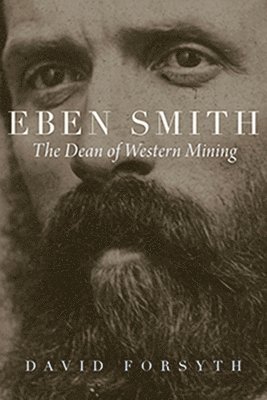
David Forsyth recounts the life of Eben Smith, an integral but little-known figure in Colorado mining history. Smith was one of the many fortune seekers who traveled to California during the gold rush and one of the few who found what he sought. He moved to Colorado in 1860 with business partner Jerome Chaffee and over the next forty-six years was involved in mining in nearly every major camp in the state, from Central City to Cripple Creek, and in the development of mines such as the Bobtail, Little Jonny, and Victor. He was eulogized by the Denver Post and Denver Times as the “dean of mining in Colorado.” The mining teams Smith formed with Chaffee and with industrialist David Moffat were among the most successful and respected in Colorado, and many in the state held Smith in high regard. Yet despite the credit he received during his lifetime for establishing Colorado’s mining industry, Smith has not received much attention from historians, perhaps because he was content to leave public-facing duties to his partners while he concerned himself with managing mine operations. From Smith’s early years and his labor in the mines to his rise to prominence as an investor and developer, Forsyth shows how Smith used the mining and milling knowledge he acquired in California to become a leader in technological innovation in Colorado’s mining industry.
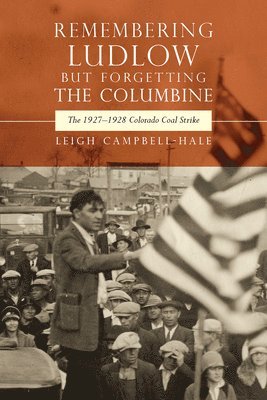
Remembering Ludlow but Forgetting the Columbine
The 1927-1928 Colorado Coal Strike
Inbunden, Engelska, 2023
414 kr
Tillfälligt slut
Mining the American West Remembering Ludlow but Forgetting the Columbine examines the causes, context, and legacies of the 1927 Columbine Massacre in relation to the history of labor organizing and coal mining in both Colorado and the United States. While historians have written prolifically about the 1914 Ludlow Massacre, there has been a lack of attention to the violent event remembered now as the Columbine Massacre in which police shot and killed six striking coal miners and wounded sixty more protestors during the 1927–1928 Colorado Coal Strike, even though its aftermath exerted far more influence upon subsequent national labor policies. This volume is a comparative biography of three key participants before, during, and after the strike: A. S. Embree, the IWW strike leader; Josephine Roche, the owner of the coal mine property where the Columbine Massacre took place; and Powers Hapgood, who came to work for Roche four months after she signed the 1928 United Mine Worker’s contract. The author demonstrates the significance of this event to national debates about labor during the period, as well as changes and continuities in labor history starting in the progressive era and continuing with 1930s New Deal labor policies and through the 1980s. This examination of the 1927–1928 Colorado Coal Strike reorients understandings of labor history from the 1920s through the 1960s and the construction of public memory—and forgetting—surrounding those events. Remembering Ludlow but Forgetting the Columbine appeals to academic and general readers interested in Colorado history, labor history, mining history, gender studies, memory, and historiography.
525 kr
Skickas inom 5-8 vardagar
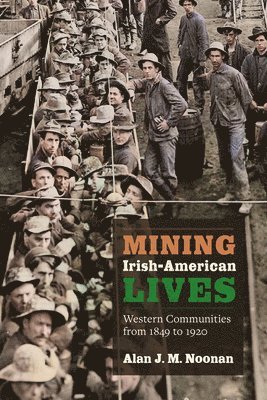
Mining Irish-American Lives focuses on the importance and influence of the Irish within the mining frontier of the American West. Scholarship of the West has largely ignored the complicated lives of the Irish people in mining towns, whose life details are often kept to a bare minimum. This book uses individual stories and the histories of different communities—Randsburg, California; Virginia City, Nevada; Leadville, Colorado; Butte, Montana; Idaho’s Silver Valley; and the Comstock Lode, for example—to explore Irish and Irish-American lives. Historian Alan J. M. Noonan uses a range of previously overlooked sources, including collections of emigrant letters, hospital logbooks, private detective reports, and internment records, to tell the stories of Irish men and women who emigrated to mining towns to search for opportunity. Noonan details the periods, the places, and the experiences over multiple generations in the late nineteenth and early twentieth centuries. He carefully examines their encounters with nativists, other ethnic groups, and mining companies to highlight the contested emergence of a hyphenated Irish-American identity. Unearthing personal details along with the histories of different communities, the book investigates Irish immigrants and Irish-Americans through the prism of their own experiences, significantly enriching the history of the period.