Monographs in Mediterranean Archaeology - Böcker
Visar alla böcker i serien Monographs in Mediterranean Archaeology. Handla med fri frakt och snabb leverans.
11 produkter
11 produkter
1 212 kr
Skickas inom 5-8 vardagar
The Archaeology of Nuragic Sardinia is a comprehensive synthesis of evidence bearing on current understandings of Sardinian prehistory from the 23rd through 8th centuries BC. Within a culture-historical framework recent findings on chronology, settlement, subsistence, industries, trade, external relations and cult practices are treated within successive chronological periods from Early Bronze Age through Early Iron Age. Summary discussions address issues of interpretation with regard to what might be reasonably inferred about Nuragic social institutions, normative codes, even cognitive orientations. While the focus throughout is on the Sardinian record, due consideration is also paid to potentially related developments on the neighboring island of Corsica.
The Power of Technology in the Bronze Age Eastern Mediterranean: The Case of the Painted Plaster
Häftad, Engelska, 2015
574 kr
Skickas inom 5-8 vardagar
In the past, Bronze Age painted plaster in the Aegean and the Eastern Mediterranean has been studied from a range of different but isolated viewpoints. This volume brings both technological and iconographic approaches closer together by completing certain gaps in the literature on technology and by investigating how and why technological transfer has developed and what broader impact this had on the wider social dynamics of the late Middle and Late Bronze Age in the eastern Mediterranean. This study approaches the topic of painted plaster by a multidisciplinary methodology and demonstrates the human forces through which transfer was enabled and how multiple social identities and the inter-relationships of these actors with each other and their material world were expressed through their craft production and organization. The investigated data from sixteen sites has been contextualized within a wider framework of Bronze Age interconnections both in time and space because studying painted plaster in the Aegean cannot be considered separate from similar traditions both in Egypt and in the Near East.
494 kr
Skickas inom 5-8 vardagar
This volume considers regional approaches to social complexity from a variety of perspectives and at a global scale. John F. Cherry has been a key figure in regional-scale inquiry and broader disciplinary interfaces throughout his career, producing, mentoring, and inspiring a remarkably diverse body of work, which nevertheless remains oriented around this central theme. While Cherry's work is the inspiration for this volume and the papers within it, this should not be seen as a traditional festschrift, or piecemeal homage to the honorand's career. Rather, it aims to explore this core concern of regional approaches to society and complexity in comparative perspective, first in the Aegean, then branching out to the wider Mediterranean, New World, and finally reflecting on relevant issues of concern to all archaeologists working at levels above the site.
1 451 kr
Skickas inom 5-8 vardagar
This volume considers regional approaches to social complexity from a variety of perspectives and at a global scale. John F. Cherry has been a key figure in regional-scale inquiry and broader disciplinary interfaces throughout his career, producing, mentoring, and inspiring a remarkably diverse body of work, which nevertheless remains oriented around this central theme. While Cherry’s work is the inspiration for this volume and the papers within it, this should not be seen as a traditional festschrift, or piecemeal homage to the honorand’s career. Rather, it aims to explore this core concern of regional approaches to society and complexity in comparative perspective, first in the Aegean, then branching out to the wider Mediterranean, New World, and finally reflecting on relevant issues of concern to all archaeologists working at levels above the site.
1 531 kr
Skickas inom 5-8 vardagar
This volume brings together scholars to reflect on the work of Professor A. Bernard Knapp and on some of the challenges thrown down in his extensive scholarship. Knapp is a central figure in the pre and proto-history of the Mediterranean in the last generation, and the essays in this volume will be of interest and attention to a wide range of scholars and students of Mediterranean pre- and proto-history. Topics include studies of sites, places, materials and texts in the Levant, Cyprus, Crete, Greece and Sicily and wider theory and method critiques address connectivity and mobility, maritime archaeology, landscapes, climate and environment, and publication history and practice in the overall Mediterranean field. The authors comprise a mixture of senior, mid-career, and rising junior scholars - from various backgrounds, in order to offer a broad range of perspectives on the state and future of the archaeology of Cyprus and the wider Mediterranean.
Local Experiences of Connectivity and Mobility in the Ancient West-Central Mediterranean
Inbunden, Engelska, 2024
1 333 kr
Skickas
Local Experiences of Connectivity and Mobility in the Ancient West-Central Mediterranean brings together a series of papers that explore theoretical and material approaches to connectivity and mobility in the ancient Central and Western Mediterranean. The diverse contributions span the period of the Late Bronze Age through the Late Roman period and focus on locales across the central-western Mediterranean region, specifically Iberia, Southern France, North Africa, Italy, Sicily, the Balearic Islands, Sardinia, and Corsica. Case studies are grouped around the themes of people, things, and landscapes. Focusing on the small-scale picture, they illuminate local experiences of connectivity and mobility that run “against the grain” of more usual large-scale narratives of Greek, Phoenician, Carthaginian, and Roman contact and colonization in the west. Taken together, the chapters demonstrate the value of dialogue across regional and national divides that have traditionally fragmented research in these regions. Further, they bring out the common themes that emerge when approaching connectivity and mobility from a broad diachronic perspective when not confined by traditional divisions between prehistory and the classical period. The book highlights the work of emerging scholars, framed by discussions by prominent scholars in the field, combining deep expertise with fresh perspectives and new approaches to connectivity and mobility in the ancient world.
1 212 kr
Skickas inom 5-8 vardagar
Phoenician and Punic archaeology have long been overlooked by Mediterranean archaeologists, who focused their attention on Greek and Roman cultures. Although the Punic cities and their rural landscapes are to be found along the southern shores and on the islands of the western Mediterranean basin, comprehensive studies of these archaeological remains are virtually non-existent. It is the aim of this book to investigate Punic rural settlement in the western Mediterranean by bringing together and comparing the currently dispersed existing evidence for rural Punic settlement. The core of the volume is accordingly made up by a detailed discussion of the archaeological evidence for Punic rural settlement from Sardinia, Sicily, Ibiza, mainland Spain and North Africa.Because agriculture and agrarian produce have always been assumed to have played a critical role in the Carthaginian colonial expansion, the connections between the various colonial contexts and the local characteristics of rural organisation explored in detail in order to enhance our understanding of these colonial contexts.This in turn provides better insight in Carthaginian colonialism and local Punic rural settlement and their role in the wider Mediterranean context. By publishing this evidence and these interpretations in English, we hope to draw attention to Punic archaeology in general and to these rural studies in particular and to situate them in the wider Mediterranean context of both classical Antiquity and Mediterranean archaeology.
Monumentality, Place-Making and Social Interaction on Late Bronze Age Cyprus
Inbunden, Engelska, 2023
2 729 kr
Skickas inom 3-6 vardagar
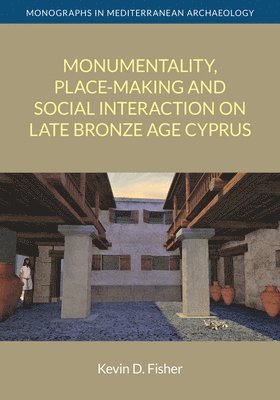
This book adopts an integrative approach to investigate the role of monumental architecture in shaping social dynamics and power relations on the island of Cyprus during the Late Bronze Age (LBA; c.1700-1050 BCE). Using such an approach, archaeologists studying ancient societies elsewhere can analyze the relationship between the built environment and human behaviour. Monumental buildings on Late Bronze Age Cyprus provided contexts for social interactions, such as ceremonial feasting and cultic rituals, that created social bonds and forged wider community identities, while also materializing social boundaries and inequalities. More than just spaces, these contexts were socially-constructed places, imbued with identity and memory, that played an integral role in social organization during this transformative period. This integrative approach emphasizes the role of buildings in configuring movement and encounter and in serving as the contexts for interactions through which sociopolitical relations are developed, maintained, transformed and reproduced. It investigates this using an interdisciplinary methodology that integrates access analysis with the study of the materiality of built environments and how they encode and communicate meanings and shape the experiences of those who interact with them.
653 kr
Skickas inom 5-8 vardagar
Phoenician and Punic archaeology have long been overlooked by Mediterranean archaeologists, who focused their attention on Greek and Roman cultures. Although the Punic cities and their rural landscapes are to be found along the southern shores and on the islands of the western Mediterranean basin, comprehensive studies of these archaeological remains are virtually non-existent. It is the aim of this book to investigate Punic rural settlement in the western Mediterranean by bringing together and comparing the currently dispersed existing evidence for rural Punic settlement. The core of the volume is accordingly made up by a detailed discussion of the archaeological evidence for Punic rural settlement from Sardinia, Sicily, Ibiza, mainland Spain and North Africa. Because agriculture and agrarian produce have always been assumed to have played a critical role in the Carthaginian colonial expansion, the connections between the various colonial contexts and the local characteristics of rural organisation explored in detail enhances our understanding of these colonial contexts.This in turn provides better insight in Carthaginian colonialism and local Punic rural settlement and their role in the wider Mediterranean context.
1 451 kr
Skickas inom 5-8 vardagar
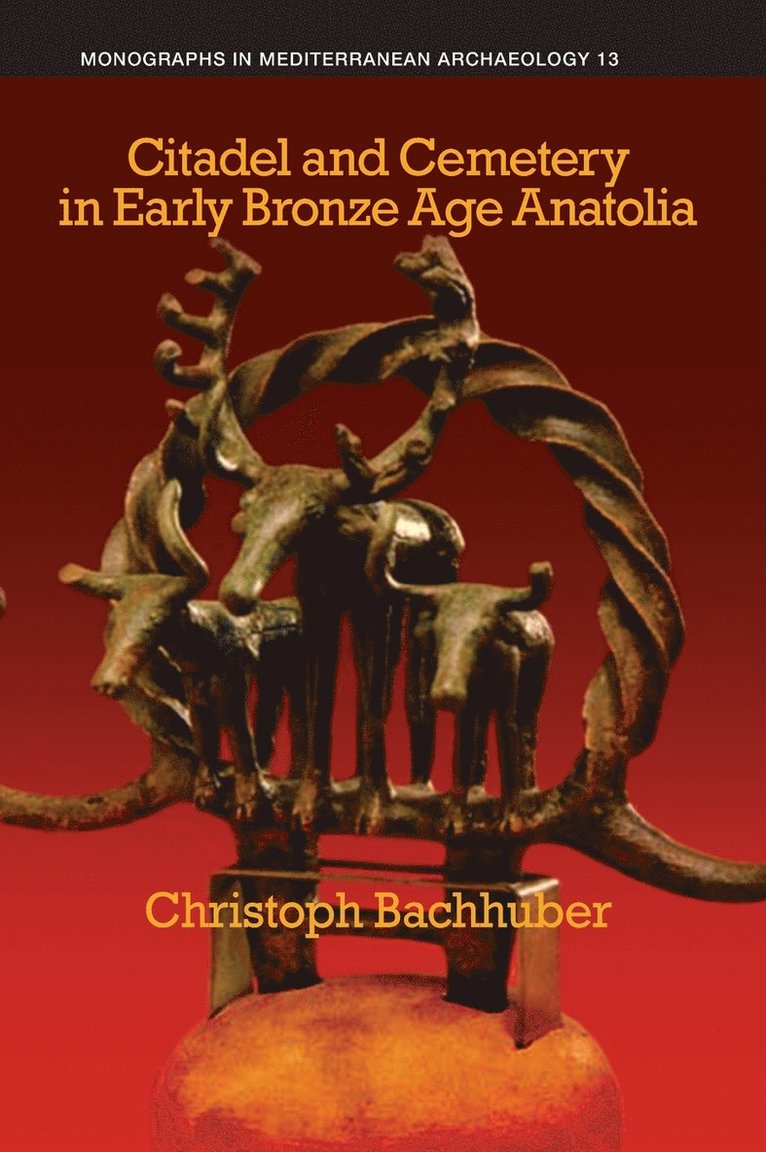
Citadel and Cemetery in Early Bronze Age Anatolia is the first synthetic and interpretive monograph on the region and time period (ca. 3000-2200 BCE). The book organizes this vast, dense and often obscure archaeological corpus into thematic chapters, and isolates three primary contexts for analysis: the settlements and households of villages, the cemeteries of villages, and the monumental citadels of agrarian elites. The book is a study of contrasts between the social logic and ideological/ritual panoply of villages and citadels. The material culture, social organization and social life of Early Bronze Age villages is not radically different from the farming settlements of earlier periods in Anatolia. On the other hand the monumental citadel is unprecedented; the material culture of the Early Bronze Age citadel informs the beginning of a long era in Anatolia, defined by the existence of an agrarian elite who exaggerated inequality and the degree of separation from those who did not live on citadels. This is a study of the ascendance of the citadel ca. 2600 BCE, and related consequences for villages in Early Bronze Age Anatolia.
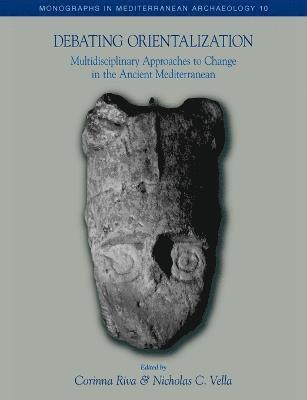
Debating Orientalization
Multidisciplinary Approaches to Change in the Ancient Mediterranean
Häftad, Engelska, 2010
494 kr
Skickas inom 5-8 vardagar
Initially coined by art historians in the second half of the nineteenth century to denote an ambivalent artistic style and period, 'Orientalizing' has been invariably used to describe a phenomenon, a revolution, or a movement. Regional developments and innovations in the ancient Mediterranean have been explained by reference to an Orient, the metaphorical bazaar containing the artistic opulence and social sophistication that spread to the West and changed it. "Debating Orientalization" brings together papers presented at a symposium held in Oxford in 2002 to debate the theme of ancient Orientalization. The volume reassesses the concept of Orientalizing, questioning whether it is valid to interpret Mediterranean-wide processes of change in the Late Bronze and Early Iron Ages by the term Orientalization. Like the ancient Mediterranean itself, the list of contributors is multicultural, and their contributions multidisciplinary, combining various strands of archaeological and textual evidence with different methodological approaches.