Multiphysics Modeling - Böcker
Visar alla böcker i serien Multiphysics Modeling. Handla med fri frakt och snabb leverans.
14 produkter
14 produkter
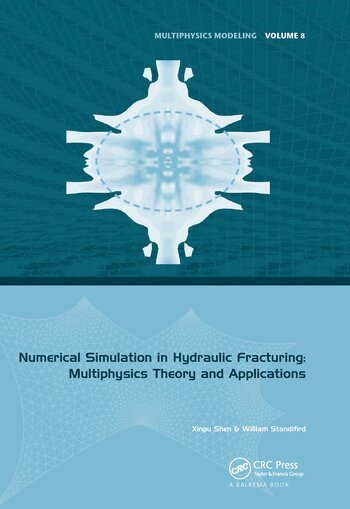
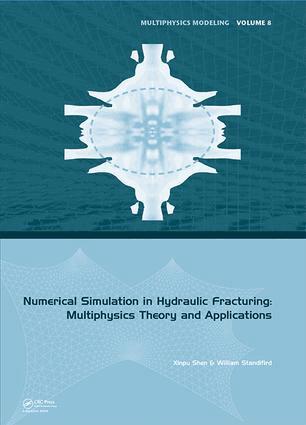
Numerical Simulation in Hydraulic Fracturing: Multiphysics Theory and Applications
Häftad, Engelska, 2020
713 kr
Skickas inom 10-15 vardagar
The expansion of unconventional petroleum resources in the recent decade and the rapid development of computational technology have provided the opportunity to develop and apply 3D numerical modeling technology to simulate the hydraulic fracturing of shale and tight sand formations. This book presents 3D numerical modeling technologies for hydraulic fracturing developed in recent years, and introduces solutions to various 3D geomechanical problems related to hydraulic fracturing. In the solution processes of the case studies included in the book, fully coupled multi-physics modeling has been adopted, along with innovative computational techniques, such as submodeling. In practice, hydraulic fracturing is an essential project component in shale gas/oil development and tight sand oil, and provides an essential measure in the process of drilling cuttings reinjection (CRI). It is also an essential measure for widened mud weight window (MWW) when drilling through naturally fractured formations; the process of hydraulic plugging is a typical application of hydraulic fracturing. 3D modeling and numerical analysis of hydraulic fracturing is essential for the successful development of tight oil/gas formations: it provides accurate solutions for optimized stage intervals in a multistage fracking job. It also provides optimized well-spacing for the design of zipper-frac wells.Numerical estimation of casing integrity under stimulation injection in the hydraulic fracturing process is one of major concerns in the successful development of unconventional resources. This topic is also investigated numerically in this book. Numerical solutions to several other typical geomechanics problems related to hydraulic fracturing, such as fluid migration caused by fault reactivation and seismic activities, are also presented. This book can be used as a reference textbook to petroleum, geotechnical and geothermal engineers, to senior undergraduate, graduate and postgraduate students, and to geologists, hydrogeologists, geophysicists and applied mathematicians working in this field. This book is also a synthetic compendium of both the fundamentals and some of the most advanced aspects of hydraulic fracturing technology.
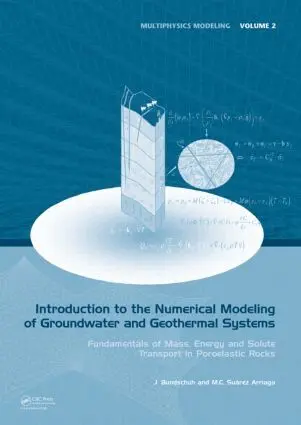
Introduction to the Numerical Modeling of Groundwater and Geothermal Systems
Fundamentals of Mass, Energy and Solute Transport in Poroelastic Rocks
Inbunden, Engelska, 2010
2 581 kr
Tillfälligt slut
This book provides an introduction to the scientific fundamentals of groundwater and geothermal systems. In a simple and didactic manner the different water and energy problems existing in deformable porous rocks are explained as well as the corresponding theories and the mathematical and numerical tools that lead to modeling and solving them. This approach provides the reader with a thorough understanding of the basic physical laws of thermoporoelastic rocks, the partial differential equations representing these laws and the principal numerical methods, which allow finding approximate solutions of the corresponding mathematical models. The book also presents the form in which specific useful models can be generated and solved. The text is introductory in the sense that it explains basic themes of the systems mentioned in three areas: engineering, physics and mathematics. All the laws and equations introduced in this book are formulated carefully based on fundamental physical principles. This way, the reader will understand the key importance of mathematics applied to all the subjects. Simple models are emphasized and solved with numerous examples. For more sophisticated and advanced models the numerical techniques are described and developed carefully. This book will serve as a synoptic compendium of the fundamentals of fluid, solute and heat transport, applicable to all types of subsurface systems, ranging from shallow aquifers down to deep geothermal reservoirs. The book will prove to be a useful textbook to senior undergraduate and graduate students, postgraduates, professional geologists and geophysicists, engineers, mathematicians and others working in the vital areas of groundwater and geothermal resources.
Numerical Modeling of Coupled Phenomena in Science and Engineering
Practical Use and Examples
Inbunden, Engelska, 2008
3 320 kr
Skickas inom 7-10 vardagar
Mathematics is a universal language. Differential equations, mathematical modeling, numerical methods and computation form the underlying infrastructure of engineering and the sciences. In this context mathematical modeling is a very powerful tool for studying engineering problems, natural systems and human society. This interdisciplinary book contains a comprehensive overview, including practical examples, of the progress achieved to date in the modeling of coupled phenomena, computational mathematics and mechanics, heat transfer, fluid-structure interactions, biomechanics, and the flow of mass and energy in porous media. Numerical subjects such as grid generation, optimization, finite elements, finite differences, spectral methods, boundary elements, finite volumes and meshless methods are also discussed in detail using real examples.The book provides a thorough presentation of the existing numerical techniques with specific applications to concrete, practical topics. The models and solutions presented here describe various systems: mechanical, biological, geophysical, technical, ecological, etc. The book is organized in thirty six chapters, each written by distinguished experts in their respective fields. The topics presented cover the current state of knowledge in numerical engineering practice including recent and ongoing developments and the presentation of new ideas for future research on applied computational engineering mathematics.The book will be of interest to scientists working in engineering (structural, civil, mechanical), geology, geophysics, aquifer research, petroleum engineering, applied mathematics, and physics, as well as students in any of these areas.
2 996 kr
Skickas inom 10-15 vardagar
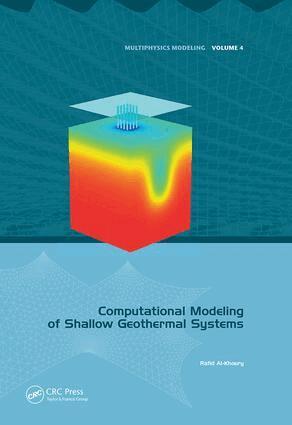
A Step-by-step Guide to Developing Innovative Computational Tools for Shallow Geothermal SystemsGeothermal heat is a viable source of energy and its environmental impact in terms of CO2 emissions is significantly lower than conventional fossil fuels. Shallow geothermal systems are increasingly utilized for heating and cooling of buildings and greenhouses. However, their utilization is inconsistent with the enormous amount of energy available underneath the surface of the earth. Projects of this nature are not getting the public support they deserve because of the uncertainties associated with them, and this can primarily be attributed to the lack of appropriate computational tools necessary to carry out effective designs and analyses. For this energy field to have a better competitive position in the renewable energy market, it is vital that engineers acquire computational tools, which are accurate, versatile and efficient. This book aims at attaining such tools.This book addresses computational modeling of shallow geothermal systems in considerable detail, and provides researchers and developers in computational mechanics, geosciences, geology and geothermal engineering with the means to develop computational tools capable of modeling the complicated nature of heat flow in shallow geothermal systems in rather straightforward methodologies. Coupled conduction-convection models for heat flow in borehole heat exchangers and the surrounding soil mass are formulated and solved using analytical, semi-analytical and numerical methods. Background theories, enhanced by numerical examples, necessary for formulating the models and conducting the solutions are thoroughly addressed.The book emphasizes two main aspects: mathematical modeling and computational procedures. In geothermics, both aspects are considerably challenging because of the involved geometry and physical processes. However, they are highly stimulating and inspiring. A good combination of mathematical modeling and computational procedures can greatly reduce the computational efforts. This book thoroughly treats this issue and introduces step-by-step methodologies for developing innovative computational models, which are both rigorous and computationally efficient.
Drilling and Completion in Petroleum Engineering
Theory and Numerical Applications
Inbunden, Engelska, 2011
3 200 kr
Skickas inom 10-15 vardagar
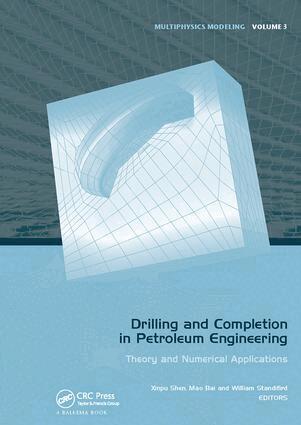
Modern petroleum and petrotechnical engineering is increasingly challenging due to the inherently scarce and decreasing number of global petroleum resources. Exploiting these resources efficiently will require researchers, scientists, engineers and other practitioners to develop innovative mathematical solutions to serve as basis for new asset development designs. Deploying these systems in numerical models is essential to the future success and efficiency of the petroleum industry.Multiphysics modeling has been widely applied in the petroleum industry since the 1960s. The rapid development of computer technology has enabled the numerical applications of multiphysics modeling in the petroleum industry: its applications are particularly popular for the numerical simulation of drilling and completion processes. This book covers theory and numerical applications of multiphysical modeling presenting various author-developed subroutines, used to address complex pore pressure input, complex initial geo-stress field input, etc. Some innovative methods in drilling and completion developed by the authors, such as trajectory optimization and a 3-dimensional workflow for calculation of mud weight window etc, are also presented. Detailed explanations are provided for the modeling process of each application example included in the book. In addition, details of the completed numerical models data are presented as supporting material which can be downloaded from the website of the publisher. Readers can easily understand key modeling techniques with the theory of multiphysics embedded in examples of applications,and can use the data to reproduce the results presented.While this book would be of interest to any student, academic or professional practitioner of engineering, mathematics and natural science, we believe those professionals and academics working in civil engineering, petroleum engineering and petroleum geomechanics would find the work especially relevant to their endeavors.
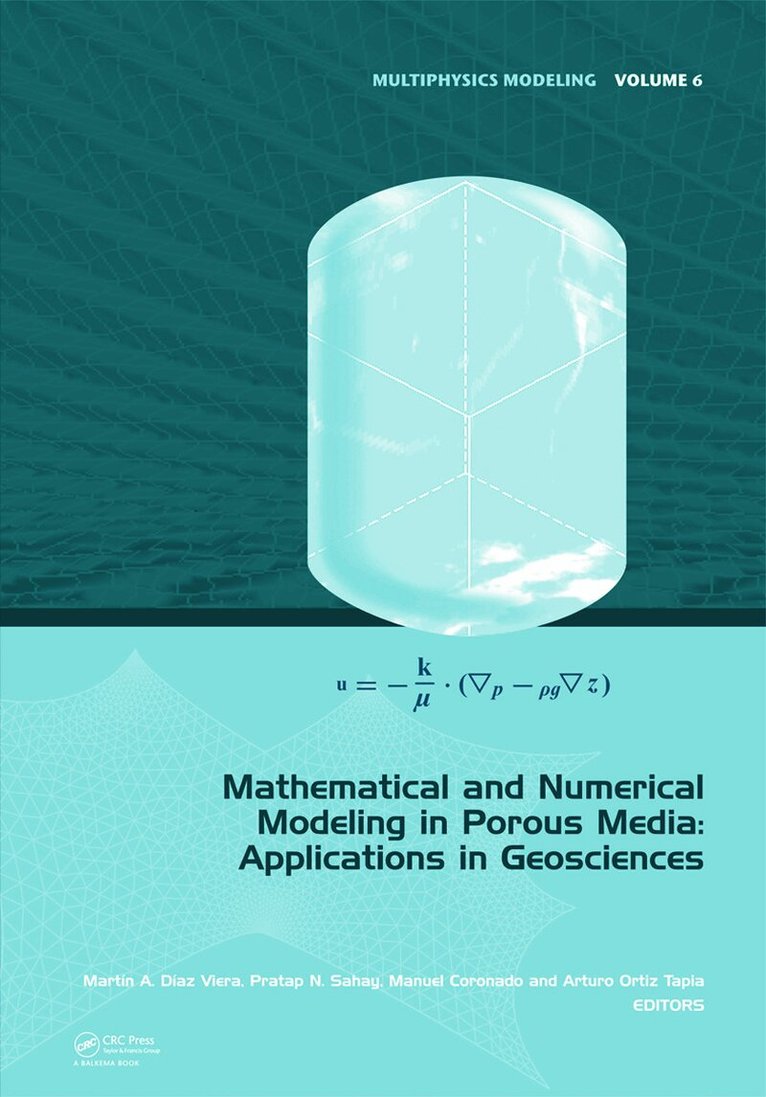
Mathematical and Numerical Modeling in Porous Media
Applications in Geosciences
Inbunden, Engelska, 2012
3 743 kr
Skickas inom 10-15 vardagar
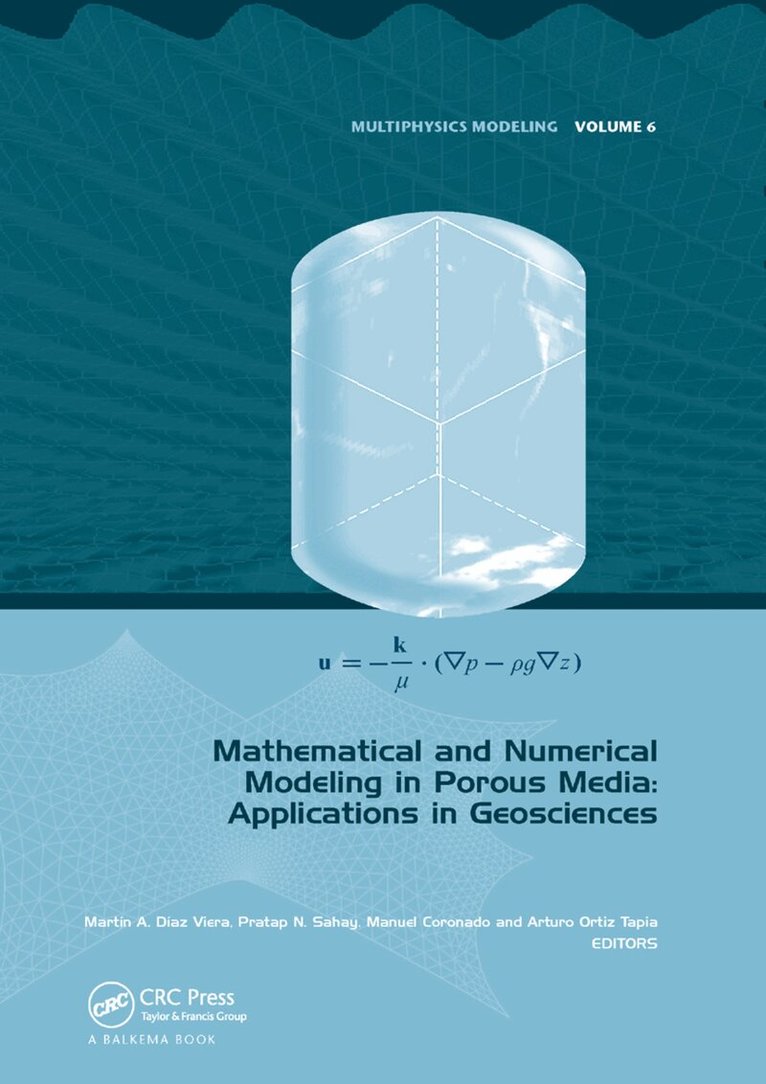
Porous media are broadly found in nature and their study is of high relevance in our present lives. In geosciences porous media research is fundamental in applications to aquifers, mineral mines, contaminant transport, soil remediation, waste storage, oil recovery and geothermal energy deposits. Despite their importance, there is as yet no complete understanding of the physical processes involved in fluid flow and transport. This fact can be attributed to the complexity of the phenomena which include multicomponent fluids, multiphasic flow and rock-fluid interactions. Since its formulation in 1856, Darcy’s law has been generalized to describe multi-phase compressible fluid flow through anisotropic and heterogeneous porous and fractured rocks. Due to the scarcity of information, a high degree of uncertainty on the porous medium properties is commonly present. Contributions to the knowledge of modeling flow and transport, as well as to the characterization of porous media at field scale are of great relevance. This book addresses several of these issues, treated with a variety of methodologies grouped into four parts:I Fundamental conceptsII Flow and transportIII Statistical and stochastic characterizationIV WavesThe problems analyzed in this book cover diverse length scales that range from small rock samples to field-size porous formations. They belong to the most active areas of research in porous media with applications in geosciences developed by diverse authors.This book was written for a broad audience with a prior and basic knowledge of porous media. The book is addressed to a wide readership, and it will be useful not only as an authoritative textbook for undergraduate and graduate students but also as a reference source for professionals including geoscientists, hydrogeologists, geophysicists, engineers, applied mathematicians and others working on porous media.
2 779 kr
Tillfälligt slut
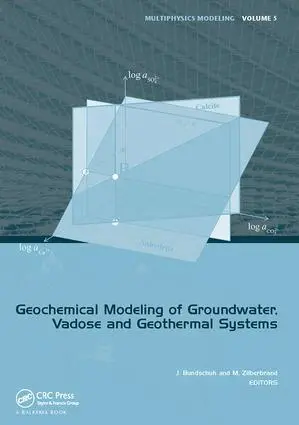
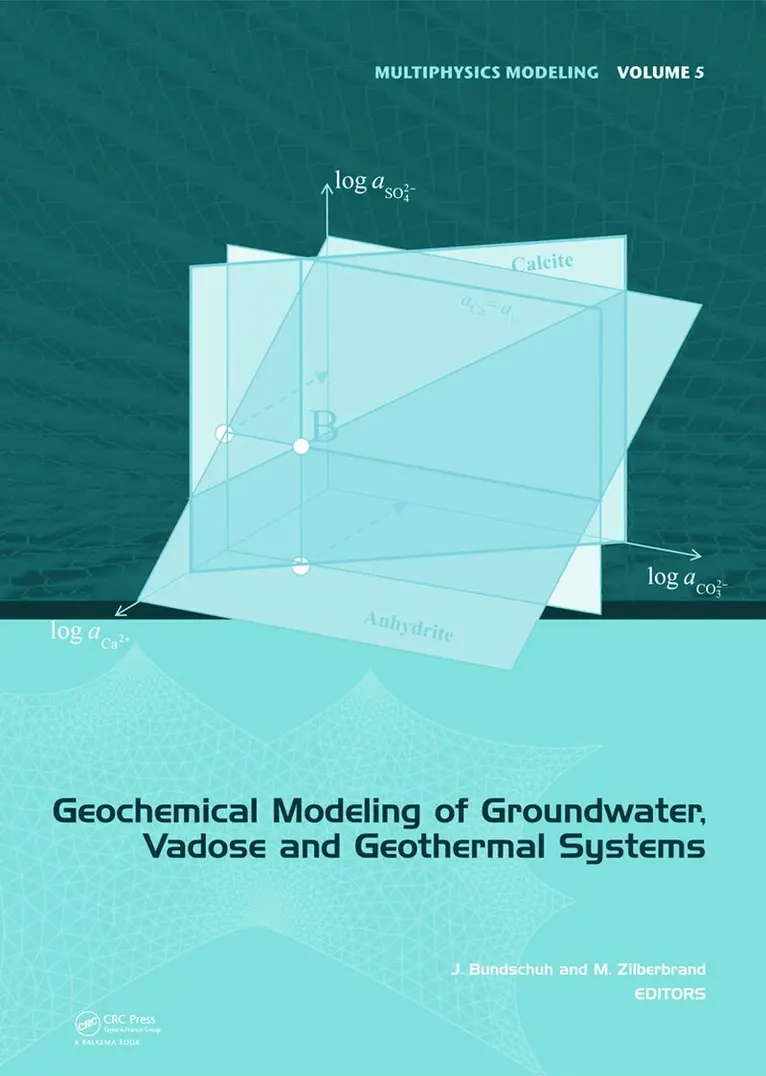
Geochemical modeling is an important tool in environmental studies, and in the areas of subsurface and surface hydrology, pedology, water resources management, mining geology, geothermal resources, hydrocarbon geology, and related areas dealing with the exploration and extraction of natural resources. The book fills a gap in the literature through its discussion of geochemical modeling, which simulates the chemical and physical processes affecting the distribution of chemical species in liquid, gas, and solid phases. Geochemical modeling applies to a diversity of subsurface environments, from the vadose zone close to the Earth’s surface, down to deep-seated geothermal reservoirs.This book provides the fundamental thermodynamic concepts of liquid-gas-solid phase systems. It introduces the principal types of geochemical models, such as speciation, reaction-path or forward, inverse- and reactive-transport models, together with examples of the most common codes and the best-practices for constructing geochemical models. The physical laws describing homogeneous and heterogeneous chemical reactions, their kinetics, and the transport of reactive solutes are presented. The partial differential or algebraic equations representing these laws, and the principal numerical methods that allow approximate solutions of these equations that can provide useful solutions to model different geochemical processes, are discussed in detail. Case studies applying geochemical models in different scientific areas and environmental settings, conclude the book. The book is addressed to students, teachers, other professionals, and to the institutions involved in water, geothermal and hydrocarbon resources, mining, and environmental management. The book should prove useful to undergraduate and graduate students, postgraduates, professional geologists and geophysicists, engineers, environmental scientists, soil scientists, hydrochemists, and others interested in water and geochemistry.
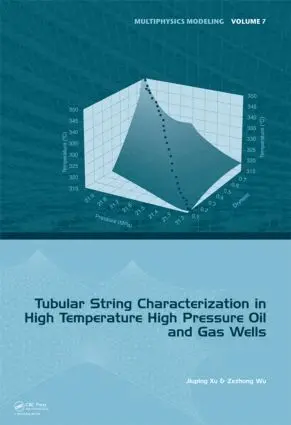
Tubular String Characterization in High Temperature High Pressure Oil and Gas Wells
Inbunden, Engelska, 2015
2 792 kr
Skickas inom 10-15 vardagar
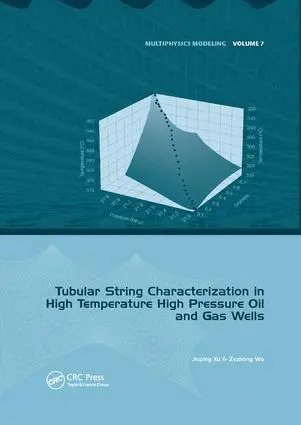
High temperature, high oil pressure, oil and gas well completion testing have always been a technical challenge and basic theoretical research is one of the key factors needed to ensure a successful completion test. The completion test basic theory includes: a stress analysis of the completion string, completion string buckling behavior, and temperature and pressure distribution prediction. The completion string is the main bearing and power transmission component for oil and gas well operations and production, and it is required to take on a combination of loads, which result in completion string deformation. Because of these complex relationships, completion string stress analysis has become increasingly more complicated.This book discusses the characters of tubular strings in HTHP (High Temperature - High Pressure) oil and gas wells. These characters include the mechanical behavior of tubular strings and the temperature and pressure variation of tubular strings in different conditions. Mathematical models are established for different conditions and solution existence and uniqueness of some models is discussed, providing algorithms corresponding to the different models. Numerical experiments are presented to verify the validity of models and the feasibility of algorithms, and the impact of the parameters of models for oil and gas wells is also discussed.This book is written for production and testing engineers to provide them with the tools to deal more effectively with the numerical decisions they have to take and for researchers and technicians in petroleum and gas testing and production engineering. Finally, it is also intended to serve as a reference book for mathematicians, college teachers and students.
Numerical Simulation in Hydraulic Fracturing: Multiphysics Theory and Applications
Inbunden, Engelska, 2017
2 385 kr
Skickas inom 10-15 vardagar
The expansion of unconventional petroleum resources in the recent decade and the rapid development of computational technology have provided the opportunity to develop and apply 3D numerical modeling technology to simulate the hydraulic fracturing of shale and tight sand formations. This book presents 3D numerical modeling technologies for hydraulic fracturing developed in recent years, and introduces solutions to various 3D geomechanical problems related to hydraulic fracturing. In the solution processes of the case studies included in the book, fully coupled multi-physics modeling has been adopted, along with innovative computational techniques, such as submodeling. In practice, hydraulic fracturing is an essential project component in shale gas/oil development and tight sand oil, and provides an essential measure in the process of drilling cuttings reinjection (CRI). It is also an essential measure for widened mud weight window (MWW) when drilling through naturally fractured formations; the process of hydraulic plugging is a typical application of hydraulic fracturing. 3D modeling and numerical analysis of hydraulic fracturing is essential for the successful development of tight oil/gas formations: it provides accurate solutions for optimized stage intervals in a multistage fracking job. It also provides optimized well-spacing for the design of zipper-frac wells.Numerical estimation of casing integrity under stimulation injection in the hydraulic fracturing process is one of major concerns in the successful development of unconventional resources. This topic is also investigated numerically in this book. Numerical solutions to several other typical geomechanics problems related to hydraulic fracturing, such as fluid migration caused by fault reactivation and seismic activities, are also presented. This book can be used as a reference textbook to petroleum, geotechnical and geothermal engineers, to senior undergraduate, graduate and postgraduate students, and to geologists, hydrogeologists, geophysicists and applied mathematicians working in this field. This book is also a synthetic compendium of both the fundamentals and some of the most advanced aspects of hydraulic fracturing technology.
1 230 kr
Skickas inom 10-15 vardagar
A Step-by-step Guide to Developing Innovative Computational Tools for Shallow Geothermal SystemsGeothermal heat is a viable source of energy and its environmental impact in terms of CO2 emissions is significantly lower than conventional fossil fuels. Shallow geothermal systems are increasingly utilized for heating and cooling of buildings and greenhouses. However, their utilization is inconsistent with the enormous amount of energy available underneath the surface of the earth. Projects of this nature are not getting the public support they deserve because of the uncertainties associated with them, and this can primarily be attributed to the lack of appropriate computational tools necessary to carry out effective designs and analyses. For this energy field to have a better competitive position in the renewable energy market, it is vital that engineers acquire computational tools, which are accurate, versatile and efficient. This book aims at attaining such tools.This book addresses computational modeling of shallow geothermal systems in considerable detail, and provides researchers and developers in computational mechanics, geosciences, geology and geothermal engineering with the means to develop computational tools capable of modeling the complicated nature of heat flow in shallow geothermal systems in rather straightforward methodologies. Coupled conduction-convection models for heat flow in borehole heat exchangers and the surrounding soil mass are formulated and solved using analytical, semi-analytical and numerical methods. Background theories, enhanced by numerical examples, necessary for formulating the models and conducting the solutions are thoroughly addressed.The book emphasizes two main aspects: mathematical modeling and computational procedures. In geothermics, both aspects are considerably challenging because of the involved geometry and physical processes. However, they are highly stimulating and inspiring. A good combination of mathematical modeling and computational procedures can greatly reduce the computational efforts. This book thoroughly treats this issue and introduces step-by-step methodologies for developing innovative computational models, which are both rigorous and computationally efficient.
Drilling and Completion in Petroleum Engineering
Theory and Numerical Applications
Häftad, Engelska, 2017
1 107 kr
Skickas inom 10-15 vardagar
Modern petroleum and petrotechnical engineering is increasingly challenging due to the inherently scarce and decreasing number of global petroleum resources. Exploiting these resources efficiently will require researchers, scientists, engineers and other practitioners to develop innovative mathematical solutions to serve as basis for new asset development designs. Deploying these systems in numerical models is essential to the future success and efficiency of the petroleum industry.Multiphysics modeling has been widely applied in the petroleum industry since the 1960s. The rapid development of computer technology has enabled the numerical applications of multiphysics modeling in the petroleum industry: its applications are particularly popular for the numerical simulation of drilling and completion processes. This book covers theory and numerical applications of multiphysical modeling presenting various author-developed subroutines, used to address complex pore pressure input, complex initial geo-stress field input, etc. Some innovative methods in drilling and completion developed by the authors, such as trajectory optimization and a 3-dimensional workflow for calculation of mud weight window etc, are also presented. Detailed explanations are provided for the modeling process of each application example included in the book. In addition, details of the completed numerical models data are presented as supporting material which can be downloaded from the website of the publisher. Readers can easily understand key modeling techniques with the theory of multiphysics embedded in examples of applications,and can use the data to reproduce the results presented.While this book would be of interest to any student, academic or professional practitioner of engineering, mathematics and natural science, we believe those professionals and academics working in civil engineering, petroleum engineering and petroleum geomechanics would find the work especially relevant to their endeavors.
1 434 kr
Skickas inom 10-15 vardagar
Geochemical modeling is an important tool in environmental studies, and in the areas of subsurface and surface hydrology, pedology, water resources management, mining geology, geothermal resources, hydrocarbon geology, and related areas dealing with the exploration and extraction of natural resources. The book fills a gap in the literature through its discussion of geochemical modeling, which simulates the chemical and physical processes affecting the distribution of chemical species in liquid, gas, and solid phases. Geochemical modeling applies to a diversity of subsurface environments, from the vadose zone close to the Earth’s surface, down to deep-seated geothermal reservoirs.This book provides the fundamental thermodynamic concepts of liquid-gas-solid phase systems. It introduces the principal types of geochemical models, such as speciation, reaction-path or forward, inverse- and reactive-transport models, together with examples of the most common codes and the best-practices for constructing geochemical models. The physical laws describing homogeneous and heterogeneous chemical reactions, their kinetics, and the transport of reactive solutes are presented. The partial differential or algebraic equations representing these laws, and the principal numerical methods that allow approximate solutions of these equations that can provide useful solutions to model different geochemical processes, are discussed in detail. Case studies applying geochemical models in different scientific areas and environmental settings, conclude the book. The book is addressed to students, teachers, other professionals, and to the institutions involved in water, geothermal and hydrocarbon resources, mining, and environmental management. The book should prove useful to undergraduate and graduate students, postgraduates, professional geologists and geophysicists, engineers, environmental scientists, soil scientists, hydrochemists, and others interested in water and geochemistry.
Mathematical and Numerical Modeling in Porous Media
Applications in Geosciences
Häftad, Engelska, 2018
1 325 kr
Skickas inom 10-15 vardagar
Porous media are broadly found in nature and their study is of high relevance in our present lives. In geosciences porous media research is fundamental in applications to aquifers, mineral mines, contaminant transport, soil remediation, waste storage, oil recovery and geothermal energy deposits. Despite their importance, there is as yet no complete understanding of the physical processes involved in fluid flow and transport. This fact can be attributed to the complexity of the phenomena which include multicomponent fluids, multiphasic flow and rock-fluid interactions. Since its formulation in 1856, Darcy’s law has been generalized to describe multi-phase compressible fluid flow through anisotropic and heterogeneous porous and fractured rocks. Due to the scarcity of information, a high degree of uncertainty on the porous medium properties is commonly present. Contributions to the knowledge of modeling flow and transport, as well as to the characterization of porous media at field scale are of great relevance. This book addresses several of these issues, treated with a variety of methodologies grouped into four parts:I Fundamental conceptsII Flow and transportIII Statistical and stochastic characterizationIV WavesThe problems analyzed in this book cover diverse length scales that range from small rock samples to field-size porous formations. They belong to the most active areas of research in porous media with applications in geosciences developed by diverse authors.This book was written for a broad audience with a prior and basic knowledge of porous media. The book is addressed to a wide readership, and it will be useful not only as an authoritative textbook for undergraduate and graduate students but also as a reference source for professionals including geoscientists, hydrogeologists, geophysicists, engineers, applied mathematicians and others working on porous media.
Tubular String Characterization in High Temperature High Pressure Oil and Gas Wells
Häftad, Engelska, 2017
1 325 kr
Skickas inom 10-15 vardagar
High temperature, high oil pressure, oil and gas well completion testing have always been a technical challenge and basic theoretical research is one of the key factors needed to ensure a successful completion test. The completion test basic theory includes: a stress analysis of the completion string, completion string buckling behavior, and temperature and pressure distribution prediction. The completion string is the main bearing and power transmission component for oil and gas well operations and production, and it is required to take on a combination of loads, which result in completion string deformation. Because of these complex relationships, completion string stress analysis has become increasingly more complicated.This book discusses the characters of tubular strings in HTHP (High Temperature - High Pressure) oil and gas wells. These characters include the mechanical behavior of tubular strings and the temperature and pressure variation of tubular strings in different conditions. Mathematical models are established for different conditions and solution existence and uniqueness of some models is discussed, providing algorithms corresponding to the different models. Numerical experiments are presented to verify the validity of models and the feasibility of algorithms, and the impact of the parameters of models for oil and gas wells is also discussed.This book is written for production and testing engineers to provide them with the tools to deal more effectively with the numerical decisions they have to take and for researchers and technicians in petroleum and gas testing and production engineering. Finally, it is also intended to serve as a reference book for mathematicians, college teachers and students.