Music and Sound on the International Screen – serie
Visar alla böcker i serien Music and Sound on the International Screen. Handla med fri frakt och snabb leverans.
7 produkter
7 produkter
Andrei Tarkovsky's Sounding Cinema
Music and Meaning from Solaris to The Sacrifice
Inbunden, Engelska, 2019
2 176 kr
Skickas inom 10-15 vardagar
Andrei Tarkovsky's Sounding Cinema adds a new dimension to our understanding and appreciation of the work of Russian director Andrei Tarkovsky (1932–1986) through an exploration of the presence of music and sound in his films.The first comprehensive study in English concentrating on the soundtrack in Tarkovsky’s cinema, this book reveals how Tarkovsky’s use of electronic music, electronically manipulated sound, traditional folk songs and fragments of canonized works of Western art music plays into the philosophical, existential and ethical themes recurring throughout his work. Exploring the multilayered relationship between music, sound, film image and narrative space, Pontara provides penetrating and innovative close readings of Solaris (1972), Mirror (1975), Stalker (1979), Nostalghia (1983) and The Sacrifice (1986) and in turn deeply enriches critical understanding of Tarkovsky’s films and their relation to the broader traditions of European art cinema. An excellent resource for scholars, researchers and students interested in European art cinema and the role of music in film, as well as for film aficionados interested in Tarkovsky’s work.
Andrei Tarkovsky's Sounding Cinema
Music and Meaning from Solaris to The Sacrifice
Häftad, Engelska, 2021
651 kr
Skickas inom 10-15 vardagar
Andrei Tarkovsky's Sounding Cinema adds a new dimension to our understanding and appreciation of the work of Russian director Andrei Tarkovsky (1932–1986) through an exploration of the presence of music and sound in his films.The first comprehensive study in English concentrating on the soundtrack in Tarkovsky’s cinema, this book reveals how Tarkovsky’s use of electronic music, electronically manipulated sound, traditional folk songs and fragments of canonized works of Western art music plays into the philosophical, existential and ethical themes recurring throughout his work. Exploring the multilayered relationship between music, sound, film image and narrative space, Pontara provides penetrating and innovative close readings of Solaris (1972), Mirror (1975), Stalker (1979), Nostalghia (1983) and The Sacrifice (1986) and in turn deeply enriches critical understanding of Tarkovsky’s films and their relation to the broader traditions of European art cinema. An excellent resource for scholars, researchers and students interested in European art cinema and the role of music in film, as well as for film aficionados interested in Tarkovsky’s work.
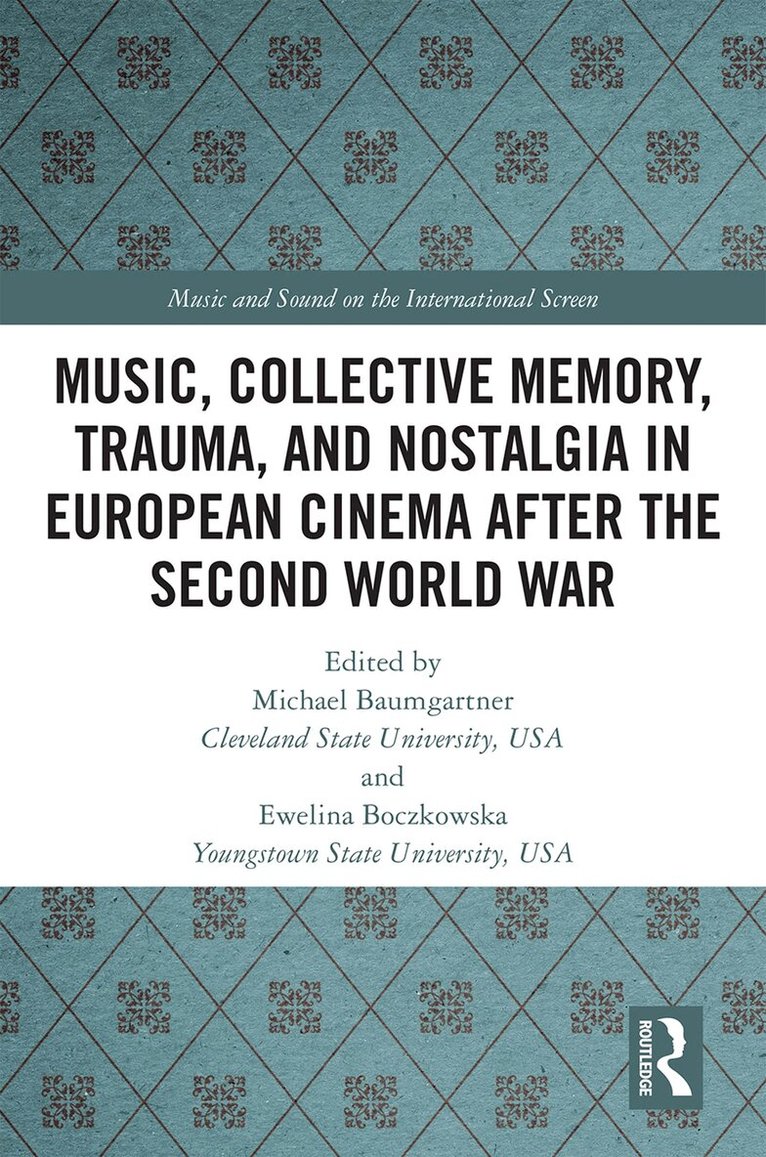
Music, Collective Memory, Trauma, and Nostalgia in European Cinema after the Second World War
Häftad, Engelska, 2021
651 kr
Skickas inom 10-15 vardagar
In the wake of World War II, the arts and culture of Europe became a site where the devastating events of the 20th century were remembered and understood. Exploring one of the most integral elements of the cinematic experience—music—the essays in this volume consider the numerous ways in which post-war European cinema dealt with memory, trauma and nostalgia, showing how the music of these films shaped the representation of the past. The contributors consider films from the United Kingdom, Poland, the Soviet Union, France, Italy, Germany, Sweden, Austria, and the Netherlands, providing a diverse and well-rounded understanding of film music in the context of historical memory.Memory is often underrepresented within scholarly musical studies, with most of these applications found in the disciplines of ethnomusicology, popular music studies, music cognition, and psychology and music therapy. Likewise, trauma has mainly been studied in relation to music in only a few historical contexts, while nostalgia has attracted even less academic attention. In three parts, this volume addresses each area of study as it relates to the music of European cinema from 1945 to 1989, applying an interdisciplinary approach to investigate how films use music to negotiate the precarious relationships we maintain with the past. Music, Collective Memory, Trauma, and Nostalgia in European Cinema after the Second World War offers compelling arguments as to what makes music such a powerful medium for memory, trauma and nostalgia.
595 kr
Skickas inom 10-15 vardagar
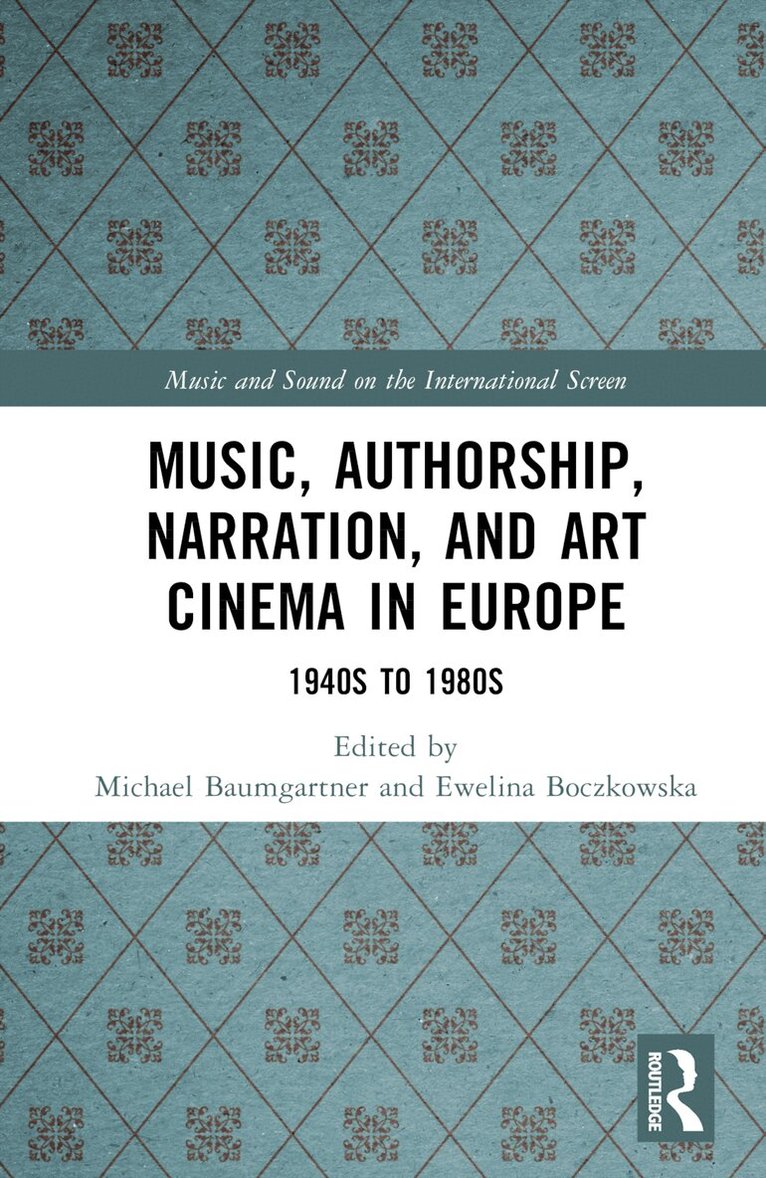
Music, Authorship, Narration, and Art Cinema in Europe: 1940s to 1980s investigates the function of music in European cinema after the Second World War up to the fall of the Berlin wall, a period when composers and directors embraced experimentation. Through analyses of music and sound in a wide range of iconic films from across Europe, the essays in this book provide a nuanced reconsideration of three core themes: auteur theory, art house film, and national cinema. Chapters written by an international array of contributors focus on case studies of music in the cinema of Carlos Saura, Jean-Pierre Melville, the Polish School, and Romanian directors, as well as collaborations between directors and composers, including Michelangelo Antonioni and Giovanni Fusco, Federico Fellini and Nino Rota, Leo Arnshtam and Dmitry Shostakovich, and Peter Greenaway and Michael Nyman. The contributors shift the emphasis from a director-centered view to the working relationship between director and composer, and from the visual component to the sonic aspects of these films, without ignoring the close correlation between soundtrack and visual elements. Enriching our understanding of the complex, intertwined nature of authorship in film, the role of film music, and sound, nation-state and art cinema, and European cinematic history, this volume offers a valuable addition to research across music and film studies.
Music, Collective Memory, Trauma, and Nostalgia in European Cinema after the Second World War
Inbunden, Engelska, 2019
2 456 kr
Skickas inom 10-15 vardagar
In the wake of World War II, the arts and culture of Europe became a site where the devastating events of the 20th century were remembered and understood. Exploring one of the most integral elements of the cinematic experience—music—the essays in this volume consider the numerous ways in which post-war European cinema dealt with memory, trauma and nostalgia, showing how the music of these films shaped the representation of the past. The contributors consider films from the United Kingdom, Poland, the Soviet Union, France, Italy, Germany, Sweden, Austria, and the Netherlands, providing a diverse and well-rounded understanding of film music in the context of historical memory.Memory is often underrepresented within scholarly musical studies, with most of these applications found in the disciplines of ethnomusicology, popular music studies, music cognition, and psychology and music therapy. Likewise, trauma has mainly been studied in relation to music in only a few historical contexts, while nostalgia has attracted even less academic attention. In three parts, this volume addresses each area of study as it relates to the music of European cinema from 1945 to 1989, applying an interdisciplinary approach to investigate how films use music to negotiate the precarious relationships we maintain with the past. Music, Collective Memory, Trauma, and Nostalgia in European Cinema after the Second World War offers compelling arguments as to what makes music such a powerful medium for memory, trauma and nostalgia.
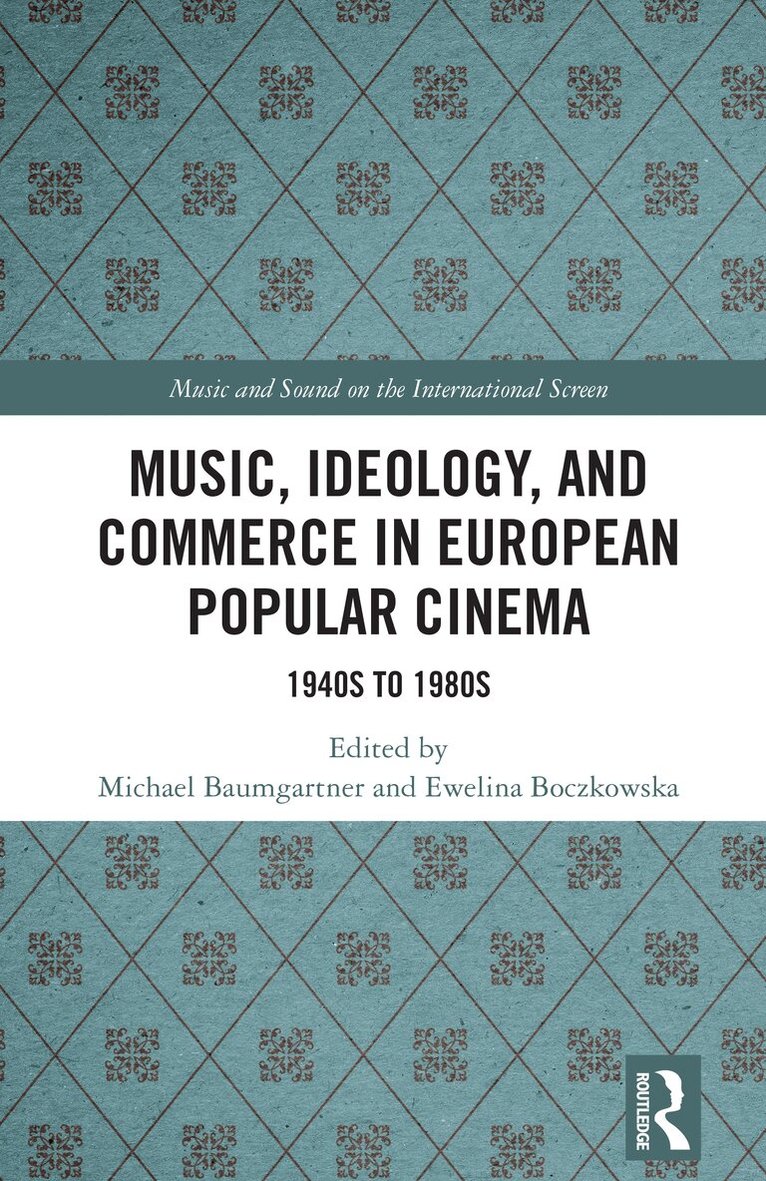
1 578 kr
Kommande
Throughout the Cold War, the films produced on both sides of the Iron Curtain were shaped by the ideologies of their respective countries. Music played a key role defining the messages sent by these films. The chapters in Music, Ideology, and Commerce in European Popular Cinema: 1940s to 1980s offer the first extended look at the relationship between music and ideology and between the film and music industries in popular European cinema of the Cold War era.With contributions from an international array of scholars, this volume examines cinematic productions from East and West Germany, France, Great Britain, Italy, and the former Yugoslavia. The contributors explore the interactions between music, ideology, and commercial and popular cinema that shaped mass culture during the Cold War. The book provides valuable insights for researchers and graduate students in music, film studies, and cultural studies departments who are studying European cinema or film music.
1 966 kr
Skickas inom 10-15 vardagar
Music, Authorship, Narration, and Art Cinema in Europe: 1940s to 1980s investigates the function of music in European cinema after the Second World War up to the fall of the Berlin wall, a period when composers and directors embraced experimentation. Through analyses of music and sound in a wide range of iconic films from across Europe, the essays in this book provide a nuanced reconsideration of three core themes: auteur theory, art house film, and national cinema. Chapters written by an international array of contributors focus on case studies of music in the cinema of Carlos Saura, Jean-Pierre Melville, the Polish School, and Romanian directors, as well as collaborations between directors and composers, including Michelangelo Antonioni and Giovanni Fusco, Federico Fellini and Nino Rota, Leo Arnshtam and Dmitry Shostakovich, and Peter Greenaway and Michael Nyman. The contributors shift the emphasis from a director-centered view to the working relationship between director and composer, and from the visual component to the sonic aspects of these films, without ignoring the close correlation between soundtrack and visual elements. Enriching our understanding of the complex, intertwined nature of authorship in film, the role of film music, and sound, nation-state and art cinema, and European cinematic history, this volume offers a valuable addition to research across music and film studies.