New Library of Psychoanalysis Teaching Series - Böcker
Visar alla böcker i serien New Library of Psychoanalysis Teaching Series. Handla med fri frakt och snabb leverans.
19 produkter
19 produkter
1 723 kr
Skickas inom 10-15 vardagar
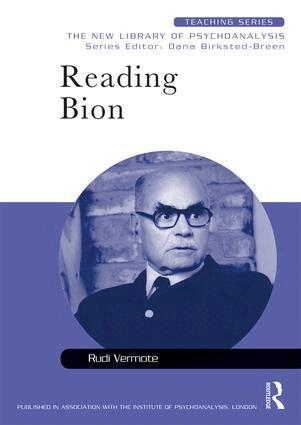
Wilfred R. Bion is considered a ground-breaking psychoanalyst. His thinking is rooted in Freud and Klein from where it takes an original flight. Reading Bion shows the evolution of his seminal insights in psychic functioning and puts them in a wider context. Rudi Vermote integrates a chronological close reading and discussion of Bion’s texts, with a comprehensive approach of his major concepts. The book is divided in two main parts: Transformation in Knowledge: Bion’s odyssey to understand psychic processing or the mind Transformation in O: in which Bion reinterprets his former concepts from the dimension of the unknown and unknowable The running text is put against a background of biographical data and scientific, artistic and philosophical influences on his work, which are highlighted in boxes and separate chapters. Bion’s concepts are important for anyone dealing with the mind. His ideas have an ongoing deep impact on psychoanalysis, psychotherapy and psychopathology. His concepts help to understand psychic change, creativity, individual psychodynamics and small and large-group phenomena. The discovery of their value for studies on art, literature, sociology, religion, economics has just begun. Reading Bion starts from the very beginning so that it is instructive for people who are new to his work, but the close reading and background information make it a meaningful companion for experienced psychoanalysts and psychotherapists studying his work.
522 kr
Skickas inom 10-15 vardagar
Wilfred R. Bion is considered a ground-breaking psychoanalyst. His thinking is rooted in Freud and Klein from where it takes an original flight. Reading Bion shows the evolution of his seminal insights in psychic functioning and puts them in a wider context. Rudi Vermote integrates a chronological close reading and discussion of Bion’s texts, with a comprehensive approach of his major concepts. The book is divided in two main parts: Transformation in Knowledge: Bion’s odyssey to understand psychic processing or the mind Transformation in O: in which Bion reinterprets his former concepts from the dimension of the unknown and unknowable The running text is put against a background of biographical data and scientific, artistic and philosophical influences on his work, which are highlighted in boxes and separate chapters. Bion’s concepts are important for anyone dealing with the mind. His ideas have an ongoing deep impact on psychoanalysis, psychotherapy and psychopathology. His concepts help to understand psychic change, creativity, individual psychodynamics and small and large-group phenomena. The discovery of their value for studies on art, literature, sociology, religion, economics has just begun. Reading Bion starts from the very beginning so that it is instructive for people who are new to his work, but the close reading and background information make it a meaningful companion for experienced psychoanalysts and psychotherapists studying his work.
1 723 kr
Skickas inom 10-15 vardagar
Reading Winnicott brings together a selection of papers by the psychoanalyst and paediatrician Donald Winnicott, providing an insight into his work and charting its impact on the well-being of mothers, babies, children and families. With individual introductions summarising the key features of each of Winnicott’s papers this book not only offers an overview of Winnicott’s work, but also links it with Freud and later theorists. Areas of discussion include: the relational environment and the place of infantile sexualityaggression and destructivenessillusion and transitional phenomenatheory and practice of psychoanalysis of adults and children. As such Reading Winnicott will be essential reading for all students wanting to learn more about Winnicott’s theories and their impact on psychoanalysis and the wider field of mental health.
601 kr
Skickas inom 10-15 vardagar
Reading Winnicott brings together a selection of papers by the psychoanalyst and paediatrician Donald Winnicott, providing an insight into his work and charting its impact on the well-being of mothers, babies, children and families. With individual introductions summarising the key features of each of Winnicott’s papers this book not only offers an overview of Winnicott’s work, but also links it with Freud and later theorists. Areas of discussion include: the relational environment and the place of infantile sexualityaggression and destructivenessillusion and transitional phenomenatheory and practice of psychoanalysis of adults and children. As such Reading Winnicott will be essential reading for all students wanting to learn more about Winnicott’s theories and their impact on psychoanalysis and the wider field of mental health.
535 kr
Skickas inom 10-15 vardagar
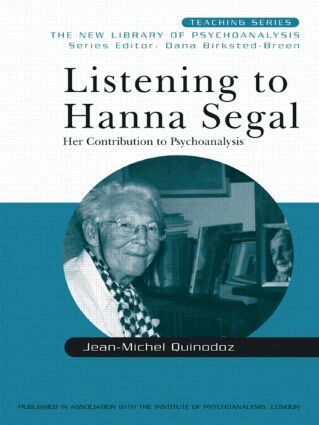
Winner of the 2010 Sigourney Award!How has Hanna Segal influenced psychoanalysis today?Jean-Michel Quinodoz provides the reader with a comprehensive overview of Segal's life, her clinical and theoretical work, and her contribution to psychoanalysis over the past sixty years by combining actual biographical and conceptual interviews with Hanna Segal herself or with colleagues who have listened to Segal in various contexts.Listening to Hanna Segal explores both Segal's personal and professional histories, and the interaction between the two. The book opens with an autobiographical account of Segal's life, from her birth in Poland to her analysis with Melanie Klein in London where she became the youngest member of the British Psychoanalytical Society. Quinodoz goes on to explain Segal's contributions in various fields of psychoanalysis including:the psychoanalytic treatment of psychotic patients the introduction of the "symbolic equation" aesthetics and the creative impulse the analysis of elderly patients introducing the work of Melanie Klein.Quinodoz concludes by examining Segal's most recent contribution to psychoanalysis - exploring nuclear terror, psychotic anxieties, and group phenomena.Throughout the interviews Segal speaks of her close relationships with prominent colleagues such as Klein, Rosenfeld, and Bion, making this book both a valuable contribution to the history of psychoanalysis and an indication of the evolution of psychoanalytic ideas over the past six decades. This clear summary of Hanna Segal's life and her contribution to psychoanalysis will be an essential guide to anyone studying Segal and her contemporaries.
1 921 kr
Skickas inom 10-15 vardagar
Winner of the 2010 Sigourney Award!How has Hanna Segal influenced psychoanalysis today?Jean-Michel Quinodoz provides the reader with a comprehensive overview of Segal's life, her clinical and theoretical work, and her contribution to psychoanalysis over the past sixty years by combining actual biographical and conceptual interviews with Hanna Segal herself or with colleagues who have listened to Segal in various contexts.Listening to Hanna Segal explores both Segal's personal and professional histories, and the interaction between the two. The book opens with an autobiographical account of Segal's life, from her birth in Poland to her analysis with Melanie Klein in London where she became the youngest member of the British Psychoanalytical Society. Quinodoz goes on to explain Segal's contributions in various fields of psychoanalysis including:the psychoanalytic treatment of psychotic patients the introduction of the "symbolic equation" aesthetics and the creative impulse the analysis of elderly patients introducing the work of Melanie Klein.Quinodoz concludes by examining Segal's most recent contribution to psychoanalysis - exploring nuclear terror, psychotic anxieties, and group phenomena.Throughout the interviews Segal speaks of her close relationships with prominent colleagues such as Klein, Rosenfeld, and Bion, making this book both a valuable contribution to the history of psychoanalysis and an indication of the evolution of psychoanalytic ideas over the past six decades. This clear summary of Hanna Segal's life and her contribution to psychoanalysis will be an essential guide to anyone studying Segal and her contemporaries.
2 053 kr
Skickas inom 10-15 vardagar
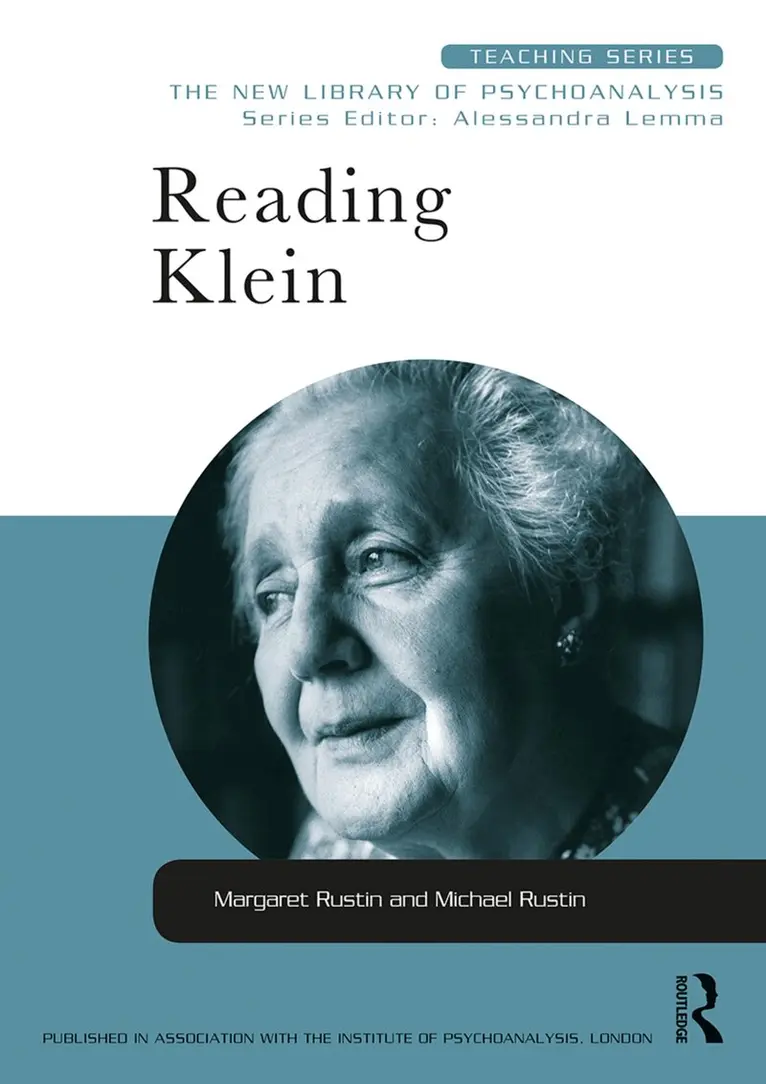
Reading Klein provides an introduction to the work of one of the twentieth century’s greatest psychoanalysts, known in particular for her contribution in developing child analysis and for her vivid depiction of the inner world. This book makes Melanie Klein’s works highly accessible, providing both substantial extracts from her writings, and commentaries by the authors exploring their significance. Each chapter corresponds to a major field of Klein’s work outlining its development over almost 40 years. The first part is concerned with her theoretical and clinical contributions. It shows Klein to be a sensitive clinician deeply concerned for her patients, and with a remarkable capacity to understand their unconscious anxieties and to revise our understanding of the mind. The second part sets out the contribution of her ideas to morality, to aesthetics and to the understanding of society, introducing writing by her associates as well as herself. The book provides a lucid account of Klein’s published writing, presented by two distinguished writers who know her work well and have made creative use of it in their own clinical and extra-clinical writing. Its aim is to show how substantial her contribution to psychoanalytic thinking and clinical practice was, and how indispensable it remains to understanding the field of psychoanalysis.Reading Klein will be a highly valuable resource for students, trainees in psychoanalysis, psychoanalytic practitioners and all who are interested in Melanie Klein and her legacy.
535 kr
Skickas inom 10-15 vardagar
Reading Klein provides an introduction to the work of one of the twentieth century’s greatest psychoanalysts, known in particular for her contribution in developing child analysis and for her vivid depiction of the inner world. This book makes Melanie Klein’s works highly accessible, providing both substantial extracts from her writings, and commentaries by the authors exploring their significance. Each chapter corresponds to a major field of Klein’s work outlining its development over almost 40 years. The first part is concerned with her theoretical and clinical contributions. It shows Klein to be a sensitive clinician deeply concerned for her patients, and with a remarkable capacity to understand their unconscious anxieties and to revise our understanding of the mind. The second part sets out the contribution of her ideas to morality, to aesthetics and to the understanding of society, introducing writing by her associates as well as herself. The book provides a lucid account of Klein’s published writing, presented by two distinguished writers who know her work well and have made creative use of it in their own clinical and extra-clinical writing. Its aim is to show how substantial her contribution to psychoanalytic thinking and clinical practice was, and how indispensable it remains to understanding the field of psychoanalysis.Reading Klein will be a highly valuable resource for students, trainees in psychoanalysis, psychoanalytic practitioners and all who are interested in Melanie Klein and her legacy.
2 504 kr
Skickas inom 7-10 vardagar
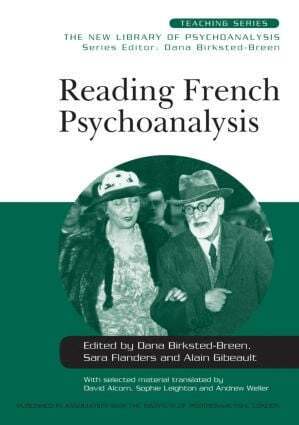
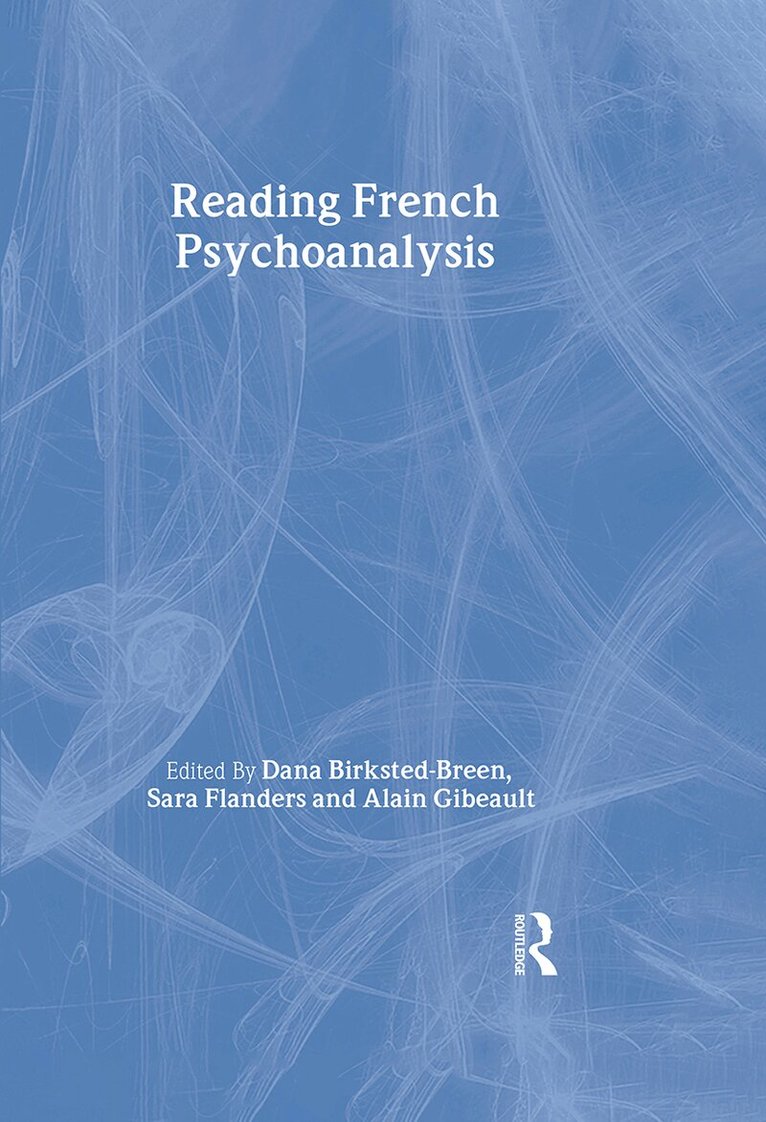
How has psychoanalysis developed in France in the years since Lacan so dramatically polarized the field?In this book, Dana Birksted-Breen and Sara Flanders of the British Psychoanalytical Society, and Alain Gibeault of the Paris Psychoanalytical Society provide an overview of how French psychoanalysis has developed since Lacan. Focusing primarily on the work of psychoanalysts from the French Psychoanalytical Association and from the Paris Psychoanalytical Society, the two British psychoanalysts view the evolution of theory as it appears to them from the outside, while the French psychoanalyst explains and elaborates from inside the French psychoanalytic discourse. Seminal and representative papers have been chosen to illuminate what is special about French thinking. A substantial general introduction argues in favour of the specificity of 'French psychoanalysis', tracing its early influences and highlighting specific contemporary developments.Sections are made up of introductory material by Alain Gibeault, followed by illustrative papers in the following categories:the history of psychoanalysis in Francethe pioneers and their legacythe setting and the process of psychoanalysisphantasy and representationthe body and the drivesmasculine and feminine sexualitypsychosis.An excellent introduction to French psychoanalytical debate, Reading French Psychoanalysis sheds a complementary light on thinking that has evolved differently in England and North America. It will be ideal reading for beginners and advanced students of clinical theory as well as experienced psychoanalysts wanting to know more about French Psychoanalytic theory, and how it has developed.
825 kr
Skickas inom 10-15 vardagar
How has psychoanalysis developed in France in the years since Lacan so dramatically polarized the field?In this book, Dana Birksted-Breen and Sara Flanders of the British Psychoanalytical Society, and Alain Gibeault of the Paris Psychoanalytical Society provide an overview of how French psychoanalysis has developed since Lacan. Focusing primarily on the work of psychoanalysts from the French Psychoanalytical Association and from the Paris Psychoanalytical Society, the two British psychoanalysts view the evolution of theory as it appears to them from the outside, while the French psychoanalyst explains and elaborates from inside the French psychoanalytic discourse. Seminal and representative papers have been chosen to illuminate what is special about French thinking. A substantial general introduction argues in favour of the specificity of 'French psychoanalysis', tracing its early influences and highlighting specific contemporary developments.Sections are made up of introductory material by Alain Gibeault, followed by illustrative papers in the following categories:the history of psychoanalysis in Francethe pioneers and their legacythe setting and the process of psychoanalysisphantasy and representationthe body and the drivesmasculine and feminine sexualitypsychosis.An excellent introduction to French psychoanalytical debate, Reading French Psychoanalysis sheds a complementary light on thinking that has evolved differently in England and North America. It will be ideal reading for beginners and advanced students of clinical theory as well as experienced psychoanalysts wanting to know more about French Psychoanalytic theory, and how it has developed.
1 789 kr
Skickas inom 10-15 vardagar
Initiating Psychoanalysis presents an international collection of papers brought together by the Working Party on Initiating Psychoanalysis of the European Psychoanalytic Federation and addresses the specific clinical and technical issues involved in launching the processes that are at the core of psychoanalysis and psychoanalytic treatment. Expert contributors provide introductions and commentaries on a selection of psychoanalytic papers, including one by Freud himself, which refer to beginning psychoanalytic treatment in a wide range of settings. Divided into four main sections, areas of discussion include: historical and conceptual developments in the fieldpractical, technical and ethical considerations unconscious transference and counter-transference dynamics of initial interviewsinternal factors that can help or hinder psychoanalysts in their work to initiate psychoanalysis. This book will be helpful to all psychoanalytical practitioners in thinking about their work in first interviews with prospective patients, as well as psychoanalysts and psychotherapists at all levels of experience, who will be able to use this book to enrich their own practice.
601 kr
Skickas inom 10-15 vardagar
Initiating Psychoanalysis presents an international collection of papers brought together by the Working Party on Initiating Psychoanalysis of the European Psychoanalytic Federation and addresses the specific clinical and technical issues involved in launching the processes that are at the core of psychoanalysis and psychoanalytic treatment. Expert contributors provide introductions and commentaries on a selection of psychoanalytic papers, including one by Freud himself, which refer to beginning psychoanalytic treatment in a wide range of settings. Divided into four main sections, areas of discussion include: historical and conceptual developments in the fieldpractical, technical and ethical considerations unconscious transference and counter-transference dynamics of initial interviewsinternal factors that can help or hinder psychoanalysts in their work to initiate psychoanalysis. This book will be helpful to all psychoanalytical practitioners in thinking about their work in first interviews with prospective patients, as well as psychoanalysts and psychotherapists at all levels of experience, who will be able to use this book to enrich their own practice.
2 119 kr
Skickas inom 10-15 vardagar
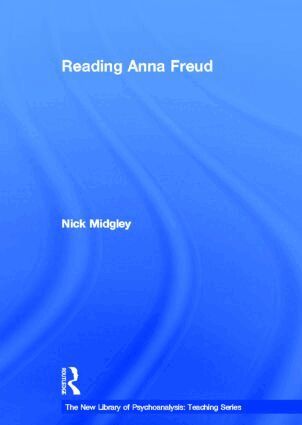
What place do Anna Freud’s ideas have in the history of psychoanalysis? What can her writings teach us today about how to work therapeutically with children? Are her psychoanalytic ideas still relevant to those entrusted with the welfare of infants and young people? Reading Anna Freud provides an accessible introduction to the writings of one of the most significant figures in the history of psychoanalysis. Each chapter introduces a number of her key papers, with clear summaries of the main ideas, historical background, a discussion of the influence and contemporary relevance of her thinking, and recommendations for further reading. Areas covered include Anna Freud’s writings on:• The theory and practice of child analysis and 'developmental therapy'• The application of psychoanalytic thinking to education, paediatrics and the law• The assessment and diagnosis of childhood disorders• Psychoanalytic research and developmental psychopathologyNick Midgley draws on his extensive experience as a child psychotherapist and a teacher to bring Anna Freud's ideas to life. He illustrates the remarkable originality of her thinking, and shows how analytic ideas can be used not only in child psychotherapy, but also to inform the care of children in families, hospitals, classrooms, residential care and the court-room.Reading Anna Freud will be of interest to child therapists, child analysts and psychoanalysts, as well as others working in the field of child and adolescent mental health, such as clinical psychologists, child psychiatrists and educational psychologists. It also has much to offer to those entrusted with the care of children in a wide range of settings - including teachers, nurses and social workers - for whom Anna Freud was always keen to demonstrate the value of a psychoanalytic approach. Nick Midgley trained as a child and adolescent psychotherapist at the Anna Freud Centre, where he now works as a clinician and as Programme Director for the MSc in Developmental Psychology and Clinical Practice. Nick has written articles on a wide range of topics and is joint editor of Minding the Child: Mentalization-based Interventions with Children, Young People and their Families (Routledge, 2012) and Child Psychotherapy and Research: New Directions, Emerging Findings (Routledge, 2009).
667 kr
Skickas inom 10-15 vardagar
What place do Anna Freud’s ideas have in the history of psychoanalysis? What can her writings teach us today about how to work therapeutically with children? Are her psychoanalytic ideas still relevant to those entrusted with the welfare of infants and young people? Reading Anna Freud provides an accessible introduction to the writings of one of the most significant figures in the history of psychoanalysis. Each chapter introduces a number of her key papers, with clear summaries of the main ideas, historical background, a discussion of the influence and contemporary relevance of her thinking, and recommendations for further reading. Areas covered include Anna Freud’s writings on:• The theory and practice of child analysis and 'developmental therapy'• The application of psychoanalytic thinking to education, paediatrics and the law• The assessment and diagnosis of childhood disorders• Psychoanalytic research and developmental psychopathologyNick Midgley draws on his extensive experience as a child psychotherapist and a teacher to bring Anna Freud's ideas to life. He illustrates the remarkable originality of her thinking, and shows how analytic ideas can be used not only in child psychotherapy, but also to inform the care of children in families, hospitals, classrooms, residential care and the court-room.Reading Anna Freud will be of interest to child therapists, child analysts and psychoanalysts, as well as others working in the field of child and adolescent mental health, such as clinical psychologists, child psychiatrists and educational psychologists. It also has much to offer to those entrusted with the care of children in a wide range of settings - including teachers, nurses and social workers - for whom Anna Freud was always keen to demonstrate the value of a psychoanalytic approach. Nick Midgley trained as a child and adolescent psychotherapist at the Anna Freud Centre, where he now works as a clinician and as Programme Director for the MSc in Developmental Psychology and Clinical Practice. Nick has written articles on a wide range of topics and is joint editor of Minding the Child: Mentalization-based Interventions with Children, Young People and their Families (Routledge, 2012) and Child Psychotherapy and Research: New Directions, Emerging Findings (Routledge, 2009).
2 036 kr
Skickas inom 10-15 vardagar
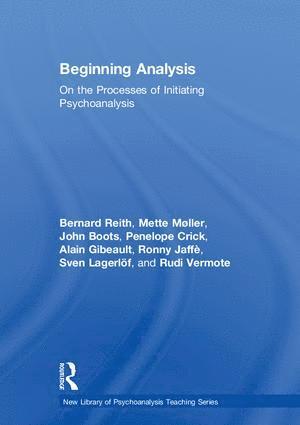
How does a psychoanalysis begin? What goes on when analyst and prospective analysand meet for the first time, and what processes are activated to make the project for an analysis possible? This unique contribution to the surprisingly sparse literature on this most essential aspect of the psychoanalytical practitioner’s work, is the clinical companion to Initiating Psychoanalysis: Perspectives, also part of the ‘Teaching’ Series of the New Library of Psychoanalysis. Replete with clinical illustrations, this book is based on the findings of an ambitious research project on first interviews carried out from 2004 to 2016 by an international group of psychoanalysts, the Working Party on Initiating Psychoanalysis (WPIP) of the European Psychoanalytic Federation. The authors, all members of the Investigative Team, are senior psychoanalysts from member societies of the European Psychoanalytic Federation, all with extensive experience in the practice and teaching of psychoanalytic consultation.Psychoanalysts and analytic therapists, in particular those in training or setting up their practice, will find Beginning Analysis to be essential reading in deepening their understanding of how analysand and analyst arrive at the decision to begin analysis.
553 kr
Skickas inom 10-15 vardagar
How does a psychoanalysis begin? What goes on when analyst and prospective analysand meet for the first time, and what processes are activated to make the project for an analysis possible? This unique contribution to the surprisingly sparse literature on this most essential aspect of the psychoanalytical practitioner’s work, is the clinical companion to Initiating Psychoanalysis: Perspectives, also part of the ‘Teaching’ Series of the New Library of Psychoanalysis. Replete with clinical illustrations, this book is based on the findings of an ambitious research project on first interviews carried out from 2004 to 2016 by an international group of psychoanalysts, the Working Party on Initiating Psychoanalysis (WPIP) of the European Psychoanalytic Federation. The authors, all members of the Investigative Team, are senior psychoanalysts from member societies of the European Psychoanalytic Federation, all with extensive experience in the practice and teaching of psychoanalytic consultation.Psychoanalysts and analytic therapists, in particular those in training or setting up their practice, will find Beginning Analysis to be essential reading in deepening their understanding of how analysand and analyst arrive at the decision to begin analysis.
3 855 kr
Skickas inom 10-15 vardagar
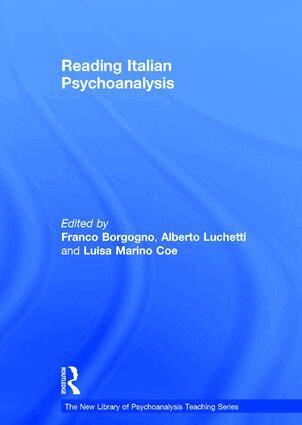
Winner of the American Board & Academy of Psychoanalysis Prize for best Edited book published in 2016Psychoanalysis in Italy is a particularly diverse and vibrant profession, embracing a number of influences and schools of thought, connecting together new thinking, and producing theorists and clinicians of global renown. Reading Italian Psychoanalysis provides a comprehensive guide to the most important Italian psychoanalytic thinking of recent years, including work by major names such as Weiss, E.Gaddini, Matte Blanco, Nissim Momigliano, Canestri, Amati Mehler, and Ferro. It covers the most important theoretical developments and clinical advances, with special emphasis on contemporary topics such as transference, trauma and primitive states of mind where Italian work has been particular influential. In this volume, Franco Borgogno, Alberto Luchetti and Luisa Marino Coe of the Italian Psychoanalytical Society provide an overview of how Italian psychoanalysis has developed from the 1920’s to the present day, tracing its early influences and highlighting contemporary developments. Forty-six seminal and representative papers of psychoanalysts belonging to the two Italian psychoanalytical societies (the Italian Psychoanalytical Society and the Italian Association of Psychoanalysis) have been chosen to illuminate what is special about Italian theoretical and clinical thinking, and what is demonstrative of the specificity of its psychoanalytic discourse. The selected papers are preceded by a first introductory section about the history of psychoanalysis in Italy and followed by a "swift glance at Italian psychoanalysis from abroad". They are grouped into sections which represent the areas particularly explored by Italian psychoanalysis. Each section is accompanied by introductory comments which summarize the main ideas and concepts and also their historical and cultural background, so as to offer to the reader either an orientation and stimulus for the debate and to indicate their connections to other papers included in the present volume and to the international psychoanalytic world.The book is divided into six parts including: History of psychoanalysis in ItalyMetapsychologyClinical practice, theory of technique, therapeutic factorsThe person of the analyst, countertransference and the analytic relationship/fieldTrauma, psychic pain, mourning and working-throughPreverbal, precocious, fusional, primitive states of the mindThis volume offers an excellent and detailed "fresco" of Italian psychoanalytic debate, shining a light on thinking that has evolved differently in France, England, North and Latin America. It is an ideal book for beginners and advanced students of clinical theory as well as experienced psychoanalysts wanting to know more about Italian psychoanalytic theory and technique, and how they have developed.
1 224 kr
Skickas inom 10-15 vardagar
Winner of the American Board & Academy of Psychoanalysis Prize for best Edited book published in 2016Psychoanalysis in Italy is a particularly diverse and vibrant profession, embracing a number of influences and schools of thought, connecting together new thinking, and producing theorists and clinicians of global renown. Reading Italian Psychoanalysis provides a comprehensive guide to the most important Italian psychoanalytic thinking of recent years, including work by major names such as Weiss, E.Gaddini, Matte Blanco, Nissim Momigliano, Canestri, Amati Mehler, and Ferro. It covers the most important theoretical developments and clinical advances, with special emphasis on contemporary topics such as transference, trauma and primitive states of mind where Italian work has been particular influential. In this volume, Franco Borgogno, Alberto Luchetti and Luisa Marino Coe of the Italian Psychoanalytical Society provide an overview of how Italian psychoanalysis has developed from the 1920’s to the present day, tracing its early influences and highlighting contemporary developments. Forty-six seminal and representative papers of psychoanalysts belonging to the two Italian psychoanalytical societies (the Italian Psychoanalytical Society and the Italian Association of Psychoanalysis) have been chosen to illuminate what is special about Italian theoretical and clinical thinking, and what is demonstrative of the specificity of its psychoanalytic discourse. The selected papers are preceded by a first introductory section about the history of psychoanalysis in Italy and followed by a "swift glance at Italian psychoanalysis from abroad". They are grouped into sections which represent the areas particularly explored by Italian psychoanalysis. Each section is accompanied by introductory comments which summarize the main ideas and concepts and also their historical and cultural background, so as to offer to the reader either an orientation and stimulus for the debate and to indicate their connections to other papers included in the present volume and to the international psychoanalytic world.The book is divided into six parts including: History of psychoanalysis in ItalyMetapsychologyClinical practice, theory of technique, therapeutic factorsThe person of the analyst, countertransference and the analytic relationship/fieldTrauma, psychic pain, mourning and working-throughPreverbal, precocious, fusional, primitive states of the mindThis volume offers an excellent and detailed "fresco" of Italian psychoanalytic debate, shining a light on thinking that has evolved differently in France, England, North and Latin America. It is an ideal book for beginners and advanced students of clinical theory as well as experienced psychoanalysts wanting to know more about Italian psychoanalytic theory and technique, and how they have developed.
535 kr
Skickas inom 10-15 vardagar
Winner of the 2010 Sigourney Award!Reading Freud provides an accessible outline of the whole of Freud's work from Studies in Hysteria through to An Outline of Psycho-Analysis. It succeeds in expressing even the most complex of Freud's theories in clear and simple language whilst avoiding over-simplification.Each chapter concentrates on an individual text and includes valuable background information, relevant biographical and historical details, descriptions of Post-Freudian developments and a chronology of Freud's concepts. By putting each text into the context of Freud's life and work as a whole, Jean-Michel Quinodoz manages to produce an overview which is chronological, correlative and interactive. Texts discussed include:The Interpretation of DreamsThe 'Uncanny'Civilisation and its Discontents'The clear presentation, with regular summaries of the ideas raised, encourages the reader to fully engage with the texts presented and gain a thorough understanding of each text in the context of its background and impact on the development of psychoanalysis.Drawing on his extensive experience as a clinician and a teacher of psychoanalysis, Jean-Michel Quinodoz has produced a uniquely comprehensive presentation of Freud's work which will be of great value to anyone studying Freud and Psychoanalysis.