Nietzsche Today - Böcker
Visar alla böcker i serien Nietzsche Today. Handla med fri frakt och snabb leverans.
11 produkter
11 produkter
2 369 kr
Skickas inom 5-8 vardagar
This volume consists of the revised and expanded versions of the papers presented at the International Conference “Nietzsche On Instinct and Language”, held at the Universidade Nova de Lisboa (Portugal) in December 2009. The list of contributors includes top Nietzsche scholars, like Werner Stegmaier, Patrick Wotling, and Scarlett Marton. The volume as a whole represents a fresh look at Nietzsche’s attempt to connect language to the instinctive activity of the human body. Four of the papers focus on Nietzsche’s early Nachlass notes and writings, including The Birth of Tragedy and On Truth and Lying in a Non-Moral Sense; the other seven deal with his mature views on this important subject, especially in Beyond Good and Evil, The Gay Science, and the Nachlass. In focusing on how Nietzsche tries to dissolve the traditional opposition between instinct and language, as well as between instinct and consciousness and instinct and reason, the different papers consider, from this viewpoint, such Nietzschean themes as morality, value, the concept of philosophy, dogmatism, naturalization, metaphor, affectivity and emotion, health and sickness, tragedy, and laughter.
1 618 kr
Skickas inom 5-8 vardagar
Nietzsche's metaphor of the spider that spins its cobweb expresses his critique of the metaphysical use of language - but it also suggests that ‟we, spiders‟, are able to spin different, life-affirming, healthier, non-metaphysical cobwebs. This book is a collection of 12 essays that focus not only on Nietzsche's critique of the metaphysical assumptions of language, but also on his effort to use language in a different way, i.e., to create a ‟new language‟. It is from this viewpoint that the book considers such themes as consciousness, the self, metaphor, instinct, affectivity, style, morality, truth, and knowledge.The authors invited to contribute to this volume are Nietzsche scholars who belong to some of the most important research centers of the European Nietzsche-Research: Centro Colli-Montinari (Italy), GIRN (Europhilosphie), SEDEN (Spain), Greifswald Research Group (Germany), NIL (Portugal). In 2011 João Constâncio and Maria João Mayer Branco edited Nietzsche on Instinct and Language, also published by Walter de Gruyter. The two books complement each other.
1 362 kr
Skickas inom 5-8 vardagar
Nietzsche is known as a severe critic of German Idealism, but what exactly is the relation between his thought and theirs? And how does Nietzsche's stance differ from the critique of idealism in Kierkegaard and Schopenhauer?The papers from leading international specialists in German Idealism, Schopenhauer, Kierkegaard and Nietzsche address these questions. The aim of the volume is to introduce novel ways of addressing the complex relations between Nietzsche and his immediate philosophical predecessors: Schopenhauer, Kierkegaard, Hegel, Schelling, Fichte and Kant. The focus is on the profound interconnections and affinities between their ways of thinking. Each paper considers one particular aspect of Nietzsche's philosophy (such as his notion of "spirit", "law", "power", "will", his "physiology" or his critique of morality) in relation to the above-mentioned philosophers. This largely systematic approach reveals surprising affinities between Nietzsche and the German idealists, despite their patent differences and generates new perspectives from which to understand and reinterpret Nietzsche's thought.Contributors: Maria J. Branco; Danielle Cohen Levinas; Joao Constancio; Carlos J. Correia; Katia Hay; Lore Hühn; Jose Justo; Elisabetta Marques J.de Sousa; Frederick Neuhouser; Leonel R. dos Santos; Philipp Schwab; Herman Siemens.
2 036 kr
Skickas inom 5-8 vardagar
This collection establishes Nietzsche's importance as a political philosopher. It includes a substantial introduction and eighteen chapters by some of the most renowned Nietzsche scholars. The book examines Nietzsche's connections with political thought since Plato, major influences on him, his methodology, and his influence on subsequent thought. The book includes extensive coverage of the debate between radical aristocratic readings of Nietzsche, and more liberal or democratic readings. Close readings of Nietzsche's texts are combined with a contextualising approach to build up a complete picture of his place in political philosophy. Topics include the relevance of Bonapartism and classical liberalism, Nietzsche on Christianity, the cultural history of Germany, the Übermensch, ethics and politics in Nietzsche, and the controversial question of his political preferences and affinities. Nietzsche's political thought is compared with that of Humboldt, Weber and Foucault. The book is essential reading for anyone concerned with Nietzsche's thought, political philosophy, and the history of political ideas.
2 206 kr
Skickas inom 5-8 vardagar
Nietzsche's critique of the modern subject is often presented as a radical break with modern philosophy and associated with the so-called ‘death of the subject’ in 20th century philosophy. But Nietzsche claimed to be a ‘psychologist’ who was trying to open up the path for ‘new versions and sophistications of the soul hypothesis.’ Although there is no doubt that Nietzsche gave expression to a fundamental crisis of the modern conception of subjectivity (both from a theoretical and from a practical-existential perspective), it is open to debate whether he wanted to abandon the very idea of subjectivity or only to pose the problem of subjectivity in new terms.The volume includes 26 articles by top Nietzsche scholars. The chapters in Part I, “Tradition and Context”, deal with the relationship between Nietzsche's views on subjectivity and modern philosophy, as well as with the late 19th century context in which his thought emerged; Part II, “The Crisis of the Subject”, examines the impact of Nietzsche's critique of the subject on 20th century philosophy, from Freud to Heidegger to Dennett, but also in such authors as Deleuze, Foucault, Derrida, or Luhmann; Part III, “Current Debates - From Embodiment and Consciousness to Agency”, shows that the way in which Nietzsche engaged with such themes as the self, agency, consciousness, embodiment and self-knowledge makes his thought highly relevant for philosophy today, especially for philosophy of mind and ethics.
250 kr
Skickas inom 3-6 vardagar
This volume consists of the revised and expanded versions of the papers presented at the International Conference “Nietzsche On Instinct and Language”, held at the Universidade Nova de Lisboa (Portugal) in December 2009. The list of contributors includes top Nietzsche scholars, like Werner Stegmaier, Patrick Wotling, and Scarlett Marton. The volume as a whole represents a fresh look at Nietzsche’s attempt to connect language to the instinctive activity of the human body. Four of the papers focus on Nietzsche’s early Nachlass notes and writings, including The Birth of Tragedy and On Truth and Lying in a Non-Moral Sense; the other seven deal with his mature views on this important subject, especially in Beyond Good and Evil, The Gay Science, and the Nachlass. In focusing on how Nietzsche tries to dissolve the traditional opposition between instinct and language, as well as between instinct and consciousness and instinct and reason, the different papers consider, from this viewpoint, such Nietzschean themes as morality, value, the concept of philosophy, dogmatism, naturalization, metaphor, affectivity and emotion, health and sickness, tragedy, and laughter.
377 kr
Skickas inom 3-6 vardagar
Nietzsche's critique of the modern subject is often presented as a radical break with modern philosophy and associated with the so-called ‘death of the subject’ in 20th century philosophy. But Nietzsche claimed to be a ‘psychologist’ who was trying to open up the path for ‘new versions and sophistications of the soul hypothesis.’ Although there is no doubt that Nietzsche gave expression to a fundamental crisis of the modern conception of subjectivity (both from a theoretical and from a practical-existential perspective), it is open to debate whether he wanted to abandon the very idea of subjectivity or only to pose the problem of subjectivity in new terms.The volume includes 26 articles by top Nietzsche scholars. The chapters in Part I, “Tradition and Context”, deal with the relationship between Nietzsche's views on subjectivity and modern philosophy, as well as with the late 19th century context in which his thought emerged; Part II, “The Crisis of the Subject”, examines the impact of Nietzsche's critique of the subject on 20th century philosophy, from Freud to Heidegger to Dennett, but also in such authors as Deleuze, Foucault, Derrida, or Luhmann; Part III, “Current Debates - From Embodiment and Consciousness to Agency”, shows that the way in which Nietzsche engaged with such themes as the self, agency, consciousness, embodiment and self-knowledge makes his thought highly relevant for philosophy today, especially for philosophy of mind and ethics.
253 kr
Skickas inom 3-6 vardagar
This collection establishes Nietzsche's importance as a political philosopher. It includes a substantial introduction and eighteen chapters by some of the most renowned Nietzsche scholars. The book examines Nietzsche's connections with political thought since Plato, major influences on him, his methodology, and his influence on subsequent thought. The book includes extensive coverage of the debate between radical aristocratic readings of Nietzsche, and more liberal or democratic readings. Close readings of Nietzsche's texts are combined with a contextualising approach to build up a complete picture of his place in political philosophy. Topics include the relevance of Bonapartism and classical liberalism, Nietzsche on Christianity, the cultural history of Germany, the Übermensch, ethics and politics in Nietzsche, and the controversial question of his political preferences and affinities. Nietzsche's political thought is compared with that of Humboldt, Weber and Foucault. The book is essential reading for anyone concerned with Nietzsche's thought, political philosophy, and the history of political ideas.
208 kr
Skickas inom 3-6 vardagar
Nietzsche is known as a severe critic of German Idealism, but what exactly is the relation between his thought and theirs? And how does Nietzsche's stance differ from the critique of idealism in Kierkegaard and Schopenhauer?The papers from leading international specialists in German Idealism, Schopenhauer, Kierkegaard and Nietzsche address these questions. The aim of the volume is to introduce novel ways of addressing the complex relations between Nietzsche and his immediate philosophical predecessors: Schopenhauer, Kierkegaard, Hegel, Schelling, Fichte and Kant. The focus is on the profound interconnections and affinities between their ways of thinking. Each paper considers one particular aspect of Nietzsche's philosophy (such as his notion of "spirit", "law", "power", "will", his "physiology" or his critique of morality) in relation to the above-mentioned philosophers. This largely systematic approach reveals surprising affinities between Nietzsche and the German idealists, despite their patent differences and generates new perspectives from which to understand and reinterpret Nietzsche's thought.Contributors: Maria J. Branco; Danielle Cohen Levinas; Joao Constancio; Carlos J. Correia; Katia Hay; Lore Hühn; Jose Justo; Elisabetta Marques J.de Sousa; Frederick Neuhouser; Leonel R. dos Santos; Philipp Schwab; Herman Siemens.
1 704 kr
Skickas inom 7-10 vardagar
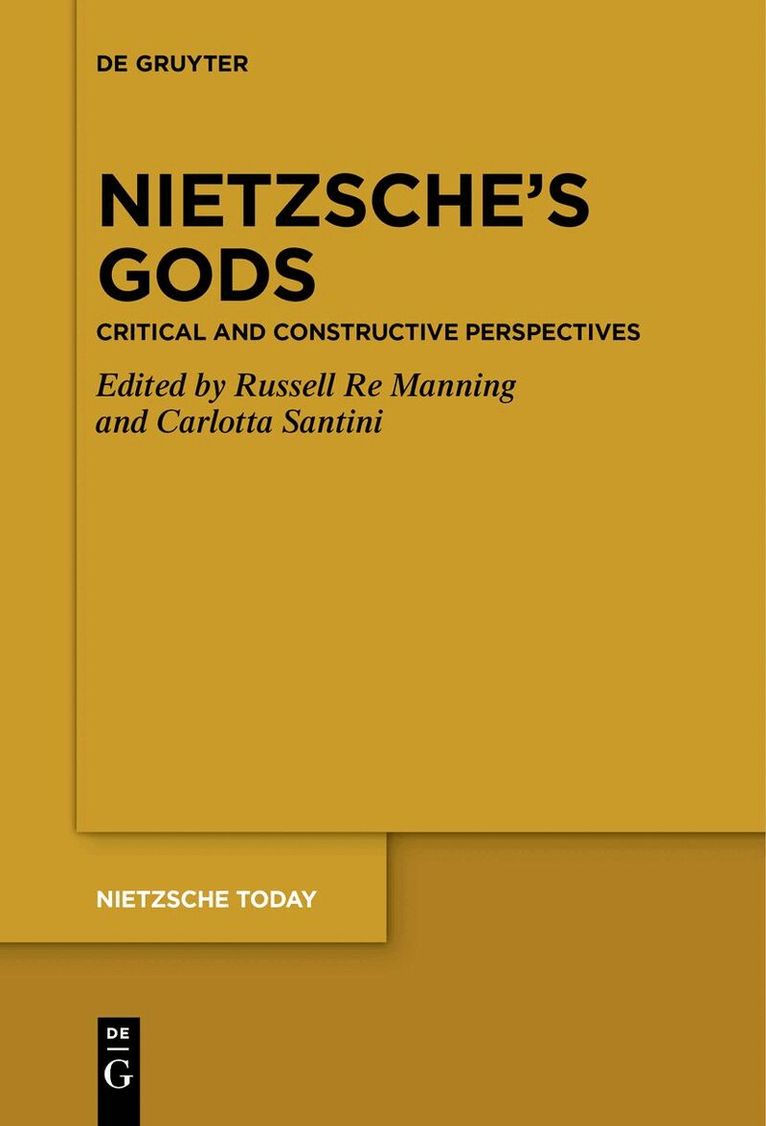
The place (or absence) of God in Nietzsche’s thought remains central and controversial. Nietzsche’s proclamation of 'the death of God' is one of the most famous (and parodied) slogans in modern philosophy, seeming to encapsulate the nineteenth-century loss of religious faith in the affirmation that God has "turned out to be our oldest lie" and yet the nature of Nietzsche’s own ‘theology’ is far from clear. This volume engages with Nietzsche’s arguments about God, theology, and religion. The volume extends the discussion to an engagement of Nietzsche with alternative models of God, with ancient Greek religions, and with discussions of diversity (race, class, gender, sex) in dis/conjunction with religion. The chapters examine Nietzsche’s genealogy of religion and his claims about the place of God and theology in the history of Western thought ("that faith of the Christians, which was also Plato’s faith"), as well as his engagements with alternative conceptions of God. The volume also examines the historical and contemporary reception of Nietzsche’s arguments about God by religious and non-religious thinkers, asking to what extent Nietzsche’s philosophy of God speaks to the challenges of today's globalized philosophy and religion.
257 kr
Skickas inom 3-6 vardagar
The place (or absence) of God in Nietzsche’s thought remains central and controversial. Nietzsche’s proclamation of 'the death of God' is one of the most famous (and parodied) slogans in modern philosophy, seeming to encapsulate the nineteenth-century loss of religious faith in the affirmation that God has "turned out to be our oldest lie" and yet the nature of Nietzsche’s own ‘theology’ is far from clear. This volume engages with Nietzsche’s arguments about God, theology, and religion. The volume extends the discussion to an engagement of Nietzsche with alternative models of God, with ancient Greek religions, and with discussions of diversity (race, class, gender, sex) in dis/conjunction with religion. The chapters examine Nietzsche’s genealogy of religion and his claims about the place of God and theology in the history of Western thought ("that faith of the Christians, which was also Plato’s faith"), as well as his engagements with alternative conceptions of God. The volume also examines the historical and contemporary reception of Nietzsche’s arguments about God by religious and non-religious thinkers, asking to what extent Nietzsche’s philosophy of God speaks to the challenges of today's globalized philosophy and religion.