
Oldcastle Books Ltd – serie
Visar alla böcker i serien Oldcastle Books Ltd. Handla med fri frakt och snabb leverans.
3 produkter
3 produkter
Häftad, Engelska, 2026
115 kr
Skickas inom 5-8 vardagar
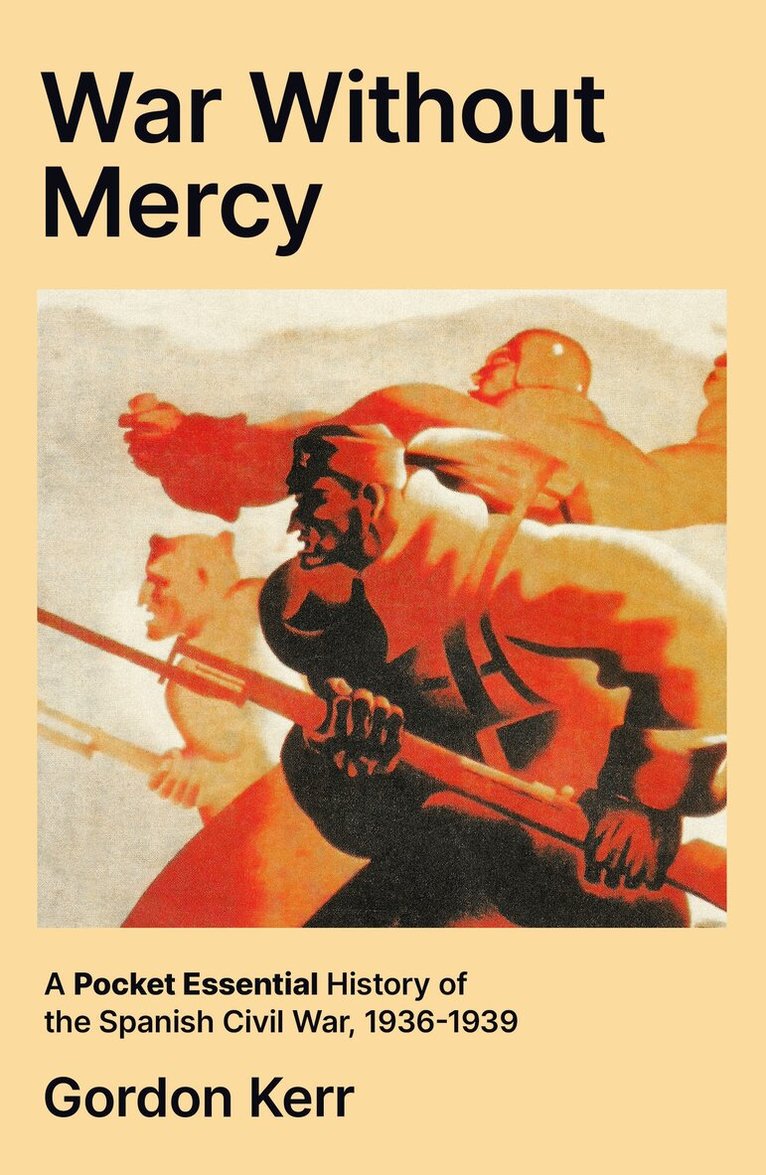
More than eighty-five years after it ended in defeat for the Republicans and victory for the Nationalists headed by General Francisco Franco, the Spanish Civil War remains a subject of debate and contention. We live in a time of political polarization, with opposing sides holding entrenched and unalterable positions and War Without Mercy sheds light on the consequences of such circumstances. It also presents a detailed but concise picture of this turbulent and pivotal moment in European history.The Spanish Civil War was a war of firsts: the first in which civilians were targeted, through the bombing of cities. It was also the first 'photogenic' war in history, the growth in photo-journalism bringing images of the fighting and of the huge number of refugees that were created by the conflict to the newspapers and newsreels of other European countries. New weapons, technologies and strategies were tried out, rehearsing for the increasingly inevitable war on European soil.War Without Mercy examines the origins of this deadly conflagration which date back to the nineteenth century and which finds its causes in the issues of mass suffrage, social welfare reform, and land reform, as well as in the increasing tensions between urbanism and rural tradition. The course of the war is laid out, including descriptions of the major battles and incidents, incorporating details of the bombing of major cities, most harrowingly, of course, the bombing of civilians at Guernica, famously depicted in Pablo Picasso's painting of the atrocity. The reaction of the other nations of Europe is also examined - the 'non-intervention' promulgated by Great Britain and France, and the direct intervention of the fascist nations, Germany and Italy, in support of the Nationalist cause, support that took the form of troops, planes and armaments.
Häftad, Engelska, 2026
148 kr
Kommande
From rural Scotland and the west coast of Ireland to Paris and beyond, musician and journalist Callum retraces the people, places and moments that have shaped him.Reine, Sylvie and Sparrow are among those whose paths become entwined with Callum's, each leaving an indelible mark on his understanding of love, loss and what it means to find a place in the world.From bitterly cold Irish loughs and Parisian flea markets to discos, bird hides and the Top of the Pops studio, Callum's memories gather and overlap, revealing a life in vivid fragments.Wry, tender and quietly life-affirming, Callum, Reine, Sylvie and Sparrow is a celebration of the people who shape us, the places that stay with us and the unexpected paths that lead us home.
Häftad, Engelska, 2026
121 kr
Kommande
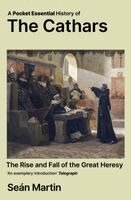
Catharism was the most successful heresy of the Middle Ages.Flourishing principally in the Languedoc and Italy, the Cathars taught that the world is evil and must be transcended through a simple life of prayer, work, fasting and nonviolence. They believed themselves to be the heirs of the true form of Christianity going back to the Apostles and the Gnostics, and completely rejected the Catholic Church and all its trappings, regarding it as the Church of Satan; Cathar services and ceremonies, by contrast, were held in fields, barns and in people's homes.Finding support from the nobility in the fractious political situation in southern France, where the Church was lax, corrupt and unpopular, the Cathars also enjoyed widespread popularity among peasants and artisans. And again unlike the Church, the Cathars respected women, and women played a major role in the movement. Alarmed at the success of Catharism, the Church launched the Albigensian Crusade to exterminate the heresy. While previous Crusades had been directed against Muslims in the Middle East or pagans in the Baltic, the Albigensian Crusade was the first Crusade to be directed against fellow Christians, and was also the first European genocide. With the fall of the Cathar fortress of Montségur in 1244, and the Italian fortress of Sirmione in 1276, Catharism was largely obliterated, although the faith survived into the fourteenth century. The Church founded the Inquisition to ensure that the heresy would not return.But the Church was never able to completely eradicate the myth of the Cathars, and the heresy became a powerful symbol for 19th century Languedocian separatists, the German archaeologist Otto Rahn, and the philosopher Simone Weil. Today, the mystique surrounding the Cathars is as strong as ever. Seán Martin sympathetically recounts their story and the myths associated with them in this informative, lively and gripping book.